
📊 Full opportunity report: DDR5 Now, DDR6 Soon: A Buyer’s Field Guide on ThorstenMeyerAI.com — validation score, market gap, and execution plan.
TL;DR
With DDR5 prices stabilizing and DDR6 still in early stages, buyers should focus on current DDR5 options suited for 2026-2028. DDR6 offers future potential but is not ready for mainstream purchase yet.
Market analysis confirms that DDR5 memory remains the recommended choice for most PC builders in 2026, while DDR6 is still in early development stages and not suitable for mainstream purchases yet.
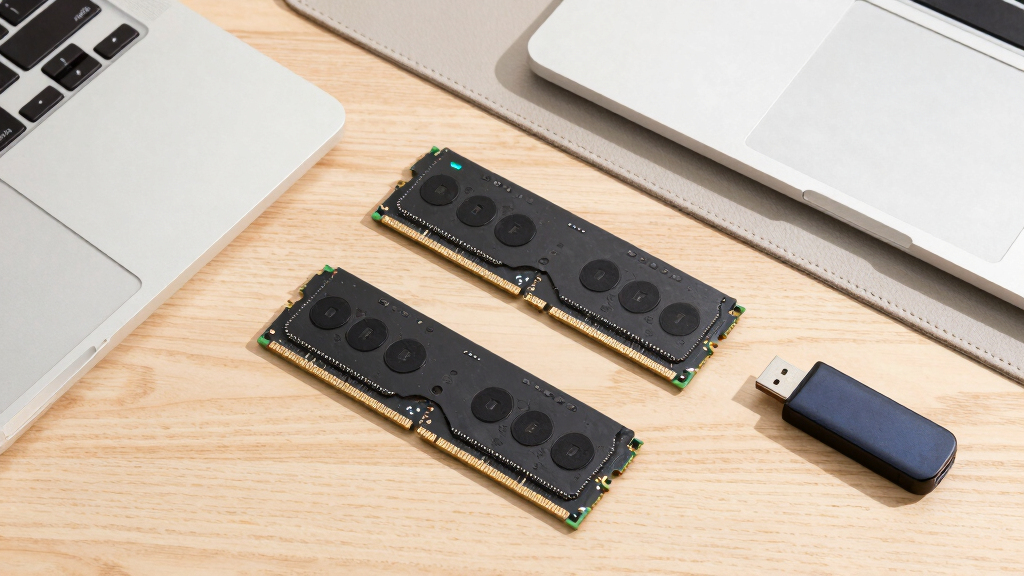
According to recent industry insights, DDR5-6000 with CL30 timings continues to offer the best value for mainstream desktops and gaming PCs through at least 2028. Higher-speed DDR5 kits, such as DDR5-8000, generally provide minimal real-world performance gains and are not cost-effective amid ongoing market shortages.
In contrast, DDR6 is still in the early stages of rollout, with initial adoption limited to enterprise and AI servers expected around 2026–27. The new standard features a significant architecture leap, including four 24-bit sub-channels and speeds starting at approximately 8,800 MT/s, scaling toward 17,600 MT/s. However, DDR6 modules are not backward compatible with DDR5 or DDR4, requiring new CPUs, chipsets, and modules, and are expected to come with a premium price tag.
Experts advise that most consumers and mainstream builders should avoid waiting for DDR6, as the first-generation modules will be expensive, immature, and limited in capacity. Instead, a well-chosen DDR5 system now will outperform early DDR6 setups in 2027, with better compatibility and lower costs.
DDR5 now, DDR6 soon
A buyer’s field guide. The 20-year instinct — wait for prices to drop, or wait for the next generation — is broken this cycle. Buy the DDR5 you actually need now; don’t wait for DDR6. Here’s the reasoning.
Driven to end-of-life, production slashed. Same money, dead-end socket. Leave a working DDR4 box alone — but never start a new build on DDR4 to “save.”
A framework, not a gamble. Buy the DDR5 you need now, at the sweet spot, in the capacity you’ll actually use — don’t buy DDR4, don’t wait for DDR6. The two costliest mistakes in this market are the ones that feel prudent: waiting for a price drop that isn’t coming, and waiting for a next-gen part that launches dearer than what’s on the shelf. Next: The SSD Squeeze.
Why Current DDR5 Choices Matter for Buyers
This guidance helps consumers avoid unnecessary delays and overspending. With DDR5 prices stabilized and DDR6 not yet viable for mainstream use, buyers can focus on building reliable, high-performance systems now. Waiting for DDR6 could mean missing out on platform improvements and paying a premium for unproven technology that won’t deliver immediate benefits.
As an affiliate, we earn on qualifying purchases.
Market Trends and Future Memory Developments
The memory market has experienced significant price volatility in recent years, driven by supply shortages and demand surges. DDR4 is now nearing end-of-life, with manufacturers shifting focus to DDR5, which is currently in a phase of price stabilization. DDR6, announced as the next major upgrade, is still in development, with initial deployment expected in enterprise and high-end markets around 2026–27. Consumer adoption is projected to lag until 2027 or later, with broad availability not expected until 2030.
This phased rollout mirrors previous transitions, such as DDR4’s evolution from early adoption to mainstream ubiquity over several years. The architecture improvements in DDR6 promise higher bandwidths but come with higher costs and compatibility challenges, making it unsuitable for immediate upgrade paths.
“DDR6 modules will initially target enterprise and AI applications, with consumer-friendly modules expected several years down the line.”
— Memory manufacturer spokesperson
As an affiliate, we earn on qualifying purchases.
Uncertainties About DDR6 Adoption and Pricing
It remains unclear exactly when DDR6 modules will become widely available for consumers, what their pricing will be, and how early adoption issues like stability and capacity limitations will be addressed. The timeline for mainstream adoption is projected to be around 2027–30, but these estimates could shift with technological or market developments.
As an affiliate, we earn on qualifying purchases.
Next Steps for Buyers and Industry Watchers
Consumers should continue to monitor JEDEC standards and motherboard compatibility lists for DDR6 updates. Meanwhile, the market for DDR5 will likely see continued price stabilization and new kit options through 2024 and 2025. Industry analysts recommend focusing on current DDR5 configurations that meet workload needs, avoiding premature investment in DDR6 until it matures and becomes cost-effective.
As an affiliate, we earn on qualifying purchases.
Key Questions
Should I buy DDR4 in 2026 to save money?
No. DDR4 is nearing end-of-life, and new builds should focus on DDR5 for future compatibility and performance. DDR4 is no longer the cost-saving option it once was.
Is DDR6 worth waiting for in 2026?
Most users should not wait for DDR6, as it will be expensive, immature, and limited in capacity initially. It’s better to invest in a solid DDR5 system now.
When will DDR6 be available for consumer desktops?
Industry projections suggest DDR6 will reach mainstream desktops around 2027, with broader availability not until approximately 2030.
Will DDR6 significantly improve gaming performance?
Likely not. DDR6’s bandwidth improvements are mainly beneficial for data-intensive workloads like AI and scientific computing, not gaming.
What should I look for when choosing DDR5 memory?
Focus on DDR5-6000 with CL30 timings for the best balance of performance and price. Capacity should match your workload—32GB for gaming and general use, 64GB for content creation.
Source: ThorstenMeyerAI.com