

The best Soviet-era book for most readers is The Gulag Archipelago, Solzhenitsyn’s towering literary investigation of the prison-camp system that defined so much of Soviet life. If you want a single-volume, rigorously sourced history instead, Gulag: A History by Anne Applebaum covers the same subject with a scholar’s distance and far less reading commitment. For fiction readers, Life and Fate by Vasily Grossman stands as the era’s great novel — a Soviet War and Peace that trades documentary weight for emotional depth. The main tradeoff in this category is between primary witness accounts that carry authority but demand stamina, and modern narrative histories that are easier to enter but secondhand. Price differences matter less here than reading time: some of these runs exceed 700 pages. Read on for the full breakdown of all ten picks and who each one suits best.

Get the latest gadgets delivered free with Prime
- Fast, free delivery on millions of items
- Prime Video, Amazon Music and more included
- Member-only deals all year
Complete the kit



Key Takeaways
- The comparison split cleanly into three formats — survivor testimony (The Gulag Archipelago, One Day in the Life of Ivan Denisovich), narrative history (Gulag: A History, A People’s Tragedy, Lenin’s Tomb), and panoramic life-writing (Secondhand Time, Life and Fate) — and the right pick depends on which format fits your reading style, not which book is ‘better’.
- The Gulag Archipelago and Gulag: A History cover the same subject, but they are not substitutes: Solzhenitsyn gives you the inside voice of a prisoner, Applebaum gives you the archives, statistics, and cold analysis. Buyers wanting both perspectives need both books.
- A Day in the Life of the Soviet Union and Secondhand Time are the two picks that show ordinary Soviet life rather than state terror — the better entry points for readers who find camp literature too bleak.
- Length is the single biggest commitment variable in this roundup: Life and Fate and A People’s Tragedy both exceed 800 pages, while One Day in the Life of Ivan Denisovich can be finished in an afternoon and is the cheapest way to test your interest in the subject.
- Two Pulitzer winners (Gulag: A History and Lenin’s Tomb) anchor the modern-history side, but they serve different eras — Applebaum covers the system’s full lifespan while Remnick covers only its 1991 collapse, so choose based on which question you want answered.
| Stalin: The Court of the Red Tsar |  | Best Overall | Author: Simon Sebag Montefiore | Subject: Joseph Stalin and his inner circle | Genre: Political biography / history | VIEW LATEST PRICE | See Our Full Breakdown |
| Former People: The Final Days of the Russian Aristocracy | 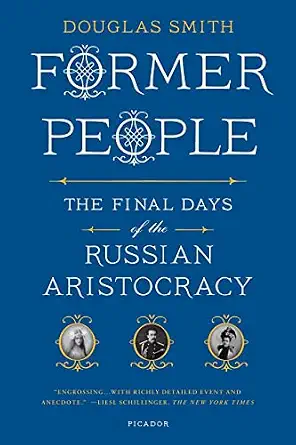 | Best for Social History | Author: Douglas Smith | Subject: Russian aristocracy under revolution and Soviet rule | Genre: Social history / narrative nonfiction | VIEW LATEST PRICE | See Our Full Breakdown |
| A Day in the Life of the Soviet Union |  | Best Visual Window on Everyday Life | Format: Large-format photographic book | Subject: Daily life across the Soviet Union in a single day | Genre: Documentary photography / cultural history | VIEW LATEST PRICE | See Our Full Breakdown |
| Secondhand Time: The Last of the Soviets |  | Best for Personal Voices | Author: Svetlana Alexievich | Subject: Post-Soviet Russia and the end of the USSR | Genre: Oral history / literary nonfiction | VIEW LATEST PRICE | See Our Full Breakdown |
| A People’s Tragedy: The Russian Revolution 1891-1924 |  | Best for Understanding How It All Began | Author: Orlando Figes | Subject: The Russian Revolution and its roots | Genre: Narrative history | VIEW LATEST PRICE | See Our Full Breakdown |
| One Day in the Life of Ivan Denisovich |  | Best Entry Point | Author: Aleksandr Solzhenitsyn | Format: Mass-market paperback | Length: Approximately 180 pages | VIEW LATEST PRICE | See Our Full Breakdown |
| The Gulag Archipelago, Volume 1: An Experiment in Literary Investigation |  | Best Primary Testimony | Author: Aleksandr Solzhenitsyn | Format: Paperback | Length: Approximately 660 pages (Volume 1) | VIEW LATEST PRICE | See Our Full Breakdown |
| Lenin’s Tomb: The Last Days of the Soviet Empire |  | Best for the Collapse Era | Author: David Remnick | Format: Paperback | Length: Approximately 576 pages | VIEW LATEST PRICE | See Our Full Breakdown |
| Life and Fate (New York Review Books Classics) |  | Best Epic Novel | Author: Vasily Grossman | Format: Paperback (New York Review Books Classics) | Length: Approximately 880 pages | VIEW LATEST PRICE | See Our Full Breakdown |
| Gulag: A History | 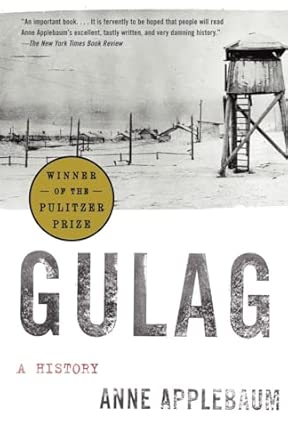 | Best Scholarly History | Author: Anne Applebaum | Format: Paperback | Length: Approximately 677 pages | VIEW LATEST PRICE | See Our Full Breakdown |
| Soviet-era book | Genre | Author | Format | Subject |
|---|---|---|---|---|
| Stalin: The Court of the Red T | Political biography / history | Simon Sebag Montefiore | — | Joseph Stalin and his inner circle |
| Former People: The Final Days | Social history / narrative nonfiction | Douglas Smith | — | Russian aristocracy under revolution and Soviet rule |
| A Day in the Life of the Sovie | Documentary photography / cultural history | — | Large-format photographic book | Daily life across the Soviet Union in a single day |
| Secondhand Time: The Last of t | Oral history / literary nonfiction | Svetlana Alexievich | — | Post-Soviet Russia and the end of the USSR |
| A People’s Tragedy: The Russia | Narrative history | Orlando Figes | — | The Russian Revolution and its roots |
| One Day in the Life of Ivan De | Literary fiction / novella | Aleksandr Solzhenitsyn | Mass-market paperback | — |
| The Gulag Archipelago | Literary nonfiction / memoir-history | Aleksandr Solzhenitsyn | Paperback | — |
| Lenin’s Tomb: The Last Days of | Journalistic history / narrative nonfiction | David Remnick | Paperback | — |
| Life and Fate | Literary fiction / war epic | Vasily Grossman | Paperback (New York Review Books Classics) | — |
| Gulag: A History | Scholarly history / narrative nonfiction | Anne Applebaum | Paperback | — |
More Details on Our Top Picks
Stalin: The Court of the Red Tsar
Simon Sebag Montefiore’s Stalin: The Court of the Red Tsar earns the top spot because it does something no other book in this lineup attempts: it renders Soviet history as intimate political drama. Where Gulag: A History examines the system from a structural distance, this biography pulls readers inside the Kremlin apartments, the dachas, and the late-night dinners where Stalin’s terror was actually administered. The result is a portrait of power that feels lived rather than summarized.
The tradeoff is density. Compared with Secondhand Time, which moves through voices and vignettes, this book demands sustained attention across a long cast of characters and decades of intrigue. Readers wanting a quick overview of the Soviet period should start elsewhere — but those who commit will come away understanding how the regime functioned at its apex, not just what it did.
Pros:- Unmatched detail on Stalin’s inner circle, family life, and court politics
- Archival research that surfaces material few other Stalin biographies include
- Narrative-driven writing that reads like political drama rather than textbook
- Explains the mechanics of terror from the top down, complementing system-level histories
Cons:- Dense cast of names and positions requires careful reading to follow
- Focus on elite politics leaves everyday Soviet life largely offstage
Best for: History readers who want a character-driven, deeply sourced account of Stalin’s inner circle and the mechanics of his rule
Not ideal for: Casual readers or those new to Soviet history — the long cast of characters and dense political detail can overwhelm without baseline knowledge
- Author:Simon Sebag Montefiore
- Subject:Joseph Stalin and his inner circle
- Genre:Political biography / history
- Time period covered:Stalin’s rise and rule, roughly 1920s–1953
- Depth:Long-form, archival-based narrative
- Reading difficulty:Advanced — best with some Soviet history background
Our verdict“The definitive pick for readers who want to understand Stalin the man and the court that ran the terror — provided they’re ready for a long, detailed read.”
Former People: The Final Days of the Russian Aristocracy
Former People fills a gap the rest of this roundup leaves open: what happened to the losers of the revolution. Douglas Smith tracks two aristocratic families — the Sheremetevs and the Golitsyns — through revolution, civil war, and decades of persecution. Where A People’s Tragedy surveys the revolution’s causes and consequences at scale, this book narrows to a single social class and follows it to its end, which makes the collapse feel personal rather than abstract.
The narrow lens is both its strength and its limit. Readers hoping for the full sweep of Soviet history, as in Stalin: The Court of the Red Tsar, won’t find it here. And because the subject is an elite class, some readers may struggle to sympathize with figures who began as beneficiaries of the old order — a deliberate discomfort the book invites rather than resolves.
Pros:- Rare focus on a social class most histories treat only as a footnote
- Follows real families across decades, giving the era a human throughline
- Well-researched with extensive use of letters, diaries, and memoirs
- Illuminates how Bolshevik policy targeted entire categories of people
Cons:- Dense for casual readers without grounding in revolutionary-era Russia
- No photographs or visual aids to support the many figures and settings
Best for: Readers interested in class, fate, and forgotten perspectives — especially those who already know the revolution’s broad outlines
Not ideal for: Readers seeking a general history of the revolution or Soviet state — the class-specific focus omits the wider political story
- Author:Douglas Smith
- Subject:Russian aristocracy under revolution and Soviet rule
- Genre:Social history / narrative nonfiction
- Structure:Family-centered narrative following two noble houses
- Time period covered:Revolution through the Stalin era
- Reading difficulty:Moderate to advanced
Our verdict“A poignant, narrow-angle history for readers who already know the revolution’s big picture and want to see its cost from the losing side.”
A Day in the Life of the Soviet Union
This book takes the opposite approach from everything else here: instead of leaders, revolutions, or victims, it documents what an ordinary day looked like across the entire USSR. Built around a single-day, nation-spanning photography project in the vein of the Day in the Life series, it captures factories, kitchens, classrooms, and bread lines — the texture of Soviet life that Stalin: The Court of the Red Tsar never touches and Secondhand Time only reconstructs through memory.
Its strength is also its ceiling. Compared with Former People or A People’s Tragedy, there’s little sustained argument or narrative — it’s an immersive snapshot, not an analysis. Readers without prior knowledge of Soviet geography and institutions may find themselves admiring images without fully grasping their context. As a companion volume to any of the heavier picks, though, it’s hard to beat.
Pros:- Photographic documentation of daily life across the entire Soviet Union
- Accessible entry point that doesn’t require deep background knowledge
- Captures ordinary citizens rather than elites or dissidents
- Excellent companion to text-heavy histories in this lineup
Cons:- Limited interpretive or analytical depth
- Some context about Soviet institutions and regions is assumed
Best for: Visual learners and readers who want a grounded sense of Soviet daily reality alongside heavier political histories
Not ideal for: Readers seeking analysis or narrative history — this is documentary atmosphere, not argument
- Format:Large-format photographic book
- Subject:Daily life across the Soviet Union in a single day
- Genre:Documentary photography / cultural history
- Approach:Nation-wide single-day snapshot
- Audience level:Accessible to general readers
- Best use:Companion volume to narrative histories
Our verdict“The best visual complement in this roundup — buy it to see the Soviet Union, not to argue about it.”
Secondhand Time: The Last of the Soviets
Svetlana Alexievich’s Secondhand Time is the emotional center of this roundup. Rather than explaining the Soviet collapse, it lets ordinary people narrate it themselves, in monologues that are by turns bitter, funny, and devastating. Compared with Lenin’s Tomb, which charts the empire’s final days through political reporting, this oral history captures what the collapse felt like — the humiliation, nostalgia, and disorientation of a generation that lost a country along with its certainties.
The tradeoff is structure. There’s no chronology to follow and no argument to grasp; readers who loved the narrative drive of Stalin: The Court of the Red Tsar may find the accumulating voices aimless. The emotional weight is also unrelenting — this is not a book to skim. But for readers who want the human cost of ideology rather than its theory, nothing else here comes close.
Pros:- Nobel laureate oral history built from hundreds of firsthand interviews
- Captures emotions and contradictions textbooks cannot convey
- Gives voice to ordinary citizens across generations and regions
- Powerful on nostalgia and the psychological aftermath of the USSR’s fall
Cons:- Emotionally heavy and unrelenting across hundreds of pages
- Dense collage structure with no narrative throughline
Best for: Readers moved by testimony and oral history who want to feel the Soviet collapse rather than study it
Not ideal for: Readers who want clear chronology or analysis — the collage of voices offers no linear structure or argument
- Author:Svetlana Alexievich
- Subject:Post-Soviet Russia and the end of the USSR
- Genre:Oral history / literary nonfiction
- Structure:Woven interview monologues
- Time period covered:Late Soviet era through post-Soviet decades
- Reading difficulty:Moderate — emotionally demanding, structurally loose
Our verdict“An essential oral history for readers who want the human interior of the Soviet collapse — as long as they can handle its weight.”
A People’s Tragedy: The Russian Revolution 1891-1924
Orlando Figes’s A People’s Tragedy is the best starting point in this roundup for readers who need the full arc from famine to Bolshevik victory. Spanning 1891 to 1924, it explains why the revolution happened, not just what occurred — something none of the other picks attempts. Where Stalin: The Court of the Red Tsar picks up the story after power is won, and Former People assumes you know the revolution’s outcome, this book builds the whole foundation: the late tsarist system, the war, the collapse, and the civil war that followed.
The cost is sheer scale. At nearly a thousand pages, it makes even Gulag: A History feel compact, and readers wanting human testimony over political narrative may prefer Secondhand Time. But for anyone building a Soviet-history library from the beginning, this is the volume to buy first.
Pros:- Covers the revolution’s full arc from 1891 famine to Lenin’s death
- Blends political, social, and cultural history rather than one lens
- Explains causes and consequences, not just events
- Widely regarded as a standard single-volume history of the period
Cons:- Very long — a major time commitment for casual readers
- Primarily political and social narrative; lighter on individual testimony
Best for: Readers starting a Soviet-history library who want the revolution’s causes, events, and aftermath in one authoritative volume
Not ideal for: Casual or time-pressed readers — the length and density make it a serious commitment
- Author:Orlando Figes
- Subject:The Russian Revolution and its roots
- Genre:Narrative history
- Time period covered:1891–1924
- Scope:Single-volume, near-exhaustive treatment
- Reading difficulty:Advanced — long and densely detailed
Our verdict“The foundation read of this roundup — if you’re building understanding from the revolution forward, start here and read outward.”
One Day in the Life of Ivan Denisovich
One Day in the Life of Ivan Denisovich is the shortest path into Soviet literature, and that compactness is its greatest strength. Where The Gulag Archipelago demands a multi-month commitment across dense volumes, Solzhenitsyn’s novella compresses the entire machinery of the camp system into a single, ordinary day. This makes it ideal for readers who want the emotional truth of the Gulag without the encyclopedic scope. Compared with Gulag: A History, which explains the system analytically, this book makes you feel the cold of it. The tradeoff is deliberate: there is little historical context or analysis, so readers wanting the full political picture will need to pair it with a nonfiction companion.
Pros:- Compressed, accessible length that can be read in one or two sittings
- Vivid day-in-the-life structure that conveys camp reality viscerally
- Landmark publication — the first openly published account of Stalin’s camps in the USSR
- Plain, direct prose that requires no prior knowledge of Soviet history
- Affordable mass-market edition easy to carry and gift
Cons:- Minimal historical framing — readers new to the era may miss why the book shocked the world
- Narrow scope: one day, one prisoner, little about the wider system
- Mass-market paperback printing is basic compared with premium editions in this roundup
Best for: Newcomers to Soviet literature who want a short, powerful first read before committing to longer works
Not ideal for: Readers seeking historical analysis or comprehensive coverage of the Gulag system — this is pure narrative with minimal context
- Author:Aleksandr Solzhenitsyn
- Format:Mass-market paperback
- Length:Approximately 180 pages
- Genre:Literary fiction / novella
- Setting:Soviet labor camp, early 1950s
- Original publication:1962 (Novy Mir)
- Publisher:Signet
Our verdict“If you read only one Soviet-era book first, make it this one — then decide whether to go deeper with Solzhenitsyn’s longer works.”
The Gulag Archipelago, Volume 1: An Experiment in Literary Investigation
The Gulag Archipelago is the foundational document of this entire category, and it earns its place as the deepest primary source on the list. Unlike Lenin’s Tomb, which observes the Soviet collapse from the outside as reportage, this book is written from inside the machine — Solzhenitsyn assembled it from his own imprisonment and hundreds of survivor testimonies smuggled to him. The result is a work that is part memoir, part indictment, part archive. The tradeoff is real: the structure is deliberately fragmented, the tone is polemical, and Volume 1 alone is a serious reading project. Readers who want the same subject in a cleaner narrative should start with One Day in the Life of Ivan Denisovich and graduate to this.
Pros:- First-hand testimony woven from over 200 survivor accounts
- The single most consequential work of Soviet dissident literature
- Blends literary power with documentary detail no historian could invent
- This edition includes helpful maps and updated translation
- Essential companion to analytical histories like Gulag: A History
Cons:- Fragmented, non-linear structure can be disorienting without background knowledge
- Polemical tone sacrifices the neutrality some readers expect from history
- Volume 1 of a multi-volume work — a major time commitment
Best for: Readers who want unmediated testimony from inside the camp system and are prepared for a demanding, monumental read
Not ideal for: Casual readers or anyone wanting a neutral, footnoted history — the author’s voice is fierce and literary, not academic
- Author:Aleksandr Solzhenitsyn
- Format:Paperback
- Length:Approximately 660 pages (Volume 1)
- Genre:Literary nonfiction / memoir-history
- Coverage:Gulag system, 1918–1956
- Original publication:1973 (Paris, in Russian)
- Translation:Revised edition, translated from Russian
- Publisher:Harper Perennial Modern Classics
Our verdict“For readers ready to move beyond fiction and touch the primary source itself, nothing else in this roundup carries the same moral weight.”
Lenin’s Tomb: The Last Days of the Soviet Empire
Lenin’s Tomb covers the piece most books in this roundup skip: how the whole system came apart. David Remnick reported from Moscow as the USSR dissolved, and the book reads like a front-row seat to 1991. Compared with Gulag: A History, which looks backward at the system’s crimes, this is a present-tense chronicle of its funeral — interviews with former prisoners, apparatchiks, and ordinary citizens caught in the upheaval. It pairs naturally with Secondhand Time, which extends the story into the post-Soviet decades, but Remnick’s Pulitzer-winning account has more narrative drive and journalistic immediacy. The tradeoff: readers focused on Stalin-era terror or the camps will find less here about the system at its height.
Pros:- Eyewitness journalism from Moscow during the 1989–1991 collapse
- Pulitzer Prize winner with strong narrative pacing
- Interviews with figures ranging from ex-prisoners to former officials
- Excellent bridge to post-Soviet reads like Secondhand Time
- Accessible to readers with no prior Soviet-history background
Cons:- Coverage ends at the dissolution — no analysis of the post-1991 aftermath
- Dense cast of Russian names and figures can be hard to track
- Reportage format means less structural or economic explanation of the collapse
Best for: Readers fascinated by how and why the Soviet Union collapsed, told through vivid on-the-ground reporting
Not ideal for: Readers primarily interested in Stalinism, the Gulag, or wartime literature — the book begins where most of this list ends
- Author:David Remnick
- Format:Paperback
- Length:Approximately 576 pages
- Genre:Journalistic history / narrative nonfiction
- Coverage:Final years of the USSR, roughly 1989–1991
- Awards:Pulitzer Prize for General Nonfiction (1994)
- Publisher:Vintage
Our verdict“The definitive pick if your interest is the Soviet ending rather than the Soviet empire at its height.”
Life and Fate (New York Review Books Classics)
Life and Fate is the literary centerpiece of this roundup — a novel of the Stalingrad era that Grossman dared to compare, structurally, to War and Peace. Where One Day in the Life of Ivan Denisovich shows one man’s day, Grossman spans an entire society: physicists and commissars, camp prisoners and German occupation, mothers and sons. Its central insight — that both Stalinism and Nazivism reduced the individual to raw material — got the manuscript arrested by the KGB in 1961. This NYRB Classics edition is the one to buy: careful translation and quality production that honor a book meant to be kept. The honest tradeoff is its demands: over 800 pages, a sprawling cast, and moral complexity that rewards slow, attentive reading.
Pros:- Widely regarded as the greatest Soviet-era novel ever written
- Encompasses war, camps, science, and family life in one sweep
- Suppressed by the KGB — smuggled to the West and published only decades later
- NYRB Classics edition offers quality translation, printing, and editorial apparatus
Cons:- Very long — a multi-week reading commitment
- Large cast and interleaved storylines demand sustained focus
- Unrelentingly serious tone with little narrative relief
Best for: Serious fiction readers who want the great Soviet-era novel and will commit to a long, morally complex epic
Not ideal for: Casual or time-pressed readers — the length, cast of dozens, and philosophical density make it a poor first Soviet book
- Author:Vasily Grossman
- Format:Paperback (New York Review Books Classics)
- Length:Approximately 880 pages
- Genre:Literary fiction / war epic
- Setting:Battle of Stalingrad and Soviet rear, 1942–1943
- Original publication:1980 (Lausanne); written circa 1960
- Translation:Translated by Robert Chandler
- Publisher:NYRB Classics
Our verdict“For readers who want the masterpiece rather than a survey, this is the single most rewarding novel in the category — as long as you come prepared to work for it.”
Gulag: A History
Gulag: A History is the definitive nonfiction counterpart to the firsthand accounts elsewhere in this list. Anne Applebaum worked from newly opened Soviet archives, which means this book can document what Solzhenitsyn could only testify to: the camp counts, the economics, the bureaucratic decision-making behind the terror. Compared with The Gulag Archipelago, it is calmer, footnoted, and complete — covering the system’s rise, peak, and long afterlife — where Solzhenitsyn is literary and partial. And next to Former People, which focuses on one social class, Applebaum maps the entire forced-labor empire. The tradeoff is emotional temperature: this is history, not literature, so readers chasing the visceral power of Ivan Denisovich may find it dry in stretches.
Pros:- Built on Soviet archives opened after 1991, enabling documented statistics and records
- Covers the full arc of the camp system from Lenin through Khrushchev
- Explains the economics and bureaucracy of forced labor, not just the suffering
- Pulitzer Prize winner with clear, readable scholarly prose
- Best single-volume reference to anchor the rest of this roundup
Cons:- Academic in texture — dense stretches of data and policy detail
- Longer than most narrative histories at nearly 700 pages
- Little room for individual voices compared with memoir-based accounts
Best for: Readers who want a rigorous, source-based account of the entire Gulag system rather than one person’s testimony
Not ideal for: Readers seeking narrative drama or emotional immediacy — the archival thoroughness comes at the cost of pace
- Author:Anne Applebaum
- Format:Paperback
- Length:Approximately 677 pages
- Genre:Scholarly history / narrative nonfiction
- Coverage:Soviet forced-labor camp system, 1917–1956 and aftermath
- Sources:Post-1991 Soviet archives, memoirs, and interviews
- Awards:Pulitzer Prize for General Nonfiction (2004)
- Publisher:Anchor
Our verdict“If you want to understand the Gulag rather than only witness it, this is the authoritative one-volume history to build your shelf around.”

How We Picked
I evaluated these ten titles against four buyer-relevant criteria rather than literary reputation alone. Subject coverage came first: the list needed to span the Revolution, the Stalinist terror, everyday Soviet life, and the collapse, so a reader could build a complete picture from this lineup alone. Accessibility mattered next — a 900-page novel and a 180-page novella serve entirely different readers, and I weighed how demanding each book is on someone new to the period. Authority and perspective separated eyewitness accounts from later scholarship; both have value, but buyers should know which they are getting before committing weeks of reading. Finally, I considered emotional readability, because several of these books are unrelentingly grim and that genuinely affects whether people finish them.
The ranking order reflects a simple logic: books that combine authority with broad readability rank highest, specialist or extremely demanding works rank lower despite their quality. The Gulag Archipelago takes the top spot as the era’s defining document. Life and Fate and Secondhand Time follow because they humanize the period in ways straight histories cannot. The narrative histories — Applebaum, Figes, Remnick — fill the middle as the most reliable introductions, while Former People and Stalin: The Court of the Red Tsar sit at the tail as excellent but narrower reads for readers already hooked on the period.
| Soviet-era book | Subject | Format | Length | Publisher |
|---|---|---|---|---|
| Stalin: The Court of the Red T | Joseph Stalin and his inner circle | — | — | — |
| Former People: The Final Days | Russian aristocracy under revolution and Soviet rule | — | — | — |
| A Day in the Life of the Sovie | Daily life across the Soviet Union in a single day | Large-format photographic book | — | — |
| Secondhand Time: The Last of t | Post-Soviet Russia and the end of the USSR | — | — | — |
| A People’s Tragedy: The Russia | The Russian Revolution and its roots | — | — | — |
| One Day in the Life of Ivan De | — | Mass-market paperback | Approximately 180 pages | Signet |
| The Gulag Archipelago | — | Paperback | Approximately 660 pages (Volume 1) | Harper Perennial Modern Classics |
| Lenin’s Tomb: The Last Days of | — | Paperback | Approximately 576 pages | Vintage |
| Life and Fate | — | Paperback (New York Review Books Classics) | Approximately 880 pages | NYRB Classics |
| Gulag: A History | — | Paperback | Approximately 677 pages | Anchor |
Factors to Consider When Choosing Best Soviet-era Books
Before adding any of these books to your cart, a few broader decisions will save you from buying the wrong book for your mood and background. The Soviet era spans seventy years and an enormous range of human experience, and these ten titles cover very different slices of it.Decide Between Fiction, Memoir, and History First
This is the choice that determines whether you finish the book, and it is more important than any title-level comparison. Survivor memoirs like The Gulag Archipelago carry an unmatched moral weight, but they are dense, fragmented, and emotionally exhausting by design — Solzhenitsyn wrote testimony, not entertainment. Narrative histories such as Gulag: A History or A People’s Tragedy organize the same events into a readable arc, which makes them the safer purchase for readers who want to understand the period without living inside it. Fiction like Life and Fate and One Day in the Life of Ivan Denisovich sits in between: invented characters, but drawn from lived experience. A common mistake is buying the most famous title regardless of format, then abandoning it two chapters in and concluding the subject is not for you. Match the format to how you actually read, not to which book has the stronger reputation.
Match the Book to the Era You Care About
The Soviet story runs from 1917 to 1991, and no single book here covers it all. A People’s Tragedy handles the Revolution and its origins, Stalin: The Court of the Red Tsar covers the 1930s inner circle, the Gulag books cover the terror apparatus across decades, and Lenin’s Tomb is exclusively about the 1991 collapse. Buyers frequently purchase Lenin’s Tomb expecting a general history of the USSR and are surprised to find a journalistic account of one year of disintegration. If you only care about one period — say, Stalin’s purges — you can skip half this list entirely and buy one camp testimony plus one scholarly history. If you want the full arc, plan a reading order from Figes through to Remnick rather than buying everything at once.
Be Honest About Reading Commitment
Page counts in this category range from under 200 to nearly 1,000, and that difference should shape your purchase more than it usually does. Life and Fate and A People’s Tragedy are multi-week projects that reward sustained attention and punish casual dipping — Grossman in particular weaves dozens of characters across parallel storylines that blur if you put the book down for a fortnight. The Gulag Archipelago is long and structurally disjointed, which some readers find liberating (you can dip in anywhere) and others find maddening. If your reading time comes in short evening sessions, the novella and the oral history format of Secondhand Time, built from self-contained interviews, will fit your life far better. Starting with the shortest serious book on the topic is a low-cost way to confirm the subject holds your interest before you commit to the doorstops.
Consider Translation and Edition Quality
Several of these works exist in multiple English translations of very different quality, and the edition you buy genuinely changes the reading experience. The Robert Chandler translation of Life and Fate is widely regarded as the definitive one, and older printings of Grossman should be checked against it before buying. Solzhenitsyn’s authorized translation of The Gulag Archipelago restored passages cut from earlier editions, so newer printings carry more complete content. For the histories by Applebaum, Figes, and Remnick, this is a non-issue since they were written in English. Secondhand shoppers should note that antiquarian editions of Soviet-era classics sometimes use stilted Cold War-era translations that flatten the prose. When in doubt, buy the most recent edition from a reputable imprint.
Balance Bleakness With Readability
Nearly every book in this category deals with suffering, but the intensity varies enormously, and buyers routinely underestimate this. Back-to-back reading of The Gulag Archipelago and One Day in the Life of Ivan Denisovich is a heavy emotional load that many readers regret. A Day in the Life of the Soviet Union and Secondhand Time act as counterweights, showing humor, domestic life, nostalgia, and ambivalence rather than only terror — and nostalgia is a real, complicated part of how former Soviets remember the era. If you are buying for a book club or a younger reader, leading with the oral histories or the photo-essay format is a gentler on-ramp. There is no shame in alternating a grim book with a lighter one; historians of the period do exactly this.
When to Buy Primary Sources Versus Scholarship
Primary witnesses like Solzhenitsyn wrote with urgency and partial information; later historians like Applebaum had archive access that was impossible before 1991. Neither is automatically more trustworthy — Solzhenitsyn sometimes guessed at numbers later corrected, while academic histories can feel bloodless next to a voice that lived through the events. The strongest personal library pairs one of each on the same topic: The Gulag Archipelago with Gulag: A History, or One Day in the Life of Ivan Denisovich with A People’s Tragedy. If you are buying only one book, the scholarship usually offers more context per page for a newcomer. If you already know the timeline and want to feel the era, go to the sources. Budget buyers can sequence the purchase: start with the history, add the testimony when the price of the hardcover drops.
Frequently Asked Questions
Which book should I read first if I know almost nothing about the Soviet Union?
Start with either One Day in the Life of Ivan Denisovich or Lenin’s Tomb, depending on whether fiction or journalism suits you better. The Solzhenitsyn novella is short, gripping, and requires zero background knowledge — it teaches you what the camp system felt like in a single sitting. Lenin’s Tomb works from the opposite end, using the vivid chaos of the 1991 collapse as a hook that makes you curious about everything that came before. Avoid beginning with The Gulag Archipelago or Life and Fate; both are magnificent but assume a stamina and context that newcomers rarely have on day one. Many readers who start with the novella find themselves buying the big histories within a month anyway.
Do I need both The Gulag Archipelago and Gulag: A History, or do they overlap?
They cover the same institution but are fundamentally different books, so the overlap is less than it appears. Solzhenitsyn gives you the prisoner’s-eye view — fragmented, furious, filled with the texture of daily survival and the moral logic of the system. Applebaum gives you the archivist’s view — how the camps were built, administered, expanded, and eventually dismantled, with documented numbers and cold analysis. Reading only Solzhenitsyn can leave you without the broader structure; reading only Applebaum can leave the terror feeling abstract. If you must choose one, take Applebaum for understanding and Solzhenitsyn for witness. If the Gulag is your central interest in the period, buy both — they genuinely complete each other.
Is Life and Fate worth the effort if I’m not usually a reader of long novels?
For most hesitant readers, yes — but with a caveat about how to approach it. Grossman writes with unusual clarity for a Russian epic; the chapters are short, the prose is direct, and the moral stakes are immediately graspable, which makes it far more approachable than its page count suggests. The difficulty is structural rather than stylistic: dozens of characters across battlefront, physics institute, and camp, and the connections only fully click in the final third. If you read it in steady weekly sessions rather than long gaps, most readers find it one of the most rewarding novels of the twentieth century. If your reading time is genuinely fragmented, One Day in the Life of Ivan Denisovich delivers a concentrated dose of the same moral world in under 200 pages.
Which of these books show everyday Soviet life rather than just terror and politics?
Two picks focus squarely on ordinary experience. A Day in the Life of the Soviet Union documents a single ordinary day in 1987 across the whole country through photographs and captions — food queues, kitchens, schools, weddings — making it the most visual and least textually demanding book on the list. Secondhand Time is an oral history built from decades of interviews, and it captures something the terror-focused books cannot: the genuine nostalgia many citizens felt for the stability and meaning of Soviet life, even knowing its crimes. Both work well as palate cleansers between heavier titles. Readers who want the full emotional range of the era should pair one terror narrative with one of these everyday-life books rather than stacking grim titles back to back.
Are the Pulitzer-winning books on this list actually better than the others?
Not better — differently valuable, and it helps to know what the prize rewards. Gulag: A History and Lenin’s Tomb won for rigorous, accessible journalism and scholarship, which means they are reliable, well-organized, and readable, but prizes do not measure literary power. Solzhenitsyn and Grossman did not win Pulitzers, yet many readers and critics consider their books the greater artistic achievements. The safest interpretation is that the Pulitzer winners are the lowest-risk purchases on the list — well-edited, broadly appealing, hard to regret — while the non-winners carry higher ceilings and higher demands. If you are buying a gift for someone with unknown tastes, the prize winners are the sensible choice. For your own reading, judge by subject and format, not by awards.
Conclusion
Matching these ten titles to buyer types closes the decision cleanly. For best overall, The Gulag Archipelago remains the one book that defines its era — buy it if you want the definitive document and can commit to its length. For best value, One Day in the Life of Ivan Denisovich delivers the fullest introduction to the Soviet experience at the lowest cost in money and time, and it is the cheapest way to find out whether this subject is for you. For best premium choice, Life and Fate in the New York Review Books Classics edition is the literary masterpiece of the lineup — the purchase for readers who want the era’s great novel on their shelf permanently. For beginners, Gulag: A History by Anne Applebaum or Lenin’s Tomb offers the most structured, least demanding entry points, with Applebaum covering the system and Remnick covering the collapse. For specific needs: choose A People’s Tragedy for the Revolution, Stalin: The Court of the Red Tsar for the dictator’s inner circle, Former People for the fate of the aristocracy, and Secondhand Time or A Day in the Life of the Soviet Union for how ordinary people actually lived and remember it. Buy one, not ten — the best Soviet-era book is the one you will actually finish.
Evergreen bestsellers Picks
bestsellers
As an affiliate, we earn on qualifying purchases.