
In the realm of **wide-area motion imagery (WAMI)**, maintaining accurate object identities over time is a major challenge. This is especially true in complex environments where multiple moving objects—like vehicles or personnel—must be tracked simultaneously. Corvus ISR has taken a significant step forward by publishing a detailed public tracker benchmark, comparing two different models on an identical synthetic scene with perfect ground truth. The goal: demonstrate how advanced algorithms can reduce errors and improve tracking fidelity in demanding conditions.

Get the latest gadgets delivered free with Prime
- Fast, free delivery on millions of items
- Prime Video, Amazon Music and more included
- Member-only deals all year
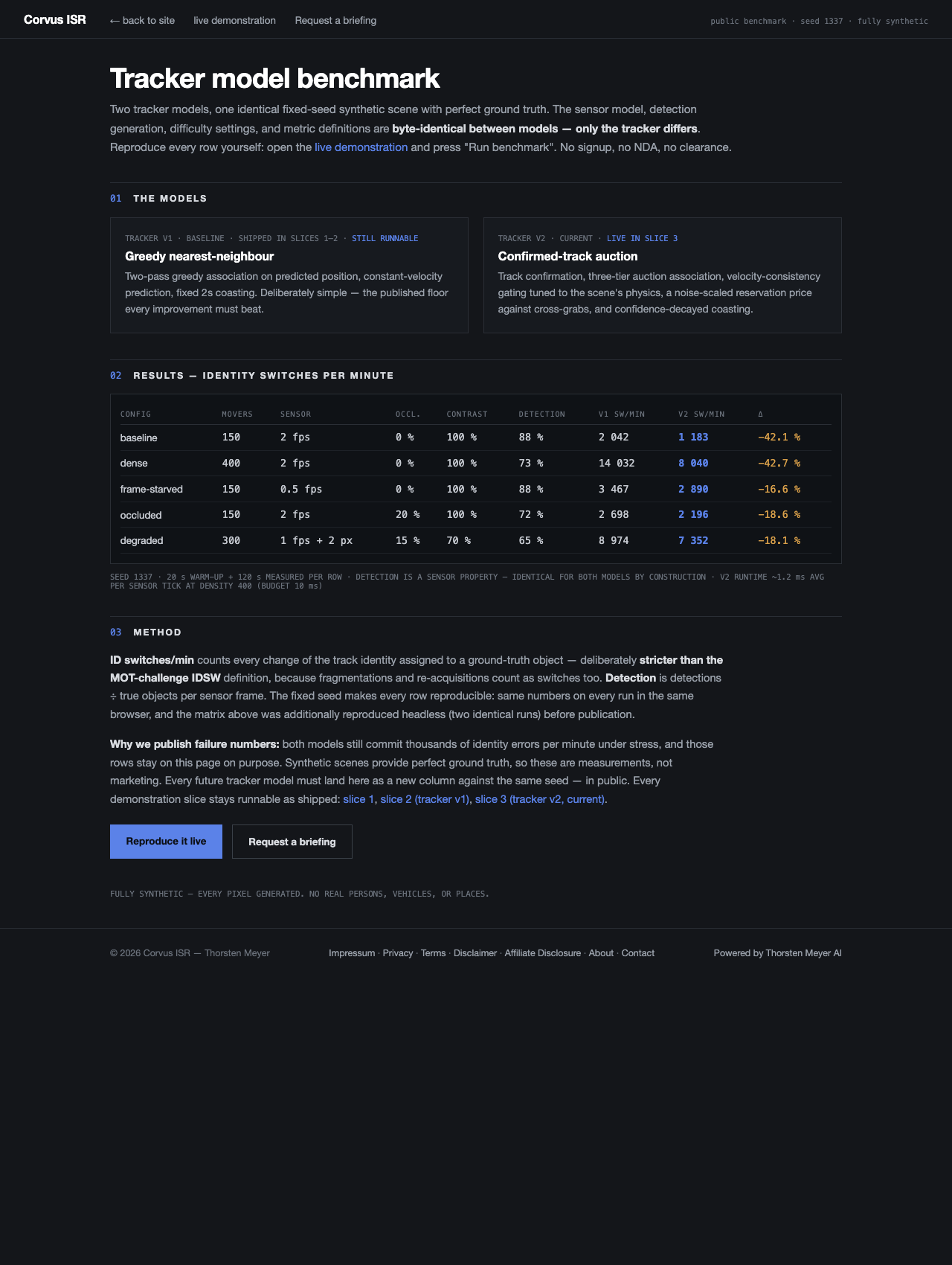
The first model, dubbed v1, relies on a straightforward approach: a two-pass greedy association with constant-velocity prediction and fixed 2-second coasting. This simple baseline was designed to set a clear floor for performance, remaining operational in the archived demo slices 1-2. In contrast, the more recent v2 employs a complex, auction-based tracker featuring a three-tier auction association, velocity-consistency gating, and noise-scaled reservation pricing. These enhancements aim to reduce identity errors and improve robustness.
Results are striking: under typical conditions with 150 moving objects at 2 frames per second, the v2 model reduces identity switches by 42.1%, dropping from 2,042 to 1,183 switches per minute. When the scene becomes more crowded with 400 objects, the reduction remains significant—42.7%, from 14,032 to 8,040 switches. Even under stressed conditions like frame starvation at 0.5 fps, occlusion at 20%, or degraded video quality, the newer model consistently outperforms the baseline, cutting errors by roughly 18% across the board.
Understanding the importance of these metrics is crucial: the benchmark counts every change in track identity, including fragmentations and re-acquisitions, making it a much stricter measure than standard MOT challenges. These published numbers highlight that even the most advanced synthetic trackers still generate thousands of errors per minute—an honest reflection of current limitations, not marketing hype. For vendors, publishing these figures emphasizes transparency and encourages continuous improvement.
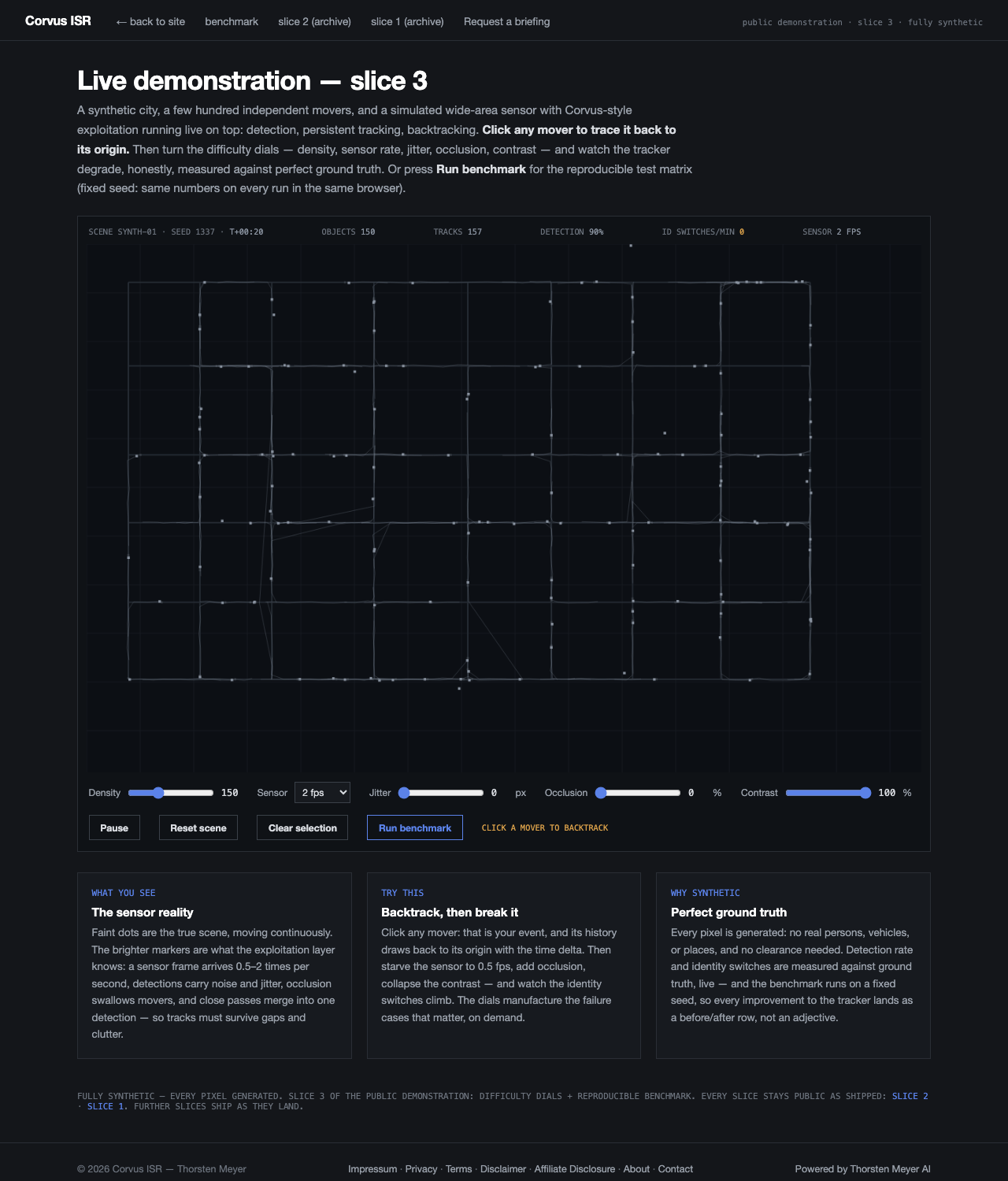
From an engineering standpoint, the v2 tracker can process around 1.2 milliseconds per sensor tick at high density, with the worst case around 5 milliseconds—well within a 10ms real-time window. This means it runs seamlessly in a browser environment, accessible to anyone interested. Simply visit the live demo and click “Run benchmark” to reproduce the results—no signup or NDA required. This openness underscores the product’s synthetic nature, built entirely from generated pixels, ensuring no real-world bias influences the metrics.
wide area motion imagery surveillance system
As an affiliate, we earn on qualifying purchases.
As an affiliate, we earn on qualifying purchases.
As an affiliate, we earn on qualifying purchases.
real-time video analytics hardware
As an affiliate, we earn on qualifying purchases.
As an affiliate, we earn on qualifying purchases.
As an affiliate, we earn on qualifying purchases.
Fall Picks
fall essentials
As an affiliate, we earn on qualifying purchases.