
📊 Full opportunity report: The Critical AI Software Issue In The Su-57 Downing on ThorstenMeyerAI.com — validation score, market gap, and execution plan.

Get the latest gadgets delivered free — and shop member deals
- Fast, free delivery on millions of items
- Access to Prime Big Deal Days deals on October 6–7
- Prime Video, Amazon Music and more included
TL;DR
A Russian Su-57 fighter jet crashed near Moscow on July 23, with Russia attributing it to a technical fault. A Ukrainian intelligence group claims it was caused by cyber manipulation of a Russian air-defense system, though this remains unverified.
On July 23, 2026, a Russian Su-57 fighter jet crashed during a routine training flight near Moscow. Russia’s Ministry of Defence officially attributed the incident to a technical malfunction, but a Ukrainian volunteer intelligence group, InformNapalm, claims the crash was caused by cyber manipulation of the aircraft’s air-defense system. This discrepancy raises questions about the vulnerability of modern AI-powered defense systems and the potential for cyber warfare to influence military outcomes.
The Su-57 crash occurred in the Moscow region, with the pilot ejecting safely. Russia’s Ministry of Defence states the cause was a malfunction, a claim supported by independent Russian military channels that suggested a possible friendly fire incident. However, InformNapalm, a Ukrainian volunteer group, alleges that the crash resulted from a cyber operation targeting a specific Russian air-defense unit, BARS Moscow.
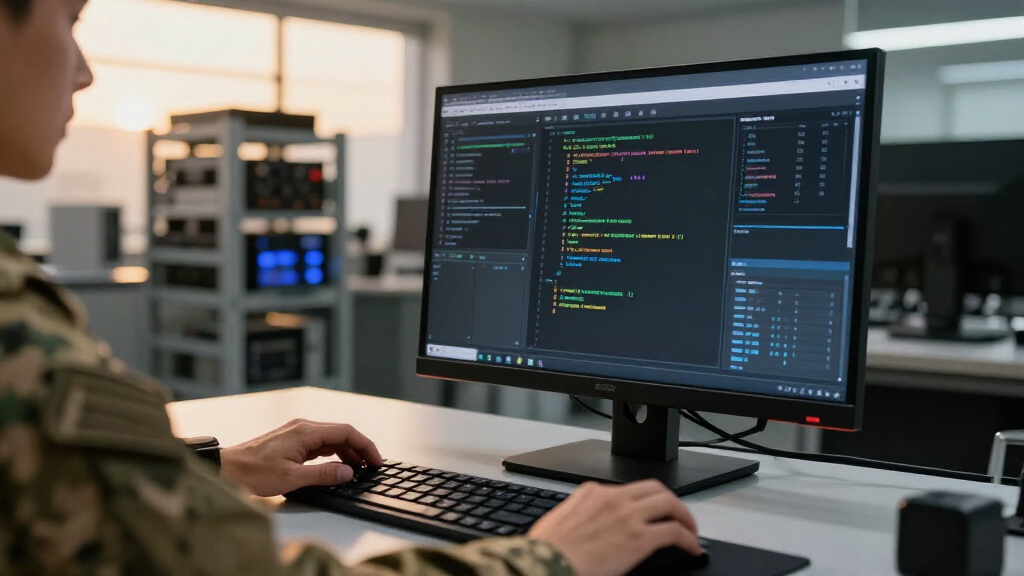
According to the group, they had intercepted and analyzed live training footage of the unit and identified vulnerabilities in its software and hardware. They claim their cyber and human intelligence operations enabled them to manipulate the unit’s systems, causing it to engage and shoot down the aircraft. The group emphasizes that the targeted system is a software-defined, volunteer air-defense unit equipped with machine vision and automated target recognition, making it susceptible to software-based attacks.
Russia has not independently verified these claims, and the official explanation remains a malfunction. The incident is now a focal point for discussions about the security of AI-driven military systems and the risks posed by cyber warfare in modern conflicts.
The Su-57 Russia may have shot down itself — and why the software is the story
A fifth-gen fighter Putin called “the best in the world” crashed near Moscow on 23 July. A Ukrainian collective says it spent weeks mapping an air-defence unit’s footage, software and blind spots — then turned it against its own jet. Unproven, single-sourced, Russia-contested. The analysis doesn’t need it to be true.
Su-57 crashed 23 July, Moscow region, pilot ejected. Russian MoD: “technical malfunction.” And — the key corroboration — Russian pro-military Telegram floated “friendly fire” before Ukraine published. An admission-against-interest in Russian space.
A combined HUMINT + CYBINT op. By 17 July, intercepted live training-ground video of “BARS Moscow” crews. A report systematizing the unit’s training, software/hardware, algorithms & vulnerabilities, passed to Ukrainian forces.
The causal link between the recon and the crash. Whether “manipulation” = intrusion, spoofed track, corrupted ID, or human error under engineered conditions. They showed the reconnaissance, and asserted the result.
- Can’t inspect the decision logic
- Can’t retrain on your own captured imagery — or your own aircraft’s signatures
- Can’t audit a friendly-fire incident — the weights aren’t yours
- Can’t air-gap from an update pipeline that is itself an attack surface
- Inspect what the classifier learned
- Retrain on your signatures — teach it what “friend” looks like in your fleet
- Red-team it against poisoning & evasion — you can see inside
- Run it fully air-gapped; audit the weights, not a support ticket
Whether or not Ukraine reached into BARS Moscow, the frontier moved — from the airframe to the algorithm, from “can you hit the target” to “can you corrupt the decision about what the target is.” Detection is solved. Identification is the new battlespace — and it runs on software that can be fooled, poisoned, or turned. The most valuable target in modern air defence is no longer the radar or the missile. It’s the seam where sensor data becomes a human decision — defended worst precisely where it’s automated most. And you cannot defend, audit, or harden a decision layer you cannot open. In a war fought at the identification layer, the side that can open its own black box holds terrain the side renting a sealed one cannot buy back.
in cooperation with VIGILSAR.COM
Potential Shift in Warfare with AI Vulnerabilities
This incident underscores the growing importance of software integrity in modern military systems, especially those relying on AI and machine vision. If cyber manipulation can cause a high-value aircraft to be shot down, it suggests a new frontier in warfare where cyber attacks can directly influence physical outcomes on the battlefield. The case highlights the need for robust cybersecurity measures in defense systems that are increasingly software-dependent, and raises concerns about the security of volunteer and improvised defense units.
For military strategists and policymakers, the incident signals a potential shift towards cyber-physical warfare, where the line between cyber operations and kinetic strikes blurs. It also raises questions about how to protect complex AI systems from manipulation and whether adversaries might exploit these vulnerabilities in future conflicts.
As an affiliate, we earn on qualifying purchases.
Rise of AI-Driven and Volunteer Defense Units
The crash of the Su-57 comes amid broader developments in military technology, notably the deployment of software-defined, AI-enabled air-defense units like BARS Moscow. These units, often operated by volunteers or rapid deployment teams, utilize machine vision and automated decision-making to intercept threats such as drones and strike aircraft. Their flexible, networked design allows for rapid deployment but also introduces new attack surfaces.
Prior to this incident, Russia had been expanding its use of AI and cyber-enabled defense systems in response to evolving drone threats from Ukraine. Conversely, Ukraine has been developing cyber capabilities aimed at disrupting Russian military systems, including efforts to compromise or manipulate enemy AI. The incident marks a potential turning point in how these systems are understood and targeted in modern warfare.
While Russia maintains that the crash was due to a malfunction, the claim by InformNapalm suggests a new dimension—cyber interference—that has yet to be independently verified or widely acknowledged by official sources.
“The crash was caused by a technical malfunction during a routine training flight.”
— Russian Ministry of Defence
cybersecurity software for military systems
As an affiliate, we earn on qualifying purchases.
As an affiliate, we earn on qualifying purchases.
Unverified Claims and Technical Unknowns
There is no independent verification of the Ukrainian group’s claims. The exact mechanism by which cyber manipulation could have caused the crash remains unconfirmed—whether through spoofing, hacking, or other means. Russia has not acknowledged or provided evidence supporting the cyber attack theory, and the official cause remains a malfunction.
Further investigation is needed to determine whether the crash was indeed caused by cyber interference or if it was a genuine technical fault, and whether the claims by InformNapalm are plausible or exaggerated.
air-defense system security hardware
As an affiliate, we earn on qualifying purchases.
As an affiliate, we earn on qualifying purchases.
Investigations and Cybersecurity Enhancements Expected
Russian authorities are likely to conduct further investigations into the crash, potentially involving cybersecurity experts to evaluate the vulnerability of their AI-enabled defense systems. Ukraine and allied cyber units may increase efforts to test and exploit similar vulnerabilities in Russian systems.
International military and cybersecurity communities will watch closely for official findings and any evidence supporting or refuting the cyber manipulation claims. The incident may prompt revisions in the design and security protocols of AI-driven defense units, emphasizing resilience against cyber attacks.
Future developments could include disclosures of technical details, new defensive measures, or even similar incidents that test the limits of AI and cyber warfare capabilities.
As an affiliate, we earn on qualifying purchases.
Key Questions
Was the Su-57 crash definitively caused by a cyber attack?
There is currently no independent verification; Russia attributes it to a malfunction, while Ukrainian sources claim cyber manipulation. The true cause remains unconfirmed.
What is BARS Moscow and why is it significant?
BARS Moscow is a volunteer air-defense unit equipped with AI and machine vision technology designed to intercept drones and aircraft. Its software-based nature makes it potentially vulnerable to cyber attacks.
Could this incident happen again with other systems?
Yes, if vulnerabilities in AI-driven defense systems are exploited, similar incidents could occur. This highlights the importance of cybersecurity in modern military technology.
What are the implications for future warfare?
This incident suggests that cyber operations could directly influence kinetic military outcomes, prompting a shift towards cyber-physical warfare and increased focus on protecting AI systems from manipulation.
Source: ThorstenMeyerAI.com
Fall Picks
fall essentials
As an affiliate, we earn on qualifying purchases.