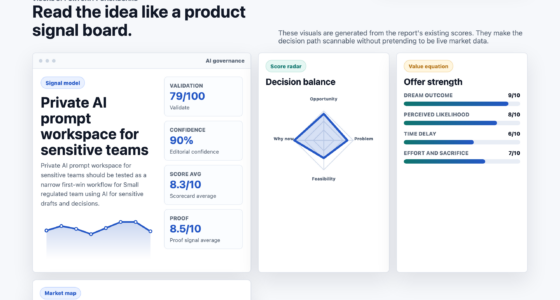
📊 Full opportunity report: Taking Daily Photos Of Your Gums To Prevent Future Gaps on IdeaNavigator AI — validation score, market gap, and execution plan.

Get the latest gadgets delivered free — and shop member deals
- Fast, free delivery on millions of items
- Access to Prime Big Deal Days deals on October 6–7
- Prime Video, Amazon Music and more included
TL;DR
A new approach involves patients taking daily photos of their gum lines to monitor inflammation and plaque buildup. Initial testing suggests this could improve early detection and prevent dental gaps between visits.
Dental researchers are testing a new method where patients take daily photos of their gum lines to monitor early signs of inflammation and plaque buildup, aiming to prevent future gaps. This approach could offer a simple, at-home way to improve preventive dental care and engagement between visits.
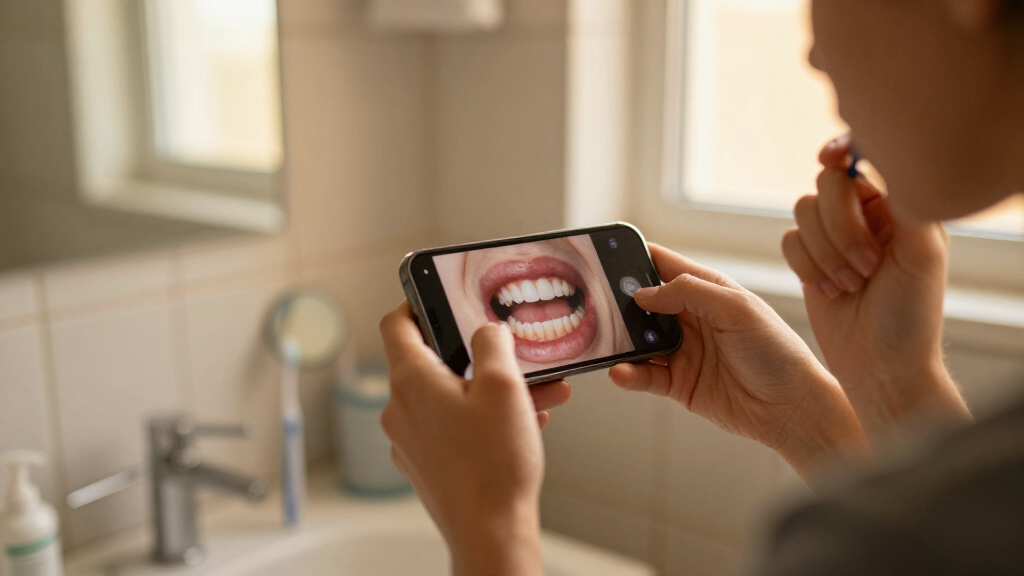
The concept involves patients using their smartphones to capture standardized images of their gum lines daily. These images are then scored automatically against general dental-health benchmarks, highlighting areas of concern such as redness or swelling. The goal is to identify early signs of gum inflammation before they develop into more serious issues that require treatment.
Initial testing involves a small group of 20 patients under the supervision of a single dental hygienist. Over a three-week period, patients will submit daily photos, which will be reviewed to determine if flagged cases of inflammation correlate with actual clinical findings during their next scheduled visit. The system aims to provide a trend score, helping both patients and hygienists detect worsening conditions early.
This method leverages existing technology—smartphone cameras and on-device scoring algorithms—making it feasible for at-home use. The subscription model would be sold through dental practices as an add-on to regular checkups, encouraging ongoing engagement and proactive oral health management.
Potential Impact on Preventive Dental Care
If successful, this approach could transform how dental health is monitored between visits, shifting focus from reactive treatment to proactive prevention. Early detection of inflammation may reduce the incidence of dental gaps, periodontal disease, and related complications, ultimately lowering long-term treatment costs and improving patient outcomes.
Moreover, integrating daily self-monitoring into routine dental care could increase patient engagement, adherence to oral hygiene practices, and foster a more collaborative approach between patients and dental professionals. This innovation aligns with broader trends in consumer health monitoring and digital health tools.
As an affiliate, we earn on qualifying purchases.
Advances in At-Home Oral Health Monitoring
The idea of at-home dental monitoring has gained traction with the proliferation of smartphone cameras and AI-powered image analysis. Previous efforts have focused on detecting cavities or whitening progress, but monitoring gum health remains less developed.
This initiative builds on recent developments where hygienists and clinics seek scalable, engaging methods to keep patients involved in their oral health between visits. The concept of daily photo scoring is a novel application aimed at early detection of gum inflammation, which is often invisible or unnoticed by patients but can lead to gaps or periodontal disease if untreated.
While still in testing, this approach reflects a broader shift towards consumer-oriented health tech solutions that empower individuals to take more control over their health data and outcomes.
“Daily gum-line photo scoring could serve as a simple, effective tool for early detection of inflammation, helping prevent gaps and other issues.”
— an anonymous researcher
at-home gum inflammation detection kit
As an affiliate, we earn on qualifying purchases.
As an affiliate, we earn on qualifying purchases.
Uncertainties in Effectiveness and Adoption
It is not yet confirmed whether the daily photo scoring system will reliably detect early inflammation in diverse patient populations. The initial sample size is small, and clinical validation is ongoing. Long-term adherence and engagement by patients remain uncertain, as well as the system’s ability to accurately flag issues without false positives.
Further studies are needed to assess whether this approach can be scaled effectively within routine dental practice and how it compares to existing preventive measures.
As an affiliate, we earn on qualifying purchases.
Next Steps in Validation and Implementation
The current pilot study will conclude after three weeks, with results analyzed to determine the correlation between flagged images and clinical findings. If promising, larger-scale trials involving more patients and multiple hygienists will follow to validate the system’s accuracy and usability.
Dental practices interested in adopting this technology will await further evidence before integrating it into standard preventive care routines. Researchers also plan to refine the scoring algorithms and explore integration with existing dental health apps.
As an affiliate, we earn on qualifying purchases.
Key Questions
How does the daily gum photo scoring system work?
Patients take standardized photos of their gum lines daily with their smartphones. An AI-powered system scores these images against dental health benchmarks, flagging signs of inflammation or plaque buildup for review during dental visits.
Can this method replace regular dental checkups?
No, it is intended as a supplementary tool to enhance early detection and prevention, not a replacement for professional dental examinations.
What are the benefits of daily gum monitoring?
Early detection of inflammation, improved patient engagement, and potentially fewer gaps or periodontal issues over time.
Is this technology available for consumers now?
Currently, it is in the testing phase within dental practices. Broader availability depends on further validation and development.
What challenges might affect adoption?
Ensuring accuracy across diverse patients, maintaining long-term user engagement, and integrating with existing dental workflows are key challenges.
Source: IdeaNavigator AI
Fall Picks
fall essentials
As an affiliate, we earn on qualifying purchases.