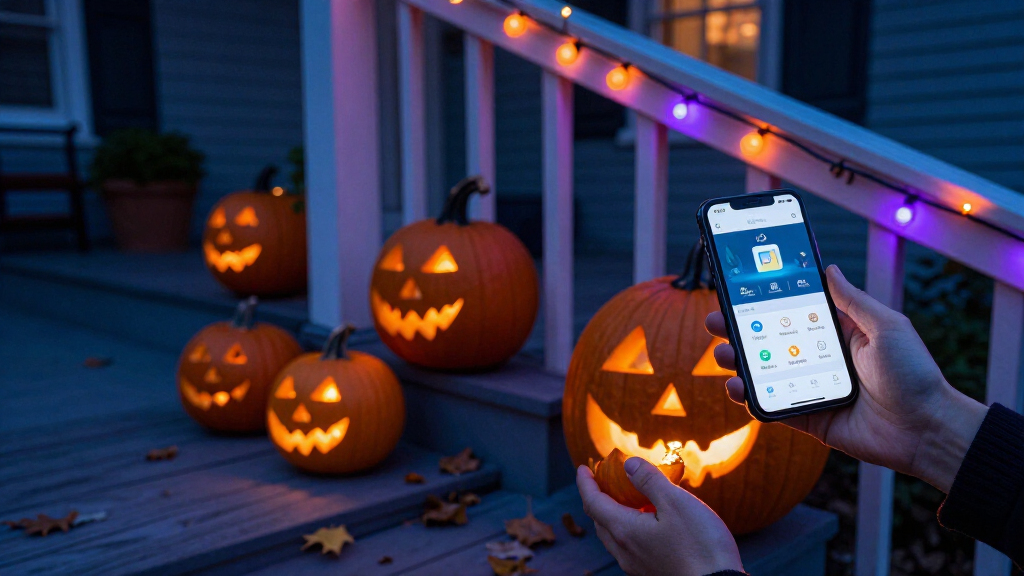

🔍 Read the full analysis: AI Inspiration For A Spooky Halloween Home on ThorstenMeyerAI.com

Get the latest gadgets delivered free — and shop member deals
- Fast, free delivery on millions of items
- Access to Prime Big Deal Days deals on October 6–7
- Prime Video, Amazon Music and more included
TL;DR
A guide from ThorstenMeyerAI.com breaks down AI-powered Halloween decorations, warning that many products labeled ‘AI’ are ordinary motion-triggered automation. It recommends verifying what a product actually does, favoring one well-timed effect over complex setups, and checking whether features run locally or depend on cloud services.
A new guide from ThorstenMeyerAI.com walks homeowners through the growing market of AI-powered Halloween decorations, warning that some products marketed as artificial intelligence rely on nothing more than a motion sensor and prerecorded audio. The guide argues that a single well-timed light and sound cue often feels more convincing than a complicated connected display, and it urges buyers to verify what a product actually does — and where its data goes — before purchasing.
The central distinction drawn in the original guide is between ordinary automation and genuine AI capability. A motion sensor that triggers a prerecorded shriek can still deliver an effective scare, the guide notes, but on its own it is conventional automation. A true AI feature, by contrast, may interpret input or generate different content after the first trigger — recognizing speech, adapting a character’s reply, or creating custom visuals and audio.
The guide breaks the ‘AI’ label into what it calls a toolbox of separate capabilities: generative AI can create a haunted portrait or draft a witch’s dialogue; voice recognition can respond to spoken phrases; and computer vision can analyze camera images. Each layer carries different costs, the guide states — generated content needs review, speech recognition can fail in noisy environments, and image analysis may raise privacy concerns.
Marketing language does not always spell out which features a device uses, and product details can change, the Halloween decor guide cautions. It recommends checking current availability, capabilities, pricing, and privacy settings before buying, and specifically looking at whether a feature works locally or sends data to an online service, since that affects both reliability and what information leaves the home.
A motion-triggered recording is automation; AI usually means a system generates or interprets content.
Use generated art, voices, or dialogue to personalize a scene, then review the results and usage terms.
Plan one clear visitor moment before choosing sensors, lights, speakers, or controllers.
Test offline behavior, sensor timing, audio, cable placement, and outdoor protection before Halloween night.
Tell visitors when a display processes faces or voices, limit collection, and provide a way to pass without interacting.
Why the AI Label Matters for Shoppers
The guide addresses a practical consumer problem: buyers paying a premium for ‘smart’ features that may amount to a recording on a loop. Knowing the difference tells shoppers what a product can do after the first trigger — repeat identically, or vary its response — and whether the extra complexity is worth the price.
It also matters for reliability. The guide describes a scenario where a smart bulb that shifts color as guests approach the door stalls because the Wi-Fi connection drops. Its core tradeoff: coordination across connected devices can make a scene feel deliberate, but each online dependency can weaken timing — and on a crowded Halloween evening, a simple local trigger can prove more dependable than a cloud feature.
Top picks for "inspiration spooky halloween"
As an affiliate, we earn on qualifying purchases.
The Guide’s Four-Step Display Plan
The guide recommends planning around a short visitor experience and adding tools only as needed. A modest display can be built with a smart light, speaker, and trigger; more elaborate builds may require hobby electronics, coding, and extra troubleshooting.
Its four steps: first, pick one moment — such as a silent scarecrow turning its head and whispering at the gate — because a single clear cue lets visitors register the reveal while several simultaneous cues compete for attention. Second, create the content using image or audio tools, then edit it; the guide notes generated voices and visuals can need cleanup, and their licenses may limit commercial use or sharing. Third, choose the trigger and output, from a simple motion detector to a microphone paired with speech tools. Fourth, test the scene from the visitor’s point of view.
The guide categorizes four approaches: motion-triggered props for simple jump scares, generated media for themed backdrops or characters, responsive characters for short porch conversations, and connected effects for coordinated timed scenes across a room.
“A motion sensor that triggers a prerecorded shriek can still make an excellent scare, but by itself it is ordinary automation.”
— ThorstenMeyerAI.com guide
What Buyers Still Need to Verify
The guide itself notes that marketing language does not always spell out which features a device uses, and that product details can change. It is not yet clear, on a product-by-product basis, which decorations marketed as AI actually run local models versus cloud services, or what data — audio, video, or voice — specific devices transmit.
The guide also leaves open how individual products handle privacy settings and offline reliability, directing readers to check current availability, capabilities, pricing, and privacy settings themselves before buying.
Before Halloween Night
Shoppers following the guide’s advice should, before the holiday, verify that any AI-labeled product’s features match its marketing, confirm whether effects run locally or online, and test their scene from a visitor’s perspective. The guide recommends preparing a simple fallback — a local recording or basic light cue — so the display survives connectivity failures during the busiest trick-or-treating hours. Reviewing generated content for tone, licensing, and audience appropriateness remains a final step before the display goes live.
Key Questions
Is a motion-activated Halloween prop considered AI?
No, according to the guide. A motion sensor that plays a prerecorded sound is ordinary automation. Genuine AI features interpret input or create different content after the first trigger, such as responding to a visitor’s spoken question.
What can generative AI actually add to Halloween decor?
The guide says generative AI can create custom visuals, dialogue, or audio — a haunted portrait with a cracked, candlelit look, or a character’s lines — which the user then edits and reviews for tone and licensing limits.
Why does it matter whether decor runs locally or online?
Local playback is usually faster and more dependable but offers less variation, while online tools can adapt and generate more but depend on connectivity and may transmit data from the home. A Wi-Fi drop can stall a timed effect at the worst moment.
Are more effects always better for a Halloween display?
No. The guide states that one striking moment often lands better than many competing sounds and lights, since visitors need time to notice and understand each cue. More effects also add delays, conflicting triggers, and troubleshooting.
What safety and privacy issues come with AI decor?
Features like speech recognition and computer vision can raise privacy concerns, especially if audio or camera data is sent to an online service. The guide recommends checking a product’s privacy settings and what information leaves the home before buying.
Source: ThorstenMeyerAI.com
Fall Picks
fall essentials
As an affiliate, we earn on qualifying purchases.


![Surveillance is not safety: A statement on the UK's latest threat to privacy [pdf]](https://theideamagazine.com/wp-content/uploads/2026/06/surveillance-is-not-safety-a-statement-on-the-uk-s-latest-threat-to-privacy-pdf-featured-560x300.jpg)