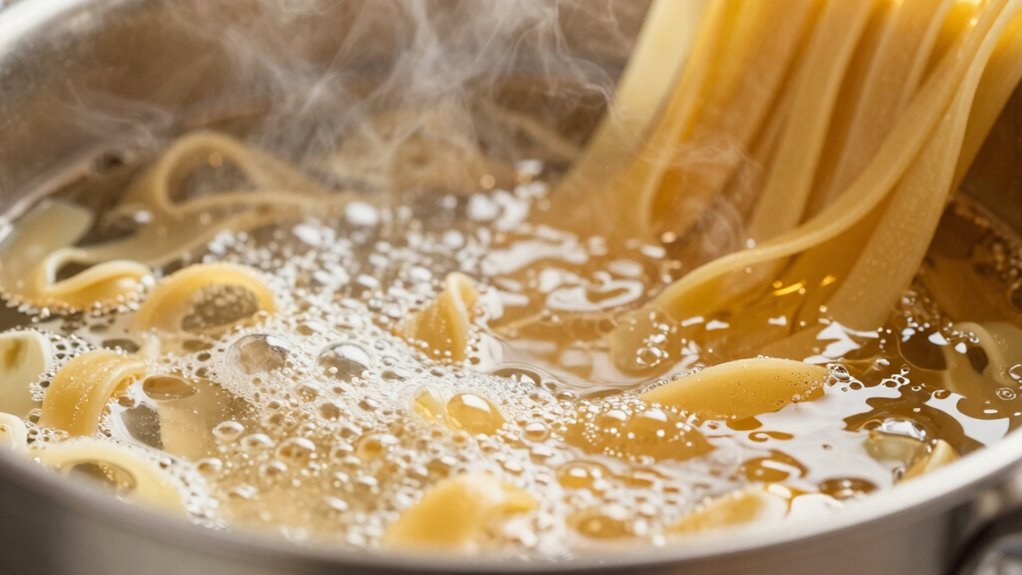

Pasta water is more valuable than you might think because it’s rich in starch and salt, which enhance your sauce’s flavor, help ingredients stick together, and give dishes a glossy, professional look. Instead of pouring it down the drain, save some to improve texture and taste. Mastering how to use pasta water can elevate your cooking quickly — keep exploring to learn all the tips and tricks.

Get the latest gadgets delivered free with Prime
- Fast, free delivery on millions of items
- Prime Video, Amazon Music and more included
- Member-only deals all year
Key Takeaways
- Pasta water is rich in starches that help thicken sauces and improve their adhesion to noodles.
- Saving pasta water enhances flavor by integrating salt and starch, creating a more cohesive dish.
- Incorporating pasta water can elevate the texture, making sauces silky and professional-looking.
- Using pasta water reduces waste and promotes sustainable cooking practices.
- Gradually adding pasta water allows better control over sauce consistency and flavor balance.
stainless steel pasta water scoop
As an affiliate, we earn on qualifying purchases.
As an affiliate, we earn on qualifying purchases.
What Makes Pasta Water Starchy and Salty?
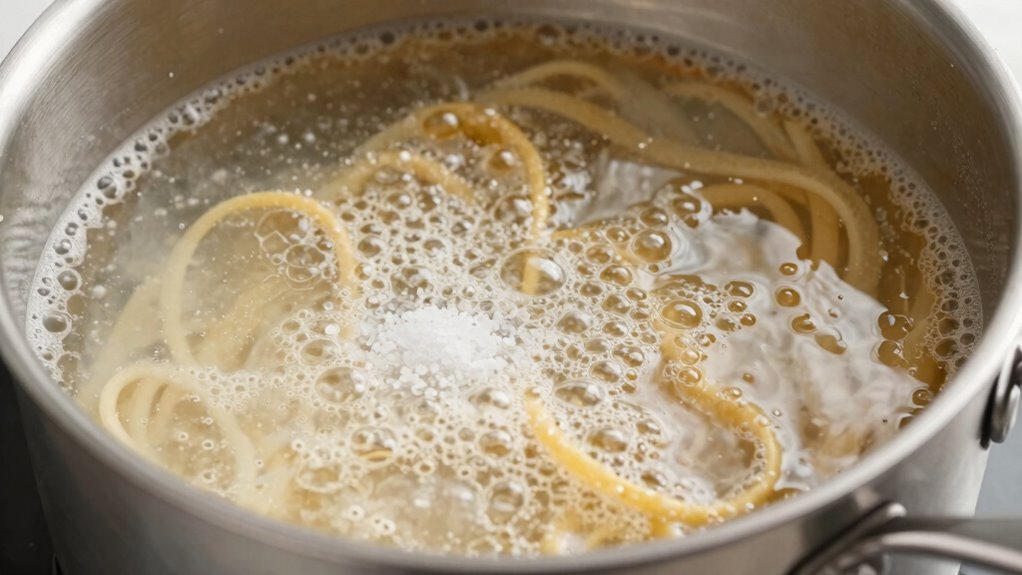
When you cook pasta, the starches from the noodles leach out into the water, making it cloudy and thick. This increases the starch concentration, giving the water its characteristic velvety texture. As the pasta heats, it also absorbs salt from the boiling water, which enhances its flavor. The amount of starch released depends on factors like cooking time and pasta type, influencing how starchy the water becomes. Meanwhile, salt absorption occurs as the noodles soak up the seasoned water, intensifying their taste. This process is vital for achieving well-seasoned pasta and creating a flavorful base for your sauce. The combination of starch and salt absorption transforms plain cooking water into a valuable ingredient that can elevate your dish. Starch release from pasta is a key factor in creating emulsified sauces that cling better to the noodles. Understanding how salinity impacts pasta flavor can help you tailor your seasoning for perfect results. Additionally, the pasta shape can influence how much starch is released and how well the sauce adheres. Exploring different pasta types can also reveal variations in starch release and flavor absorption.
As an affiliate, we earn on qualifying purchases.
How to Save and Use Pasta Water for Better Dishes
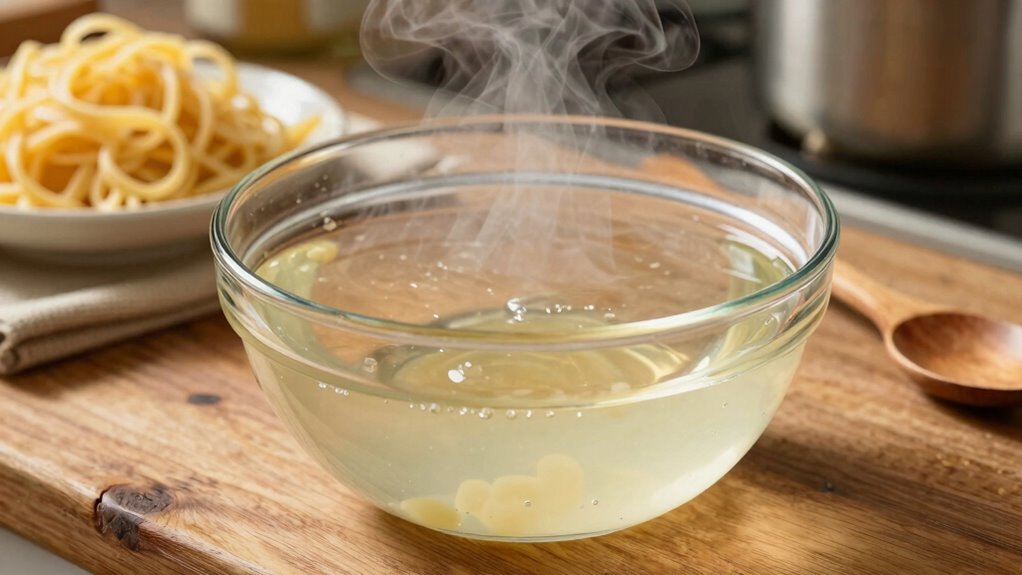
Saving pasta water is a simple yet powerful way to enhance your dishes. It’s a clever cooking shortcut that boosts flavor without extra effort. To save it, scoop out a cup before draining the pasta, and keep it nearby. Use a ladle or a small cup to do this quickly. Once saved, you can add it directly to your sauces or soups. The starchy water thickens and enriches the dish, providing better texture and depth. It also helps your sauce adhere more smoothly to your pasta. Pasta water is a versatile ingredient that can be used in various recipes to improve consistency and flavor. Understanding the starch content in pasta water helps you better utilize it for cooking. Don’t discard this valuable resource—think of it as a secret weapon for flavor enhancement. Incorporating pasta water into your cooking is an easy way to improve even simple recipes with minimal extra steps. Properly storing and recycling kitchen gear can also reduce waste and eco-friendly disposal of used cookware. Recognizing the importance of starches in your cooking process allows for more precise control over texture and taste.
As an affiliate, we earn on qualifying purchases.
Common Mistakes That Waste Pasta Water: And How to Avoid Them

Many cooks waste pasta water by pouring it down the drain too quickly or using it improperly, missing out on its flavor-boosting potential. One common mistake is discarding the starchy water before it can work its magic, losing its ability to help sauces cling better. Another error is using salty water that hasn’t been drained properly, which can make your dish overly salty or disrupt the balance of flavors. Rushing the process or pouring the water straight into the sink prevents you from harnessing its thick, flavorful qualities. Instead, save some of that starchy, salty water and add it gradually to your sauce. This simple step enhances creaminess, improves sauce adhesion, and creates a more cohesive dish overall. Regular use of glycolic acid products can help improve skin texture, much like how carefully saving pasta water can enhance the texture of your dish. Additionally, understanding the science of starches can help you better appreciate how pasta water contributes to sauce adhesion and overall dish quality. Incorporating techniques to optimize water conservation can further elevate your cooking by reducing waste and promoting sustainability in your kitchen. For example, learning about starch release during boiling can help you better control the water’s thickening properties.
As an affiliate, we earn on qualifying purchases.
Tips for Incorporating Pasta Water Into Your Cooking Routine

Incorporating pasta water into your cooking routine can elevate your dishes with minimal effort. To do this effectively, save a cup of pasta water before draining your pasta. Add a splash to your sauce as it simmers; the starchy water helps with sauce thickening, creating a smoother, more cohesive texture. Use it gradually, tasting as you go, to avoid diluting flavors. Incorporate pasta water when tossing pasta with sauce to enhance flavor and help the sauce cling better. Remember, a little goes a long way—start with a few tablespoons and adjust. This simple step boosts the overall richness and consistency of your dish, making every bite more satisfying. Mastering this tip guarantees your pasta dishes are always well-integrated and flavorful, especially when considering safety and proper technique to prevent over-dilution. Additionally, understanding the role of starches in pasta water can help you better control the texture of your sauces. Knowing how to harness the starch content allows you to create more luscious and stable sauces that won’t break or separate, and being mindful of stirring techniques during sauce preparation ensures even distribution and prevents sticking or burning.
Why Pasta Water Is a Kitchen Secret for Perfect Pasta
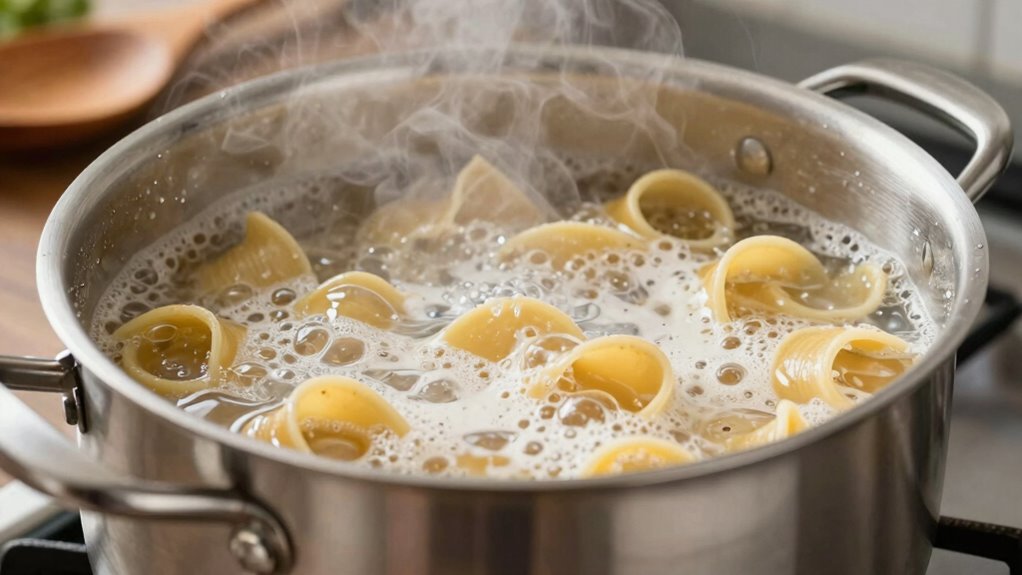
Pasta water is a secret weapon in the kitchen because it contains natural starch that can transform a simple sauce into a silky, cohesive coating for your pasta. Using this water in your cooking techniques helps bind ingredients together, creating a richer, more flavorful dish. It’s especially useful when working with ingredient variations, like tomato-based or cream sauces, as it helps them cling better to the pasta. By adding small amounts of pasta water during cooking, you enhance the sauce’s texture and consistency without extra fat or thickening agents. This simple step open(s) a new level of finesse in your pasta dishes, making them look and taste professionally prepared. Mastering the use of pasta water guarantees your pasta is never dry or overly thick, elevating your culinary skills effortlessly. Incorporating kitchen appliances and tools can also help you control water temperature and consistency more precisely, further improving your pasta-making process. Understanding the starch content in pasta water can also help you better adjust your recipes for optimal results. Additionally, knowing how to measure and utilize pasta water quantity effectively allows you to perfect your dish consistency every time. Recognizing the role of starch release in pasta cooking can help you optimize your technique for better sauce adhesion and flavor.
Frequently Asked Questions
Can Pasta Water Be Reused for Multiple Dishes?
Yes, you can reuse pasta water for multiple dishes, but pay attention to the starch concentration and water temperature. As you reuse it, the water becomes more starchy, which can thicken sauces or add flavor. Keep the water hot enough to preserve its usefulness, but avoid letting it cool too much, as this reduces its starch effectiveness. Reusing pasta water can save time and add richness to your meals.
How Does the Temperature of Pasta Water Affect Its Usefulness?
Ironically, the temperature of your pasta water can make or break its usefulness. When it reaches boiling point, the heat transfer is at its peak, making the water ideal for creating sauces or adjusting consistency. Cooler water loses its ability to transfer heat effectively, so it’s less helpful for cooking or thickening. Keep it hot, and your pasta water becomes a powerful tool rather than just discarded liquid.
Is It Necessary to Add Salt to Pasta Water?
You should definitely add salt to your pasta water. This salting technique not only prevents sticking but also enhances the pasta’s flavor. Without salt, your pasta can taste bland, so a generous amount of salted water guarantees each bite is flavorful. Remember, the saltiness of the water helps season the pasta internally, making your dish more delicious without needing extra seasoning later.
Can Pasta Water Replace Broth or Stock in Recipes?
You can use pasta water as a broth substitute, especially for flavor enhancement. Its starchy content acts as a natural thickening agent, helping sauces cling better to your pasta. While it doesn’t fully replace broth or stock in recipes requiring deep savory notes, adding pasta water can boost sauce consistency and flavor, making it a handy, cost-effective alternative for certain dishes. Just remember, it’s best for lighter, pasta-based recipes.
How Much Pasta Water Should I Save for Optimal Use?
Save about ½ to 1 cup of starchy water from your pasta. This small amount is enough to enhance your dish’s flavor and consistency. Studies show that pasta water contains natural starches that act as a seasoning enhancer, helping sauces cling better. Use it gradually, adding a few tablespoons at a time, until your sauce reaches the desired richness. This simple step elevates your pasta’s overall taste and texture.
Conclusion
Remember, the secret to perfect pasta dishes often lies in the water you pour away. By saving and using that starchy, salty water, you elevate your sauces and flavors effortlessly. Don’t let common mistakes drain your potential—practice makes perfect. As the saying goes, “A little knowledge goes a long way,” so embrace the art of pasta water and watch your cooking reach new heights. Your dishes will thank you for it.
Halloween Picks
halloween
As an affiliate, we earn on qualifying purchases.