📊 Full opportunity report: Cofounder Matching Made More Personal Through Work Style on IdeaNavigator AI — validation score, market gap, and execution plan.

Get the latest gadgets delivered free with Prime
- Fast, free delivery on millions of items
- Prime Video, Amazon Music and more included
- Member-only deals all year
TL;DR

An IdeaNavigator AI startup concept proposes a work-style matching service for founders seeking cofounders. Its suggested product would assess decision-making, conflict, risk and work pace, then offer compatibility maps and trial projects; whether those measures predict lasting partnerships remains untested.
IdeaNavigator AI has proposed a cofounder-matching service that would pair founders by work style, including how they make decisions, handle conflict, approach risk and set their pace. The concept is aimed at founders searching for a cofounder, but its central premise—that these traits can help predict whether a partnership lasts—has not yet been validated. The proposal, published on IdeaNavigator AI’s website, describes a product concept rather than an available service.
In its published concept, IdeaNavigator AI suggests a work-style assessment to add to profile-based matching. Rather than presenting a match as simply a fit by skills or startup interests, the proposed service would provide a compatibility map showing areas of alignment and predicted points of friction. It would also offer structured trial-project templates, giving prospective partners a way to work together before making a longer-term commitment.
IdeaNavigator AI proposes two possible revenue streams: a premium matching subscription for founders looking for partners, and paid compatibility reports for people who are already working together. The concept is placed in the founder-services and startup-formation market. The proposal provides no price, launch date, operating product, customer numbers or commercial results.
The validation plan outlined by IdeaNavigator AI would offer compatibility reports to 200 existing early-stage founder pairs and compare their assessment scores with whether their partnerships are still intact after 12 months. That is a proposed research plan, not a completed study: the source reports no participant recruitment, methodology, results or survival rates. The plan also does not establish that a particular score would cause a partnership to succeed or fail.
Founder services · Product concept
Cofounder Matching Made More Personal Through Work Style
IdeaNavigator AI proposes adding decision-making, conflict, risk and pace to founder matching. Compatibility maps and trial projects could help partners explore how they work together—but whether these measures predict lasting partnerships remains untested.
What the concept would assess
The proposed work-style profile would sit alongside skills and startup interests, surfacing topics partners may want to discuss before committing.
How choices get made
Compare decision speed, process and comfort with uncertainty.
How disagreement is handled
Highlight possible differences in communication and resolving tension.
How much risk feels right
Explore appetite for financial, product and strategic bets.
How work moves forward
Compare expectations around urgency, hours and follow-through.
From profile to working trial
The product idea pairs a compatibility summary with a chance to observe collaboration on a defined task.
Build profiles
Founders describe skills, interests and work-style preferences.
Map compatibility
A report would show areas of alignment and predicted friction.
Run a trial project
Templates would give prospective partners a structured task to do together.
Discuss the evidence
Use the report and real collaboration to guide a direct conversation.
A different layer of founder search
The proposal extends profile matching with questions about how people work together. It does not replace experience, conversation or judgment.
Profile matching
- +Skills and complementary expertise
- +Startup interests and ideas
- +Structured ways to find potential partners
Proposed work-style layer
- +Decision-making, conflict, risk and pace
- +Compatibility maps with possible friction points
- +Trial projects to observe communication and follow-through
A proposed test, not a result
IdeaNavigator AI describes a way to examine whether scores are associated with partnership survival. The source reports no recruitment, method or findings.
Offer compatibility reports to existing early-stage pairs, then compare assessment scores with whether partnerships remain intact after 12 months.
What remains unknown
The commercial case and the matching premise both depend on questions the concept has yet to answer.
Key questions
A quick read on what the proposal says—and what it does not establish.
What is the proposed product?
A cofounder-matching service that would add work-style assessment to founder profiles, with compatibility maps and trial-project templates.
Can founders use it now?
The proposal does not confirm a launch, operating product, launch date or pricing. It describes a concept and possible business model.
Does work style predict cofounder success?
No results are reported. Whether the measures predict lasting partnerships remains open.
What would the test show?
If completed, the proposed study could examine association over one year. It would not by itself show that the service causes better outcomes.
Testing Compatibility Beyond Skills
The concept targets a practical gap in how founders find business partners: matching on skills and startup interests may not capture how people work together. Differences over decision speed, disagreements, appetite for risk or expected hours could become sources of friction even when two people have complementary expertise and share an idea. IdeaNavigator AI’s proposal argues that a tool identifying those differences early could give founders specific topics to discuss before they divide responsibilities or make financial commitments.
For prospective founders, the proposed trial project may be as important as the assessment. Working together on a defined task could provide evidence about communication and follow-through that a questionnaire cannot. A compatibility report could help structure that conversation, but it should not be treated as a guarantee of success or as a substitute for direct discussion and experience.
The commercial case depends on whether founders find this added information useful enough to pay for. IdeaNavigator AI names subscriptions and paid reports as potential revenue, but provides no evidence of demand, willingness to pay or improved partnership outcomes. Until those questions are tested, the proposal is an early product hypothesis rather than a demonstrated solution.
Products Worth Considering
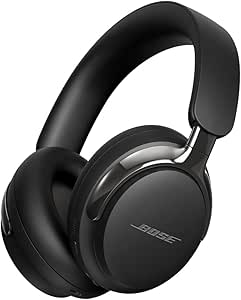
Bose QuietComfort Ultra Headphones (2nd Gen), Wireless Bluetooth Noise-Cancelling Over-Ear Headphones, Black

Logitech MX Brio Ultra HD 4K Webcam, Graphite

Logitech MX Keys S Wireless Keyboard, Graphite
As an affiliate, we earn on qualifying purchases.
A Different Layer of Founder Search
Existing cofounder search can use profiles to identify people by skills and interest in an idea. IdeaNavigator AI’s proposal is to place a work-style layer on top of that process, rather than replace profile matching. The concept identifies decision-making, conflict handling, risk appetite and pace as the dimensions to assess, and frames the opportunity around founders actively seeking a partner.
IdeaNavigator AI’s proposal says that Y Combinator’s matching platform helped normalize structured cofounder search, creating an audience for a differentiated service. That is the rationale the source offers for the timing; it provides no user figures or independent evidence about the platform’s reach. The concept also describes founder breakups as a major startup risk, but gives no data or comparative measure to establish how often those breakups occur or whether work-style conflict is their leading cause.
The proposed study of 200 pairs would begin to address a narrower question: whether assessment results are associated with partnership survival over one year. Even a correlation would not, by itself, show that using the matching service improves outcomes. The assessment would need clear measures, consistent follow-up and a way to account for other factors that influence whether cofounders continue working together.
Evidence Still Needs Testing
IdeaNavigator AI’s proposal reports no assessment results or validation data. It is not clear which questions would make up the assessment, how compatibility would be calculated, how predicted friction would be presented, or whether the measures have been tested for reliability. The proposal does not explain how it would handle changes in working style over time or differences between an early trial and the pressures of running a company.
The proposed 12-month comparison also leaves open how partnership survival would be defined. The source does not say how the 200 pairs would be recruited, whether the sample would represent founders more broadly, or how the project would distinguish a useful signal from coincidence. A partnership ending may reflect changes in a business or personal circumstances, not simply a mismatch in work style.
The proposal gives no confirmed launch, named operating team, pricing, or evidence that the product is being built. It does not establish that work-style collisions are the primary cause of cofounder breakups. Those claims and product details should be treated as questions for validation, not settled findings.
The Proposed 12-Month Test
IdeaNavigator AI’s proposal describes a next step: offer compatibility reports to 200 existing early-stage pairs and follow their partnerships for 12 months. If carried out, that test could show whether assessment scores are associated with partnerships continuing over that period. The source gives no start date, recruitment process or publication timeline, so it is not clear when results might become available.
Before such findings could support broad claims about matching, the assessment would need to be defined and its results reported alongside the study’s limitations. Subsequent testing would also need to establish whether founders who use the tool make better-informed decisions or have stronger outcomes than comparable founders who do not. For now, the proposal sets out a possible product and validation route; whether either proves useful remains open.
Source: IdeaNavigator AI
Key Questions
What is the proposed cofounder-matching product?
IdeaNavigator AI’s proposal describes a service that would add an assessment of decision-making, conflict, risk and work pace to founder profiles. Matches could include compatibility maps and trial-project templates.
Is the service available now?
The IdeaNavigator AI proposal does not confirm a launch, operating product or launch date. It describes an MVP concept and possible business model, not an announced service customers can use.
Has work style been shown to predict cofounder success?
No results are reported in the proposal. It suggests studying 200 existing early-stage pairs over 12 months, but provides no evidence that the study has been conducted or that work-style scores predict partnership survival.
How might the product make money?
IdeaNavigator AI proposes a premium matching subscription and paid compatibility reports for existing cofounder pairs. Pricing and customer demand have not been established.
Source: IdeaNavigator AI