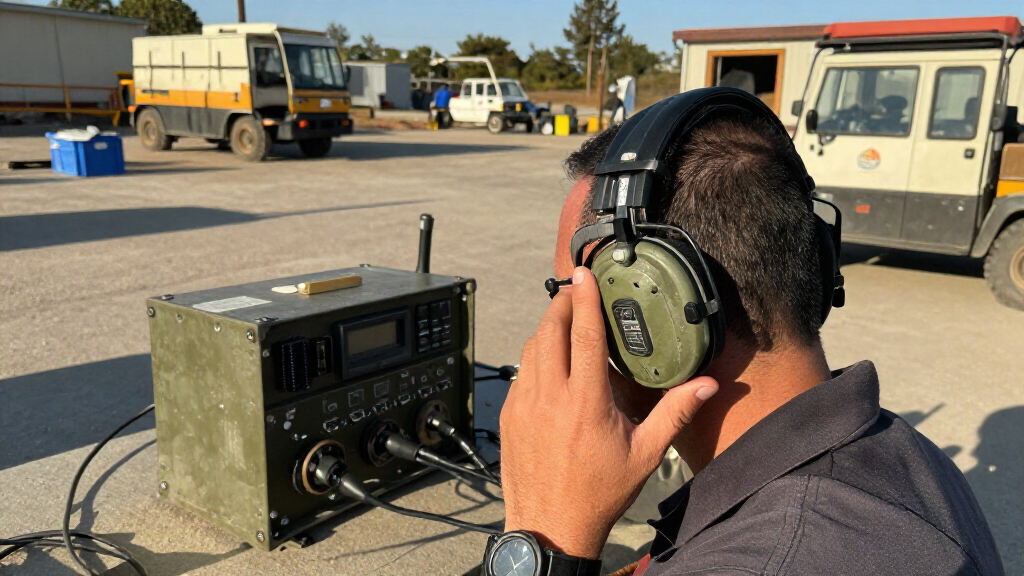

Military grade headphones can mean anything from electronic shooting earmuffs to radio-ready tactical headsets, so the right choice depends on whether you need hearing protection, communications, or both. My best overall pick is the 3M PELTOR ComTac V for buyers prioritizing a purpose-built tactical headset, while the Earmor M32 PLUS stands out for a headset with a microphone and U-174 connection. For a more accessible all-in-one-style kit, the PROHEAR Tactical Electronic Shooting Earmuffs Set pairs hearing protection with walkie-talkie communication. The main tradeoffs are connector compatibility, helmet or headband fit, and how much communication capability you actually need. Read on for a comparison of all eight options and guidance on choosing the right configuration.

Get the latest gadgets delivered free with Prime
- Fast, free delivery on millions of items
- Prime Video, Amazon Music and more included
- Member-only deals all year
Complete the kit


Key Takeaways
- The ComTac V is the specialist pick: It sits at the top for buyers seeking a dedicated tactical headset, while shoppers should verify their radio and accessory requirements before choosing any communications model.
- Earmor’s two M32 Plus listings are closely related: Compare the exact version, included connector, and package contents rather than assuming the names alone indicate different capabilities.
- Radio compatibility is a deciding factor: The Earmor M32 PLUS specifies a U-174 connector, while the Retevis EHK007 highlights a removable PTT; neither detail replaces checking compatibility with the buyer’s own equipment.
- The PROHEAR set favors a ready-to-pair approach: Its walkie-talkie headset bundle may suit buyers seeking a more complete setup, while standalone headsets can be a better match for an existing radio system.
- Mounting style changes the fit equation: The HD-19 includes ARC rail adapters, whereas other picks are listed as headsets or earmuffs; helmet users should confirm their mounting needs before ordering.
| Earmor M32 PLUS Electronic Tactical Hearing Protection Headset with Microphone and U-174 Connector |  | Best for U-174 Radio Setups | Model: M32 PLUS | Type: Electronic tactical hearing protection headset | Noise suppression threshold: Above 82 dB | VIEW LATEST PRICE | See Our Full Breakdown |
| 3M PELTOR ComTac V Foldable Tactical Headset, Coyote Brown |  | Best Premium Communications Pick | Model: ComTac V | Design: Foldable tactical headset | Environmental microphones: Omnidirectional | VIEW LATEST PRICE | See Our Full Breakdown |
| PROHEAR Tactical Electronic Shooting Earmuffs and Walkie-Talkie Headset Set, Green |  | Best Ready-to-Pair Earmuff Set | Included components: PROHEAR 066 electronic earmuffs and RH08 walkie-talkie headset | Ambient sound amplification: Up to 4x | Gunshot noise suppression: Under 0.01 seconds | VIEW LATEST PRICE | See Our Full Breakdown |
| Retevis EHK007 Tactical Radio Headset with Microphone and Removable PTT |  | Best for Kenwood 2-Pin Radios | Model: EHK007 | Type: Over-ear tactical headset | Connector: Kenwood 2-pin plug | VIEW LATEST PRICE | See Our Full Breakdown |
| Tactical Communication Headset with Detachable Microphone |  | Best for Airsoft and Costume Communication | Microphone: Detachable; mounts on the left or right | Noise reduction: None | Usage requirement: Requires a PTT; cannot be used alone | VIEW LATEST PRICE | See Our Full Breakdown |
| 3M Peltor MT16H210F Tactical Sport Electronic Headset |  | Best for Straightforward Hearing Protection | Brand: 3M | Model: MT16H210F | Fit: Over the head | VIEW LATEST PRICE | See Our Full Breakdown |
| EARMOR M32 Plus Tactical Electronic Hearing Protection Headset |  | Best for Long Wear and Ambient-Sound Awareness | Brand: EARMOR | Model: M32 Plus | Ambient microphones: Dual | VIEW LATEST PRICE | See Our Full Breakdown |
| HD-19 Tactical Shooting Headset with U94 PTT and ARC Rail Adapters, Tan |  | Best for Helmet-Ready Communication | Brand: Hdlsina | Model: HD-19 | Color: Tan | VIEW LATEST PRICE | See Our Full Breakdown |
| military grade headphone | Model |
|---|---|
| Earmor M32 PLUS Electronic Tac | M32 PLUS |
| 3M PELTOR ComTac V Foldable Ta | ComTac V |
| PROHEAR Tactical Electronic Sh | — |
| Retevis EHK007 Tactical Radio | EHK007 |
| Tactical Communication Headset | — |
| 3M Peltor MT16H210F Tactical S | MT16H210F |
| EARMOR M32 Plus Tactical Elect | M32 Plus |
| HD-19 Tactical Shooting Headse | HD-19 |
More Details on Our Top Picks
Earmor M32 PLUS Electronic Tactical Hearing Protection Headset with Microphone and U-174 Connector
For buyers whose radio setup uses a 4-pin U-174 connector, the Earmor M32 PLUS combines communication with electronic hearing protection rather than serving as a communications headset alone. It suppresses sounds above 82 dB while amplifying quieter ambient sounds, and its response time under 1 millisecond is designed to react quickly to sudden noise. Five volume levels give more adjustment than the simpler Retevis EHK007 listing describes, while gel ear pads are intended to improve the seal during extended wear. The tradeoff is system dependence: you need a compatible PTT for radio communication, and two AAA batteries are not included. Compared with the premium, more customizable 3M PELTOR ComTac V, the M32 PLUS has fewer stated audio controls, but its connector makes it a focused pick for compatible radio systems.
Pros:- Suppresses loud sounds above 82 dB while amplifying ambient sound.
- Under-1-millisecond transient response is designed for quick reaction to sudden noise.
- Detachable, adjustable microphone can be positioned on either side.
- Soft gel ear pads and five volume levels support fit and listening adjustments.
Cons:- Requires two AAA batteries, which are not included.
- Radio communication requires a compatible PTT system.
- Its stated audio customization is more limited than the ComTac V’s balance and equalizer controls.
Best for: Users with a compatible U-174 radio or PTT who want ambient sound amplification and electronic protection in one headset.
Not ideal for: Buyers without a compatible U-174 radio setup, or anyone seeking a headset that works without separately supplied AAA batteries.
- Model:M32 PLUS
- Type:Electronic tactical hearing protection headset
- Noise suppression threshold:Above 82 dB
- Transient response:Less than 1 millisecond
- Volume adjustment:5 levels
- Connector:4-pin U-174 (NATO standard)
- Microphone:Detachable, adjustable-angle
- Power:2 AAA batteries (not included)
Our verdict“Choose the M32 PLUS if your radio uses its U-174 connector and you want electronic hearing protection, but skip it if your communications setup is incompatible.”
3M PELTOR ComTac V Foldable Tactical Headset, Coyote Brown
The ComTac V earns its premium-communications role through a combination of environmental listening, level-dependent hearing protection, and a noise-cancelling dynamic microphone for radio or intercom use. Its high-fidelity speakers and adjustable balance, limiter release time, and equalizer offer more stated control than the Earmor M32 PLUS, making it better suited to users who need to tailor audio rather than rely on a small set of volume levels. The foldable design and removable rubberized headband add flexibility, including conversion to ARC adapters, though the description only claims compatibility with most helmets—not every helmet. Volume boost is also intended for use with properly fitted earplugs under the headset. Compared with the self-contained PROHEAR earmuff-and-radio set, the ComTac V is the more adaptable communications platform, but buyers must match it to their helmet and hearing-protection setup.
Pros:- Omnidirectional microphones support environmental listening with level-dependent protection.
- Noise-cancelling dynamic microphone is designed for clear two-way communications.
- Audio controls include balance, limiter release time, volume boost, and an equalizer.
- Foldable design and removable headband allow conversion to ARC adapters.
Cons:- Volume boost is intended only with properly fitted earplugs under the headset.
- Compatibility is stated for most helmets, not every helmet.
- Its range of configuration may be unnecessary for buyers who only need basic radio communication.
Best for: Tactical and maritime communications users who need customizable audio, environmental microphones, and headband or ARC-adapter mounting options.
Not ideal for: Buyers seeking a simple standalone shooting earmuff or those who need confirmed compatibility with a specific helmet before purchase.
- Model:ComTac V
- Design:Foldable tactical headset
- Environmental microphones:Omnidirectional
- Communications microphone:Noise-cancelling dynamic differential microphone
- Hearing protection:Level-dependent protection against hazardous steady-state and impulse noise
- Headband:Removable rubberized band; convertible to ARC adapters
- Audio customization:Balance, release time, volume boost, and equalizer
- Helmet compatibility:Compatible with most helmets
Our verdict“Pick the ComTac V for configurable, helmet-adaptable communications; choose a simpler option like the PROHEAR set if you want a more straightforward earmuff-and-radio package.”
PROHEAR Tactical Electronic Shooting Earmuffs and Walkie-Talkie Headset Set, Green
PROHEAR’s advantage is that it arrives as a paired earmuff and walkie-talkie headset set, so buyers do not have to assemble the communication pieces separately. The earmuffs amplify ambient sound up to 4x and are specified to suppress gunshot noise in under 0.01 seconds; the headset connects through a 3.5 mm jack and attaches to compatible earmuffs without tools. That makes this a more approachable package than the radio-specific Earmor M32 PLUS, which uses a U-174 connector and requires a compatible PTT. The tradeoff is compatibility: the RH08 is specified for the PROHEAR 066 or compatible earmuffs, not as a universal add-on. There are also two power routines to manage—AAA batteries for the earmuffs and USB-C charging for the headset. Its IPX4 resistance and light listed component weights suit field use, but do not remove those system limits.
Pros:- Includes electronic earmuffs and a walkie-talkie headset in one set.
- Amplifies ambient sounds up to 4x and specifies gunshot suppression under 0.01 seconds.
- Headset attaches without tools and connects through a 3.5 mm audio jack.
- IPX4 water and dust resistance and lightweight listed components suit field outings.
Cons:- Headset compatibility is specified for PROHEAR 066 or compatible earmuffs, which may limit use with other models.
- Earmuffs use two AAA batteries while the headset has a separate rechargeable power system.
- The listed connection does not establish compatibility with every radio or PTT setup.
Best for: Shooters and outdoor users who want an earmuff-and-communication set with ambient amplification and a tool-free headset attachment.
Not ideal for: Buyers who need a headset to fit a specific tactical helmet or radio system, or who prefer one shared power source for all components.
- Included components:PROHEAR 066 electronic earmuffs and RH08 walkie-talkie headset
- Ambient sound amplification:Up to 4x
- Gunshot noise suppression:Under 0.01 seconds
- Earmuff battery life:Up to 300 hours with 2 AAA batteries
- Headset battery life:Up to 28 hours
- Headset charging:USB Type-C
- Connection:3.5 mm audio jack
- Water and dust resistance:IPX4
Our verdict“Choose this set if you want electronic shooting earmuffs and a matching communication headset together, but verify compatibility before pairing it with other gear.”
Retevis EHK007 Tactical Radio Headset with Microphone and Removable PTT
The EHK007 is the lineup’s direct choice for users with a Kenwood 2-pin radio: its included removable U94-style PTT and microphone provide a clear communication path, while electronic sound handling amplifies quieter ambient noise and reduces sudden loud sounds. Unlike the PROHEAR set, it is not described as a combined earmuff and headset package with stated amplification and suppression figures, so buyers should not assume the same level of quantified performance. Its foldable design helps with packing, but at 15.2 ounces it is not the lightest listed option. Battery operation is required, with the specific battery type left unstated. Compared with the Earmor M32 PLUS, the Retevis fits a different radio ecosystem and does not list the same U-174 connection or gel pads. Its value is practical compatibility, not broad system flexibility.
Pros:- Includes a microphone and removable U94 K-head 2-pin PTT.
- Kenwood 2-pin plug is listed as compatible with compatible Retevis and Baofeng radios.
- Amplifies ambient sound at lower noise levels and reduces sudden loud sounds.
- Foldable design supports easier storage and transport.
Cons:- Requires batteries, but the battery type is not specified.
- Radio compatibility depends on a matching Kenwood 2-pin connection.
- Listed weight is 15.2 ounces, heavier than the PROHEAR headset component.
Best for: Users of compatible Retevis or Baofeng radios with a Kenwood 2-pin connection who want an over-ear headset and removable PTT.
Not ideal for: Buyers with U-174 radios, those who need a specified battery type or quantified suppression threshold, or users prioritizing a lighter headset.
- Model:EHK007
- Type:Over-ear tactical headset
- Connector:Kenwood 2-pin plug
- Audio impedance:32 ohms
- Weight:15.2 ounces
- Included items:Tactical headset, U94 K-head 2-pin PTT, and 2 battery covers
- Battery requirement:Batteries required; type not specified
- Warranty:1 year for accessories
Our verdict“Choose the EHK007 if your radio uses a compatible Kenwood 2-pin plug and you want an included removable PTT, but skip it if you need a different connector or clearer battery specifications.”
Tactical Communication Headset with Detachable Microphone
This headset has a narrower role than the electronic hearing-protection models in this roundup: it is a communications-only accessory for airsoft, outdoor team activities, cosplay, or prop use. Its detachable microphone can mount on either side, and the stated head circumference range helps buyers check fit before choosing it. But the listing specifies no noise reduction, so it should not be treated as protective equipment around gunfire or other hazardous noise. That is a major difference from the PROHEAR Tactical Set and Earmor M32 PLUS, both of which provide electronic sound handling. This headset also requires a separate PTT and cannot be used alone. For simulated play or costume communication, those limits may be acceptable; for live shooting or tactical hearing protection, they make this the wrong choice.
Pros:- Detachable microphone can be mounted on either the left or right side.
- Suitable for airsoft, outdoor activities, team activities, and cosplay.
- Stated head circumference range gives buyers a specific fit reference.
Cons:- Provides no noise reduction or hearing protection.
- Requires a separate PTT and cannot be used alone.
- The supplied product data does not specify a radio connector or electronic sound-control features.
Best for: Airsoft players, cosplay users, and outdoor team groups who need a communication accessory and already have a compatible PTT.
Not ideal for: Shooters or tactical users who need noise reduction or electronic hearing protection, and buyers without a compatible PTT.
- Microphone:Detachable; mounts on the left or right
- Noise reduction:None
- Usage requirement:Requires a PTT; cannot be used alone
- Suitable head circumference:20.5–25.2 inches
- Weight:About 12.7 ounces
- Intended uses:Airsoft, outdoor activities, cosplay, and movie props
- Origin:Imported
Our verdict“Choose this only for simulated or casual communication with a compatible PTT; select the PROHEAR or Earmor instead when hearing protection is required.”
3M Peltor MT16H210F Tactical Sport Electronic Headset
I’d place the 3M Peltor MT16H210F on this list for buyers who want a simple over-the-head headset for shooting or hunting, not a radio-communication setup. Its stated 20 dB noise reduction rating gives a clear protection-focused point of comparison with the EARMOR M32 Plus, which is rated at 22 dB and also amplifies safer ambient sounds. The Peltor’s simpler design may suit someone who does not need a boom mic or helmet-rail mounting, but the supplied details do not describe ambient-sound amplification or communications features. It is a listen-only option, and battery power means it is not a completely maintenance-free choice. I’d pick it for basic range use; buyers coordinating by radio should look instead at the HD-19 or a compatible EARMOR configuration.
Pros:- Designed for hearing protection in high-noise environments
- Stated 20 dB noise reduction rating
- Over-the-head fit for standalone wear
- Suitable for hunters and shooters
Cons:- Listen-only design does not provide a listed boom microphone or radio communication
- Requires battery power
- No ambient-sound amplification is specified
Best for: Hunters and recreational shooters who want over-the-head hearing protection without a boom microphone or radio setup
Not ideal for: Shooters who need amplified ambient sound, radio communication, or helmet-rail mounting; the listed headset is listen-only
- Brand:3M
- Model:MT16H210F
- Fit:Over the head
- Power source:Battery
- Weight:8 ounces
- Material:Plastic
- Color:Black
Our verdict“Choose the Peltor MT16H210F for straightforward over-the-head hearing protection, but pick the EARMOR M32 Plus or HD-19 if communication features matter.”
EARMOR M32 Plus Tactical Electronic Hearing Protection Headset
The EARMOR M32 Plus is the strongest fit here for users who want hearing protection alongside awareness of safe surrounding sounds. Its dual microphones amplify ambient audio, while its 22 dB noise reduction rating is higher than the 3M Peltor MT16H210F’s stated 20 dB. The detachable boom mic adds a communication option, but radio use depends on a compatible PTT, which is not included in the listed setup. Silicone gel ear pads, a cushioned headband, IPX5 protection, and up to 60 hours of operation make it better equipped for extended or damp outdoor use than the simpler Peltor. The tradeoff is a more involved setup: helmet mounting needs a separate adapter, and the two AAA batteries are not included. I’d choose it over the HD-19 when ambient sound and wear comfort matter more than bundled helmet hardware.
Pros:- Dual microphones amplify safe ambient sounds
- 22 dB noise reduction rating
- Silicone gel ear pads and cushioned headband support extended wear
- IPX5 protection and up to 60 hours of battery life
Cons:- Radio communication requires a compatible PTT
- Helmet mounting adapter is sold separately
- Two AAA batteries are not included
Best for: Hunters, range users, and outdoor workers who need ambient-sound amplification and a detachable mic for compatible radio setups
Not ideal for: Buyers seeking a ready-to-mount helmet headset or a complete radio kit, since the mounting adapter and compatible PTT are separate requirements
- Brand:EARMOR
- Model:M32 Plus
- Ambient microphones:Dual
- Battery:2 AAA batteries, not included
- Battery life:Up to 60 hours
- Water resistance:IPX5
- Ear pad material:Silicone gel
- Helmet mounting:Requires separate ARC Rail or M-LOK adapter
Our verdict“Choose the M32 Plus for ambient-sound awareness and extended-wear comfort, provided you have a compatible PTT and do not need a bundled helmet adapter.”
HD-19 Tactical Shooting Headset with U94 PTT and ARC Rail Adapters, Tan
The HD-19 makes the most sense for buyers who want helmet mounting and radio hardware in the box, rather than adding those pieces separately. It includes ARC rail adapters, a standalone headband, and a U94-style PTT with a 2-pin plug for compatible Kenwood radios. That bundled mounting setup gives it an advantage over the EARMOR M32 Plus, whose helmet adapter and compatible PTT must be sourced separately. Its detachable, reversible microphone also gives users more placement flexibility than the M32 Plus’s left-side-only mic. The tradeoffs are compatibility limits and battery dependence: helmet fit is specified for compatible FAST, ACH, and MICH helmets with OPS Core ARC rails, and the two AAA batteries are not included. The listing provides no noise reduction rating, so I would not rank its protection level against the Peltor by a numeric measure.
Pros:- Includes ARC rail adapters and a U94-type PTT
- Can be worn with compatible helmets or its standalone headband
- Detachable microphone can be installed on either side
- Rotating ear cups fold to the side or back of a helmet
Cons:- Radio use depends on compatibility with the 2-pin Kenwood-style connection
- Helmet mounting is limited to compatible ARC-rail setups
- Two AAA batteries are not included
Best for: Users with compatible ARC-rail helmets and Kenwood-compatible radios who want a headset, mounting adapters, and PTT in one package
Not ideal for: Buyers with other helmet rail systems or radios, or anyone who needs a stated noise reduction rating to compare protection levels
- Brand:Hdlsina
- Model:HD-19
- Color:Tan
- Power:2 AAA batteries, not included
- Microphone:Detachable; can be installed on either side
- PTT connector:2-pin, 7.0 mm plug for compatible Kenwood radios
- Mounting:ARC rail adapters and standalone headband
- Helmet compatibility:FAST, ACH, and MICH helmets with OPS Core ARC rails
- Enclosure material:ABS
Our verdict“Choose the HD-19 if you need bundled ARC-rail mounting and compatible Kenwood radio communication, but check fit and connector compatibility before buying.”
How We Picked
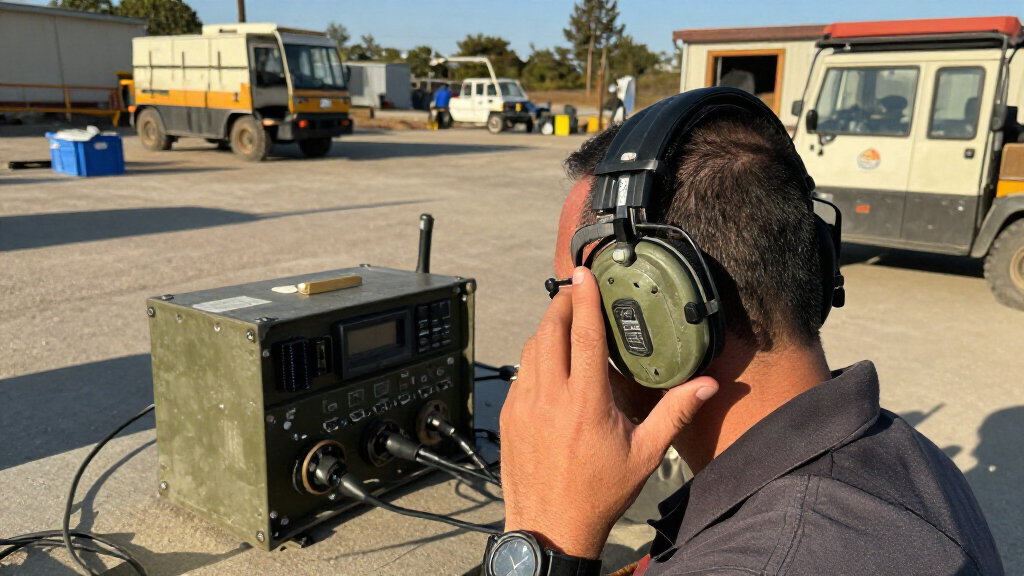
I ranked these military grade headphones by how clearly each option serves a real use case: hearing protection, tactical or walkie-talkie communication, or integration with a helmet setup. I gave weight to stated connection details such as the Earmor M32 PLUS’s U-174 connector, the Retevis EHK007’s removable PTT, and the HD-19’s ARC rail adapters. I also considered whether a product appears to be a standalone headset or a more complete set, since buyers can otherwise end up with a headset that does not connect to their radio.
The ranking favors products with a clearly identifiable role and useful configuration details, rather than treating every tactical-style label as proof of military certification. The ComTac V leads as the specialist choice; the Earmor M32 PLUS and PROHEAR set follow for their distinct communication and bundle appeal. The remaining picks serve narrower needs or provide fewer details in their supplied names, so buyers should verify specifications, fit, and compatibility before purchase.
| military grade headphone | Model |
|---|---|
| Earmor M32 PLUS Electronic Tac | M32 PLUS |
| 3M PELTOR ComTac V Foldable Ta | ComTac V |
| PROHEAR Tactical Electronic Sh | — |
| Retevis EHK007 Tactical Radio | EHK007 |
| Tactical Communication Headset | — |
| 3M Peltor MT16H210F Tactical S | MT16H210F |
| EARMOR M32 Plus Tactical Elect | M32 Plus |
| HD-19 Tactical Shooting Headse | HD-19 |
Factors to Consider When Choosing Military Grade Headphones
The phrase military grade is not enough to tell you whether a headset will work with your radio, fit your helmet, or provide the kind of hearing protection you need. I would start with the job the headset must do, then check the physical and electrical details that determine whether it fits your setup.
Decide Whether Communication or Hearing Protection Comes First
Electronic hearing protection and tactical communication overlap, but they are not interchangeable. Some buyers mainly need earmuffs for range use, while others need a microphone, push-to-talk control, or radio connection during team communication. A product name that includes “tactical” does not confirm that it supports every function in your setup. Write down whether you need ambient sound awareness, radio transmission, or both before comparing models. If communication is secondary, paying for connections you will not use may add complexity without helping your routine. If radio use is central, treat the headset as one part of a system and check every connection along the way.
Check Radio, Connector, and PTT Compatibility
Connector mismatch is one of the easiest ways to buy a headset that cannot serve its intended role. Compare the headset’s connector with your radio, adapter, and PTT, and confirm the exact radio model is supported rather than relying on a broad compatibility claim. A U-174 plug, for example, is a useful detail, but it does not mean every radio can connect directly without an appropriate interface. Also check whether the PTT is included, removable, or sold separately. Buyers sometimes focus on the headset and overlook the cable path between headset, PTT, and radio. When specifications are unclear, ask the seller or manufacturer before ordering.
Match the Mount to Your Helmet or Headband Setup
Choose a headband or rail-mounted design based on what you actually wear, not on how tactical a product looks in a photo. ARC rail adapters can suit some helmet configurations, but rail shape, mounting hardware, and clearance may affect whether the headset sits correctly. A headband model may be simpler for range sessions or occasional use, though it can compete for space with other headwear. Check whether adapters are included and whether the cups can be moved into the position you need. A common mistake is buying rail-mounted ear protection before confirming the helmet has compatible rails. If you switch between helmet and headband use, confirm whether the selected model supports both arrangements.
Treat Protection Claims as Specifications to Verify
“Military grade” is a marketing phrase, not a universal certification or a complete measure of hearing protection. Look for published noise reduction or attenuation figures, applicable standards, and clear instructions for electronic operation. Match the stated protection to your environment and follow hearing-safety guidance for loud impulse noise. Do not assume a communications headset offers the same protection as a dedicated passive earmuff simply because both cover the ears. Buyers should also check whether the product requires batteries and how electronic features behave when power runs out. If a listing omits protection data, request it rather than treating the label as evidence.
Prioritize Fit, Seal, and Long-Wear Comfort
A headset only protects as intended when its cushions form a consistent seal around the ears. Glasses, helmet straps, hair, and other equipment can create gaps or pressure points, so consider your full setup rather than judging fit in isolation. Headband tension and cup depth also affect comfort during longer sessions. A foldable design may be easier to pack, but portability does not guarantee a comfortable fit on every head. Replaceable cushions and available service parts matter if you expect frequent use, since worn seals can reduce comfort and performance. When possible, check the return policy and fit guidance before committing.
Pay for Useful Integration, Not Extra Complexity
A bundled headset and walkie-talkie setup can save compatibility work when its components match your needs, but it may be less flexible if you already own a radio. A standalone headset may fit an existing system better, provided you account for any required PTT or adapter. Premium specialist models make the most sense when their build and integration solve a specific operational need; they are harder to justify for casual range use without those requirements. Compare what is included in the box, not just the product name. Also check whether cables, batteries, mounts, and replacement cushions are available separately. The best value is the setup that works as a whole, not the one with the longest feature list.
Frequently Asked Questions
Does “military grade” mean these headphones are military-certified?
No. “Military grade” is often used as a descriptive or marketing phrase, and it does not by itself establish military approval, a particular protection level, or compliance with a standard. Check the product documentation for specific certifications, test methods, and noise reduction data. Ask the manufacturer for supporting details if a listing makes broad claims without naming a standard. For work or regulated use, follow your organization’s equipment requirements rather than relying on the phrase alone.
Can I connect any of these headsets to my two-way radio?
No, compatibility depends on the headset connector, the radio’s accessory port, and the PTT or adapter in between. The Earmor M32 PLUS listing names a U-174 connector, and the Retevis EHK007 listing calls out a removable PTT, but those details do not establish compatibility with every radio. Identify your exact radio model and confirm the full cable and PTT configuration before buying. If the listing does not name supported radios or wiring, contact the seller or manufacturer rather than assuming an adapter will solve it.
Are electronic shooting earmuffs suitable for loud impulse noise?
They may be designed for shooting environments, but suitability depends on the product’s verified protection specifications and how well it seals around your ears. Check the manufacturer’s noise reduction data and instructions for the type of sound exposure you expect. Eyewear, helmet straps, or a poor fit can break the seal and reduce protection. Follow hearing-safety guidance and do not treat electronic sound features as a substitute for rated hearing protection.
Should I choose a headband headset or one with helmet rail adapters?
Choose based on the headwear you use most often and whether the mounting system is confirmed to fit it. A headband can be a straightforward choice for standalone range sessions, while rail adapters may suit a compatible helmet setup. Check rail type, included hardware, cup positioning, and clearance with straps or other equipment. If you need to use the headset both ways, confirm that the model supports both configurations and that any alternate mount is included or available.
Is a bundled headset set better than buying a standalone tactical headset?
A bundle can make setup simpler if its radio, headset, and PTT components match your intended use. A standalone headset may be the better fit when you already own a radio or need a particular connector and want to keep your system flexible. Compare the included components and verify which devices they support before deciding. A bundle is not automatically more compatible, and a standalone unit may need extra accessories. Choose by the total working setup rather than the number of items in the package.
Conclusion
For a best overall specialist pick, I would start with the 3M PELTOR ComTac V, while confirming it matches the required communication and mounting setup. The best value-oriented route is the PROHEAR set for buyers who want a headset and walkie-talkie package together, provided its components suit their needs. For a premium tactical focus, the ComTac V is the clearest choice in this lineup; the Earmor M32 PLUS is a strong alternative when the specified U-174 connection fits your system. Beginners who want a more straightforward bundled setup can compare the PROHEAR set with standalone options before choosing. For specific needs, pick the Retevis EHK007 if its removable PTT fits your radio plan, or the HD-19 if its ARC rail adapters match your helmet. Check fit, protection data, and complete radio compatibility before making the final choice.