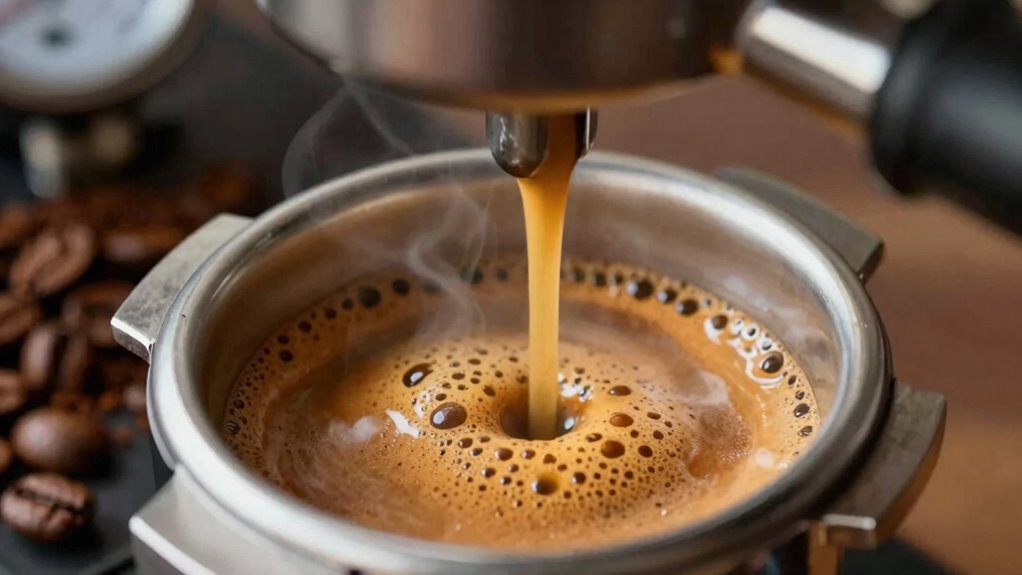

To make a great espresso, you need the right pressure, grind size, and extraction time. Ideally, keep pressure around 9 bars to balance flavor and crema. Use a fine, consistent grind for proper extraction and aim for a brew time of 25–30 seconds. Too high or low pressure, coarse or fine grind, or too short or long extraction can ruin your shot. Keep these factors in check, and you’ll brew better espresso every time. Find out more to master each step.

Get the latest gadgets delivered free — and shop member deals
- Fast, free delivery on millions of items
- Access to Prime Big Deal Days deals on October 6–7
- Prime Video, Amazon Music and more included
Key Takeaways
- Ideal pressure for espresso is around 9 bars to ensure balanced extraction and rich flavor.
- Proper grind size controls extraction speed; finer for stronger shots, coarser for lighter flavor.
- Extraction time of 25–30 seconds produces optimal flavor, aroma, and crema.
- Too high pressure causes over-extraction and bitterness; too low leads to sour, weak coffee.
- Consistent grind, tamping, pressure, and timing are essential for a high-quality, balanced espresso shot.
As an affiliate, we earn on qualifying purchases.
What Makes a Great Espresso Shot?
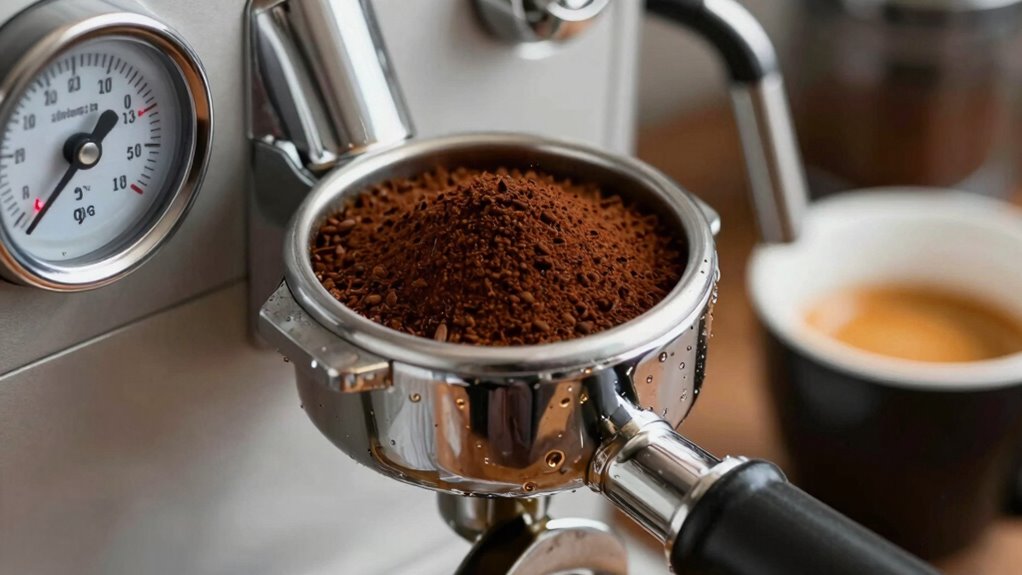
What makes a great espresso shot? It starts with the right water temperature—ideally between 195°F and 205°F—to extract flavors without overdoing it. Consistent water temperature ensures your espresso’s balance and richness. Tamping technique also plays a vital role; you need to apply even, firm pressure to compress the coffee grounds uniformly. Proper tamping creates resistance that helps water flow steadily through the coffee, resulting in a well-extracted shot. If the tamp is too loose, water will pass quickly, leading to a weak flavor; too hard, and it can cause over-extraction and bitterness. Additionally, the brewing pressure applied during extraction influences the shot’s flavor, body, and crema. Achieving the correct pressure requires understanding how the machine’s pressure gauge responds during extraction. Maintaining the right grind size is crucial because it directly affects extraction time and pressure consistency. Consistent extraction time is essential to prevent under- or over-extraction, which can compromise flavor and crema quality. Adjusting the brew ratio can also impact the intensity and balance of the espresso, helping to tailor the shot to your preferences. Combining suitable water temperature with precise tamping technique guarantees a shot with vibrant aroma, balanced acidity, and a smooth, velvety crema. Focus on these fundamentals for consistently great espresso.
As an affiliate, we earn on qualifying purchases.
How Pressure Affects Your Espresso’s Flavor
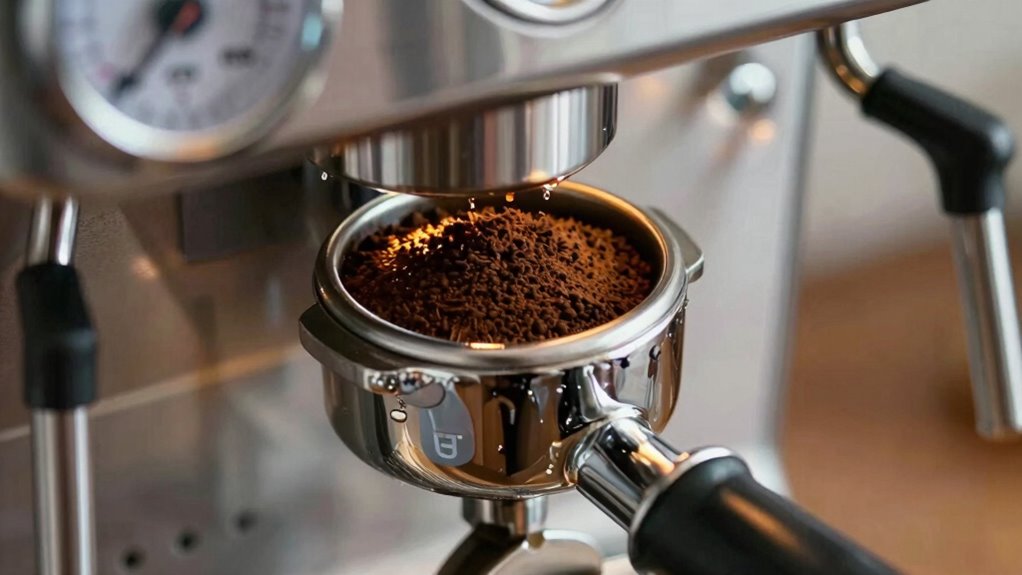
Pressure during extraction directly influences the flavor and texture of your espresso. Understanding pressure dynamics helps you control flavor extraction, guaranteeing a balanced shot. Too high pressure can cause over-extraction, making your espresso bitter, while too low results in under-extraction, leaving it sour and weak. Maintaining exemplary pressure allows the hot water to extract the right compounds from the coffee grounds. Proper pressure control is essential for achieving consistent results and optimal flavor. As part of espresso brewing techniques, managing pressure precisely ensures the desired flavor profile. Consistent pressure stability also minimizes the risk of fluctuating extraction, which can lead to inconsistent flavor. When pressure is maintained within the recommended range, it promotes proper extraction and enhances overall shot quality. Here’s a quick look at how pressure impacts flavor:
| Pressure Level | Effect on Flavor | Recommended Range |
|---|---|---|
| Low | Under-extraction, sour | 7-8 bar |
| Optimal | Balanced, rich flavor | 9 bar |
| High | Over-extraction, bitter | 10+ bar |
| Fluctuating | Inconsistent flavor | Stable pressure needed |
Mastering pressure dynamics ensures your espresso’s flavor is just right.
As an affiliate, we earn on qualifying purchases.
How Grind Size Changes Your Espresso

The grind size you choose has a direct impact on how water interacts with your coffee grounds, shaping the flavor and texture of your espresso. A finer grind increases surface area, which can lead to a richer, more intense extraction, but too fine and it may cause over-extraction or clogging. Conversely, a coarser grind results in faster water flow and under-extraction, producing a weaker shot. Maintaining grind consistency is essential for even extraction, reducing the risk of uneven flavors. Tamping pressure also plays a role; applying consistent pressure ensures the coffee bed is evenly compacted, allowing water to flow uniformly through the grounds. Adjusting grind size and tamping pressure together helps you fine-tune your espresso’s strength, clarity, and mouthfeel. Paying attention to grind consistency can make a significant difference in achieving a balanced shot, especially considering the impact of water flow on extraction quality. Understanding how extraction time influences flavor development is crucial for dialing in the perfect espresso. Mastering these variables involves understanding how pressure and grind size work together to optimize your brew, leading to a more enjoyable and consistent espresso experience. Additionally, being aware of brewing variables can help you troubleshoot and refine your technique more effectively.
As an affiliate, we earn on qualifying purchases.
Why Extraction Time Matters and How to Get It Right
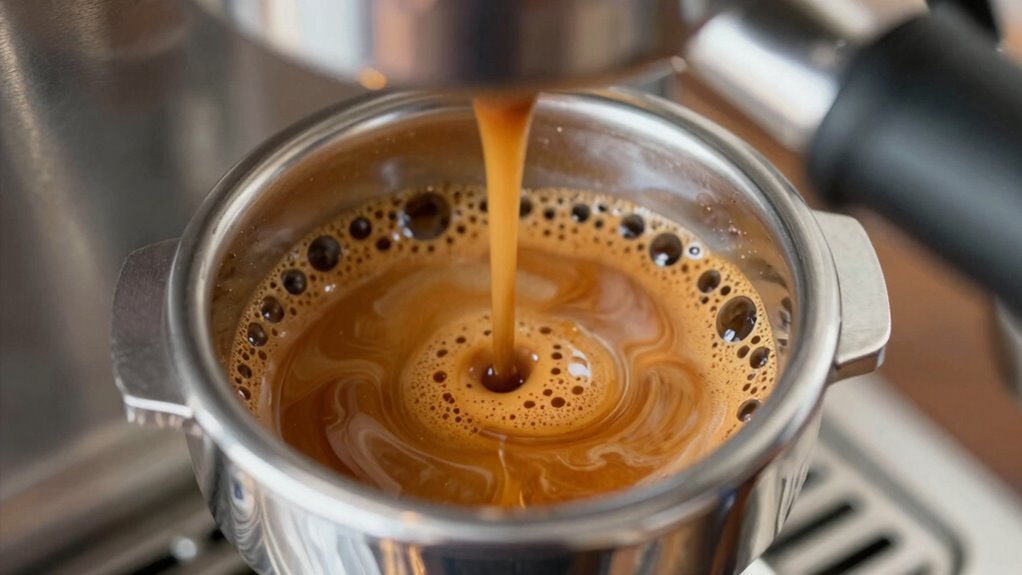
Extraction time plays a crucial role in shaping the flavor and quality of your espresso because it determines how thoroughly the coffee grounds release their soluble compounds. If extraction is too short, your espresso may taste sour or weak; too long, and it can become bitter or over-extracted. To get it right, focus on maintaining the right brew temperature, usually around 195-205°F, which helps extract flavors evenly. Your tamping technique also influences extraction time by ensuring uniform pressure, preventing channeling, and allowing water to flow smoothly through the coffee bed. Consistent tamping and accurate brew temperature help you achieve ideal extraction time—typically 25-30 seconds—resulting in a balanced, flavorful shot. Adjust these factors carefully to perfect your espresso.
Troubleshooting Common Espresso Problems
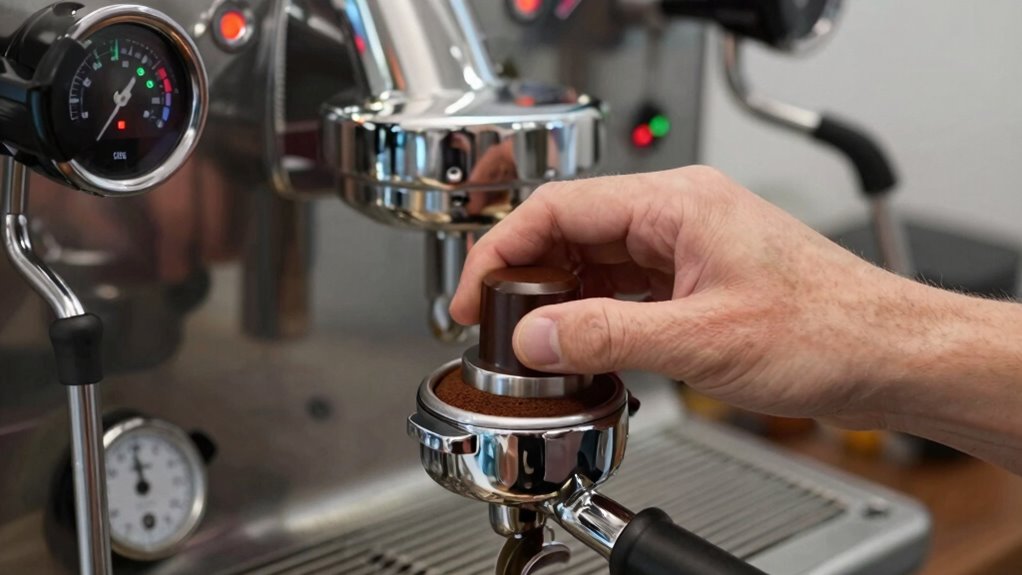
Even when you’ve mastered perfect extraction times, issues can still arise that affect your espresso’s quality. One common problem is uneven milk frothing, which can cause a thin or overly foamy texture. To fix this, verify your milk is properly steamed and the pitcher’s angle is correct. Tamping techniques also influence shot quality; if you don’t tamp evenly or with enough pressure, your espresso may be under-extracted or sour. Experiment with your tamping pressure and distribution until the puck is uniform. Additionally, watch for over-extraction or under-extraction signs, which relate back to grind size and pressure. Troubleshooting these issues involves adjusting your grind, tamp, and frothing methods to improve extraction and achieve a balanced, smooth espresso shot. Understanding seasonal coffee profiles can also help you fine-tune your brewing process for different beans and flavors, ensuring optimal results. Incorporating professional espresso equipment can further enhance consistency and precision in your brewing process.
Frequently Asked Questions
Can Water Temperature Influence Espresso Quality?
Yes, water temperature influences espresso quality considerably. If your brewing temperature isn’t consistent or well-controlled, you’ll notice differences in flavor, extraction, and crema. Maintaining precise brewing temperature control ensures your espresso extracts evenly, highlighting the right balance of acidity and bitterness. By keeping water temperature steady, you’ll achieve a richer, more balanced shot every time, making your espresso experience consistently better.
How Does Tamping Pressure Impact Extraction?
Tamping pressure directly impacts extraction by influencing tamping consistency and pressure calibration. When you apply even, firm pressure, you guarantee uniform coffee bed density, allowing water to flow consistently. Too little pressure results in under-extraction, while too much causes over-extraction. Proper tamping, with calibrated pressure, helps achieve ideal flavor and strength. Focus on maintaining steady pressure for best results, and regularly check your tamping technique to keep extraction balanced.
What Role Does Freshness of Beans Play?
Think of your beans as a treasure chest; the fresher they are, the richer the flavor they hold. Bean freshness directly impacts flavor preservation, ensuring your espresso bursts with vibrant, nuanced notes. Stale beans, like forgotten jewels, lose their sparkle and depth. By using fresh beans, you access a full-bodied, aromatic experience, making each cup a lively celebration of coffee’s true potential.
How Do Different Bean Origins Affect Shot Taste?
Different bean origins substantially influence your shot’s taste. Single origin beans showcase unique flavor nuances, offering distinct profiles like fruity, nutty, or floral notes. Bean processing methods, such as washed or natural, impact the taste impact by adding brightness or sweetness. When you choose beans from various regions, you experience a richer, more diverse espresso, allowing you to explore the complex interplay of flavor nuances and processing techniques that define each origin’s character.
Is It Necessary to Pre-Wet the Coffee Grounds?
Pre-wetting coffee grounds isn’t necessary, but it can improve extraction and flavor. To get consistent results, make sure your coffee storage keeps beans fresh and your grinder is calibrated correctly. Pre-wetting can help with that, especially if your grinder isn’t perfectly tuned. It moistens grounds for even extraction, enhancing taste. So, while not essential, pre-wetting can be a useful step if you want a smoother, more balanced shot.
Conclusion
Mastering espresso is like tuning a delicate instrument—you need just the right pressure, grind, and time to create a symphony of flavors. When these elements are in harmony, your shot sings with richness and depth, turning ordinary mornings into a vibrant dance of taste. Remember, each tweak is a brushstroke on your canvas; with patience, you’ll craft a masterpiece that awakens your senses and keeps you coming back for more.
Fall Picks
fall essentials
As an affiliate, we earn on qualifying purchases.