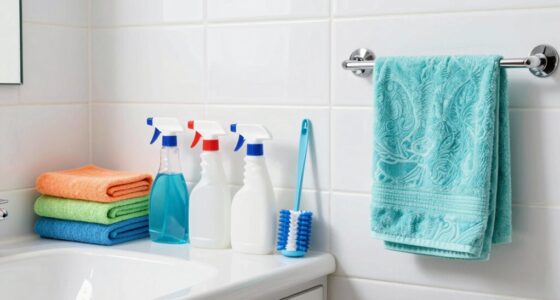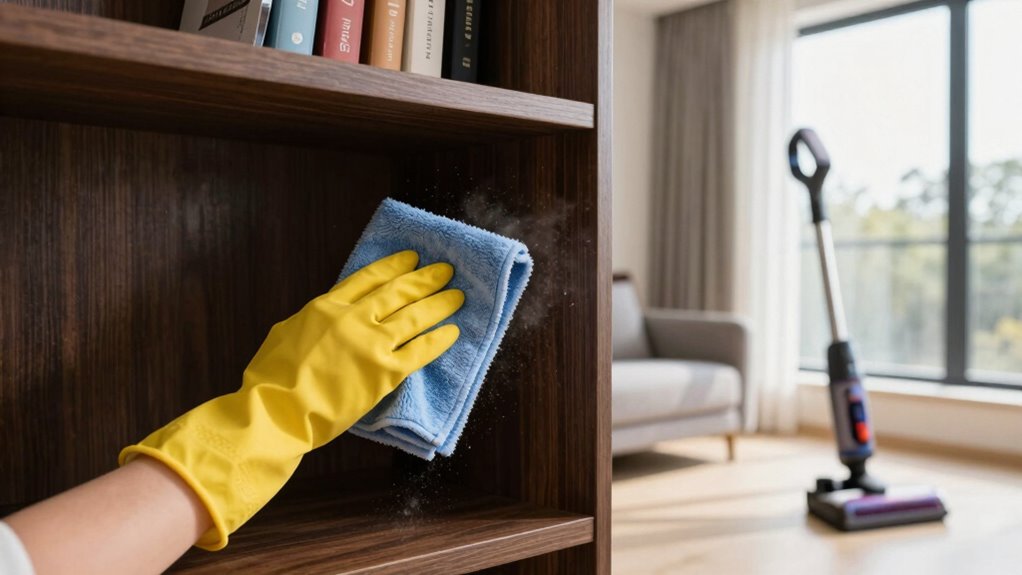

To clean dust without spreading it around, use microfiber cloths or dusting wands that trap dust effectively. Dampening your cloth slightly prevents dust from flying into the air, and always dust in multiple directions for thorough removal. Vacuum with HEPA filters and proper attachments to pick up residual dust, and run an air purifier to improve air quality. Keep these tips in mind, and you’ll discover even more ways to keep your home dust-free efficiently.

Get the latest gadgets delivered free — and shop member deals
- Fast, free delivery on millions of items
- Access to Prime Big Deal Days deals on October 6–7
- Prime Video, Amazon Music and more included
Key Takeaways
- Use microfiber cloths slightly dampened to trap dust effectively without dispersing particles into the air.
- Dust in small sections and in multiple directions to ensure thorough removal and prevent spreading.
- Employ dusting tools with electrostatic properties or dust containment features to minimize airborne dust.
- Avoid spraying cleaners directly onto surfaces; instead, spray onto a cloth to control moisture and dust dispersal.
- Regularly clean or replace vacuum filters and use HEPA air purifiers to reduce airborne dust particles.
As an affiliate, we earn on qualifying purchases.
Why Traditional Dusting Spreads Dust and How It Affects Your Home
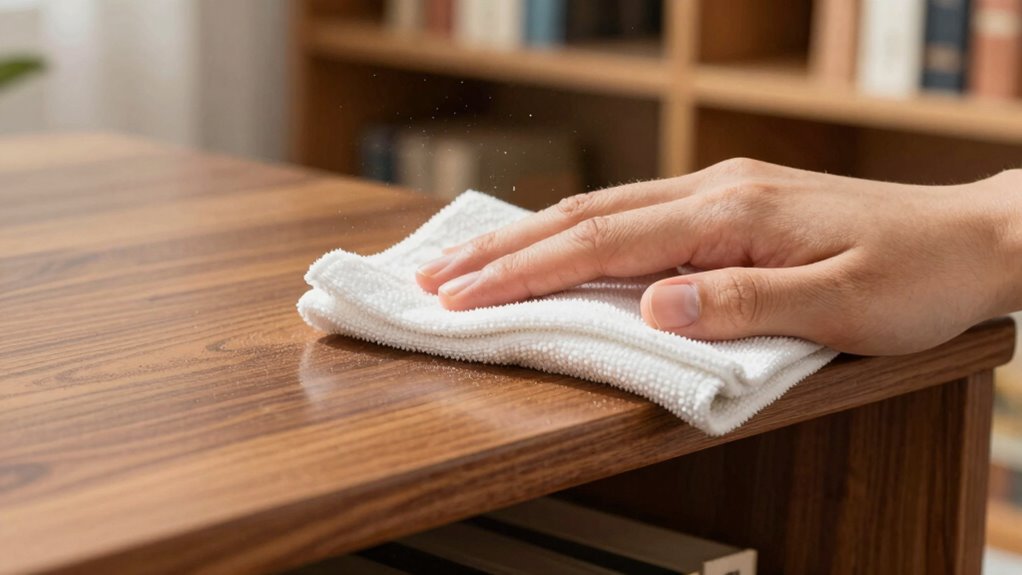
Traditional dusting methods often do more harm than good because they tend to spread dust particles into the air rather than remove them completely. When you dust with a dry cloth or feather duster, airborne particles are released into the room, increasing dust levels. These tiny particles can settle on surfaces or float around, making it harder to clean effectively. As a result, dust accumulates faster and can become an allergy trigger, especially for sensitive individuals. Instead of eliminating dust, traditional methods often just redistribute it, worsening indoor air quality. This can lead to increased sneezing, congestion, or asthma symptoms. To truly improve your home’s cleanliness, you need a dusting approach that traps dust and keeps airborne particles from circulating. Using specialized cleaning tools like electrostatic dusters or microfiber cloths can help capture dust more effectively and prevent it from spreading into the air. Employing dust-trapping techniques can further enhance dust removal and improve overall air quality. Additionally, understanding the airborne nature of dust particles emphasizes the importance of methods that contain rather than disperse dust during cleaning. Incorporating tools with electrostatic properties can significantly reduce the amount of dust that becomes airborne during cleaning sessions. Furthermore, utilizing appropriate cleaning techniques can make a noticeable difference in maintaining a cleaner, healthier living environment.
dusting wand with electrostatic properties
As an affiliate, we earn on qualifying purchases.
As an affiliate, we earn on qualifying purchases.
The Best Tools for Dust-Free Dusting
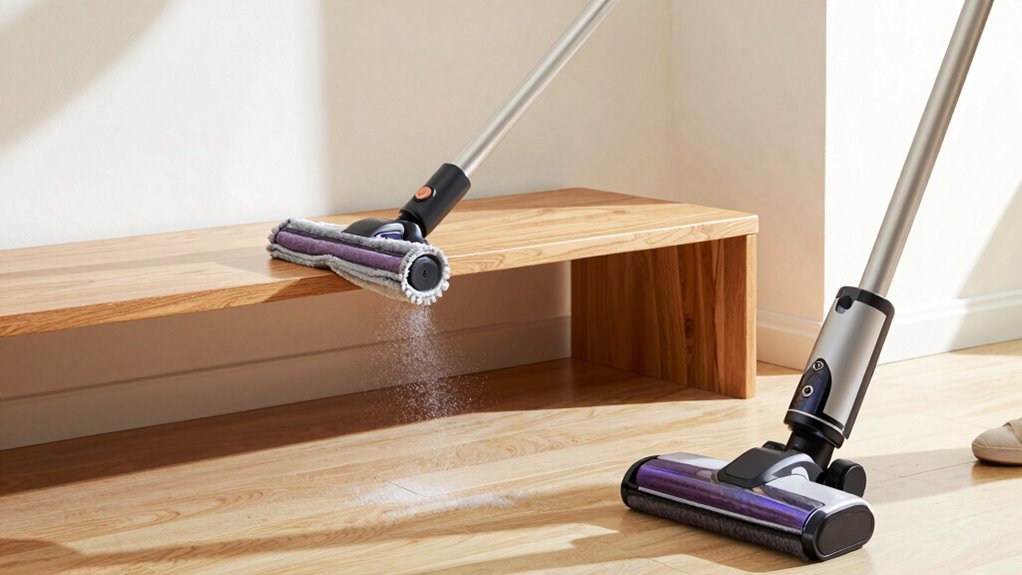
To achieve dust-free cleaning, choosing the right tools is essential. Microfiber cloths are your best option because they trap dust particles effectively without spreading them into the air. Their fine fibers attract and hold dust, making cleaning quicker and more efficient. Dusting wands are also highly useful, especially for reaching high or awkward spots like ceiling fans or behind furniture. They allow you to clean surfaces without disturbing settled dust, reducing the risk of airborne particles. When combined, microfiber cloths and dusting wands help you maintain a cleaner environment while minimizing dust dispersion. Understanding the importance of vetted – floating on water can also inspire a more mindful and dedicated approach to your cleaning routine. Additionally, using tools that prevent dust from becoming airborne aligns with effective dust management principles, ensuring a healthier living space. Employing dust containment techniques further enhances your cleaning efforts, reducing the spread of dust particles during the process. Incorporating proper tool handling can also improve the efficiency of your dusting routine and prevent dust from escaping into the environment.
As an affiliate, we earn on qualifying purchases.
How to Damp Dust Without Making a Mess
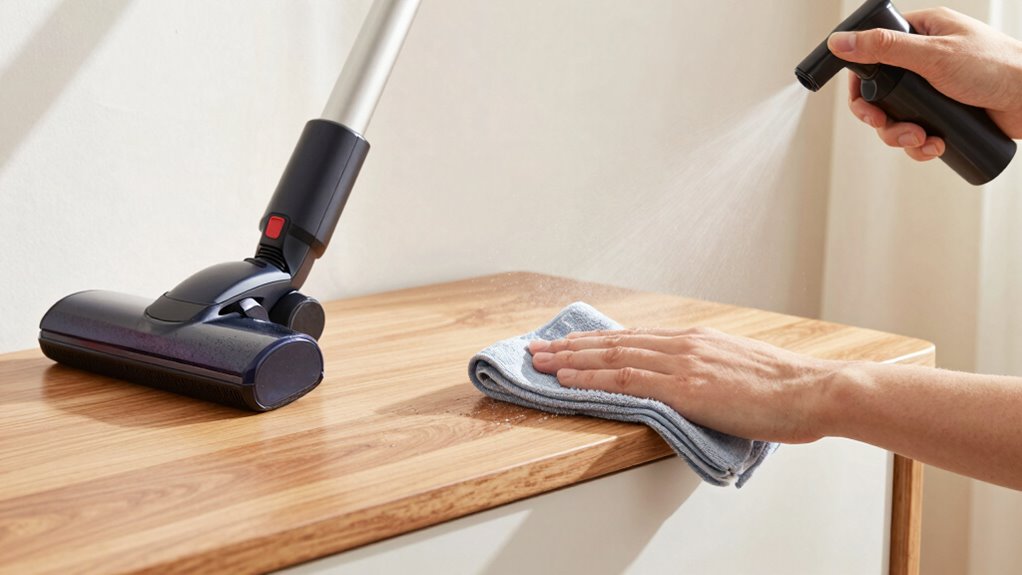
To damp dust effectively, use a slightly damp cloth rather than a wet one to prevent water from dripping. Work in small sections to keep control and avoid spreading dust or creating a mess. This method also helps in preserving delicate surfaces, ensuring they are not damaged by excess moisture. Using proper technique and tools can make a significant difference in cleaning efficiency. This way, you clean thoroughly without leaving excess moisture behind. Additionally, regularly check and clean filters of your air purifier to maintain optimal air quality during cleaning.
Use a Damp Cloth
Using a damp cloth is an effective way to trap dust without spreading it around, but it’s easy to create a mess if you’re not careful. To avoid drips and splatters, use a microfiber cloth slightly dampened—not soaked. A dry cloth won’t pick up dust effectively, while an overly wet one might spread it or cause water damage. Imagine this:
| Dry Cloth | Microfiber Cloth |
|---|---|
| No moisture | Slightly dampened, traps dust effectively |
| Causes dust to scatter | Holds dust securely without spreading |
| Needs frequent replacement | Can be reused after rinsing |
Choosing the right cloth and dampening it properly helps you clean efficiently without making a mess, keeping dust under control and your space spotless. Additionally, ensuring proper ventilation during cleaning can help disperse any airborne dust and improve safety. Proper technique also involves regular cleaning, which prevents dust buildup and makes each cleaning session easier. Maintaining a clean environment can also help reduce allergen accumulation, making your space healthier. Incorporating effective dust removal techniques can further improve indoor air quality and contribute to overall well-being.
Implementing these practices can also help mitigate risks associated with credit card security, especially when cleaning electronic devices or areas with sensitive information, by reducing dust and debris that may interfere with electronic components.
Work in Small Areas
Working in small areas makes damp dusting more manageable and minimizes messes. Focus on one section at a time to maintain control and guarantee thorough cleaning. Use microfiber cloths, which trap dust effectively, and apply dusting sprays lightly to avoid excess moisture. To maximize efficiency:
- Tackle high-traffic or visible spots first to quickly improve the room’s appearance.
- Switch to clean sections of your microfiber cloth regularly to prevent spreading dust.
- Finish each small area completely before moving on to the next to prevent recontamination.
- Be mindful of airborne particles and ensure proper ventilation to keep dust from spreading further. Proper ventilation helps control indoor air quality during dusting and is essential for dust containment. Additionally, maintaining good air circulation is crucial for reducing residual dust lingering in the air after cleaning. Using air purifiers can further improve air quality and reduce dust particles in the environment.
This approach keeps dust contained and reduces airborne particles. Working in small sections with proper tools ensures you damp dust without making a mess, making your cleaning more effective and less stressful.
As an affiliate, we earn on qualifying purchases.
Vacuum Tips to Keep Dust Clouds Away
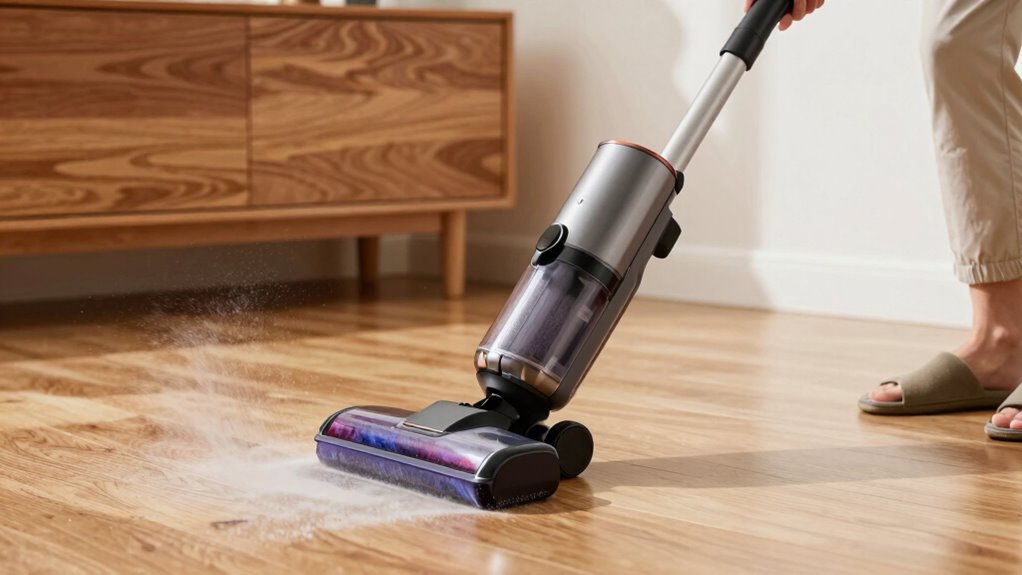
To keep dust clouds at bay while vacuuming, make sure you’re using the right settings for your floor type. Attach the correct nozzles carefully to target dust effectively without spreading it around. Don’t forget to empty your vacuum regularly to maintain strong suction and prevent dust from escaping back into the air. Utilizing airless paint sprayers with adjustable pressure can help prevent dust from becoming airborne during cleaning, similar to how proper vacuum settings control dust dispersion. Additionally, choosing appropriate vacuum attachments can significantly reduce dust disturbance, ensuring a cleaner and healthier environment. Incorporating creative storytelling for branding techniques can also make your cleaning routines more engaging and memorable.
Use Proper Vacuum Settings
Adjusting your vacuum to the right settings is essential for preventing dust clouds from spreading. Properly setting the vacuum ensures maximum vacuum power, reducing the chance of dust escaping back into the air. To achieve this, consider these tips:
- Adjust vacuum power to match the surface—use lower power for delicate fabrics and higher for carpets.
- Maintain your filter regularly; a clean filter enhances suction and prevents dust blowback.
- Set the vacuum to a gentle, consistent pace to minimize disturbance and avoid stirring up dust.
Attach Suitable Nozzles Carefully
Attaching the right nozzles is key to preventing dust clouds from escaping back into the air. Your nozzle selection determines how effectively dust is contained and removed, so choose tools designed for specific surfaces or tight spaces. When attaching nozzles, use proper attachment techniques to guarantee a secure fit; loose connections create gaps that can release dust. Make sure the nozzle clicks or locks into place firmly. Before starting, double-check that the connection is tight and airtight. This prevents dust from dispersing into the air during vacuuming. Proper nozzle selection combined with careful attachment techniques helps you clean efficiently without spreading dust around. Taking these small steps makes a significant difference in maintaining a dust-free environment.
Empty Vacuum Regularly
Have you ever noticed dust clouds when you open your vacuum’s canister or empty the bin? Regularly emptying your vacuum prevents dust accumulation, which can worsen air quality and reduce suction power. To keep dust clouds at bay, stick to these cleaning schedules:
- Empty the canister after every use or when it’s half full.
- Check and clean filters weekly to maintain airflow.
- Replace filters as recommended by the manufacturer.
Air Purifiers and HEPA Filters for Cleaner Air
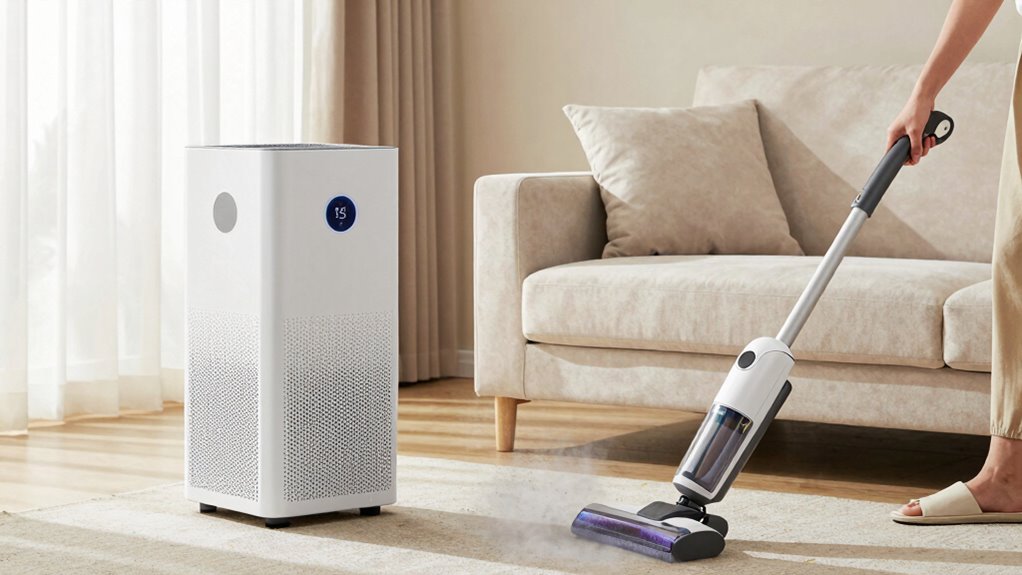
Air purifiers equipped with HEPA filters are highly effective tools for improving indoor air quality by capturing dust, allergens, and other airborne particles. To keep your air purifier working efficiently, regular air purifier maintenance is essential, including timely filter replacements. When selecting a HEPA filter, choose one that’s rated to handle your room size and meets high-efficiency standards. Proper HEPA filter selection ensures maximum particle removal without sacrificing airflow. Consistently maintaining your air purifier and using the right filters help reduce dust circulation and improve overall air quality. This minimizes dust settling on surfaces and prevents it from spreading throughout your home. Investing in a quality air purifier with easy maintenance can greatly enhance your cleaning routine and contribute to a healthier living environment.
Quick Tips to Keep Your Home Dust-Free Between Deep Cleanings
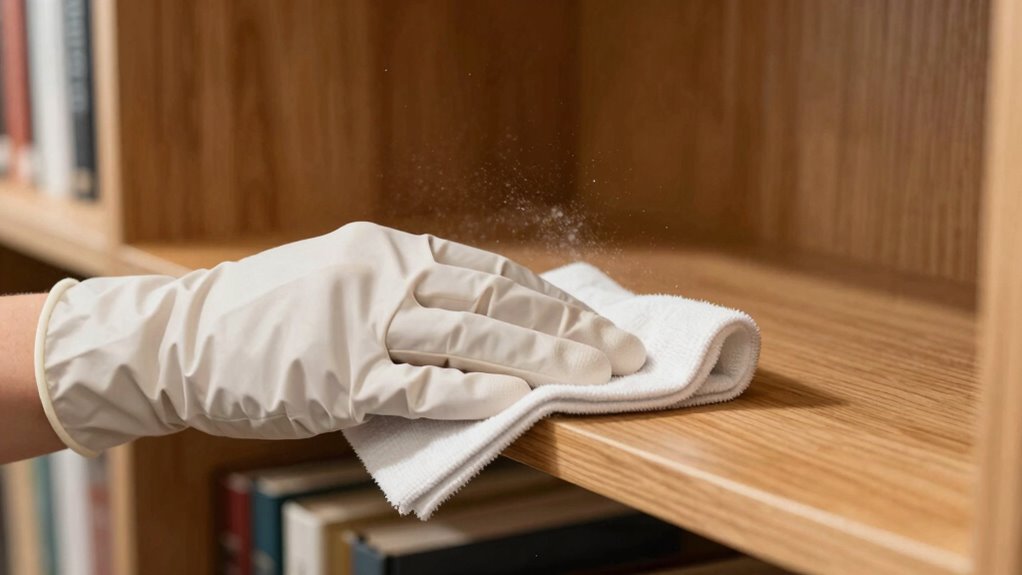
To keep dust at bay between deep cleanings, implementing simple daily habits can make a big difference. Good air quality and allergen control start with small actions. First, make your bed every morning; it reduces dust accumulation in the bedroom. Second, wipe down surfaces weekly with a damp cloth to trap dust instead of spreading it. Third, keep clutter to a minimum, as it traps dust and impairs air quality. Regularly vacuum using a HEPA filter or an air purifier to remove airborne allergens. These habits prevent dust buildup, improve air quality, and maintain allergen control. Staying consistent with these quick tips keeps your home cleaner longer and supports a healthier environment between deep cleanings.
Common Dusting Mistakes and How to Avoid Them
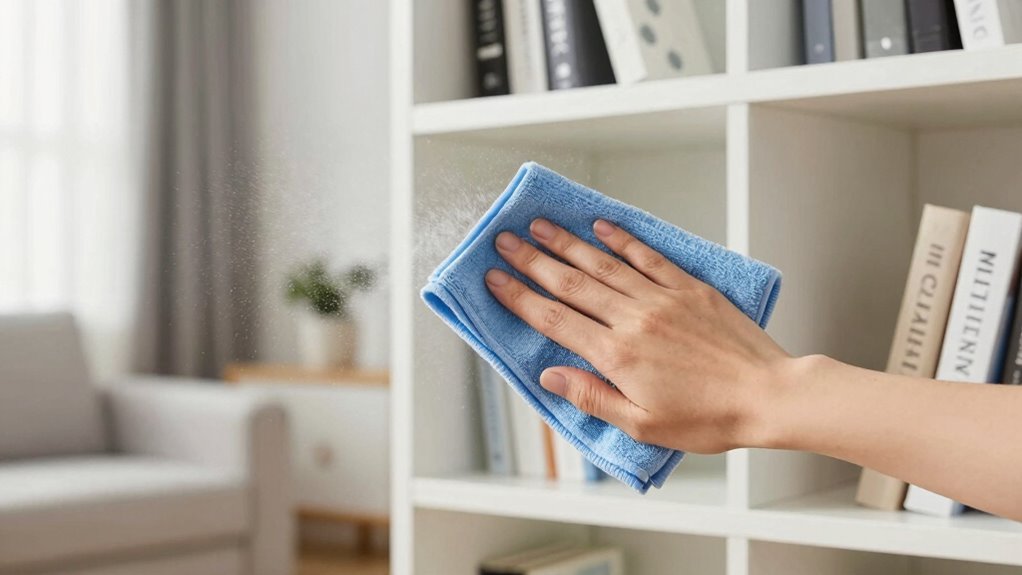
Many people make common mistakes when dusting that can actually make their efforts less effective. One mistake is relying solely on feather dusters, which often spread dust rather than remove it. Instead, use a damp microfiber cloth for better dust pickup. Another error is using spray cleaners directly onto surfaces, which can cause dust to become airborne and settle elsewhere. Always spray cleaners onto your cloth first, then wipe surfaces gently. Avoid dusting in a single direction without changing your cleaning tools or cloths frequently, as this can redistribute dust. Additionally, neglecting to dust often enough allows buildup that’s harder to remove later. By choosing proper tools like microfiber cloths and avoiding sprays used improperly, you improve dust removal and prevent spreading dust around your home.
Frequently Asked Questions
Can Natural Cleaning Remedies Effectively Reduce Dust Buildup?
Yes, natural remedies can effectively reduce dust buildup when used properly. Using solutions like vinegar and baking soda helps break down dust and grime without harsh chemicals. Regularly dust with a damp microfiber cloth, which traps dust instead of spreading it around, and incorporate natural air purifiers like houseplants. These methods promote dust reduction and create a healthier environment without relying on synthetic cleaners.
How Often Should I Dust to Prevent Allergies?
Did you know that dust can trigger allergy symptoms in about 30% of people? To prevent allergies, dust at least once a week. Regular dusting reduces the buildup of dust mites, pet dander, and pollen that cause allergies. Consistent dusting frequency is key to allergy prevention, especially in bedrooms and living areas. Don’t forget to use a damp cloth or microfiber for effective dust removal without spreading allergens around.
Are There Eco-Friendly Dusting Products Available?
Yes, eco-friendly dusting products are available. You can choose biodegradable options like microfiber cloths, which trap dust without chemicals, or natural cleaning sprays made from plant-based ingredients. Look for brands that emphasize sustainability and avoid harsh chemicals. Using these eco-friendly alternatives helps protect the environment while effectively cleaning your space. Plus, they’re safe for your family and pets, making dusting a healthier, more sustainable routine.
What Are the Signs of Poor Indoor Air Quality Caused by Dust?
Like a fog settling over a foggy morning, poor indoor air quality caused by dust shows through sneezing, coughing, and itchy eyes. You might notice a lingering musty smell or increased allergy symptoms. Air purifier benefits include reducing dust mite presence and filtering allergens, improving air quality. If you experience these signs, it’s time to improve ventilation and regularly dust with eco-friendly products to prevent health issues.
How Can I Minimize Dust When Opening Windows or Doors?
To minimize dust when opening windows or doors, manage airflow carefully. Open windows slowly to prevent sudden drafts that stir up dust, and do so during calm weather to reduce outside dust entry. Use dust trapping screens or filters on vents and doors to catch particles. Keep indoor surfaces clean and dust-free beforehand, so when you open windows or doors, you’re not releasing accumulated dust into the air. This promotes better airflow management and reduces dust spread.
Conclusion
Keeping dust at bay isn’t just about appearances—you’re improving air quality and your health too. Did you know that indoor dust can contain up to 70% skin cells? By using the right tools and techniques, you can prevent dust from spreading and breathe easier. Stick with damp dusting, vacuuming with HEPA filters, and air purifiers. With these tips, you’ll enjoy a cleaner, healthier home without the dust storms.
Fall Picks
fall essentials
As an affiliate, we earn on qualifying purchases.