To clean your washing machine, start by running an empty hot water cycle with vinegar or specialized cleaners to remove buildup. For front-load washers, wipe the door gasket and glass, then run a cycle with baking soda. For top-load models, use vinegar and baking soda directly in the drum, then wipe down interior surfaces. Regular maintenance prevents odors and prolongs your machine’s life—exploring the next steps will help you keep it spotless.
Key Takeaways
- Run an empty hot water cycle with vinegar and baking soda for deep cleaning in both front and top-load washers.
- Wipe down seals, gaskets, and door glass regularly to prevent mold and residue buildup.
- For front-load washers, leave the door slightly open after cleaning to promote drying and prevent odors.
- Focus on cleaning detergent dispensers and agitators in top-load machines to eliminate trapped dirt.
- Use manufacturer-approved or eco-friendly cleaning products, following instructions for routine maintenance of both types.

Affresh Washing Machine Cleaner, Helps Power Away Odor Causing Bacteria & Grime Deep Inside Pump, Valve & Hoses, 6 Time Release Tablets, 6 Month Supply
- Brand: No. 1 Washing Machine Cleaner Tablet
- Cleaning Action: Time-release deep cleaning for extended freshness
- Odor Removal: Eliminates pet, sweat, and mildew odors
As an affiliate, we earn on qualifying purchases.
As an affiliate, we earn on qualifying purchases.
Why Regular Washing Machine Cleaning Is Essential

Regularly cleaning your washing machine is essential because it prevents the buildup of mold, detergent residue, and lint that can cause odors and reduce its efficiency. Detergent residue can accumulate in seals and dispensers, leading to unpleasant smells and potential mold growth. By keeping your machine clean, you minimize these issues, ensuring your laundry stays fresh and your appliance runs smoothly. Mold prevention is especially critical in damp, warm environments inside the washer, which are perfect for mold spores to thrive. Regular maintenance helps eliminate trapped dirt and residue, reducing the risk of mold and odors. Staying consistent with cleaning routines keeps your washing machine functioning at its best, extending its lifespan and making sure your clothes come out clean and fresh every time. Additionally, understanding proper cleaning techniques can help you maintain your machine more effectively, including using appropriate cleaning agents to prevent residue buildup. Incorporating regular inspections can also help identify early signs of mold or residue accumulation, allowing for prompt cleaning. Being aware of common problem areas inside your washer can help you target cleaning efforts more effectively.

ACTIVE Mold Stain Remover Gel Cleaner Heavy Duty Stain Cleaner for Front Loader Washing Machine Seal, Bathroom Grout, Shower, Caulk – Front Load Washer Cleaning Solution – 7 Fl Oz
- Fast and Effective Cleaning: Instant mold and stain removal in minutes
- Versatile Cleaning Use: Cleans washer seals, grout, showers, and more
- Easy to Apply: Gel formula for targeted, mess-free application
As an affiliate, we earn on qualifying purchases.
As an affiliate, we earn on qualifying purchases.
How to Clean a Front-Load Washer: Easy Step-by-Step

Cleaning a front-load washer is straightforward when you follow a few simple steps. First, run an empty cycle with hot water and two cups of white vinegar to break down detergent residue and eliminate mold-causing bacteria. Afterwards, wipe down the rubber door gasket and door glass with a damp cloth, paying special attention to mold prevention. Use a soft brush to scrub any stubborn buildup around the seal. Next, run another hot water cycle with a cup of baking soda to deodorize and further remove residues. Leave the door slightly open after cleaning to ensure thorough drying and prevent mold growth. Regularly performing these steps keeps your washer fresh, reduces detergent residue, and helps prevent mold formation. Understanding the importance of proper maintenance ensures your washing machine stays in optimal condition over time.
Affresh Washing Machine Cleaner, Helps Power Away Odor Causing Bacteria & Grime Deep Inside Pump, Valve & Hoses, 6 Time Release Tablets, 6 Month Supply
- Brand: No. 1 Washing Machine Cleaner Tablet
- Cleaning Action: Time-release deep cleaning for extended freshness
- Odor Removal: Eliminates pet, sweat, and mildew odors
As an affiliate, we earn on qualifying purchases.
As an affiliate, we earn on qualifying purchases.
How to Deep Clean a Top-Load Washer for Best Results

Have you ever noticed a musty smell or lingering stains in your top-load washer? That’s often caused by detergent residue buildup and mold formation. To deep clean effectively, start by running an empty wash cycle with hot water. Add two cups of white vinegar and half a cup of baking soda to break down residue and kill mold spores. Let the cycle run completely, then wipe down the drum, lid, and interior surfaces with a clean cloth. Focus on areas where detergent collects, like the agitator. Regular deep cleaning like this helps prevent mold and keeps your washer smelling fresh. Using proper cleaning techniques can further enhance your washer maintenance routine. Additionally, ensuring proper ventilation and dryness in your laundry area can help prevent mold growth over time. Proper drainage and airflow are essential to maintain a dry environment and avoid moisture buildup. Incorporating dehumidifiers or fans can also assist in reducing humidity levels and preventing mold development. Remember, consistent cleaning prevents detergent residue from building up and guarantees your laundry stays clean and odor-free. For additional protection, consider using small wood stove tips to keep your laundry area warm and dry, reducing mold growth.
Affresh Washing Machine Cleaner, Helps Power Away Odor Causing Bacteria & Grime Deep Inside Pump, Valve & Hoses, 6 Time Release Tablets, 6 Month Supply
- Brand: No. 1 Washing Machine Cleaner Tablet
- Cleaning Action: Time-release deep cleaning for extended freshness
- Odor Removal: Eliminates pet, sweat, and mildew odors
As an affiliate, we earn on qualifying purchases.
As an affiliate, we earn on qualifying purchases.
Top Tips to Prevent Odors and Detergent Buildup
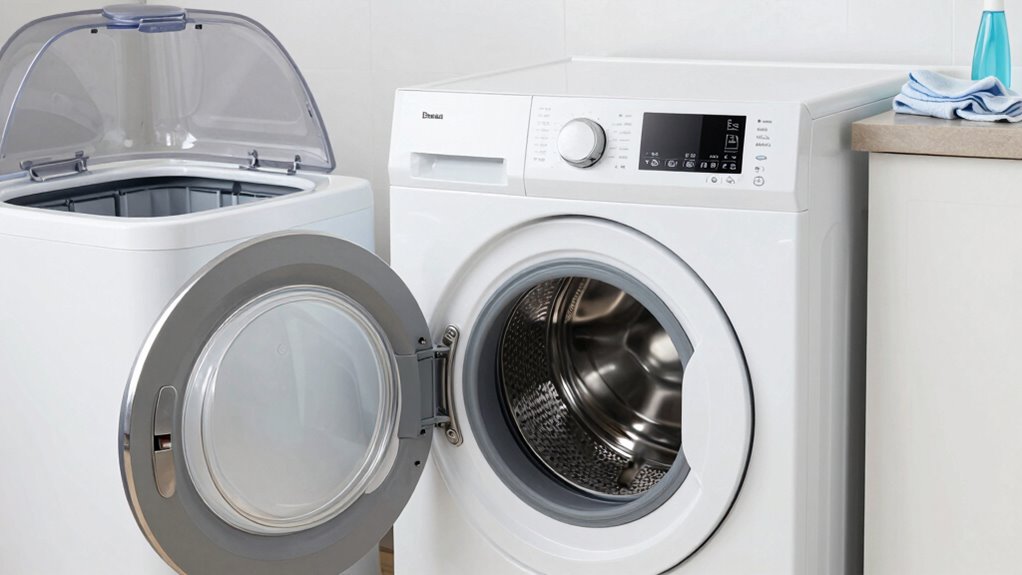
To keep odors and detergent buildup at bay, it’s essential to leave your washer door or lid open after each load. This simple step allows air to circulate, helping to dry out any remaining moisture that can cause detergent residue and mold growth. Regularly wiping down the door seal and gasket prevents mold buildup, especially in front-load washers. Use the right amount of detergent—too much can lead to excess residue that traps dirt and odors. Running a monthly cleaning cycle with hot water helps break down detergent residue and mold spores. Avoid leaving wet clothes inside for extended periods. Additionally, utilizing tracking gear like GPS or Bluetooth sensors can help monitor your laundry appliances for leaks or humidity issues that might contribute to odors. Proper ventilation in your laundry area is essential, as it helps reduce indoor humidity and prevents mold growth. Ensuring routine maintenance can further extend the lifespan of your washer and keep it operating efficiently. Incorporating air circulation techniques, such as installing exhaust fans or using dehumidifiers, can significantly improve airflow and reduce moisture buildup. By maintaining proper ventilation and cleaning habits, you’ll prevent unpleasant odors and keep your washer fresh and functioning efficiently.
Choosing the Best Cleaning Products and When to Use Them

Wondering which cleaning products are best for your washing machine? Choosing the right detergent types and cleaners depends on your machine’s needs. For routine cleaning, use a manufacturer-approved machine cleaner or a cup of white vinegar to remove soap scum and odors. When tackling tough buildup, consider specialized washing machine cleaners designed for deep cleaning. Eco-friendly cleaners are a great option if you want to reduce your environmental impact; look for natural or biodegradable products that effectively break down grime without harsh chemicals. Always check your machine’s manual for recommended products and avoid mixing different cleaners. Use the appropriate cleaner at the right time—regular maintenance with gentle products can prolong your washer’s lifespan and keep it smelling fresh.
Frequently Asked Questions
Can I Use Vinegar or Bleach Together to Clean My Washing Machine?
You shouldn’t mix vinegar and bleach when cleaning your washing machine. Vinegar safety is compromised because combining it with bleach creates dangerous fumes. Instead, use bleach alternatives like hydrogen peroxide or baking soda, which are effective and safe. To clean, run a cycle with vinegar or a bleach alternative separately. This keeps your machine clean without risking chemical reactions or health hazards.
How Often Should I Replace Washing Machine Seals and Gaskets?
You should replace your washing machine seals and gaskets when they show signs of wear, mold, or leaks. Regular gasket maintenance helps prevent damage and keeps your machine running smoothly. Typically, seal replacement is needed every few years, but it depends on usage and condition. Keep an eye out for cracks, tears, or persistent odors, and address gasket issues promptly to avoid costly repairs and guarantee maximum performance.
Are There Specific Cleaning Routines for HE (High-Efficiency) Washers?
For HE washers, you should follow specific cleaning routines to maintain ideal performance. Regularly run a cleaning cycle with an HE-compatible cleaner or a mixture of vinegar and baking soda to prevent mold and odors. Use HE detergent as it’s formulated for low water usage and won’t cause excess suds. Keep the door or lid slightly open after washing to promote air circulation and reduce moisture buildup, ensuring your HE washer stays fresh and efficient.
What Are Signs My Washing Machine Needs Professional Repair Instead of Cleaning?
If your washing machine makes excessive noise or water leaks persist despite cleaning, it’s time to call a professional. While routine cleaning handles dirt and buildup, unusual machine noise or persistent leaks signal mechanical issues or worn parts. Ignoring these signs can lead to bigger damage or costly repairs. Trust experts to diagnose and fix the problem swiftly, restoring your washer’s performance and preventing further damage.
How Does Water Hardness Affect Washing Machine Cleaning and Maintenance?
Water hardness impacts your washing machine by causing mineral buildup, which can clog parts and reduce efficiency. Hard water contains high mineral levels, so you should consider water softening to prevent these issues. Regular maintenance, like running a cleaning cycle with vinegar or commercial descalers, helps remove mineral deposits. Softening your water reduces mineral buildup, prolonging your machine’s lifespan and keeping it running smoothly for longer.
Conclusion
Regular cleaning keeps your washer fresh and running smoothly, preventing odors and buildup. Whether you have a front-load or top-load machine, sticking to a routine ensures your clothes stay cleaner longer. Remember, “An ounce of prevention is worth a pound of cure”—a little effort now saves you headaches later. So, take the time to clean your washer regularly and enjoy fresh, spotless laundry every time.