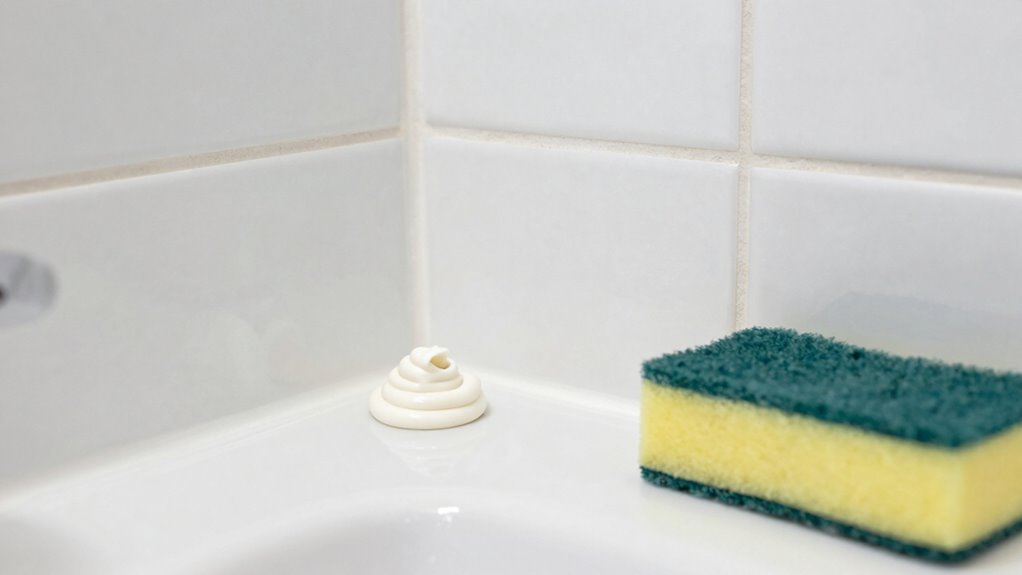

To handle mold-prone spots before they become a problem, regularly inspect damp areas like bathrooms, basements, and around pipes for signs of leaks, discoloration, or musty odors. Keep humidity between 30-50% using dehumidifiers and improve ventilation with fans and open windows. Fix any leaks immediately and clean potential mold spots with natural solutions like vinegar or baking soda. Using mold-resistant materials and monitoring moisture levels can prevent mold growth before it starts—learn more to stay ahead of issues.

Get the latest gadgets delivered free — and shop member deals
- Fast, free delivery on millions of items
- Access to Prime Big Deal Days deals on October 6–7
- Prime Video, Amazon Music and more included
Key Takeaways
- Regularly inspect damp, poorly ventilated areas like bathrooms and basements for early signs of mold.
- Control indoor humidity levels between 30-50% using dehumidifiers and proper ventilation.
- Fix leaks immediately and ensure plumbing and appliances are watertight to prevent moisture buildup.
- Clean and dry any water spills or condensation promptly to stop mold spores from settling.
- Use mold-resistant materials in high-risk areas and seek professional help for persistent or hidden mold issues.
As an affiliate, we earn on qualifying purchases.
Recognize Mold-Prone Areas in Your Home
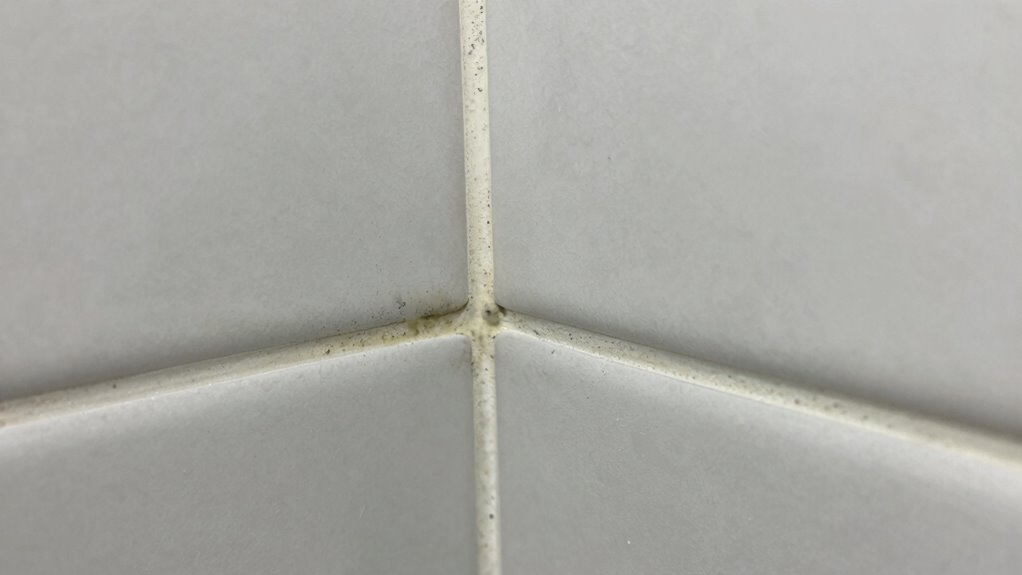
Since mold thrives in damp, poorly ventilated areas, it is essential to identify these spots in your home. During a home inspection, focus on common mold-prone areas like bathrooms, basements, and kitchens, where moisture tends to accumulate. Check for hidden leaks under sinks, around pipes, and behind appliances. Don’t forget to inspect laundry rooms and areas with poor airflow, as these are prime locations for mold growth. Pay attention to musty odors and visible signs like discoloration or black spots. Regularly monitoring these areas helps catch problems early. Additionally, maintaining a supportive environment by controlling humidity and encouraging proper airflow can significantly reduce mold risks. Proper ventilation and humidity control are key components of a mold-resistant environment. Being aware of mold prevention strategies enables you to implement effective measures before mold becomes a serious issue. Using air quality gear such as HEPA filters and dehumidifiers can also help prevent mold spores from spreading and taking hold. Incorporating routine inspections into your home maintenance routine ensures ongoing mold prevention and early detection. By recognizing mold-prone spots through thorough inspections, you can prevent mold from establishing a foothold and avoid costly remediation later. Staying proactive is your best defense against mold damage.
dehumidifier for home moisture control
As an affiliate, we earn on qualifying purchases.
As an affiliate, we earn on qualifying purchases.
How to Spot Urgent Mold Problems and When to Act
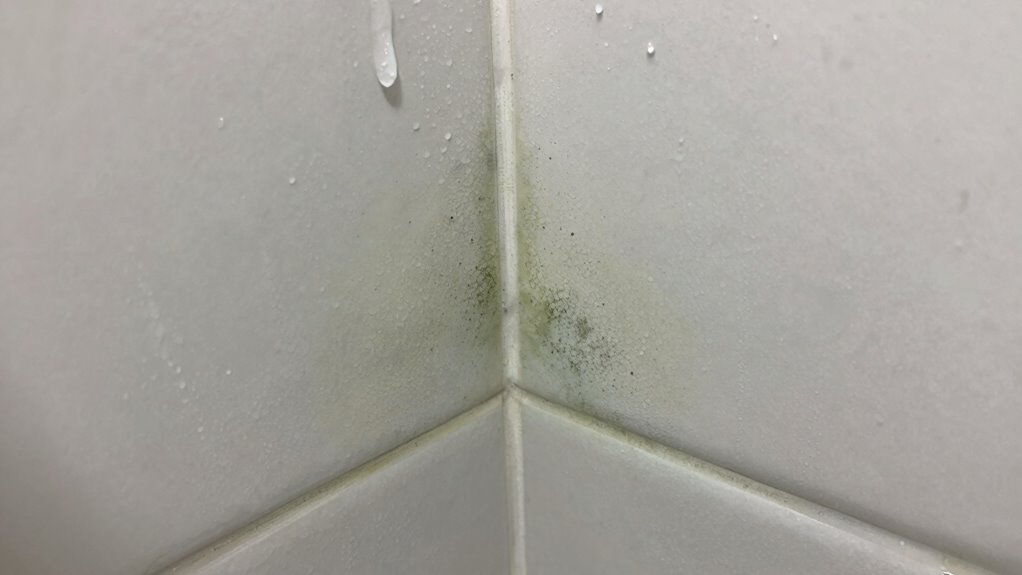
Recognizing urgent mold problems early can prevent extensive damage and health risks. If you notice rapid mold growth, a persistent musty smell, or visible mold that won’t clean away, it’s time to act. These signs indicate that moisture control has failed, and mold is spreading quickly. Be alert to:
- Dark, discolored patches on walls or ceilings
- Damp or water-damaged materials that don’t dry out
- Increased allergy or respiratory symptoms among household members
- Areas with ongoing leaks or water intrusion
Prompt action involves addressing moisture issues immediately and consulting professionals if mold has become invasive. Ignoring these signs allows mold to flourish, risking your home’s integrity and your health. Spotting these urgent problems early ensures you can contain and eliminate mold before it worsens. Addressing underlying moisture issues promptly can help prevent future mold growth and protect your living environment.
As an affiliate, we earn on qualifying purchases.
Perform Routine Moisture Checks to Catch Mold Early
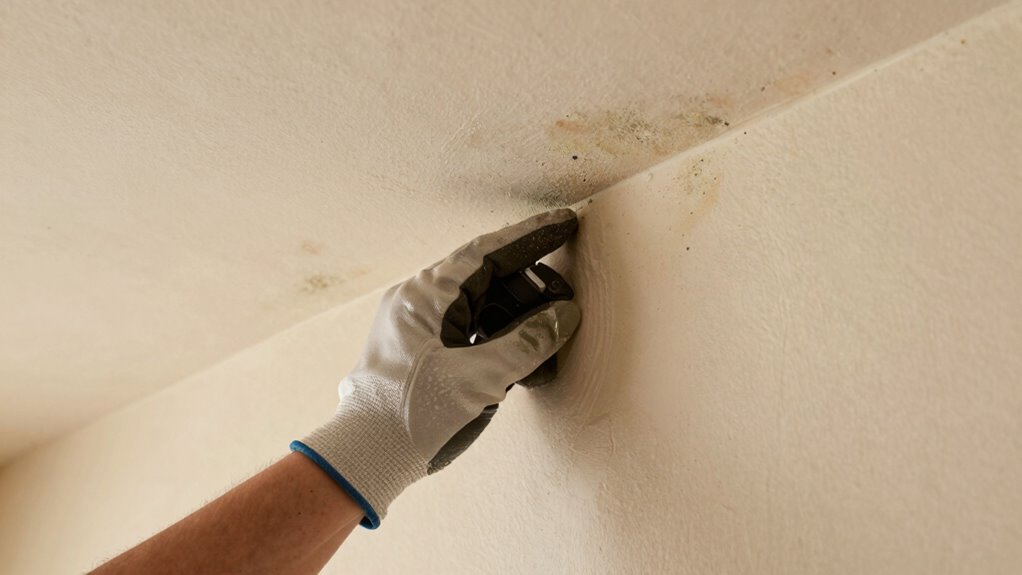
Regularly check for water leaks and keep an eye on humidity levels in your home. Inspect hidden areas like behind appliances and inside cabinets to catch moisture buildup early. By staying vigilant, you can spot problems before mold has a chance to develop. Additionally, maintaining proper air circulation helps prevent excess moisture accumulation that fosters mold growth. Ensuring good ventilation systems are in place can significantly reduce indoor humidity and discourage mold development. Monitoring indoor humidity levels with a hygrometer can provide valuable insights to prevent mold formation and support your caregiver emotional health by reducing stress related to home maintenance. Incorporating professional mold inspections periodically can further ensure that hidden mold issues are caught before they become problematic.
Check for Water Leaks
Have you ever wondered how small leaks can lead to big mold problems? Water damage from unnoticed plumbing issues can create the perfect environment for mold to thrive. Regularly check vulnerable areas like under sinks, behind appliances, and around pipes for signs of leaks. Catching leaks early prevents moisture buildup that fosters mold growth. Keep in mind:
- Dripping pipes or fixtures
- Discolored or warped walls and ceilings
- Musty odors indicating hidden leaks
- Puddles or damp spots on floors
These signs point to potential water damage, and addressing them promptly reduces mold risks. Staying vigilant about plumbing issues ensures your home stays dry and mold-free, saving you time and money in the long run. Routine inspections are your first line of defense against mold-prone environments. Additionally, understanding mold-prone spots helps you target areas that require extra attention. Regular moisture checks can significantly reduce the chance of mold development before it becomes a serious problem. For example, inspecting hidden areas behind appliances or under flooring can reveal moisture buildup early on, especially when combined with water leak detection techniques. Using proper ventilation can also help keep humidity levels in check and prevent mold growth.
Monitor Humidity Levels
Monitoring humidity levels is essential because high moisture can quickly lead to mold growth. When humidity stays above 60%, mold spores find it easier to settle and thrive. Use a reliable hygrometer to regularly check the air quality in vulnerable areas like bathrooms, basements, and kitchens. Keeping humidity in the ideal range (30-50%) helps prevent mold from developing. Consistently monitoring moisture levels allows you to catch early signs of excess dampness before mold becomes visible. This proactive approach reduces the risk of mold spores spreading and causing health issues. Maintaining proper humidity not only safeguards your home’s structure but also promotes healthier indoor air quality. Regular moisture checks are a simple, effective way to stay ahead of mold problems before they escalate. Vetted – Doomsday Robots Additionally, understanding mold-prone spots and their characteristics can help you focus your monitoring efforts more effectively. Recognizing moisture accumulation in hidden areas can alert you to potential problems before mold growth becomes apparent. Incorporating proper ventilation techniques can further decrease humidity levels and inhibit mold development. Being aware of common trouble spots and their moisture tendencies enables targeted prevention strategies.
Inspect Hidden Areas
Ever wondered what hidden mold problems might be lurking out of sight? Regularly inspecting concealed areas helps you catch moisture issues early before mold takes hold. Focus on hidden spaces like behind appliances, inside cabinets, under sinks, or in attics and basements. These spots often trap moisture without you noticing, creating ideal conditions for mold growth. To stay ahead, perform routine moisture checks using a moisture meter or visual inspections. Keep an eye out for:
- Discoloration or water stains
- Musty odors
- Peeling paint or wallpaper
- Condensation buildup. Incorporating monitoring tools like smart moisture sensors can enhance your ability to track these areas remotely and receive alerts when moisture levels rise, enabling proactive mold prevention. Additionally, understanding the signs of mold can help you identify early issues before they become widespread. Detecting problems early allows you to take swift action, preventing mold from spreading and causing damage. Staying vigilant in concealed areas is key to maintaining a healthy, mold-free environment.
As an affiliate, we earn on qualifying purchases.
Fix Leaks and Water Issues Immediately to Prevent Mold
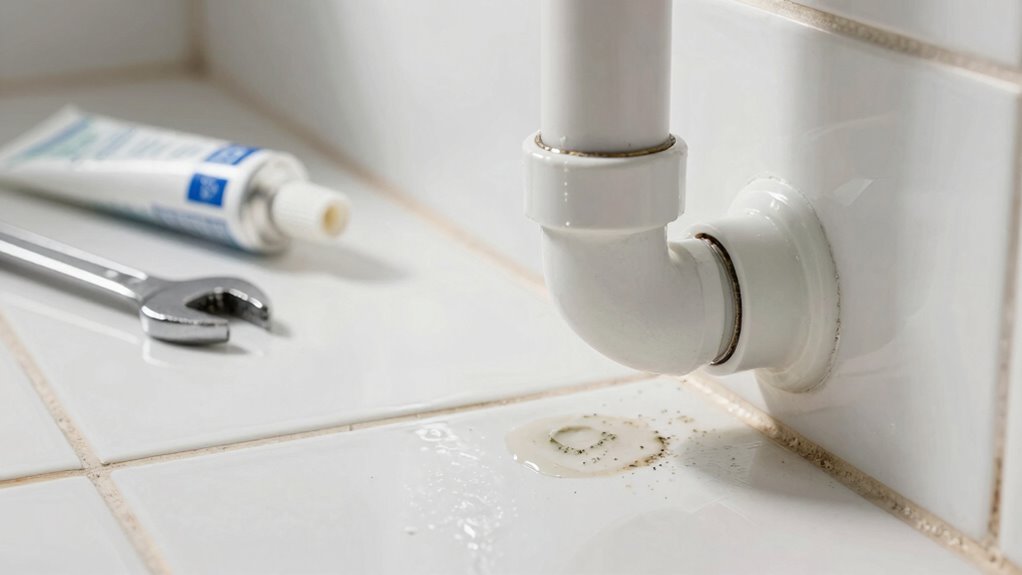
Water leaks and excess moisture create ideal conditions for mold to thrive, so addressing these issues promptly is essential. If you notice leaks in pipes or fixtures, fix them immediately to prevent water buildup. Poor basement humidity levels can lead to dampness that encourages mold growth, so use dehumidifiers if needed. In bathrooms, ensure proper ventilation to reduce moisture after showers or baths, which helps keep walls and ceilings dry. Regularly inspect plumbing and seals around sinks and tubs to catch leaks early. By controlling water sources and moisture levels, you create an environment less inviting for mold. Utilizing humidifiers and dehumidifiers can help maintain optimal moisture levels and prevent mold development. Quick action not only prevents mold from developing but also protects your home’s structural integrity and your health.
How to Clean Mold Spots Effectively and Safely
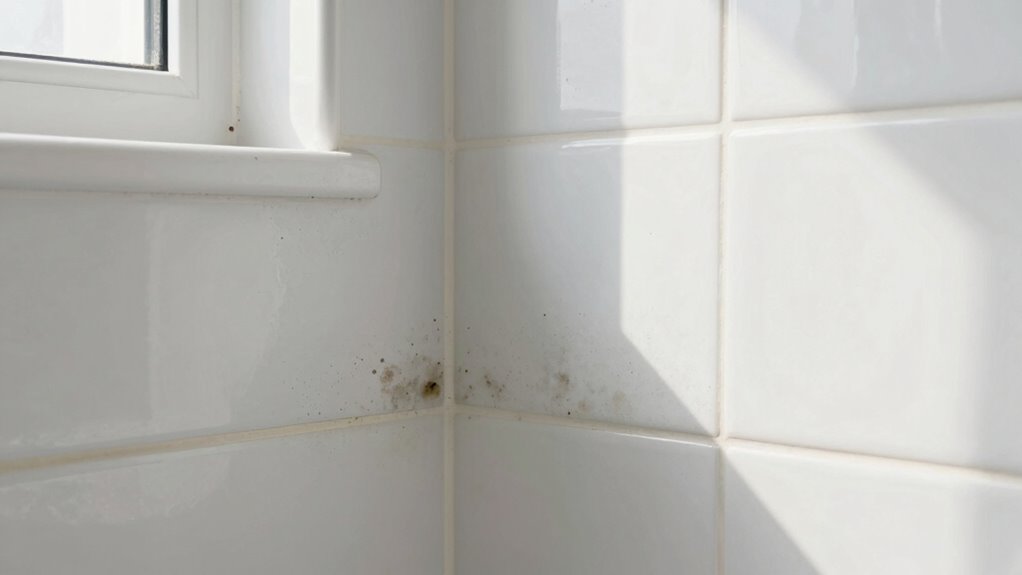
To clean mold spots effectively and safely, you need to use proper techniques that remove mold completely without releasing spores. Choose safe cleaning products like vinegar, baking soda, or commercial mold removers designed for household use. Always follow instructions carefully to protect yourself and guarantee the mold doesn’t return.
Proper Cleaning Techniques
When tackling mold spots, it’s essential to use proper cleaning techniques to guarantee you remove the mold safely and effectively. Start by wearing gloves and a mask to protect your air quality and prevent mold spores from becoming airborne. Use a stiff brush or sponge to scrub the affected area thoroughly. Keep the area well-ventilated to reduce humidity and mold growth. Remember, always dry the surface completely afterward to prevent mold from returning. To deepen your understanding:
- Focus on removing all visible mold to prevent spores from spreading
- Avoid mixing cleaning agents that could produce hazardous fumes
- Use a clean cloth to prevent cross-contamination
- Regularly inspect cleaned areas for signs of mold regrowth
Following these steps ensures safe, effective removal while maintaining a healthier indoor environment.
Safe Cleaning Products
Using the right cleaning products is essential for safely removing mold spots without harming your indoor environment. Opt for natural remedies like vinegar, baking soda, or hydrogen peroxide, which are effective and eco-friendly. DIY solutions can be just as powerful as commercial cleaners when used correctly. Always test a small area first to avoid damage. Here’s a quick guide:
| Natural Remedies | DIY Solutions |
|---|---|
| Vinegar (undiluted) | Mixture of baking soda and water |
| Hydrogen peroxide | Lemon juice |
| Tea tree oil | Borax solution |
Choose products based on the surface and severity. These options ensure safe, effective mold removal while safeguarding your home’s air quality.
Improve Ventilation to Keep Mold at Bay
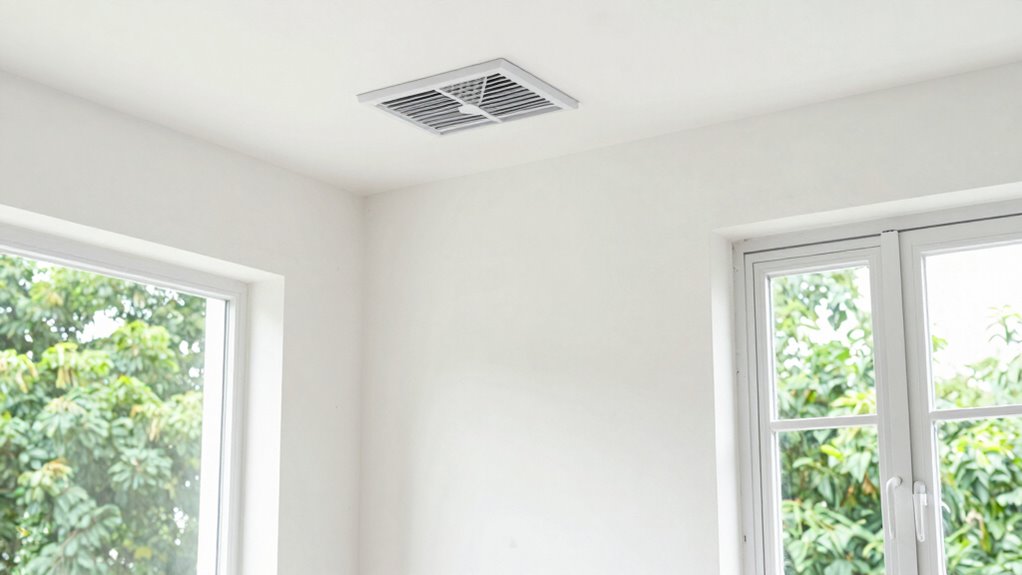
Ever wondered why proper ventilation is essential in preventing mold? Good air circulation helps reduce moisture buildup, which mold thrives on. Natural ventilation is a simple, effective way to improve airflow and keep damp areas dry. To maximize this, consider opening windows regularly, using exhaust fans in bathrooms and kitchens, and ensuring vents are unobstructed. Proper ventilation also involves maintaining a balance—too much can cause drafts, while too little traps humidity indoors. Keep these principles in mind:
- Use cross-ventilation by opening windows on opposite sides
- Install vents or exhaust fans in high-moisture areas
- Keep vents clean and unobstructed
- Use natural ventilation to promote continuous airflow
Choose Mold-Resistant Paints and Materials for High-Risk Areas
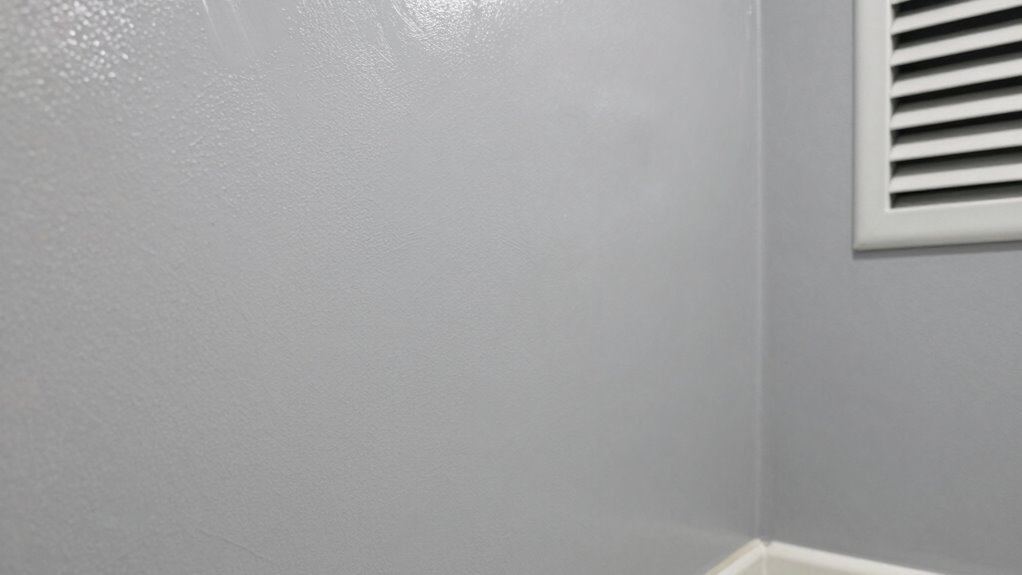
Choosing mold-resistant paints and materials is a proactive way to protect high-risk areas like bathrooms, basements, and kitchens from mold growth. When selecting paint, focus on options labeled as mold-resistant, which enhance material durability and prevent mold spores from settling. Opt for high-quality paint selection that offers moisture resistance and easy cleaning. For surfaces prone to dampness, consider using mold-resistant drywall or cement board, which provide added durability. Here’s a quick comparison:
| Material | Features |
|---|---|
| Mold-Resistant Paint | Inhibits mold growth, durable finish |
| Water-Resistant Drywall | Resistant to moisture, enhances durability |
| Epoxy Coatings | Long-lasting, suitable for high moisture areas |
| Vinyl Wallpaper | Moisture-resistant, easy to clean |
| Sealed Grout | Prevents water seepage, maintains material durability |
Choosing the right materials boosts protection and extends your space’s durability.
Keep Humidity Levels Under Control With Dehumidifiers
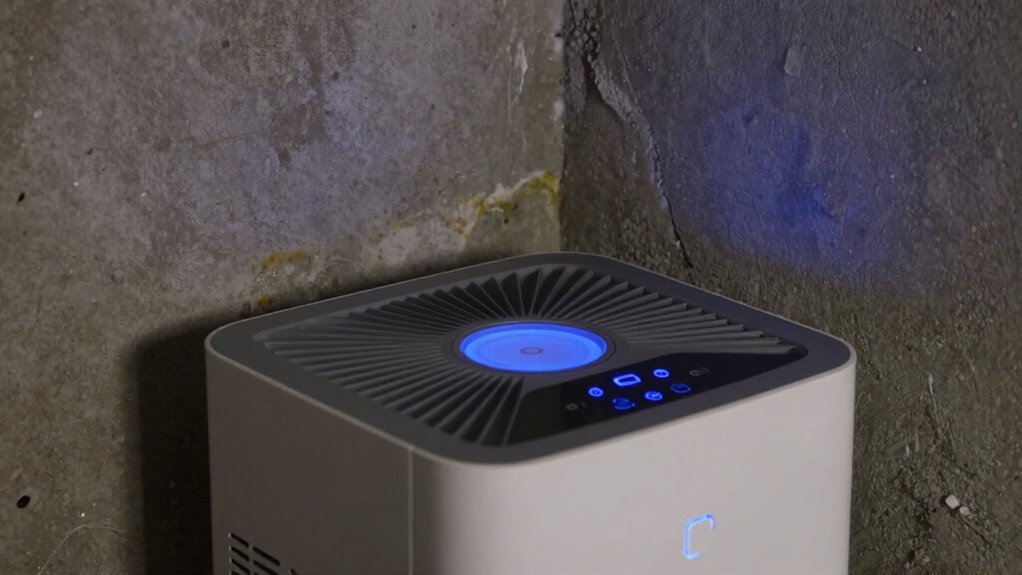
Controlling humidity levels is essential for preventing mold growth, especially in damp or poorly ventilated areas. Using a dehumidifier helps maintain ideal moisture levels, reducing mold risk. Regular dehumidifier maintenance ensures it runs efficiently, while humidity level monitoring keeps you informed. To maximize effectiveness:
Controlling humidity prevents mold growth; use dehumidifiers, maintain them, and monitor moisture levels regularly.
- Empty the water reservoir frequently
- Clean filters regularly
- Place the dehumidifier in strategic locations
- Use a hygrometer to track humidity
These steps ensure your device operates at its best and prevents excess moisture buildup. Keeping humidity below 60% discourages mold spores from settling and growing. By actively managing humidity levels, you create an environment less hospitable to mold and protect your home’s health. Stay vigilant with maintenance and monitoring to prevent mold-prone spots from becoming a problem.
When to Call a Professional for Serious Mold Problems
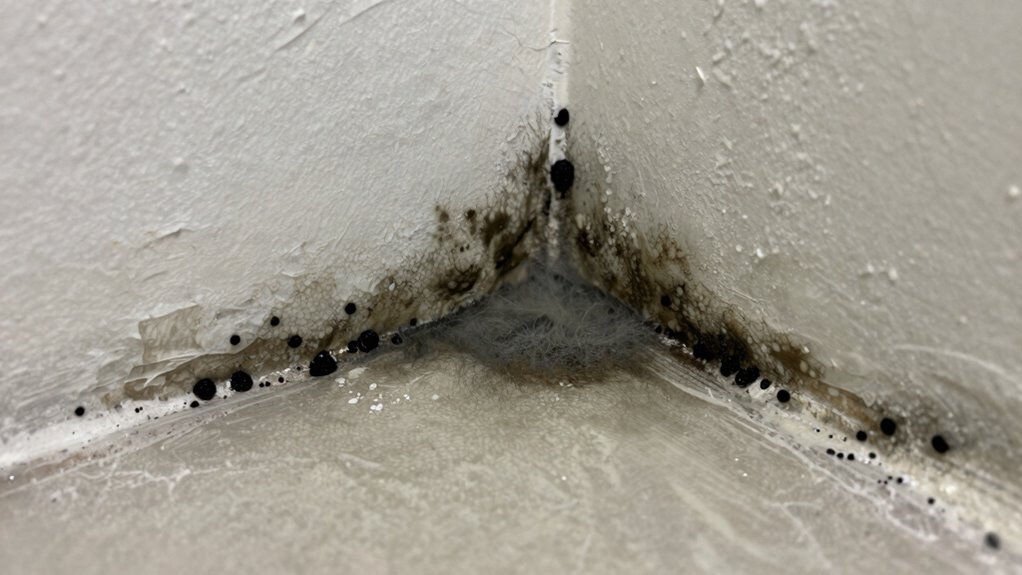
While minor mold spots can often be cleaned with household solutions, you should call a professional when mold covers a large area, penetrates deep into surfaces, or keeps returning despite your efforts. In such cases, mold testing is essential to determine the extent of the problem and identify hidden growth. Professional mold remediation guarantees safe and thorough removal, preventing health risks and further damage. If mold persists after your attempts to clean, or if you notice a strong musty odor, it’s time to seek expert help. Professionals have specialized equipment and techniques to handle serious mold issues effectively. Addressing the problem early with professional assistance can save you money and protect your health in the long run.
Frequently Asked Questions
Can Mold Grow in Areas With Minimal Moisture?
Yes, mold can grow in areas with minimal moisture if there’s enough humidity or if water is present from leaks or condensation. To prevent mold growth, you should focus on moisture control, ensuring proper ventilation and fixing leaks promptly. Even small amounts of moisture can promote mold development, so staying vigilant and maintaining a dry environment is key to avoiding mold problems before they start.
Are There Natural Remedies to Prevent Mold Buildup?
Yes, you can use natural treatments and herbal solutions to prevent mold buildup. You might try applying tea tree oil, which has antifungal properties, or using vinegar solutions to inhibit mold growth. Keep your space dry and well-ventilated, and regularly wipe surfaces with these herbal remedies. These natural options are safe, effective, and eco-friendly ways to keep mold at bay before it becomes a bigger problem.
How Long Does It Take for Mold to Become Visible?
Mold growth can show up in as little as 24 to 48 hours if moisture levels stay high. Don’t wait for it to become obvious; mold can be a wolf in sheep’s clothing. Keep an eye on damp spots, ventilate well, and control humidity. The clock’s ticking, so act fast—early detection saves you a lot of trouble later.
What Are the Health Risks Associated With Hidden Mold?
Hidden mold can pose serious health risks, including allergies, respiratory issues, and asthma attacks. Mold detection is vital to identifying these unseen dangers early. Without proper mold prevention, spores can spread, leading to long-term health problems. You should regularly check damp or hidden areas, like behind walls or under sinks, and address moisture problems swiftly. Staying vigilant helps protect your health from the dangers of unseen mold.
How Often Should I Inspect Hidden Mold-Prone Areas?
You should inspect hidden mold-prone areas at least every three to six months, especially in high-moisture spots. Use moisture monitoring tools to detect excess humidity, and incorporate this into your regular inspection schedule. Pay close attention to areas like behind appliances, under sinks, and in basements. Consistent checks help catch problems early, preventing mold growth and safeguarding your health and home.
Conclusion
Remember, an ounce of prevention is worth a pound of cure. By regularly checking for mold-prone spots, fixing leaks promptly, and maintaining good ventilation, you can keep mold at bay before it becomes a serious problem. Stay vigilant and proactive—small steps now save you from big headaches later. Don’t wait until mold takes hold; acting early keeps your home safe, healthy, and mold-free for years to come.
Fall Picks
fall essentials
As an affiliate, we earn on qualifying purchases.