
Understanding the five main clutter categories—junk, papers, sentimental items, miscellaneous objects, and digital files—helps you tackle clutter effectively. Start by identifying which type each item falls into, then use targeted strategies like sorting, discarding, or organizing. Create zones and routines to keep things under control long-term. If you want practical steps to clear out space and stay organized, exploring these categories further will give you the tools you need.

Get the latest gadgets delivered free — and shop member deals
- Fast, free delivery on millions of items
- Access to Prime Big Deal Days deals on October 6–7
- Prime Video, Amazon Music and more included
Key Takeaways
- Identify and categorize clutter into junk, files, sentimental items, scattered objects, and digital content for targeted decluttering.
- For junk clutter, discard or recycle items no longer serving a purpose or value.
- Organize files and digital content using clear categories, consistent naming, and regular maintenance.
- Clear out clothes by assessing fit, use, and emotional value, then donate or recycle unused items.
- Create designated zones and routines to maintain an organized space and prevent clutter buildup.
As an affiliate, we earn on qualifying purchases.
How to Recognize Different Types of Clutter in Your Space
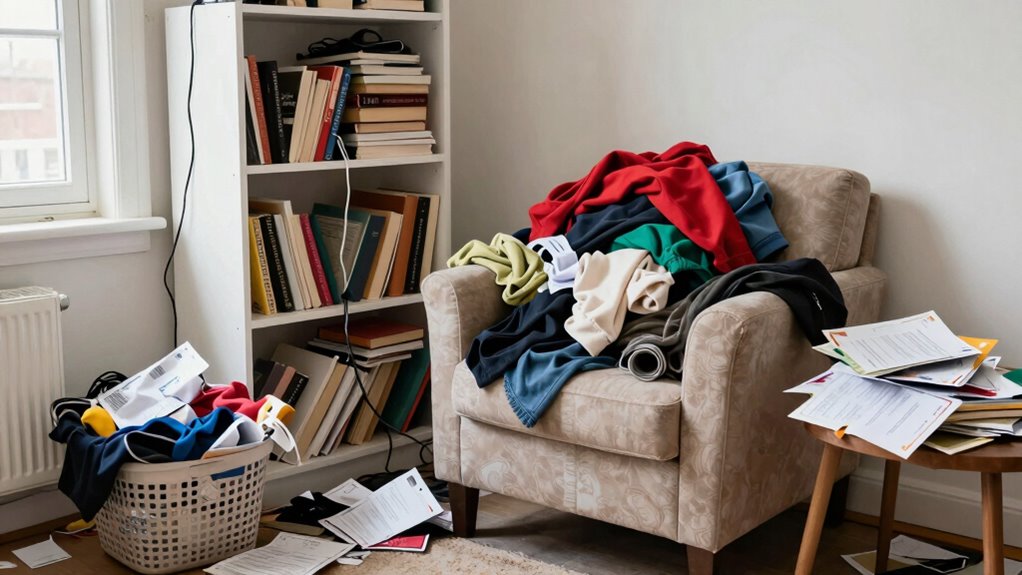
Have you ever wondered how to tell different types of clutter apart? Recognizing clutter categories is key to tackling them effectively. Start by observing your space: is it filled with items that no longer serve a purpose, like old clothes or broken gadgets? These belong to the “junk clutter” category. Or are your surfaces overwhelmed with papers, receipts, and digital files, indicating clutter in your files or documents? For these, implementing proper storage solutions can help keep things in order. Other clutter types include sentimental items that take up space or miscellaneous objects scattered around without a clear home. Identifying each clutter category allows you to choose targeted storage solutions, making decluttering more manageable. Additionally, being aware of different content formats can help you organize digital clutter more effectively. Recognizing these distinct clutter types can also help you develop a systematic approach to decluttering, ensuring you address each category efficiently. Paying attention to natural decluttering patterns can also reveal which areas tend to accumulate clutter most quickly and require regular maintenance. Understanding the causes of clutter can further inform your strategies for prevention and ongoing organization. Incorporating clutter triggers awareness can help you prevent future buildup by addressing habits that contribute to disorder.
As an affiliate, we earn on qualifying purchases.
Simple Steps to Organize and Declutter Paper and Digital Files
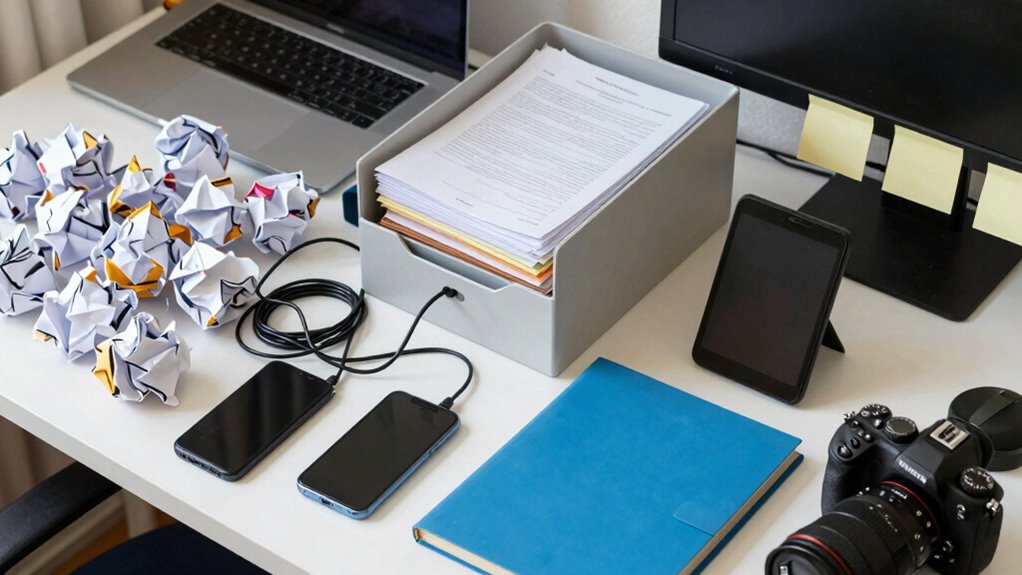
Are you overwhelmed by the clutter of paper and digital files that seem to pile up unexpectedly? Start by setting aside a specific time to tackle your files. Begin with file organization by creating clear categories—such as invoices, receipts, or work documents—and assigning dedicated folders for each. For digital decluttering, delete unnecessary files and unsubscribe from unneeded newsletters to reduce digital clutter. Use consistent naming conventions to make future searches easier. Consider using cloud storage or external drives to back up important files, freeing up space on your devices. Regular maintenance is key: schedule weekly or monthly reviews to keep your files organized and clutter-free. Taking these simple steps helps you regain control and keeps your paper and digital files manageable.
As an affiliate, we earn on qualifying purchases.
Clear Out Clothes and Keep Only What You Need
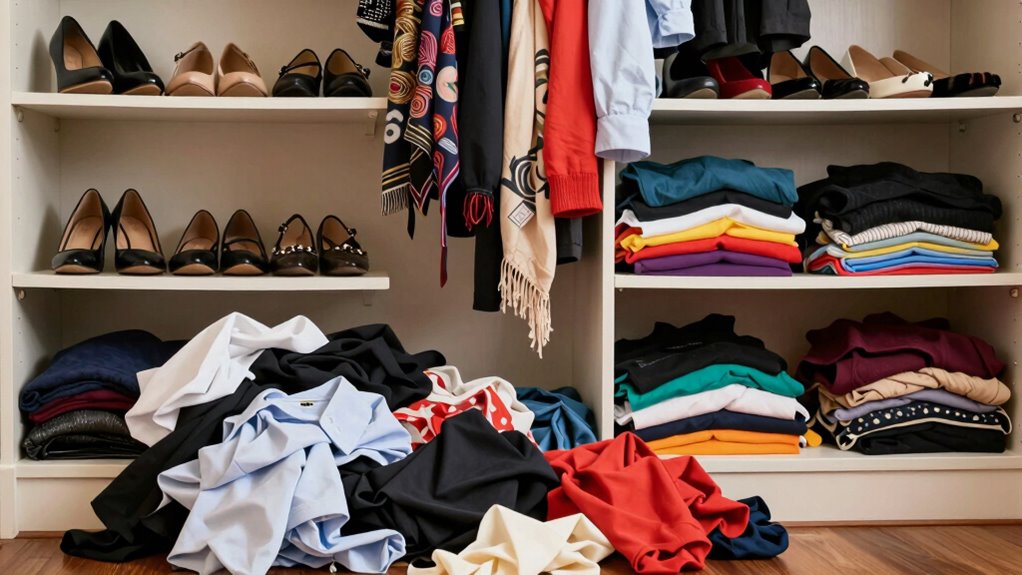
Wondering how to tackle overflowing closets? Start with a wardrobe detox by removing clothes you no longer wear or need. Clothing overaccumulation can make it hard to find what you truly love and cause unnecessary stress. Lay out everything and honestly assess each item. Ask yourself if it fits, if you’ve worn it recently, or if it sparks joy. Be ruthless—if it doesn’t meet these criteria, it’s time to let it go. Donations or recycling are good options for items in decent shape. Keep only what you genuinely need and love, creating space for a more functional wardrobe. Incorporating vintage and antique furnishings can inspire a cozy and authentic feel to your space, making the process of decluttering more meaningful. Recognizing the importance of ergonomics can help you organize your wardrobe for easier access and better posture while dressing. Considering clothing storage solutions can further optimize your space and improve your daily routine, reducing clutter and simplifying your life. Additionally, thoughtful space planning can help maintain an organized environment that invites relaxation and efficiency.
As an affiliate, we earn on qualifying purchases.
Designate Zones and Regularly Purge Miscellaneous Items
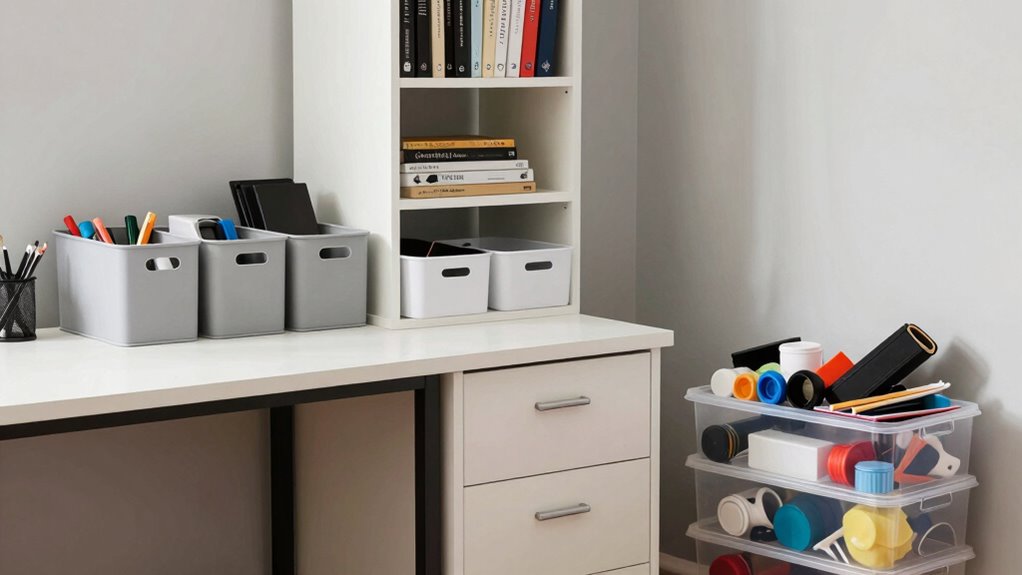
Once you’ve pared down your wardrobe, the next step is to organize what’s left by creating designated zones for different categories of items. Clear clutter zones for specific items—like shoes, accessories, or seasonal gear—so everything has a home. Use storage solutions like bins, shelves, or drawer dividers to keep these zones neat and accessible. Regularly purge miscellaneous items that don’t belong in any zone or have accumulated unnecessarily. Set aside time weekly or monthly to revisit these areas, removing items you no longer need or use. Incorporating organization techniques such as labeling and categorization can further streamline your system and make it easier to maintain. This ongoing effort prevents clutter from piling up and keeps your space functional. Additionally, performance metrics such as tracking what items are used most often can help you make informed decisions about what to keep or discard. Developing a clutter management strategy that includes monitoring and adjusting your zones over time can ensure your organization remains effective and sustainable. Regular assessment of your organization system, inspired by law updates and strategic planning, can help you adapt to changing needs and keep clutter at bay. To further enhance your organization, consider implementing simple DIY storage solutions that can be customized to fit your space and needs. By establishing dedicated zones and routinely purging, you create a system that’s easy to maintain and minimizes chaos.
Build Habits to Keep Your Space Clutter-Free Long-Term

How can you guarantee your clutter stays at bay long-term? Building daily habits is key. Use habit tracking to stay accountable and notice progress, which boosts motivation boosters. Consistently dedicating a few minutes each day to tidying prevents clutter from piling up. Establish routines like sorting mail immediately or putting away items after use. To deepen your understanding, consider this:
| Habit Formation | Motivation Boosters |
|---|---|
| Track daily tasks | Celebrate small wins |
| Set reminders | Visual progress cues |
| Create cues | Reward consistency |
| Make it enjoyable | Share goals with others |
Additionally, implementing consistent routines for your beauty and skin care can help maintain a clutter-free space by preventing the accumulation of unused products. Developing effective organization systems supports your efforts and makes tidying easier over time. Incorporating minimalist principles into your space can further reduce clutter and simplify your daily habits. Regularly practicing mindful decluttering can also prevent clutter buildup and keep your environment organized. These strategies reinforce your commitment, making clutter management part of your lifestyle rather than a chore. Consistency ensures long-term success and keeps your space clutter-free.
Frequently Asked Questions
How Can I Prevent Clutter From Returning After Decluttering?
To prevent clutter from returning, you should adopt simple daily habits like putting things back immediately and using effective storage solutions. Regularly declutter to stay on top of things and avoid accumulation. Make a habit of reviewing your space weekly, and invest in smart storage options to keep everything organized. Consistency is key; when you stay disciplined with these habits, clutter won’t have a chance to build up again.
What Are Effective Strategies for Decluttering Sentimental Items?
Did you know that 70% of people struggle with decluttering sentimental items? To tackle this, focus on memory preservation by photographing or creating a digital archive of keepsakes. Limit yourself to a manageable number of items that truly hold emotional attachment. Keep only the pieces that evoke strong, positive feelings, and consider repurposing or gifting others. This way, you honor your memories without overwhelming your space.
How Do I Involve Family Members in Decluttering Efforts?
You can involve family members in decluttering by encouraging family participation and sharing responsibilities. Make it fun by setting a timer or playing music, and discuss the benefits of a tidy space together. Assign specific tasks based on everyone’s strengths and preferences, and celebrate small wins. When everyone contributes, it becomes a team effort, making the process quicker and more enjoyable for all.
What Tools or Storage Solutions Best Combat Specific Clutter Types?
Imagine your clutter as a tangled garden needing clear pathways. Use sturdy storage bins to contain larger messes, transforming chaos into organized beds. Drawer dividers act like neat trellises, keeping small items upright and accessible. These tools help combat specific clutter types by creating designated zones, making tidying easier. With these solutions, you’ll cultivate a tidy space where every item has its place, and clutter no longer overflows into your daily life.
How Often Should I Revisit My Decluttering Routines?
You should revisit your decluttering routines every few months to maintain an organized space. Incorporate regular maintenance routines, like quick weekly tidies, to prevent clutter from piling up. Adjust decluttering frequency based on your lifestyle—more often if you tend to accumulate quickly or less if you’re naturally tidy. Staying consistent helps you keep clutter under control and makes your space feel fresh and manageable over time.
Conclusion
By recognizing the different types of clutter and tackling each with simple, consistent habits, you can transform your space into a haven of order. Think of clutter as a garden—you have to pull weeds regularly to keep it beautiful. Stay committed to your routines, and soon, clutter will be just a distant memory. With patience and effort, you’ll create a home that feels as calming as a gentle breeze on a sunny day.
Fall Picks
fall essentials
As an affiliate, we earn on qualifying purchases.