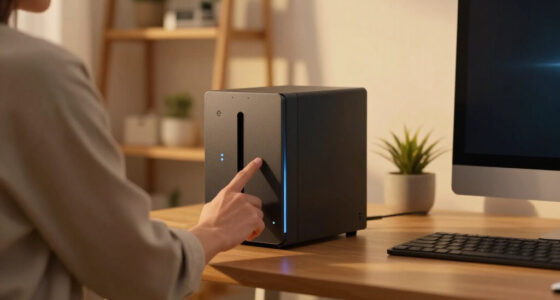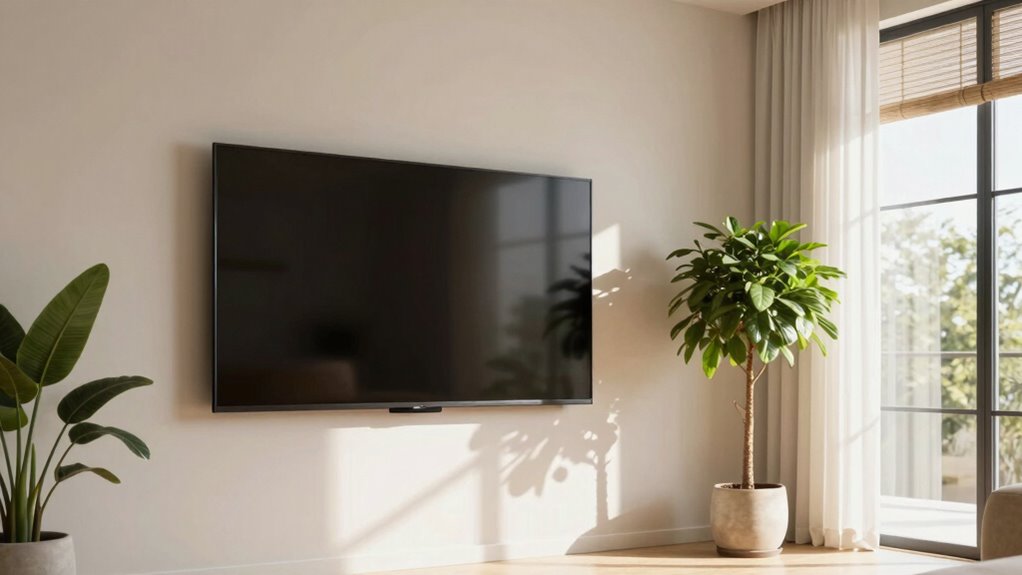

To reduce screen glare in any room, start by adjusting your device brightness to match ambient light and use anti-glare screen protectors or matte filters. Position your screen perpendicular to windows and avoid bright lights shining directly on it. Control natural light with curtains or blinds, and use layered lighting like lamps and diffusers to create a comfortable environment. If glare persists, exploring professional solutions can help, which you’ll discover more about below.

Get the latest gadgets delivered free with Prime
- Fast, free delivery on millions of items
- Prime Video, Amazon Music and more included
- Member-only deals all year
Key Takeaways
- Use layered lighting and position fixtures to minimize reflections on screens.
- Adjust device brightness and contrast to match ambient lighting conditions.
- Install matte or anti-glare screen protectors and keep screens clean.
- Manage natural light with curtains, blinds, or window films to control glare sources.
- Reposition furniture and screens to avoid direct exposure to bright light sources and reflections.
anti-glare screen protector for laptops
As an affiliate, we earn on qualifying purchases.
As an affiliate, we earn on qualifying purchases.
What Causes Screen Glare and How It Affects Your Eyes
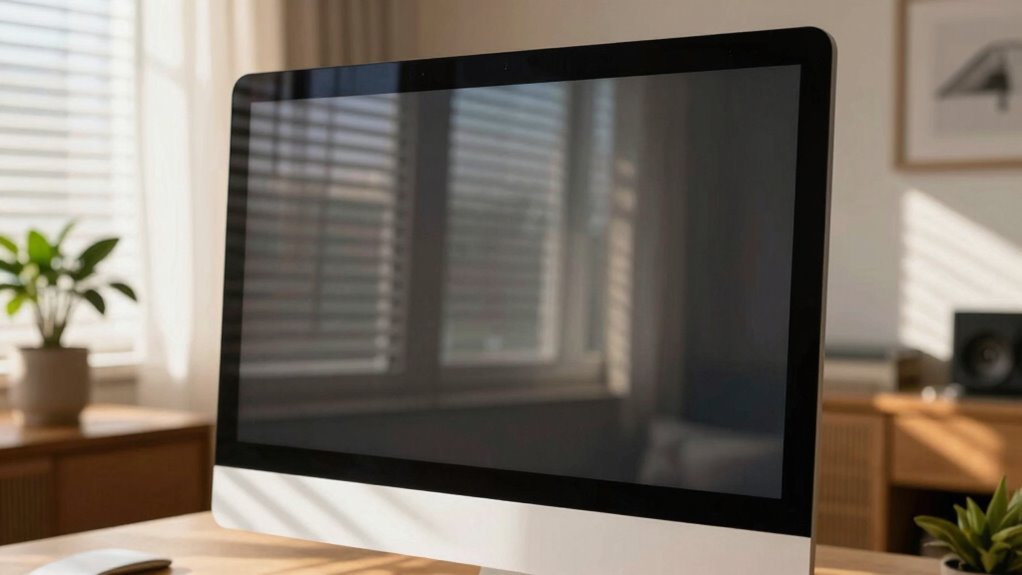
Since screen glare occurs when light reflects off your device’s surface, it can considerably strain your eyes and reduce visibility. This glare causes your eyes to work harder to focus, leading to eye strain and discomfort. When light bounces off your screen, it diminishes visual clarity, forcing you to squint or adjust your position constantly. Over time, this can cause headaches, blurred vision, and fatigue. The more glare you experience, the more your eyes struggle to maintain comfort, making it difficult to concentrate on your work or entertainment. Understanding that glare impacts your visual comfort helps you realize the importance of managing lighting conditions and screen placement to protect your eye health and keep your eyes feeling relaxed. Implementing DIY tools and safety tips such as screen filters or proper lighting setups can effectively reduce glare and improve your viewing experience. Additionally, optimizing your room’s natural and artificial lighting can significantly lessen visual discomfort caused by glare. Recognizing the role of lighting control can help you create a more comfortable viewing environment and minimize strain. Proper screen positioning can also help reduce reflections and improve overall comfort during extended screen time. Incorporating ergonomic setup practices can further enhance your comfort and reduce eye fatigue during prolonged use.
matte monitor filter for computer screens
As an affiliate, we earn on qualifying purchases.
As an affiliate, we earn on qualifying purchases.
How to Adjust Device Settings to Reduce Screen Glare
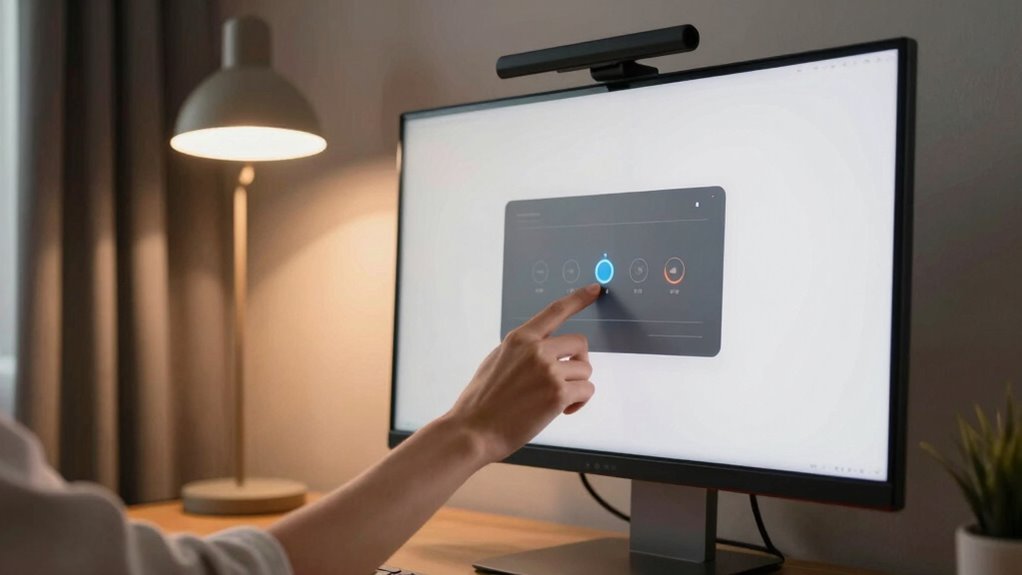
Adjusting your device settings can substantially reduce screen glare and improve your viewing comfort. Start by lowering your device brightness to prevent excessive light from bouncing off the screen. Next, adjust the contrast to enhance clarity, making details easier to see without straining your eyes. Consider these steps:
Lower your device brightness and adjust contrast to reduce glare and enhance comfort.
- Reduce device brightness to match ambient lighting.
- Increase contrast for sharper image quality.
- Enable auto-brightness if available, so the device adapts automatically.
- Fine-tune contrast adjustment to balance brightness and detail.
- Using screen cleaning techniques, such as cleaning your device’s glass regularly, can also help minimize glare and improve visibility. Additionally, adjusting ambient lighting in the room can significantly decrease screen glare and enhance overall viewing comfort. Proper lighting can also help reduce eye strain, making your viewing experience more comfortable during extended use. Ensuring that your room lighting is properly positioned can further lessen reflections and improve your screen visibility. Regularly reviewing your device’s display settings can help maintain optimal glare reduction as lighting conditions change.
adjustable desk lamp with layered lighting
As an affiliate, we earn on qualifying purchases.
As an affiliate, we earn on qualifying purchases.
Tips for Proper Room Lighting to Minimize Glare
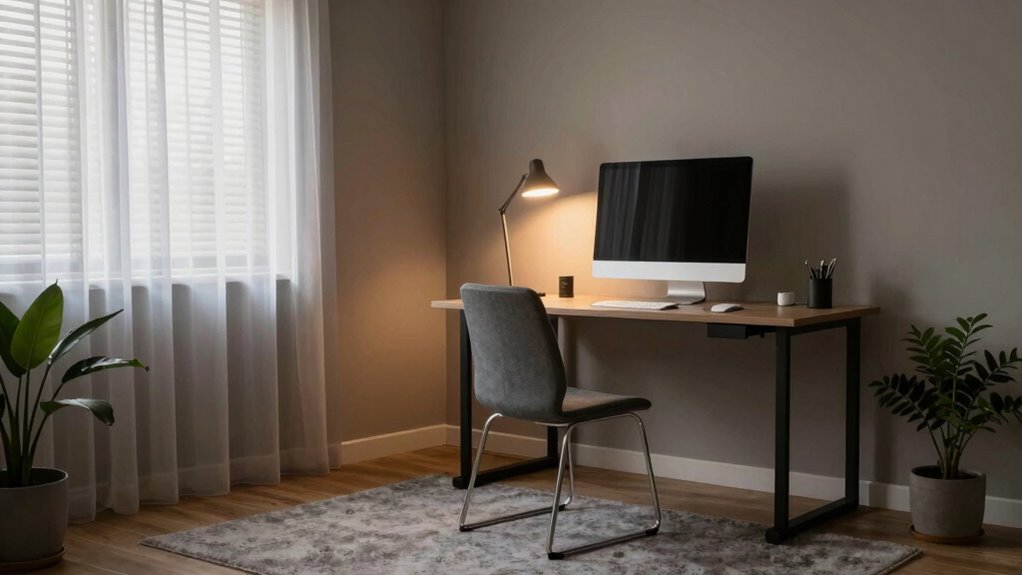
To reduce screen glare, you should use layered lighting to balance brightness and avoid harsh contrasts. Position your lights strategically so they don’t shine directly on your screens, and choose the right light bulbs to prevent unnecessary glare. These simple adjustments can make a noticeable difference in creating a more comfortable viewing environment. Additionally, selecting the appropriate battery inverter generator capacity can ensure consistent, flicker-free lighting, further reducing eye strain and glare. Understanding measurement tools can help you assess ambient lighting levels and optimize your room setup effectively, especially since proper lighting is essential for visual comfort during extended screen use. Properly calibrated lighting also minimizes unwanted reflections, which can contribute to glare and discomfort. Being aware of lighting standards can help you create a safer and more efficient lighting environment tailored to your needs.
Use Layered Lighting Properly
Layered lighting involves combining different types of light sources to create a balanced and flexible illumination environment. To reduce glare, use layered lighting strategically.
- Start with ambient illumination to set a soft, overall glow in the room, avoiding harsh overhead lights.
- Add task lighting near work areas, like desk lamps, to provide direct light without spilling onto screens.
- Incorporate accent lights to highlight features and prevent dark corners that can cause eye strain.
- Use dimmable fixtures to adjust brightness depending on the time of day or activity.
This layered approach helps distribute light evenly, minimizes reflections, and ensures your space is well-lit without overpowering your screens. Properly balancing ambient illumination with other light sources creates a glare-free environment.
Position Lights Strategically
Properly positioning your lights can substantially reduce glare by directing illumination where it’s needed and preventing unwanted reflections. Start with strategic lamp placement—place lamps to the sides or behind your screen rather than directly in front or above it. This prevents light from bouncing directly into your eyes or onto your screen surface. Incorporate light layering by combining ambient, task, and accent lighting, which creates balanced illumination and minimizes harsh contrasts. Avoid placing bright lights behind your monitor, as they can increase glare. Instead, aim light sources away from screens and reflect light off walls or ceilings to diffuse it evenly. Additionally, using glare-reducing lighting fixtures designed to minimize glare can enhance comfort. Ensuring your lighting setup aligns with ergonomic principles can also contribute to a more comfortable and eye-friendly environment. Proper lighting placement is essential in controlling reflections and creating a more comfortable viewing environment. By carefully positioning your lights, you control where the light goes, reducing reflections and glare, and creating a more comfortable viewing environment. Incorporating ambient lighting can also help balance brightness levels across the room for improved visual comfort.
Select Appropriate Light Bulbs
Choosing the right light bulbs is essential for minimizing glare in any room. Proper light bulb selection impacts both brightness and comfort. Consider these factors:
- Use bulbs with a warm color temperature (around 2700K to 3000K) to reduce harsh reflections.
- Opt for LED bulbs with diffusers or frosted finishes to soften light output.
- Select bulbs with lower lumens for ambient lighting, avoiding overly bright spots.
- Avoid high-intensity bulbs near screens to prevent unwanted glare and eye strain.
- Incorporate light scattering techniques such as lampshades or diffusers to further reduce glare and improve overall lighting quality. Additionally, choosing bulbs with glare reduction features can help create a more comfortable environment.
- Proper bulb selection can also contribute to improved indoor air quality by reducing the need for multiple light sources and minimizing dust accumulation around fixtures. Incorporating appropriate fixture placement not only enhances glare control but also optimizes lighting distribution for a balanced environment.
window blinds for glare reduction
As an affiliate, we earn on qualifying purchases.
As an affiliate, we earn on qualifying purchases.
How to Position Your Screen and Furniture to Avoid Reflections
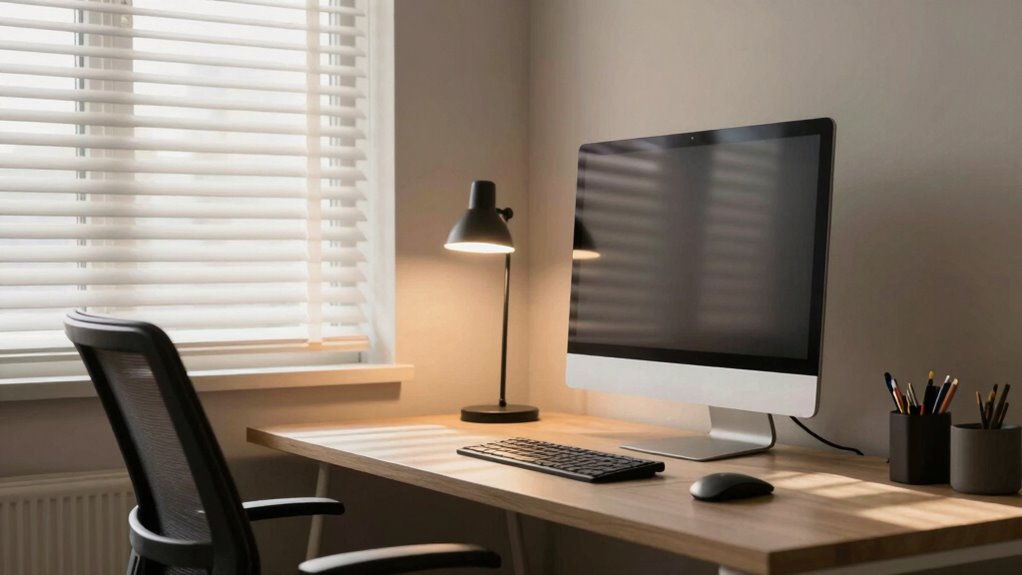
Position your screen so it’s perpendicular to windows and bright light sources to reduce reflections. Arrange your furniture to keep glare-causing surfaces away from your view. By focusing on ideal placement, you can create a more comfortable, glare-free workspace. Additionally, consider using neural interface technologies that can help optimize your environment for visual comfort.
Optimal Screen Placement
To minimize screen glare, you should carefully arrange your monitor and furniture so reflections don’t distract you. Start by positioning your screen perpendicular to windows, reducing direct ambient illumination. Next, make sure your monitor is at eye level for ergonomic positioning, preventing neck strain. Consider the placement of nearby light sources; avoid placing them behind or beside the screen. Place your desk so that natural light hits the room indirectly, not directly on the display. Use adjustable furniture to fine-tune your setup. Keep your monitor about an arm’s length away for ideal viewing. Lastly, dim or turn off bright lights when working, aligning ambient illumination with your screen to reduce glare and eye strain. Proper placement creates a comfortable, glare-free workspace.
Strategic Furniture Arrangement
Strategic furniture arrangement plays a crucial role in minimizing screen reflections. Start by considering your room layout and positioning your furniture to reduce direct light hitting your screen. Place your desk or seating so that windows or light sources are behind or beside you, not in front. Adjust furniture placement to keep reflective surfaces, like glass tables or mirrors, away from your screen’s line of sight. Use angled furniture to block or divert light and reflections. Keep your screen at a position where reflections from lamps, windows, or other bright objects are minimized. By thoughtfully arranging your furniture, you control how light interacts with your space, making glare less intrusive and creating a more comfortable viewing environment.
Choosing Window Treatments to Control Natural Light
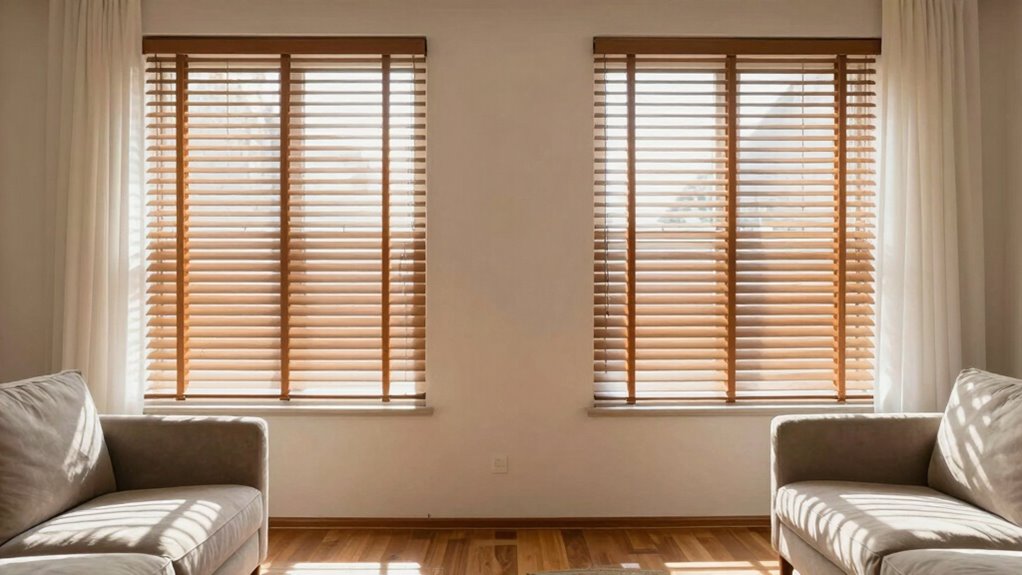
Choosing the right window treatments is essential for controlling natural light and reducing glare in any room. You can achieve this with options like:
Selecting the right window treatments helps control natural light and minimize glare for a more comfortable space.
- Installing window film that reflects or filters sunlight, minimizing harsh glare.
- Using blackout curtains to block out excessive light during bright parts of the day.
- Opting for adjustable blinds that let you control the amount of light entering.
- Combining sheer curtains with heavier drapes for flexibility depending on your needs.
These choices help you manage natural light effectively, creating a more comfortable viewing environment. Window film offers a sleek, permanent solution, while blackout curtains provide full coverage when needed. By selecting the right treatments, you can reduce screen glare without sacrificing natural brightness.
Using Ambient Lighting to Balance Brightness and Reduce Eye Strain

When working or relaxing near screens, balancing ambient lighting is key to reducing eye strain and preventing glare. Proper ambient lighting creates a comfortable environment by softening harsh light contrasts and minimizing reflections on your screen. Instead of bright overhead lights that cause glare, opt for diffuse lighting sources such as lamps with adjustable settings or wall-mounted fixtures. These help distribute light evenly across the room, enhancing eye comfort. Avoid placing bright lights directly behind or in front of your screen, as this can increase glare and cause eye fatigue. The goal is to achieve a harmonious lighting balance that reduces the strain on your eyes while maintaining visibility. Well-managed ambient lighting makes screen time more comfortable and helps prevent long-term eye issues.
Anti-Glare Screen Protectors and Filters: Are They Worth It?
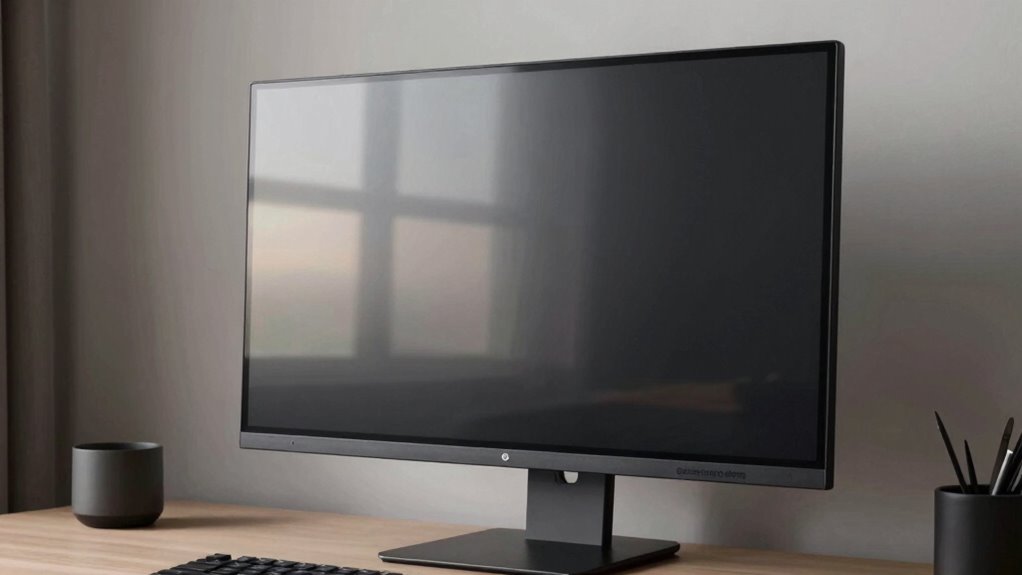
Are anti-glare screen protectors and filters worth investing in? They can be a smart choice if you’re looking to reduce reflections and eye strain. The screen protector benefits include minimizing glare, enhancing screen clarity, and protecting your device from scratches. When considering filter installation tips, keep these points in mind:
- Clean your screen thoroughly before applying.
- Align the filter carefully to avoid bubbles.
- Use a credit card to smooth out air pockets.
- Choose a filter with anti-reflective properties for best results.
While these filters can improve viewing comfort, remember they might slightly reduce screen brightness. Overall, if glare is a persistent issue, investing in a quality anti-glare screen protector can be worth it, especially when combined with good screen management habits.
Simple Habits for Reducing Glare During Device Use
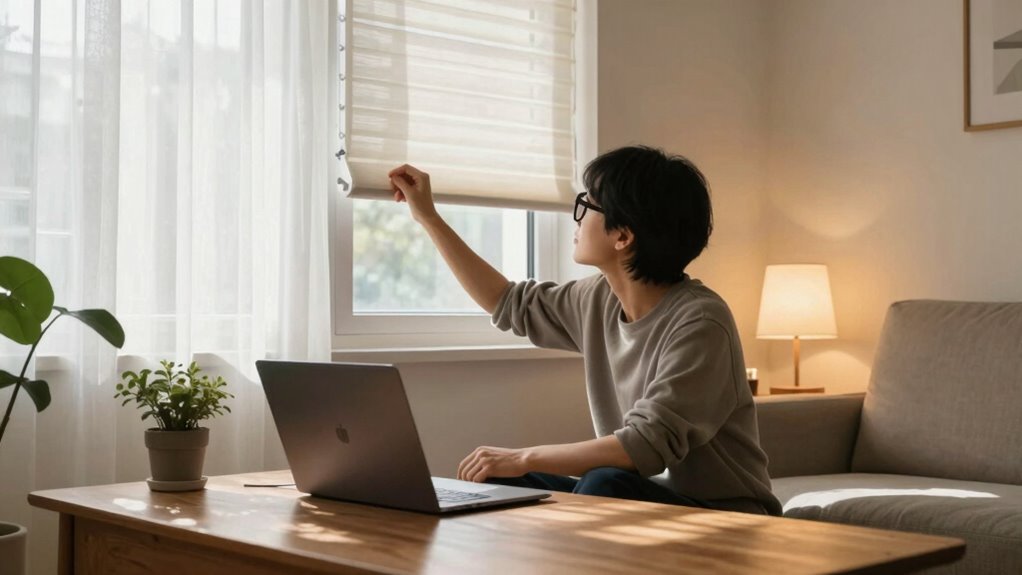
To minimize glare during device use, adopting simple habits can make a significant difference. Maintain an ergonomic posture by sitting upright with your screen at eye level, reducing strain and glare reflection. Take regular breaks to perform eye exercises, such as blinking frequently or focusing on distant objects, to relax your eyes and prevent fatigue. Adjust your device’s brightness to match ambient lighting, avoiding excessive contrast that worsens glare. Keep your workspace organized, with minimal clutter and indirect lighting, to prevent unwanted reflections. Practice these habits consistently to improve visual comfort and reduce glare during prolonged device use. Small adjustments in your daily routine can lead to noticeable relief, helping you work or relax without the distraction of screen glare.
When to Seek Professional Solutions for Persistent Glare
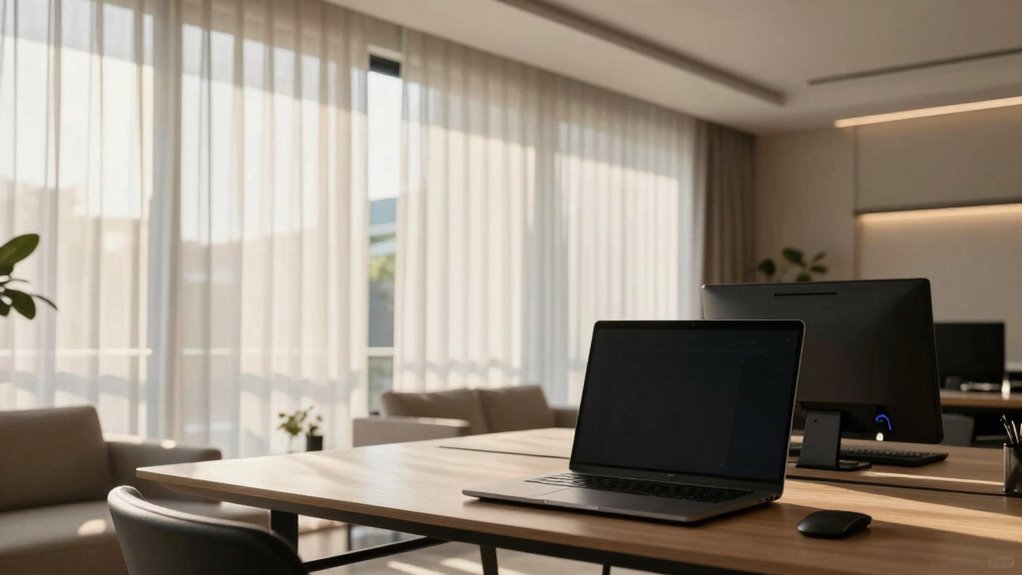
If you notice glare that won’t go away despite your efforts, it may be time to consult a professional. Persistent glare, especially in complex lighting situations, can indicate underlying issues that need expert assessment. Recognizing these signs helps you decide when specialized solutions are necessary.
Persistent Glare Indicators
Persistent glare that refuses to diminish despite adjusting blinds, repositioning screens, or changing lighting often signals a deeper issue requiring professional attention. Look for clear glare indicators and reflection cues that suggest the problem is beyond simple fixes. If you notice:
- Constant reflections on screens that don’t respond to repositioning
- Persistent halos or bright spots around lights
- Unusual or uneven glare patterns across the room
- Visual discomfort or headaches despite adjustments
these are signs it’s time to seek expert help. These reflection cues often point to underlying issues like improper window treatments or faulty lighting setups. Addressing this early can prevent long-term eye strain and improve your workspace comfort. Recognizing these indicators ensures you get the right professional solutions when needed.
Complex Lighting Environments
When multiple light sources interact unpredictably in a room, it can create complex glare that’s difficult to resolve with simple adjustments. These glare causes often involve uneven lighting, reflections, and overlapping light sources, which can lead to persistent eye strain. If you’ve tried repositioning lamps or adjusting blinds without success, professional help might be necessary. Lighting experts can analyze your space to identify underlying issues and recommend tailored solutions, such as specialized lighting fixtures or controlled lighting zones. Persistent glare from complex environments can greatly impact your comfort and productivity. Recognizing when to seek professional solutions ensures that you address the root causes of glare, reducing eye strain and creating a more comfortable viewing environment.
Practical Tips for Maintaining a Glare-Free Viewing Environment
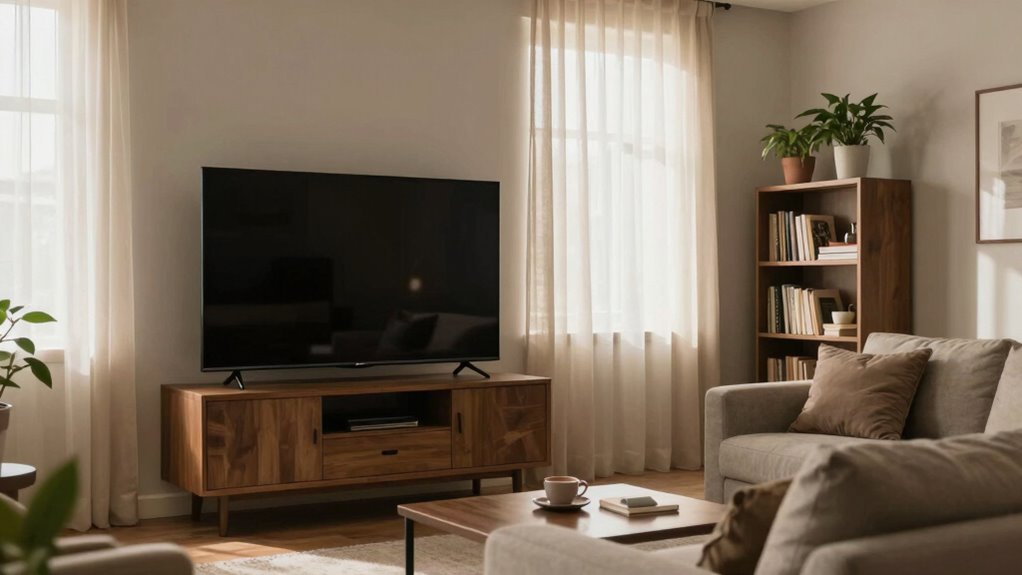
Maintaining a glare-free viewing environment requires proactive steps to control light sources and position your screens effectively. To reduce eye fatigue caused by blue light and glare, consider these tips:
- Adjust your screen’s angle so it avoids direct reflections from windows or lamps.
- Use matte screen protectors to minimize glare and diffuse reflections.
- Incorporate soft, indirect lighting to balance ambient light and prevent harsh contrasts.
- Regularly clean screens to prevent dust buildup that can intensify glare.
Frequently Asked Questions
Can Specific Colors of Walls Help Reduce Screen Glare?
Yes, wall color and paint shade can help reduce screen glare. Opt for matte or flat finishes rather than glossy ones, as they minimize reflections. Choose darker, muted shades like soft gray or taupe, which absorb light instead of reflecting it. Light colors tend to bounce light around the room, increasing glare. By selecting the right wall color, you create a more comfortable viewing environment and lessen screen glare effectively.
How Does Screen Size Impact Glare and Eye Strain?
A larger screen size can increase glare and eye strain because it exposes more surface area to ambient light. Higher display resolution helps by providing sharper images, reducing the need to squint or strain your eyes. To minimize glare, choose a screen size that fits your workspace comfortably and opt for a high-resolution display. Adjust brightness settings and position your screen to avoid direct light sources for better eye comfort.
Are There Particular Window Films Effective Against Glare?
Yes, certain window film options effectively combat glare using advanced glare reduction technology. You should look for films designed specifically for glare reduction, which minimize reflections while maintaining visibility. These films also block UV rays and control heat, enhancing comfort. By choosing the right window film options, you’ll reduce glare, improve screen clarity, and protect your eyes, creating a more comfortable and productive environment.
What Role Does Humidity Play in Screen Glare?
Humidity plays a subtle role in screen glare by affecting your room’s environment. When humidity levels are high, moisture can cause condensation and foggy windows, amplifying glare from natural light. By practicing humidity control, you can reduce this effect, leading to clearer views and less eye strain. Proper humidity management improves glare reduction, making your screens easier to see and your room more comfortable.
Can Plants or Decorative Items Influence Glare Levels?
Plants and decorative items can influence glare levels through strategic plant placement and thoughtful decorative lighting. By placing plants near windows, you can soften incoming light, reducing harsh reflections on screens. Additionally, using decorative lighting like lamps with adjustable shades helps control light direction and intensity, minimizing glare. Keep in mind that cluttered or overly reflective decorations may increase glare, so choose items that diffuse light and complement your room’s layout.
Conclusion
Think of your room as a serene lake, reflecting only what you want to see. By managing screen glare, you’re steering the ripples and reflections to create a clear, peaceful surface. With mindful adjustments and habits, you craft a tranquil oasis where your eyes can rest and focus without disturbance. Remember, maintaining this balance is an ongoing journey—like tending to a calm lake—ensuring your viewing environment stays bright, comfortable, and glare-free.
Fall Picks
fall essentials
As an affiliate, we earn on qualifying purchases.