
TL;DR
President Trump arrived in Beijing on May 13 for his first visit to China since 2017. He will meet Xi Jinping on May 14 to discuss key issues including trade, Iran, Taiwan, and AI. The outcome could impact US-China relations and global markets.
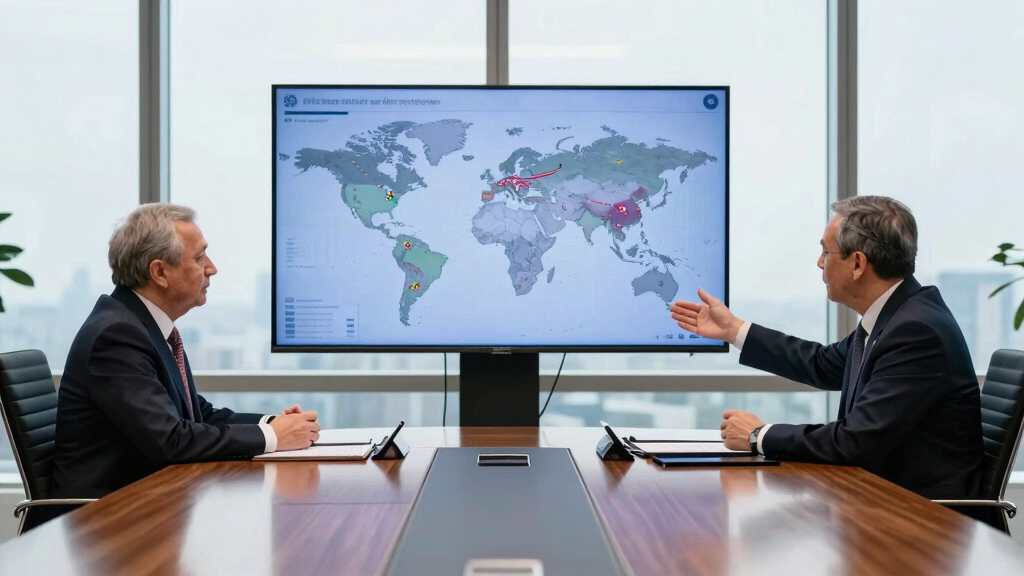
U.S. President Donald Trump and Chinese President Xi Jinping are set to hold a bilateral summit in Beijing on May 14, marking Trump’s first visit to China since 2017. The meeting comes amid rising tensions over trade, Taiwan, Iran, and technological competition, making it a significant event for global diplomacy and markets.
President Trump arrived in Beijing on May 13, his first visit to China in nearly nine years, and is scheduled to meet Xi Jinping at the Great Hall of the People at 10 a.m. local time on May 14. The summit will include formal talks, a state banquet, and working lunches. The White House has indicated discussions will focus on several contentious issues, including Iran, trade policies, export controls, Taiwan, and artificial intelligence.
Trump’s delegation includes prominent U.S. corporate leaders such as Elon Musk of Tesla, Tim Cook of Apple, and Jensen Huang of NVIDIA, suggesting an emphasis on economic and technological cooperation. There are expectations that the summit could facilitate agreements on aircraft exports and U.S. farm goods, although no formal deals have been announced.
Why It Matters
This summit is significant because it represents a rare direct engagement between the two superpowers amid ongoing geopolitical tensions. Its outcomes could influence U.S.-China economic relations, regional stability in Asia, and the broader global balance of power. The meeting also occurs at a time when China is seeking to internationalize its currency and reduce reliance on the U.S. dollar, which could have long-term implications for global markets.
artificial intelligence development kits
As an affiliate, we earn on qualifying purchases.
As an affiliate, we earn on qualifying purchases.
Background
President Trump’s visit marks a departure from previous diplomatic approaches, with high-level talks focused on stabilizing a relationship marked by trade disputes and strategic rivalry. The last U.S. president to visit China was Barack Obama in 2017. Prior to this, tensions over trade tariffs, Taiwan sovereignty, and technology bans have strained relations. The summit follows recent efforts by U.S. officials to engage China on economic issues, including last-minute trade talks in South Korea involving Treasury and Commerce officials.
Meanwhile, China’s currency, the renminbi, has appreciated to its highest level in over three years, signaling Beijing’s ambitions to challenge U.S. economic dominance and reduce dependence on the dollar, especially amid Middle East tensions affecting global safe-haven assets.
“We hope to convince them to play a more active role in getting Iran to walk away from what they’re doing now and trying to do now in the Persian Gulf.”
— U.S. Secretary of State Marco Rubio
“There is a tolerance from policymakers to allow the renminbi to gradually appreciate as a push for renminbi internationalization.”
— Rohit Arora, UBS Asia FX strategist

The AI-Powered Developer: Master ChatGPT, GitHub Copilot & Claude for Coding | Prompt Templates, Workflows & Real-World Examples
As an affiliate, we earn on qualifying purchases.
As an affiliate, we earn on qualifying purchases.
What Remains Unclear
It remains unclear what specific agreements or commitments will emerge from the summit. The final outcomes depend on the negotiations during the meeting, and some issues, such as Taiwan and Iran, are highly sensitive and may not be fully addressed or resolved.
As an affiliate, we earn on qualifying purchases.
What’s Next
Following the summit, both leaders are expected to issue statements summarizing their discussions. Markets will closely watch for any signs of policy shifts or new agreements. Further diplomatic engagements and follow-up talks are likely in the coming weeks to solidify any commitments made during the summit.

Beyond the Hardware Lottery: How Machines Shape Which AI Algorithms Are Discovered, Rewarded, and Remembered as Progress (Trajecta Research Book 8)
As an affiliate, we earn on qualifying purchases.
As an affiliate, we earn on qualifying purchases.
Key Questions
What are the main issues expected to be discussed at the summit?
The main topics include trade relations, Iran’s regional activities, Taiwan, export controls, and artificial intelligence cooperation.
Why is this summit considered so important?
It is a rare direct engagement between the U.S. and China at the highest level, with potential to influence global economic stability, regional security, and international diplomatic relations.
What are the potential risks of this summit?
If disagreements intensify or no agreements are reached, tensions could escalate, affecting markets and regional stability. Sensitive issues like Taiwan and Iran remain particularly unpredictable.
Will this summit lead to concrete deals?
It is uncertain. While there are expectations for agreements on trade and technology, no formal deals have been announced, and negotiations are still ongoing.