
TL;DR

Get the latest gadgets delivered free — and shop member deals
- Fast, free delivery on millions of items
- Access to Prime Big Deal Days deals on October 6–7
- Prime Video, Amazon Music and more included
Cerebras Systems, now valued at $60 billion, almost went bankrupt in 2019 due to massive costs and technical challenges in developing its groundbreaking AI chip. The company faced near failure after burning through nearly $200 million before solving key packaging problems.
Cerebras Systems, now a publicly traded company valued at approximately $60 billion, nearly failed in 2019 after spending nearly $200 million attempting to solve a technical problem no other semiconductor firm had tackled — creating a large, powerful AI chip with complex packaging and cooling requirements.
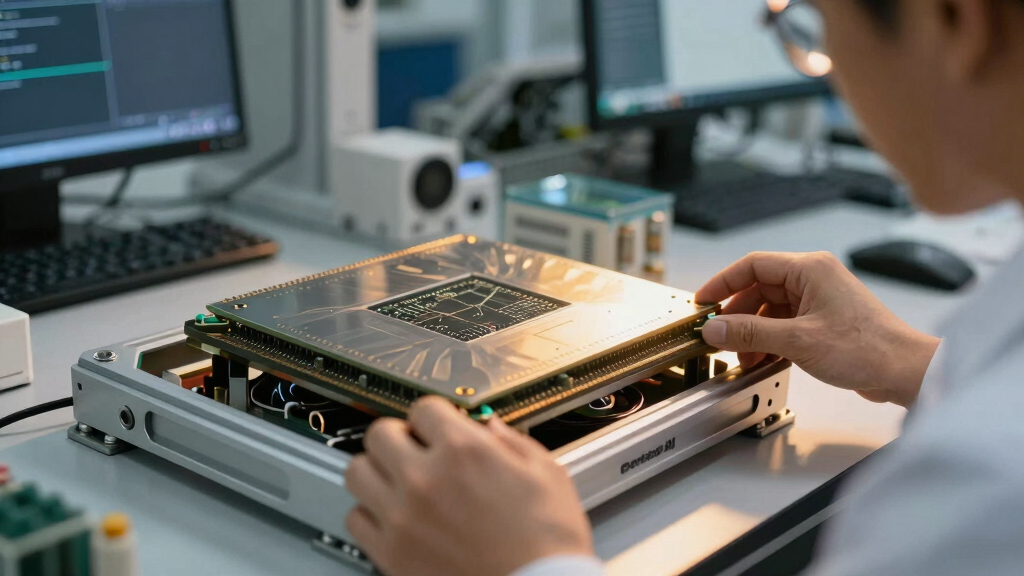
Founded in 2015, Cerebras aimed to revolutionize AI hardware by designing a single, massive chip to handle the massive compute demands of AI workloads. In 2019, during early development, the company faced a critical crisis when its engineers encountered insurmountable packaging and cooling issues, leading to the destruction of numerous chips and a monthly expenditure of around $8 million. CEO Andrew Feldman confirmed to TechCrunch that at that time, the company had burned through nearly $200 million trying to solve these problems.
Despite these setbacks, the team persisted, developing innovative solutions such as custom machinery to secure the wafer without cracking it and devising cooling methods for the large, power-intensive chip. The breakthrough came in July 2019, when the team successfully packaged and powered the chip, marking a pivotal moment in the company’s history. This achievement enabled Cerebras to move forward with manufacturing and commercializing its AI hardware.
By 2026, Cerebras had gone public, with a valuation of about $60 billion, and is now a key supplier to major AI players like OpenAI and AWS. The company’s CEO, Andrew Feldman, also confirmed that OpenAI had engaged in acquisition talks with Cerebras around 2019, which eventually fell through due to internal disagreements among OpenAI’s founders. Currently, OpenAI is a customer and investor, having loaned Cerebras $1 billion secured by warrants, which could be worth over $9 billion at recent stock prices.
Why It Matters
This story illustrates how groundbreaking innovation in the semiconductor industry often involves significant risk and resource expenditure. Cerebras’ near-failure highlights the technical challenges of creating large-scale chips for AI, which require novel packaging and cooling solutions. Its subsequent success underscores the importance of perseverance and engineering ingenuity in enabling the AI hardware revolution, which has broad implications for AI development, cloud computing, and the global chip industry.
As an affiliate, we earn on qualifying purchases.
Background
Prior to its IPO, Cerebras was a small startup founded in 2015, aiming to address the growing computational needs of AI with a revolutionary chip design. The company’s early years were marked by intense technical challenges, especially in packaging and thermal management, as no existing solutions could handle the size and power of their chip. The breakthrough in 2019 allowed Cerebras to finally produce a functional mega chip, setting the stage for its later commercial success and high valuation.
“We were spending about $8 million a month. At this point, we had incinerated nearly $200 million trying to solve one technical problem.”
— Andrew Feldman, CEO of Cerebras
“Watching a computer run is about as exciting as watching paint dry. But there we were watching lights flashing on the computer, stunned that we’d solved this.”
— Andrew Feldman, CEO of Cerebras
large semiconductor packaging equipment
As an affiliate, we earn on qualifying purchases.
As an affiliate, we earn on qualifying purchases.
What Remains Unclear
While the technical breakthrough in 2019 is confirmed, it remains unclear how close Cerebras was to failure at that time and whether additional undisclosed technical or financial issues occurred afterward. Details about internal decision-making and the full scope of the crisis are still emerging.
thermal management systems for high-performance chips
As an affiliate, we earn on qualifying purchases.
As an affiliate, we earn on qualifying purchases.
What’s Next
Going forward, Cerebras plans to expand its customer base and scale production, leveraging its recent IPO and high valuation. The company is also likely to continue refining its chip design and packaging solutions to meet growing AI hardware demands. Monitoring its ability to secure new clients and manage supply chain challenges will be key.
custom machinery for semiconductor manufacturing
As an affiliate, we earn on qualifying purchases.
As an affiliate, we earn on qualifying purchases.
Key Questions
How did Cerebras manage to turn around its fortunes in 2019?
Through intense engineering efforts, including inventing new packaging and cooling methods, Cerebras solved the critical technical challenges that threatened its survival, enabling it to produce a functional mega chip in July 2019.
What is the significance of Cerebras’ recent IPO and valuation?
The company’s valuation of about $60 billion reflects its success in overcoming early challenges and establishing itself as a leading supplier of AI hardware for major tech firms like OpenAI and AWS.
Did Cerebras almost go bankrupt in 2019?
While it is confirmed that the company faced a near-collapse due to technical failures and financial burn rate, it ultimately succeeded after solving its packaging and cooling problems, avoiding bankruptcy.
What are Cerebras’ plans for future growth?
The company aims to expand its customer base, scale production, and innovate further in AI chip design, leveraging its recent IPO and high valuation to support growth initiatives.
Fall Picks
fall essentials
As an affiliate, we earn on qualifying purchases.