

TL;DR
A developer has demonstrated hosting a simple webpage using an AVR64DD32 microcontroller without external components. The setup uses serial protocols and custom TCP/IP implementation, showcasing a novel, low-power web hosting method on microcontrollers.
A hobbyist has successfully hosted a basic website on an AVR64DD32 microcontroller, using serial protocols and custom TCP/IP stack, demonstrating that even low-power 8-bit chips can serve web pages with minimal hardware.
The project involves an AVR64DD32 microcontroller, similar to the Arduino Atmega328 but with more memory and peripherals, running at 24 MHz with 8 KB RAM and 64 KB flash. It connects to the internet via serial protocols, specifically using the Serial Line Internet Protocol (SLIP), which enables network communication over serial links. The developer implemented a minimal TCP/IP stack and a simplified HTTP response, which is hardcoded for a single webpage, without external components.
To connect to the internet, the microcontroller uses a serial-to-USB interface and a Linux machine configured with WireGuard VPN, proxying requests to the microcontroller. This setup allows the microcontroller to respond to web requests despite lacking a public IP address or native Ethernet hardware. The project demonstrates that hosting a webpage on such low-power hardware is feasible, though with significant limitations, including no support for multiple pages or dynamic content.
Why It Matters
This development illustrates the potential for ultra-low-power devices to serve web content, which could impact IoT applications, remote monitoring, and edge computing where minimal hardware and power consumption are critical. It also highlights the challenges of implementing networking protocols on constrained hardware and the importance of software ingenuity in overcoming hardware limitations.

HJHYUL CP2102 USB to TTL Serial Adapter Cable, USB 2.0 to UART Converter 4 Pin (TXD RXD GND 5V), 3ft/95cm Long, 3.3V TTL Signal for Arduino, Raspberry Pi, ESP8266, ESP32 (1pcs)
- Stable CP2102 Chipset: Ensures reliable data transmission
- 3ft/95cm Cable Length: Provides greater flexibility and reach
- 4-Pin Interface: Simplifies wiring and reduces errors
As an affiliate, we earn on qualifying purchases.
As an affiliate, we earn on qualifying purchases.
Background
Hosting a website traditionally requires powerful servers and reliable internet connections. Hobbyists and developers have long experimented with microcontrollers for simple projects, but hosting a web server on an 8-bit microcontroller is unprecedented at this scale. Previous efforts typically relied on external modules or more capable hardware. This project pushes the boundaries by using only the microcontroller and minimal external components, employing serial networking protocols and custom protocol stacks to achieve basic web hosting.
“It’s possible to run a web server on an AVR microcontroller using serial protocols and custom TCP/IP stacks, with no external components beyond a serial interface.”
— The project developer
“Implementing TCP/IP on such limited hardware is a significant challenge, but this project demonstrates that with clever software, even 8-bit microcontrollers can handle basic web serving.”
— A networking expert

AITRIP 3PCS Type c 30pins CP2102 ESP-WROOM-32 ESP32 ESP-32S Development Board 2.4GHz Dual-Mode WiFi + Bluetooth Dual Cores Microcontroller Processor Integrated with Antenna RF AMP Filter AP STA
- Package Includes: 3pcs Type-C ESP32 Development Boards
- Compatibility: Supports ESP-WROOM-32 and ESP-32S
- Connectivity: WiFi and Bluetooth Dual Mode
As an affiliate, we earn on qualifying purchases.
As an affiliate, we earn on qualifying purchases.
What Remains Unclear
It remains unclear how scalable or reliable this setup is for practical use, especially under real-world network conditions or with multiple simultaneous requests. The project is experimental, and performance or security implications have not been thoroughly evaluated.

HiLetgo 2pcs W5500 Ethernet LAN Network Module Support TCP/IP51/STM32 Microcontroller Program with 32k Bytes SPI 3.3V/5V Over W5100
- Product Type: Ethernet LAN Network Module
- Compatibility: Supports TCP/IP, STM32, TCP/IP51
- Socket Support: Supports 8 simultaneous sockets
As an affiliate, we earn on qualifying purchases.
As an affiliate, we earn on qualifying purchases.
What’s Next
Further development could include adding support for multiple pages, dynamic content, or more robust networking features. The creator might also explore integrating external modules for Ethernet or Wi-Fi to improve connectivity and performance. Community interest may lead to more optimized implementations or similar projects on other microcontrollers.
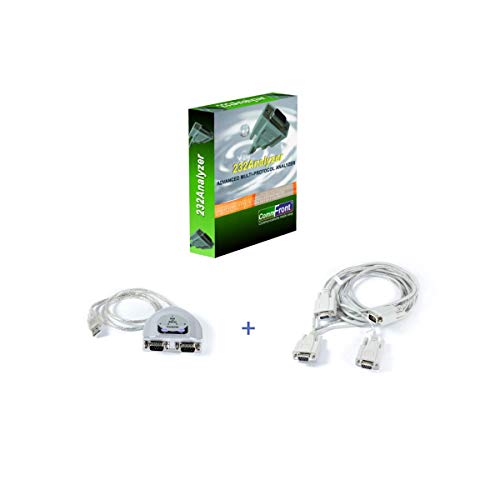
COMMFRONT 232Analyzer Bundle# S1, Advanced RS232 / RS485 / RS422 / TTL Serial Protocol Analyzer
- Serial Protocol Analyzer: Supports RS232, RS485, RS422, TTL
- Dual Communication Modes: Debugging/Simulating and Monitoring
- Data Format Support: Hex, Decimal, Octal, Binary, ASCII
As an affiliate, we earn on qualifying purchases.
As an affiliate, we earn on qualifying purchases.
Key Questions
Can a microcontroller host a full-featured website?
Currently, this project only supports a single static page with minimal functionality. Full-featured websites require more resources and complex protocols, which are beyond this microcontroller’s capabilities.
What hardware is needed for this setup?
The setup uses an AVR64DD32 microcontroller, a serial-to-USB converter, and a Linux machine configured with WireGuard VPN. No external Ethernet or Wi-Fi modules are required.
Is this approach practical for everyday use?
While technically impressive, this setup is mainly a proof of concept. It is not suitable for production or high-traffic scenarios but demonstrates the possibilities of ultra-low-power web hosting.
What are the limitations of this microcontroller web server?
Limitations include support for only one webpage, lack of dynamic content, no native IP address, and reliance on proxying through a Linux machine. Performance and security are also limited.