
TL;DR

Get the latest gadgets delivered free — and shop member deals
- Fast, free delivery on millions of items
- Access to Prime Big Deal Days deals on October 6–7
- Prime Video, Amazon Music and more included
UC Santa Barbara scientists have developed a liquid, chemical-based solar energy storage material inspired by DNA. It can store sunlight as chemical energy and release it as heat, even boiling water. This innovation could reduce reliance on traditional batteries.
Scientists at UC Santa Barbara have developed a new liquid-based solar energy storage material capable of storing sunlight as chemical energy and releasing it as heat, including boiling water under ambient conditions. This breakthrough offers a potential alternative to conventional batteries and grid reliance, marking a significant step forward in renewable energy technology.
The research team, led by Associate Professor Grace Han, created a modified organic molecule based on pyrimidone, inspired by DNA’s natural structures. This molecule can absorb sunlight, store energy in its strained form, and release it when triggered by heat or catalysts. The material’s energy density exceeds 1.6 megajoules per kilogram, surpassing typical lithium-ion batteries, which store about 0.9 MJ/kg.
In practical tests, the molecule released enough heat to boil water at room temperature, demonstrating its potential for real-world applications such as off-grid heating or water heating systems. Unlike traditional solar panels that convert sunlight directly into electricity, this system stores energy chemically, making it reusable and recyclable. The project was supported by the Moore Inventor Fellowship, awarded to Han in 2025.
Why It Matters
This development could significantly impact renewable energy storage by providing a recyclable, chemical-based alternative to large battery systems. It offers a way to store solar energy efficiently for extended periods, reducing reliance on the electrical grid and enabling off-grid applications. The ability to boil water using stored solar energy under ambient conditions highlights its potential for practical, everyday use, potentially transforming how solar power is harnessed and stored.
As an affiliate, we earn on qualifying purchases.
Background
Traditional solar energy systems rely on photovoltaic panels combined with large-scale batteries or grid connections for storage, which can be costly and environmentally taxing. Molecular solar thermal (MOST) technology, which stores energy in chemical bonds, has been an area of active research but has faced challenges in stability and energy density. The recent breakthrough builds on prior efforts by UC Santa Barbara and UCLA to improve stability and practical applicability of such materials.
“The concept is reusable and recyclable. Think of photochromic sunglasses. When you’re inside, they’re just clear lenses. You walk out into the sun, and they darken on their own. Come back inside, and the lenses become clear again. That kind of reversible change is what we’re interested in.”
— Nguyen, lead author
“The molecule stores more than 1.6 megajoules of energy per kilogram, which is higher than conventional lithium-ion batteries.”
— Nguyen, on energy storage capacity
“With molecular solar thermal energy storage, the material itself is able to store that energy from sunlight, eliminating the need for additional batteries.”
— Baker, co-author
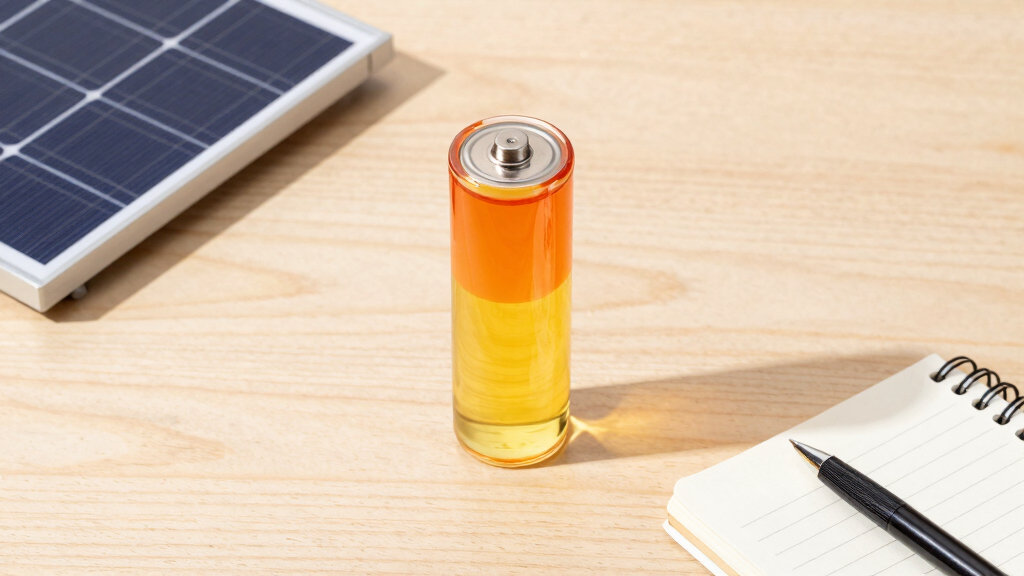
chemical solar energy storage system
As an affiliate, we earn on qualifying purchases.
As an affiliate, we earn on qualifying purchases.
What Remains Unclear
It is not yet clear how scalable or cost-effective this technology will be for commercial applications. Long-term stability and safety of the molecule in real-world environments remain to be tested. Further research is needed to determine how efficiently the material can be integrated into existing solar heating systems and whether it can maintain performance over many cycles.
As an affiliate, we earn on qualifying purchases.
What’s Next
Researchers plan to scale up the synthesis process and conduct durability tests over extended periods. They also aim to explore integration into prototype solar thermal systems for off-grid heating and evaluate its performance in real-world conditions. Additional funding and collaboration with industry partners are likely to follow to commercialize the technology.
As an affiliate, we earn on qualifying purchases.
Key Questions
How does this new solar energy storage system work?
The system uses a specially designed organic molecule that absorbs sunlight, stores the energy chemically, and releases it as heat when triggered, such as by heat or catalysts. It can even boil water using stored solar energy.
How does this compare to traditional batteries?
The molecule’s energy density exceeds that of lithium-ion batteries, and it is recyclable and reusable, offering a potentially cheaper and more sustainable alternative for storing solar energy.
Can this technology be used for everyday applications?
Yes, potential uses include off-grid water heating, camping, and home heating systems, especially in remote or off-grid locations.
What are the main challenges before commercial use?
Scaling production, ensuring long-term stability, safety testing, and integrating the system into existing infrastructure are key hurdles to overcome.
Halloween Picks
halloween
As an affiliate, we earn on qualifying purchases.