
TL;DR
New data from Mars rovers indicate signs of past biological activity, increasing evidence of ancient life potential. However, scientists have not yet confirmed the presence of current life on Mars.
Scientists analyzing data from Mars rovers have identified additional signs consistent with past biological activity, but have not confirmed the presence of current life on the planet. This development intensifies interest in Mars’ habitability and the search for extraterrestrial life, though definitive proof remains elusive.
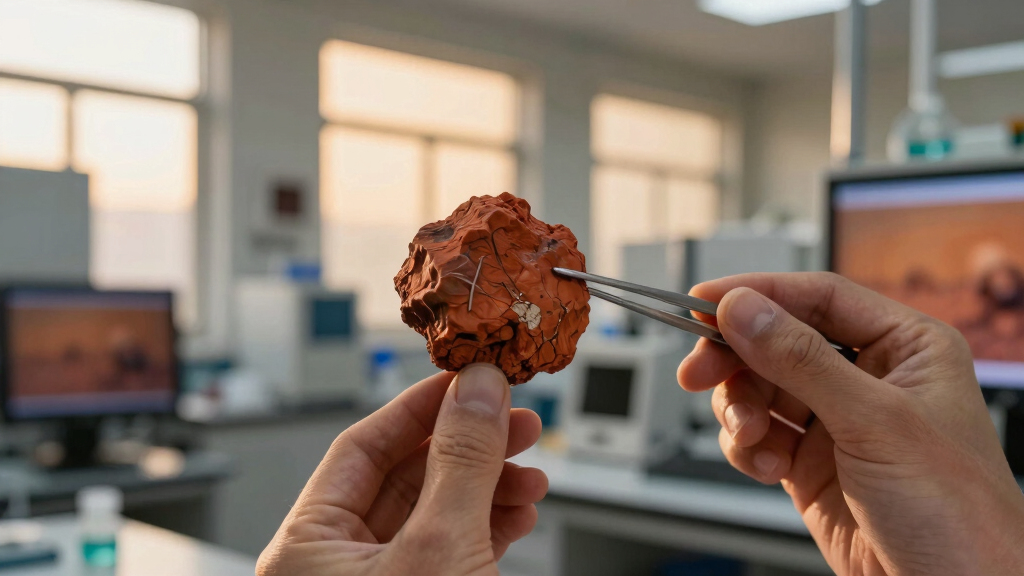
Recent analyses of samples collected by Mars rovers reveal chemical signatures and mineral formations that are consistent with biological processes that could have occurred in the planet’s ancient past. These findings build on previous evidence suggesting Mars once had liquid water and a more hospitable environment.
Despite the increased evidence pointing to past life-friendly conditions, scientists emphasize that no direct evidence of living organisms has been been discovered on Mars to date. The data primarily indicate that the planet’s environment may have supported life billions of years ago, but current habitability remains unconfirmed.
Implications for Mars’ Past Habitability
The new findings bolster the hypothesis that Mars once had conditions suitable for life, which has major implications for understanding the planet’s history and the potential for life beyond Earth. It raises the possibility that microbial life could have existed and perhaps even persisted in some form, though this remains unproven.
For the broader scientific community, these results reinforce the importance of ongoing exploration and sample return missions, as they may eventually provide the definitive evidence needed to confirm whether life ever existed on Mars.

SunFounder GalaxyRVR Mars Rover STEM Kit for Arduino, Compatible with Uno R3, Rocker-Bogie Suspension,Scratch,C,Camera, FPV, for Students, Educators, Engineers
- Mars Rover Compatibility: Compatible with Arduino Uno R3
- Realistic Suspension System: Inspired by NASA's rocker-bogie design
- Off-Road Capability: Traverses rocks, sand, grass, and mud
As an affiliate, we earn on qualifying purchases.
As an affiliate, we earn on qualifying purchases.
Recent Mars Exploration and Past Evidence
Since the first Mars rover missions, scientists have sought signs of past water, organic molecules, and other indicators of habitability. Previous discoveries include organic compounds and mineral deposits formed in water, suggesting Mars had a wetter, warmer climate billions of years ago.
Recent samples analyzed by rovers like Perseverance have revealed chemical signatures that align with biological activity, but these are not conclusive. The ongoing debate centers on whether these signatures are definitive proof of past life or can be explained through non-biological processes.
“The chemical signatures we’re seeing are consistent with biological activity, but we cannot definitively say they are proof of past life.”
— an anonymous researcher

Stargazing Cards – Messier Catalog | Night Sky Exploration Kit for Telescopes & Binoculars | Flashcards with Star Charts, Astrophotography & Facts | Perfect Astronomy & Space Gift for Kids & Adults
- Portable Stargazing Tool: Compact and easy to carry
- Concise Cosmic Insights: Provides essential star information
- Detailed Front Design: Includes star maps and telescope images
As an affiliate, we earn on qualifying purchases.
As an affiliate, we earn on qualifying purchases.
Unconfirmed Nature of Biological Signatures
While the chemical and mineral evidence is compelling, it is not yet clear whether these signatures are exclusively biological or could result from abiotic processes. The absence of direct microbial or organic remains means the evidence remains circumstantial.
Scientists acknowledge that further analysis and sample return missions are needed to conclusively determine the origin of these signatures.
As an affiliate, we earn on qualifying purchases.
Future Missions and Sample Analysis Plans
Upcoming Mars missions aim to collect and return samples for detailed laboratory analysis on Earth, which could provide more definitive evidence regarding past or current life. Researchers also plan to refine techniques to differentiate biological signatures from non-biological ones.
Continued exploration and technological advancements are expected to clarify whether Mars ever hosted life and if any traces remain today.

United Scientific™ Mineral ID Kit, 7 Piece Geology Rock Testing Tools
- Complete Mineral Identification Kit: Includes streak plates, glass plate, dropper, magnet, nail, and hand lens
- Mohs Hardness Testing: Enables accurate hardness, streak, magnetic, and effervescence tests
- Ideal for Rockhounding and Education: Suitable for enthusiasts, students, and educators
As an affiliate, we earn on qualifying purchases.
As an affiliate, we earn on qualifying purchases.
Key Questions
What specific signs suggest past biological activity on Mars?
Signs include mineral formations and chemical signatures consistent with biological processes, such as organic molecules and water-related minerals.
Has any direct evidence of current life been found on Mars?
No, current Mars missions have not discovered direct evidence of living organisms.
Why are these findings significant if no life has been confirmed?
They increase the likelihood that Mars once supported life, guiding future exploration efforts and informing planetary habitability models.
What are the next steps in the search for life on Mars?
Future missions will focus on sample return and advanced analysis techniques to seek conclusive evidence of past or present life.
Could these signs be explained by non-biological processes?
Yes, scientists caution that the signatures could result from abiotic chemical reactions, which is why further investigation is necessary.
Source: Hacker News