
TL;DR

Get the latest gadgets delivered free with Prime
- Fast, free delivery on millions of items
- Prime Video, Amazon Music and more included
- Member-only deals all year
Canadian-founded Cohere has acquired Germany’s Aleph Alpha in a deal valued around $20 billion, with significant European and Canadian backing. The move raises questions about the true sovereignty of Europe’s AI sector.
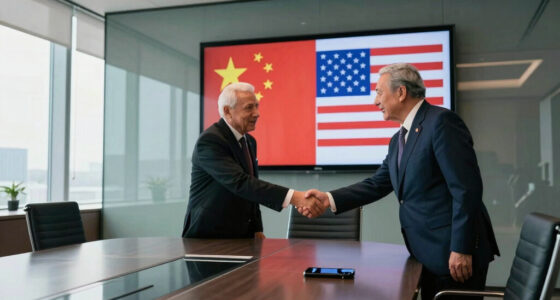
On April 24, 2026, in Berlin, Germany’s Digital Minister and Canada’s AI Minister appeared together to endorse a major corporate deal: Canadian-founded Cohere acquired Germany’s Aleph Alpha in a transaction valued at approximately $20 billion. This move, characterized by many as a strategic effort to establish Europe’s AI independence, involves significant Canadian and German government involvement, raising questions about the true nature of European sovereignty in AI technology.
The deal is structured as a simultaneous acquisition and Series E funding round, with Toronto-based Cohere taking roughly 90% of the combined entity and Heidelberg-based Aleph Alpha holding about 10%. The transaction was underwritten by Schwarz Group, the German retail giant behind Lidl, which committed €500 million (~$600 million) and will provide infrastructure via its cloud platform, STACKIT. The combined company will operate with dual headquarters in Toronto and Heidelberg, and aims to serve sectors like defense, energy, finance, healthcare, and public services.
While the deal is still awaiting regulatory approval from the European Commission, experts note that the structure and backing suggest a strategic move to embed European AI development within a framework heavily influenced by Canadian and German interests. Aleph Alpha’s sale was driven by financial distress and strategic repositioning, with the company shifting away from frontier model development towards enterprise deployment, making it more attractive for acquisition. The company’s valuation was approximately €2.7 billion (~$3 billion) after its November 2023 funding round, significantly below the estimated $20 billion valuation of the merged entity.
Key assets Aleph Alpha brings include relationships with German government agencies, European-language expertise, and access to European public procurement channels. The deal also effectively makes Schwarz Group a major stakeholder in European AI infrastructure, leveraging its cloud services as a backbone for the new entity’s deployments, thus integrating industrial capital into Europe’s sovereign AI strategy.
Implications for European AI Sovereignty
This deal marks a pivotal moment in Europe’s AI strategy, as it demonstrates how industrial and retail capital—specifically Schwarz Group—are becoming central to national AI ambitions. The integration of Schwarz’s cloud infrastructure into the AI ecosystem creates a form of industrial sovereignty that may be more resilient than reliance solely on government funding or foreign hyperscalers. However, it also raises concerns about the concentration of strategic control within a private German conglomerate and the influence of Canadian leadership on what is ostensibly a European AI enterprise.
For European policymakers and AI labs, the deal underscores the importance of developing independent infrastructure and reducing dependency on external players. It also highlights the complex interplay between national interests, corporate power, and technological sovereignty, which could influence future regulatory and strategic decisions across the continent.
As an affiliate, we earn on qualifying purchases.
European AI Development and International Alliances
Earlier this year, Canada and Germany signed a Sovereign Technology Alliance aimed at boosting AI collaboration and infrastructure sharing. The move to acquire Aleph Alpha, Germany’s leading national AI lab, was driven by financial difficulties and strategic repositioning within Aleph Alpha, which shifted focus from frontier model creation to enterprise deployment services. The sale, at a valuation below its 2023 peak, reflects the challenges faced by European AI labs in maintaining technological independence amidst increasing consolidation and dependency on foreign technology giants.
Meanwhile, the European Union has expressed concern over sector consolidation, and regulatory approval for the deal is still pending. The involvement of a major retail conglomerate as a strategic partner and infrastructure provider is unprecedented, signaling a new pattern of industrial capital shaping national AI strategies in Europe. The deal also reflects broader trends of cross-border cooperation and the influence of private capital in strategic sectors.
“Our cloud platform will serve as the backbone for Europe’s AI initiatives, ensuring resilience and independence.”
— Dieter Schwarz, Schwarz Group CEO
As an affiliate, we earn on qualifying purchases.
Uncertainties Surrounding European AI Sovereignty
It remains unclear whether the European Commission will approve the deal, given concerns over sector consolidation and foreign influence. The extent to which the combined entity will operate independently of Canadian and German interests, and whether it will truly serve European sovereignty, is still uncertain. Additionally, questions persist about the long-term strategic influence of Schwarz Group and the potential for private capital to shape public policy in AI development.
As an affiliate, we earn on qualifying purchases.
Next Steps in Regulatory and Strategic Development
European regulators are expected to complete their review later in 2026, with decisions potentially shaping future policies on sector consolidation and foreign ownership. Meanwhile, the new entity will continue integrating Aleph Alpha’s assets, with a focus on obtaining regulatory clearance and expanding deployment across targeted sectors. Observers will also watch for how this deal influences other European AI labs and whether it triggers further industrial-capital-driven strategies.
As an affiliate, we earn on qualifying purchases.
Key Questions
Is this deal considered a European sovereign AI initiative?
While the deal is branded as a European effort, the majority ownership remains Canadian, and leadership is based in Toronto, raising questions about its classification as a European sovereign AI initiative.
What role does Schwarz Group play in this AI deal?
Schwarz Group is the key strategic investor and infrastructure provider, leveraging its cloud platform STACKIT to underpin the combined company’s deployments, effectively making it a major player in European AI infrastructure.
Will regulatory approval be granted?
Regulatory approval is still pending, with European authorities scrutinizing the deal for competition and sovereignty concerns; approval is expected later in 2026 but is not guaranteed.
Does this mean Europe is independent of North American AI tech?
Not necessarily. The ownership and leadership are primarily Canadian and German, and dependencies on North American partnerships, such as Microsoft’s, remain significant.
What are the risks of this private capital-driven model?
Concentrating strategic control within a private conglomerate like Schwarz Group could limit policy flexibility and create long-term dependencies, raising questions about true sovereignty.
Source: ThorstenMeyerAI.com
Halloween Picks
halloween
As an affiliate, we earn on qualifying purchases.