
TL;DR
Kawasaki Heavy Industries will collaborate with Airbus to adapt the Eurodrone for anti-submarine missions, aiming to propose the system to Japan’s defense ministry. This marks a significant step in Japan’s maritime security efforts.
Kawasaki Heavy Industries and Airbus are collaborating to develop anti-submarine drones for Japan, starting with modifications to Airbus’s Eurodrone platform. This partnership aims to enhance Japan’s maritime surveillance capabilities amid regional security concerns.
The collaboration involves Kawasaki Heavy Industries equipping Airbus’s Eurodrone with specialized anti-submarine systems. The project is in the early stages, with plans to propose the drone to Japan’s defense ministry for potential deployment.
Sources indicate that the partnership is a strategic response to increasing regional maritime threats, particularly from submarine activity in the Asia-Pacific. The modified drone will focus on maritime surveillance and anti-submarine warfare, leveraging Kawasaki’s expertise in defense systems and Airbus’s drone platform.
Implications for Japan’s Maritime Defense Capabilities
This collaboration represents a significant advancement in Japan’s efforts to modernize its maritime surveillance and anti-submarine warfare capabilities. Developing autonomous drones tailored for submarine detection could bolster Japan’s ability to monitor regional threats more effectively, especially given rising tensions in the Indo-Pacific region.
The project also highlights growing cooperation between Japanese defense contractors and European aerospace firms, signaling a shift toward more technologically advanced, autonomous military assets in Japan’s defense strategy.
As an affiliate, we earn on qualifying purchases.
Regional Security Environment and Japan’s Defense Strategy
Japan has been increasingly focused on strengthening its maritime security amid rising regional tensions, including North Korea’s missile tests and China’s naval activities. The development of anti-submarine drones aligns with Japan’s broader efforts to incorporate unmanned systems into its defense arsenal.
Previous initiatives have included upgrading submarine detection and surveillance systems, but the integration of autonomous drones is a new step. Airbus’s Eurodrone, originally designed for intelligence gathering, provides a platform that can be adapted for anti-submarine missions, with Kawasaki’s defense technology complementing this effort.
“The partnership aims to leverage the Eurodrone platform for maritime surveillance, focusing on anti-submarine capabilities tailored for Japan’s needs.”
— an anonymous researcher
As an affiliate, we earn on qualifying purchases.
Development Timeline and Deployment Plans Still Unclear
Details about the project’s timeline, specific technological capabilities, and potential deployment are still emerging. It is not yet confirmed when the drone prototype will be ready or if Japan’s defense ministry will approve its deployment.
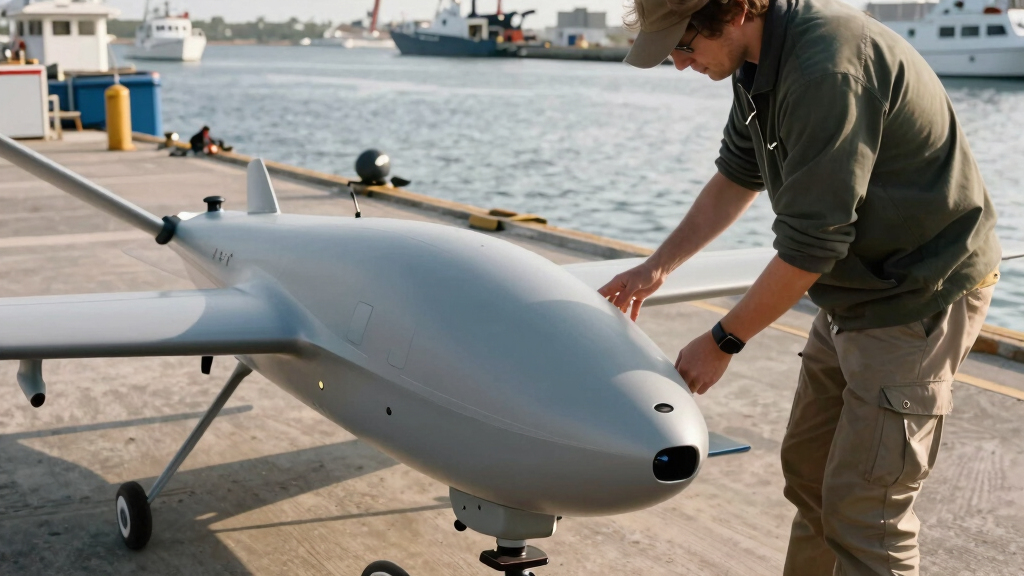
unmanned anti-submarine aircraft
As an affiliate, we earn on qualifying purchases.
As an affiliate, we earn on qualifying purchases.
Next Steps Include Prototype Testing and Strategic Evaluation
The next phase will involve developing prototypes, conducting testing, and assessing operational effectiveness. Officials expect to present the system to Japan’s defense ministry within the next year, with possible deployment considerations following successful trials.
military drone for submarine detection
As an affiliate, we earn on qualifying purchases.
As an affiliate, we earn on qualifying purchases.
Key Questions
What is the main goal of Kawasaki and Airbus’s partnership?
The primary goal is to develop an anti-submarine drone based on the Eurodrone platform to enhance Japan’s maritime surveillance and defense capabilities.
Will the drone be used operationally by Japan?
It is still under development, and deployment depends on successful testing and approval by Japan’s defense authorities.
How does this collaboration impact regional security?
It could improve Japan’s ability to detect and monitor submarine threats, contributing to regional stability amid rising maritime tensions.
What technologies are involved in this drone?
The drone will incorporate anti-submarine sensors and maritime surveillance systems, adapted from Airbus’s Eurodrone platform and Kawasaki’s defense tech expertise.
Are there similar projects elsewhere?
While several nations are developing maritime autonomous systems, this specific collaboration is among the first to adapt the Eurodrone platform for anti-submarine use.
Source: Nikkei Asia