
📊 Full opportunity report: Loan covenant calendar for bootstrapped companies on IdeaNavigator AI — validation score, market gap, and execution plan.

Get the latest gadgets delivered free — and shop member deals
- Fast, free delivery on millions of items
- Access to Prime Big Deal Days deals on October 6–7
- Prime Video, Amazon Music and more included
TL;DR
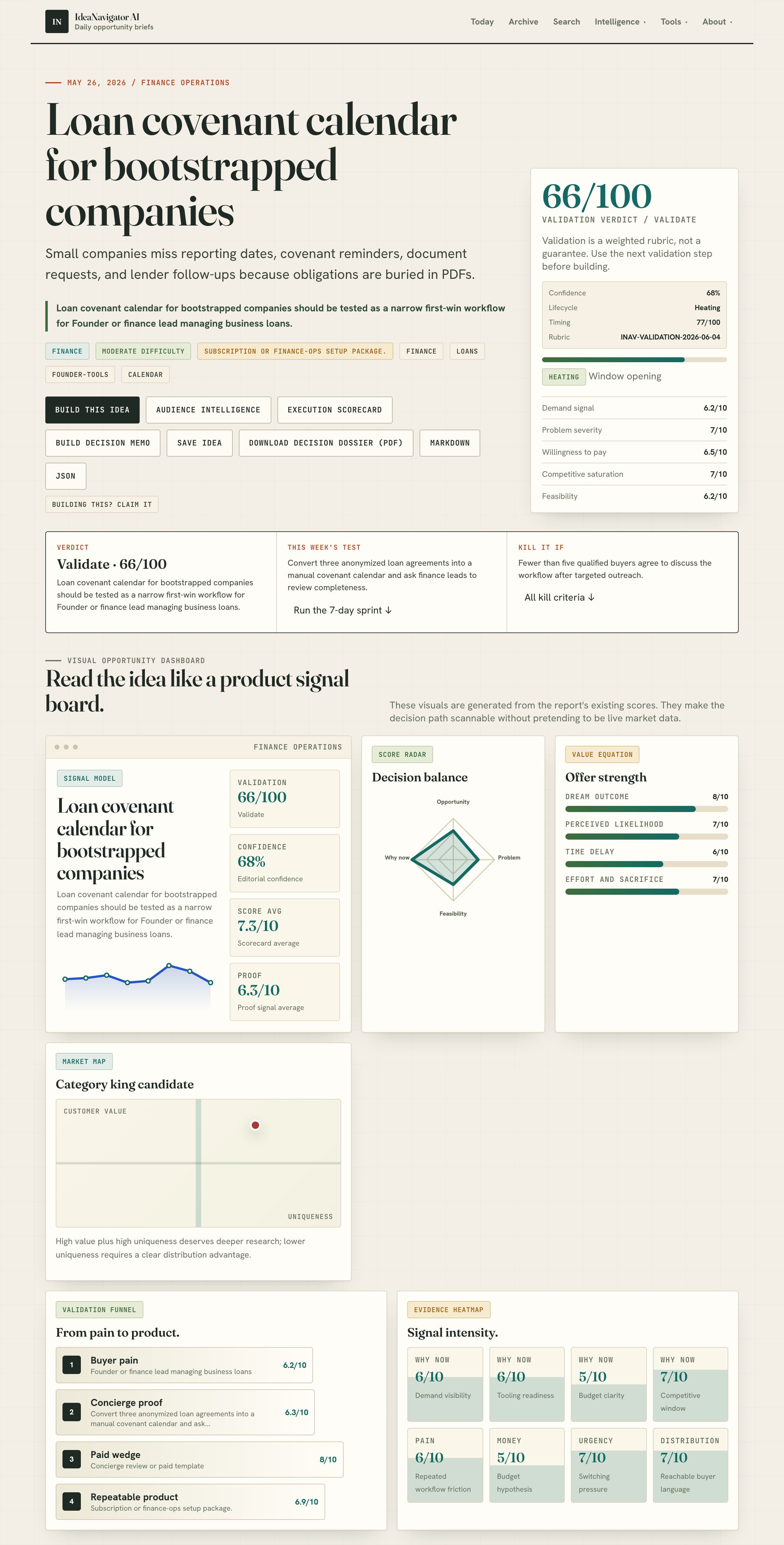
A prototype loan covenant calendar is being tested for bootstrapped companies to improve management of loan obligations. This innovation aims to reduce missed deadlines and streamline communication with lenders, addressing a key operational challenge for small businesses.
A prototype loan covenant calendar designed specifically for bootstrapped companies is currently in the testing phase, aiming to help small businesses better manage loan obligations and improve operational compliance amid rising scrutiny from lenders.
The initiative targets founders and finance leads managing business loans, addressing a common problem where small companies miss reporting deadlines, covenant reminders, and document requests due to obligations being buried in PDFs. The proposed solution is a covenant calendar that automatically extracts key obligations, owners, due dates, evidence files, and lender communication history. This tool is expected to streamline operational follow-up and reduce missed deadlines, which are increasingly critical as lenders intensify scrutiny of small business loans. The MVP (minimum viable product) involves converting three anonymized loan agreements into a manual covenant calendar for review and validation by finance leads. The goal is to verify whether the calendar captures all necessary obligations and facilitates better management. Revenue prospects include subscription models or setup packages for finance operations teams. The market focus is on finance operations for small and bootstrapped companies, with validation expected through user feedback on the completeness and usability of the tool.Why a Covenant Calendar Matters for Small Business Lending
This development matters because it addresses a critical operational gap for small, bootstrapped companies managing loans. Missed covenant deadlines can lead to penalties, increased scrutiny, or even default, which small businesses are often ill-equipped to handle without dedicated systems. Automating covenant management could improve compliance, reduce manual oversight, and help small companies maintain healthy lender relationships. As lenders tighten requirements, operational efficiency becomes increasingly vital for survival and growth in this segment.As an affiliate, we earn on qualifying purchases.
Growing Need for Better Loan Management in Small Businesses
Small companies often rely on informal processes to track loan obligations, frequently missing deadlines due to obligations buried in PDFs or scattered across multiple documents. The trend toward higher financing scrutiny from lenders has increased the importance of operational discipline, yet existing tools are typically designed for larger firms with dedicated finance teams. The idea of a covenant calendar tailored for small businesses emerges amid this context, aiming to fill a gap in operational support. The concept is being tested by converting existing loan agreements into manageable, automated calendars, with validation through user feedback scheduled for the coming months.“Small companies struggle with covenant management because obligations are buried in PDFs, leading to missed deadlines and potential penalties.”
— an anonymous researcher
As an affiliate, we earn on qualifying purchases.
Uncertainties Around Implementation and Adoption
It is not yet clear how accurately the manual conversion of loan agreements will translate into an automated, scalable tool, or how small companies will adopt and integrate the calendar into their existing workflows. The effectiveness of the MVP in real-world scenarios remains to be validated through user feedback, and there may be unforeseen challenges in extracting obligations from diverse document formats.automated covenant calendar for small business
As an affiliate, we earn on qualifying purchases.
As an affiliate, we earn on qualifying purchases.
Next Steps for Testing and Validation of the Covenant Calendar
The next phase involves converting three anonymized loan agreements into the manual covenant calendar and soliciting feedback from finance leads to assess completeness and usability. Based on this feedback, developers will refine the tool, with potential pilot programs planned for broader testing. Further validation and development are expected over the next several months, aiming for a scalable, automated version to be launched thereafter.As an affiliate, we earn on qualifying purchases.
Key Questions
What is the main purpose of the covenant calendar?
The covenant calendar aims to help small, bootstrapped companies track and manage their loan obligations more effectively, reducing missed deadlines and improving compliance.
Who is the target user for this tool?
The primary users are founders and finance leads managing business loans in small companies.
How will the calendar be implemented?
The initial MVP involves manually converting existing loan agreements into a calendar format for validation, with plans to develop an automated extraction process based on user feedback.
When will a scalable version be available?
It is not yet clear; development and validation are ongoing, with a goal to refine the tool over the next several months before a broader rollout.
Why is this development important now?
As lenders increase scrutiny of small business loans, operational compliance becomes more critical, making tools like this covenant calendar vital for risk management and ongoing business health.
Source: IdeaNavigator AI
Fall Picks
fall essentials
As an affiliate, we earn on qualifying purchases.