
TL;DR

Get the latest gadgets delivered free — and shop member deals
- Fast, free delivery on millions of items
- Access to Prime Big Deal Days deals on October 6–7
- Prime Video, Amazon Music and more included
The Philippines has made notable progress in strengthening its military, shifting away from its previous image as a ‘weakling.’ However, the buildup is ongoing, and key gaps remain. This development impacts regional security dynamics and U.S.-Philippines relations.
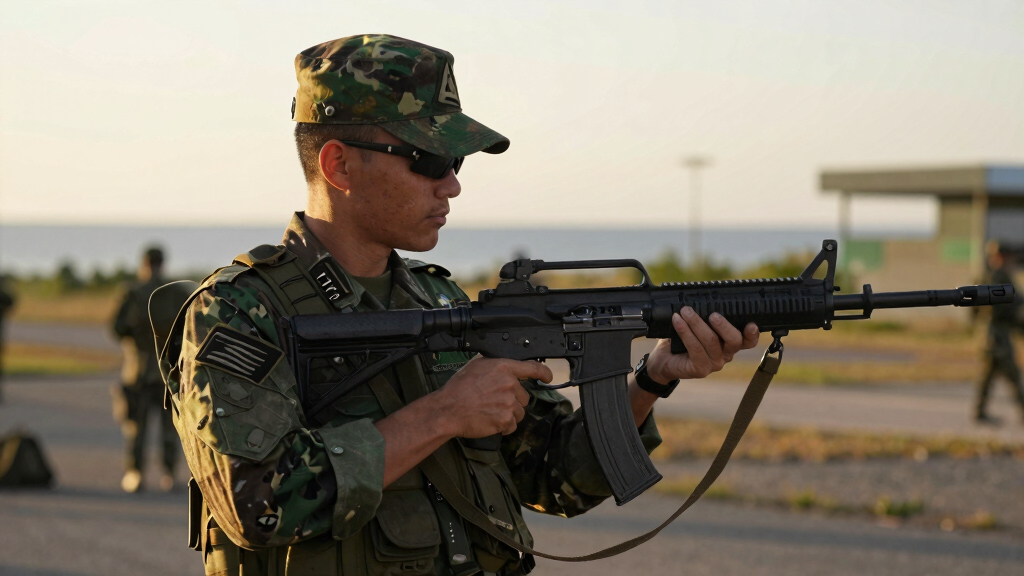
The Philippines has officially shed its reputation as a military ‘weakling’ following recent modernization efforts, but officials emphasize that the country’s defense buildup still has significant distance to cover.
Recent reports indicate that the Philippines has made measurable progress in its military modernization, including acquiring new radar systems and equipment, and improving troop training. A key milestone was the recent handover of five coastal radar systems from Japan, aimed at enhancing maritime surveillance.
However, Philippine defense officials and analysts acknowledge that the overall military capacity remains limited compared to neighboring countries like China and Vietnam. The country’s defense budget, while increased, still lags behind regional powers, and procurement processes are ongoing to upgrade aircraft, naval vessels, and missile systems.
Why It Matters
This development is significant because it signals a shift in the Philippines’ defense posture, which has historically been underfunded and underdeveloped. It reflects a strategic move to bolster maritime security amid rising regional tensions, particularly in the South China Sea. The improved military capability may influence regional power balances and U.S.-Philippines military cooperation.
coastal radar systems for maritime security
As an affiliate, we earn on qualifying purchases.
As an affiliate, we earn on qualifying purchases.
Background
The Philippines’ military has long been considered underpowered, often described as a ‘weakling’ in regional security discussions. Over the past few years, the government has prioritized modernization, partly driven by concerns over Chinese assertiveness in the South China Sea and the need to protect its maritime interests. Recent procurements and international aid, notably from Japan and the United States, have contributed to this effort.
In 2022, the Philippines announced a substantial increase in its defense budget, aiming to modernize its armed forces over the next decade. Despite these efforts, critics argue that the pace of modernization remains slow, and the country’s military capabilities still fall short of regional rivals.
“We have made significant strides in our modernization efforts, and our armed forces are no longer the weakling they once were.”
— Philippine Defense Secretary
“While the Philippines has improved its defenses, it still lacks the comprehensive capabilities needed to confront regional threats effectively.”
— Regional security analyst
As an affiliate, we earn on qualifying purchases.
What Remains Unclear
It is still unclear how quickly the Philippines will complete its modernization efforts, and whether future procurements will meet strategic needs. Details about the full scope and timeline of upgrades remain unconfirmed.
As an affiliate, we earn on qualifying purchases.
What’s Next
Next steps include completing ongoing procurement projects, increasing defense budget allocations, and expanding military training and interoperability with allies. Monitoring regional responses and U.S.-Philippines cooperation will also be key.
As an affiliate, we earn on qualifying purchases.
Key Questions
What specific military capabilities has the Philippines improved?
Recent improvements include the acquisition of coastal radar systems from Japan, increased naval patrols, and enhanced troop training. However, major upgrades to aircraft and naval vessels are still underway.
Does this mean the Philippines is now a regional military power?
No. While progress has been made, the Philippines still lags behind regional powers like China and Vietnam in overall military capacity.
How does this affect regional security?
The modernization may contribute to increased maritime security and regional stability, but it also raises concerns among neighbors about the pace and scope of the buildup.
What role does the U.S. play in Philippine military modernization?
The U.S. provides military aid, training, and strategic support, which are integral to the Philippines’ ongoing efforts to modernize its armed forces.
Halloween Picks
halloween
As an affiliate, we earn on qualifying purchases.