
TL;DR

Get the latest gadgets delivered free — and shop member deals
- Fast, free delivery on millions of items
- Access to Prime Big Deal Days deals on October 6–7
- Prime Video, Amazon Music and more included
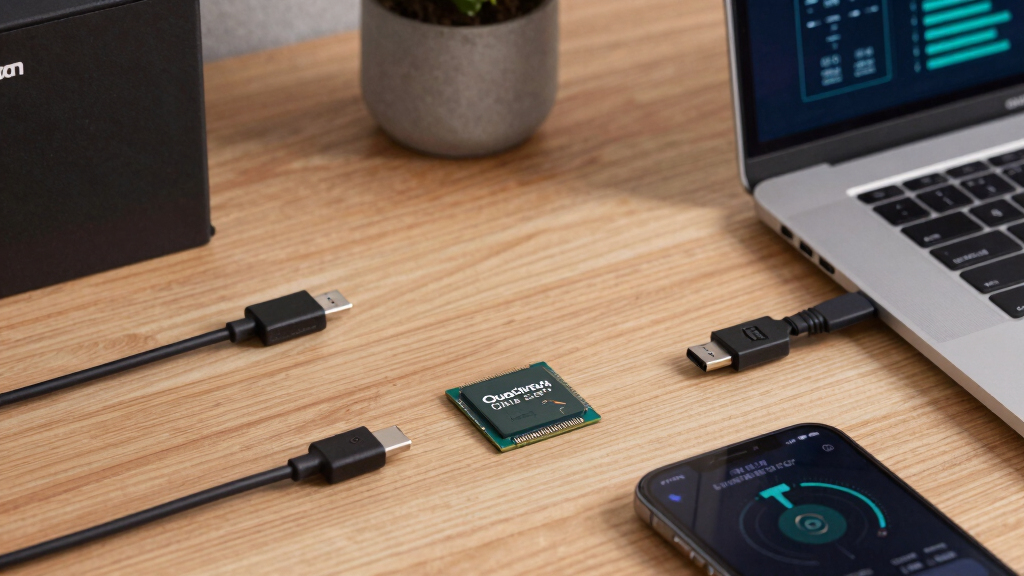
Qualcomm announced a new data center chip designed to compete with Nvidia’s GPU and HBM solutions. This move signals its entry into the AI processing market amid increasing competition.
Qualcomm has unveiled a new data center chip aimed at competing directly with Nvidia’s GPU and high-bandwidth memory solutions, marking its entry into the AI processor market. The announcement was made on June 25, 2026, at a press event in New York, highlighting Qualcomm’s strategic move to expand beyond mobile and consumer electronics into data center hardware. This development is significant as it positions Qualcomm as a new contender in a market currently dominated by Nvidia, which has a stronghold on AI acceleration and high-performance computing.
Qualcomm’s new data center chip is designed to deliver high-performance AI processing capabilities, with a focus on integrating advanced computing architectures tailored for data centers. The company claims that its chip offers competitive performance metrics, including improved energy efficiency and scalability, aiming to attract data center operators and cloud service providers.
According to Qualcomm, the chip leverages its existing expertise in mobile and embedded processors, adapting it for the demands of large-scale AI workloads. The company did not disclose detailed technical specifications but emphasized that the new hardware would feature innovative memory management and processing techniques to rival Nvidia’s GPU and HBM offerings.
Industry analysts note that Qualcomm’s entry into the data center market could increase competition and potentially lead to more diverse options for AI infrastructure. Nvidia remains the market leader, but Qualcomm’s move could challenge its dominance if the new chip proves successful in real-world deployments, especially given Qualcomm’s extensive experience in chip manufacturing and global supply chains.
Implications of Qualcomm’s Entry into Data Center AI Hardware
This development matters because it introduces a new player into the highly competitive AI hardware market, which could lead to increased innovation and potentially lower costs for data center operators. Qualcomm’s entry could also diversify the supply chain, reducing reliance on Nvidia and fostering more competition in AI processing solutions. For Nvidia, this represents a significant challenge as it faces an emerging rival with deep expertise in chip design and manufacturing, potentially reshaping the landscape of AI infrastructure.
As an affiliate, we earn on qualifying purchases.
Market Dynamics and Qualcomm’s Strategic Shift
Nvidia has been the dominant force in AI acceleration hardware, especially with its GPUs and HBM memory solutions, which are widely used in data centers worldwide. Over the past few years, several chipmakers have expressed interest in entering this space, but Nvidia’s market share and technological lead have remained substantial. Qualcomm’s move to develop a data center chip signals a strategic pivot to compete directly in this lucrative segment, leveraging its existing semiconductor capabilities.
Historically known for mobile processors, Qualcomm has been expanding into data center and AI markets, recognizing the growth potential in cloud computing and AI workloads. The company’s announcement follows other industry shifts, including increased investments from major chipmakers aiming to challenge Nvidia’s dominance, especially as AI adoption accelerates globally.
“Qualcomm’s new chip could disrupt the current AI hardware landscape by offering a viable alternative to Nvidia’s GPU and HBM solutions.”
— an anonymous researcher
As an affiliate, we earn on qualifying purchases.
Technical Details and Market Reception Still Unclear
It is not yet clear how Qualcomm’s chip will perform in real-world data center environments, as detailed technical specifications and benchmark results have not been disclosed. The market’s reception remains uncertain, particularly whether data center operators will adopt Qualcomm’s hardware over Nvidia’s established solutions. Additionally, the competitive impact of this move will depend on Qualcomm’s ability to scale production and support large deployments.
As an affiliate, we earn on qualifying purchases.
Upcoming Testing, Industry Adoption, and Market Impact
Next steps include Qualcomm conducting extensive performance testing and pilot programs with potential clients. Industry analysts will be watching for benchmarking results and early deployment feedback, which will influence market acceptance. Qualcomm may also announce partnerships or collaborations to accelerate adoption. The broader industry will observe whether this new chip can challenge Nvidia’s entrenched position in AI infrastructure.
As an affiliate, we earn on qualifying purchases.
Key Questions
How does Qualcomm’s new data center chip compare to Nvidia’s GPUs?
Qualcomm claims its chip offers competitive performance and energy efficiency, but detailed benchmarks and technical specifications are not yet publicly available, so direct comparison remains uncertain.
Will Qualcomm’s chip replace Nvidia’s solutions in data centers?
It is too early to determine. Adoption will depend on performance, compatibility, and industry acceptance, which are still to be tested in real-world scenarios.
What advantages does Qualcomm have in entering the data center market?
Qualcomm’s extensive manufacturing experience, supply chain capabilities, and existing expertise in mobile and embedded processors could give it an edge if its new hardware proves effective in AI workloads.
When will Qualcomm’s data center chip be available for deployment?
Specific release timelines have not been announced; Qualcomm is expected to begin pilot programs and testing phases soon, with commercial availability potentially within the next year.
Does this development threaten Nvidia’s market dominance?
While it introduces competition, Nvidia’s established position and technological lead mean that any challenge will take time to materialize fully, depending on Qualcomm’s performance and industry uptake.
Source: Nikkei Asia
Fall Picks
fall essentials
As an affiliate, we earn on qualifying purchases.