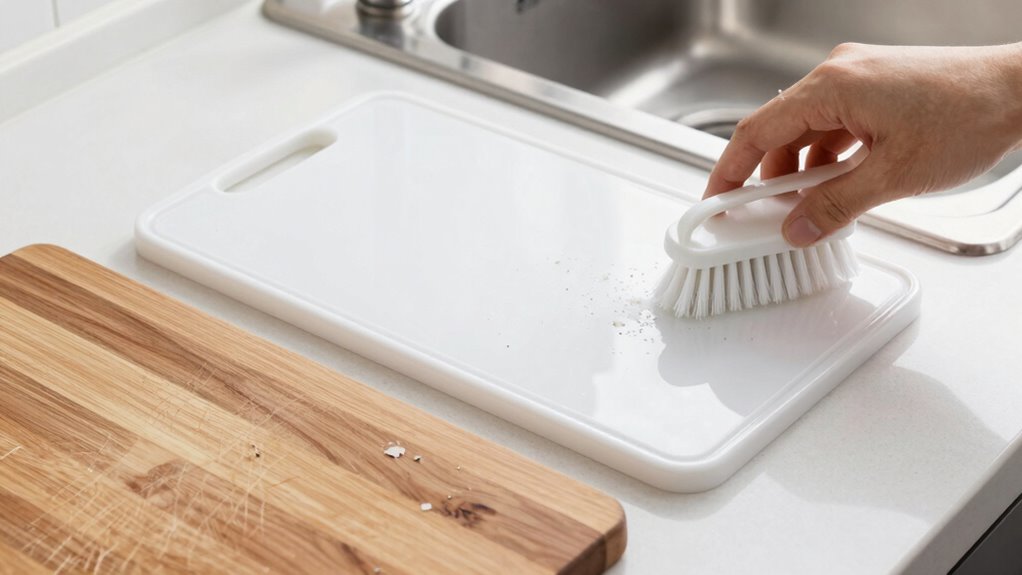

To properly clean your cutting boards, wash wooden ones with hot water, mild soap, and a scrub brush, then disinfect with vinegar or diluted bleach, allowing contact time before rinsing. For plastic boards, use hot water and dish soap, then sanitize with a diluted bleach solution or food-safe sanitizer, letting it sit briefly. Always dry thoroughly to prevent mold and odors. Keep your boards in good shape by following these steps—you’ll discover more tips for safe kitchen practices ahead.
Key Takeaways
- Rinse wood and plastic boards with hot water and scrub with mild soap after each use.
- Disinfect wooden boards with vinegar or diluted bleach, letting sit for a few minutes before rinsing.
- Sanitize plastic boards with a bleach solution (1 tbsp per gallon) or approved commercial sanitizers.
- Avoid soaking wooden boards; dry thoroughly and oil regularly to prevent cracks and warping.
- Inspect plastic boards for scratches or gouges and replace if they harbor bacteria or show damage.

DEBETOOL Cutting Board Oil Wax Applicator and Scrub Brush Set- Natural Bamboo with Sisal Fiber and Sponge for Food Grade Mineral Oil Board,Wooden Worktops,Utensil Care
⬤COMPLETE CARE KIT: Tired of dull cutting boards? Our scrub brush and oil applicator set is perfect for…
As an affiliate, we earn on qualifying purchases.
As an affiliate, we earn on qualifying purchases.
Why Properly Cleaning Your Cutting Boards Is Essential
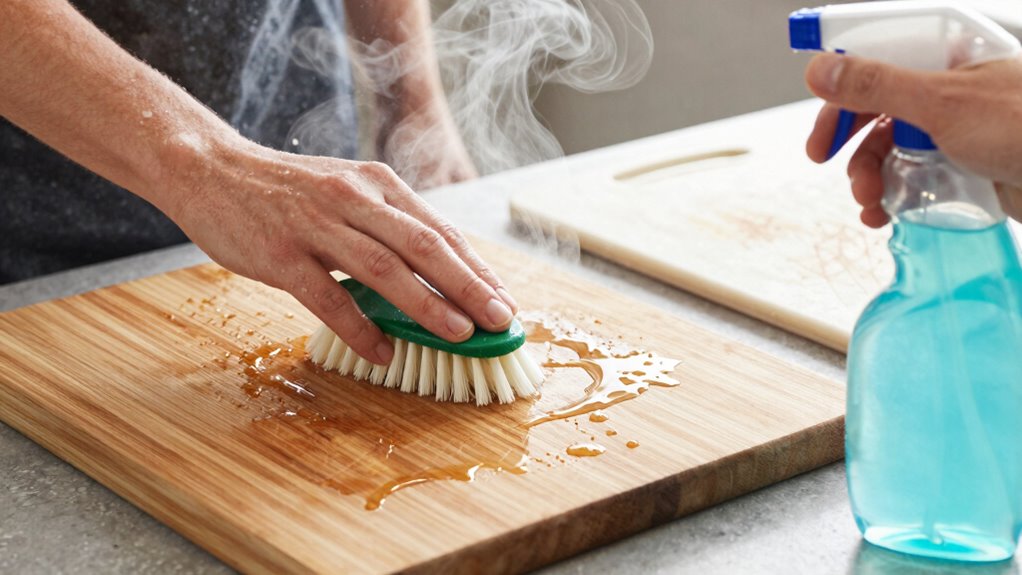
Have you ever thought about the risks of not cleaning your cutting board properly? Neglecting proper cleaning can lead to bacteria buildup, increasing the chance of foodborne illnesses. When you don’t clean thoroughly, harmful pathogens hide in cracks or porous surfaces, making cross-contamination more likely. This is especially dangerous when using poor cutting techniques or improper knife safety, which can transfer germs from raw meats to vegetables or cooked foods. Proper cleaning removes these bacteria, protecting your health and ensuring safe food prep. Additionally, a clean cutting board helps maintain sharp knives, preventing accidents caused by dull blades. By prioritizing cleanliness, you support good cutting techniques and knife safety, making your kitchen safer and your food more hygienic. Recognizing food safety as a critical aspect of kitchen hygiene underscores the importance of thorough cleaning routines. Regularly cleaning your cutting board also helps prevent bacteria growth, which can occur quickly if surfaces are not properly sanitized. Moreover, maintaining a clean surface reduces the risk of cross-contamination, which is essential for safe food handling practices. Incorporating proper cleaning techniques, such as using hot water and sanitizer, further enhances your kitchen’s hygienic environment and reduces health risks.

CITRATIDE Cutting Board Cleaner Spray – Food Safe Cleaner & Conditioner for Wood, Bamboo, plastic cutting boards & Butcher Blocks – Plant-Based Citrus Power, Non-Toxic, USA Made (16 fl oz)
Safe for Food-Prep Surfaces – Food safe formula made to clean and condition wood, bamboo, and plastic cutting…
As an affiliate, we earn on qualifying purchases.
As an affiliate, we earn on qualifying purchases.
How to Clean Wooden Cutting Boards Effectively
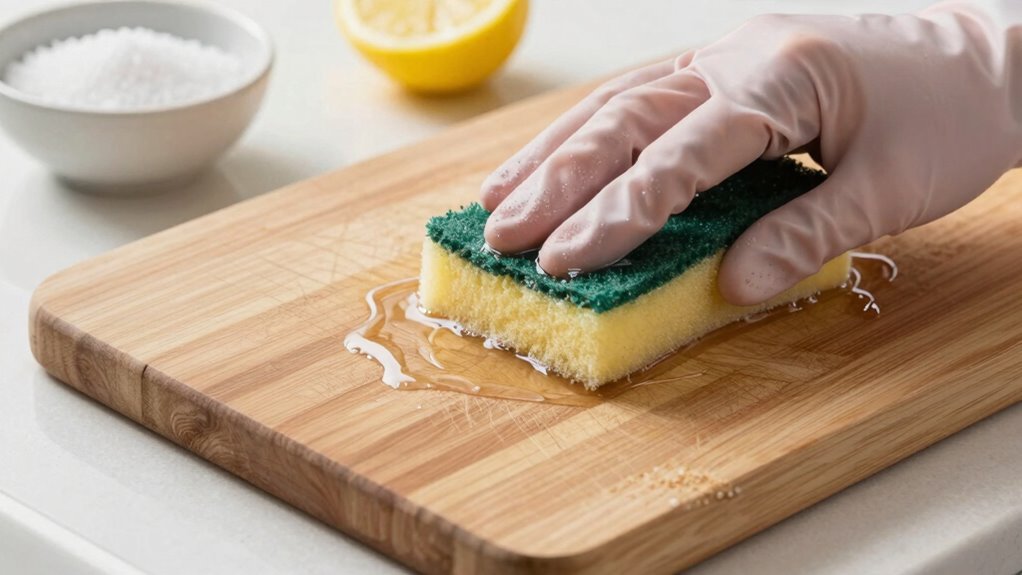
To keep your wooden cutting board clean, use proper techniques like scrubbing with hot water and mild soap after each use. Disinfect it regularly with vinegar or a diluted bleach solution to kill bacteria. Remember to maintain and care for the board by oiling it periodically to prevent cracks and warping. Additionally, piercing aftercare can often be improved by inspecting and maintaining your piercings’ jewelry and hygiene practices regularly. Proper maintenance of kitchen tools, like checking for electrical safety, can also reduce the risk of accidents and ensure longevity. Monitoring kitchen appliance safety guidelines helps to identify potential hazards before they lead to problems.
Proper Cleaning Techniques
Proper cleaning of wooden cutting boards is essential to prevent bacteria buildup and maintain their condition. To do this effectively, start by rinsing the board with hot water and scrubbing it with a brush or sponge. Avoid soaking it in water, which can cause warping. After cleaning, consider these techniques:
- Sprinkle coarse salt and rub with lemon to disinfect and remove odors
- Use a mixture of vinegar and water for natural sanitizing
- Regularly sharpen your knives to prevent unnecessary damage to the board’s surface
- Keep your workspace organized to avoid cross-contamination and streamline cleaning
Disinfecting Recommendations
After cleaning your wooden cutting board thoroughly, it’s important to disinfect it to eliminate any lingering bacteria. Proper disinfection is key to maintaining food safety and preventing cross-contamination. You can use a solution of white vinegar or hydrogen peroxide, both effective at reducing surface bacteria without damaging the wood. Spray or wipe the disinfectant onto the board, ensuring full coverage. Let it sit for a few minutes to allow the solution to work, then rinse with hot water. Avoid soaking the board in water, which can cause warping. Regular disinfecting helps keep your cutting board safe for food prep, especially after cutting raw meats or poultry. Incorporating these steps ensures you minimize bacteria and maintain a hygienic surface for your culinary needs. Additionally, understanding the spiritual significance of maintaining cleanliness can reinforce the importance of caring for your kitchen tools. To enhance your hygiene practices, consider implementing a routine cleaning schedule to ensure ongoing safety and sanitation. Maintaining a clean kitchen environment also supports overall health and well-being. Recognizing the role of contrast ratio in image quality can also remind you of the importance of proper maintenance, whether in kitchen tools or home theater setups. Being aware of proper cleaning techniques can further improve your sanitation efforts and prolong the life of your cutting boards.
Maintenance and Care
Regularly cleaning your wooden cutting board is essential to keep it in good condition and safe for food prep. Proper maintenance involves more than just cleaning; it includes regular oiling and thoughtful storage. To prolong its life, consider these care tips:
- Use mineral oil or beeswax to maintain the wood’s moisture.
- Store your board in a dry, well-ventilated area, avoiding damp places.
- Keep your knife sharp; a dull blade can damage the wood’s surface.
- Rotate storage solutions to prevent warping or cracking over time.
- Additionally, understanding the material properties of wood helps tailor your cleaning routine effectively, and being aware of the wood’s porosity can help prevent bacterial buildup and staining.
- Recognizing the wood’s moisture content can also guide you in choosing appropriate cleaning and sealing methods to extend the lifespan of your cutting board.
- Being familiar with the types of wood used for cutting boards can help you select the best one for your needs and care routine.
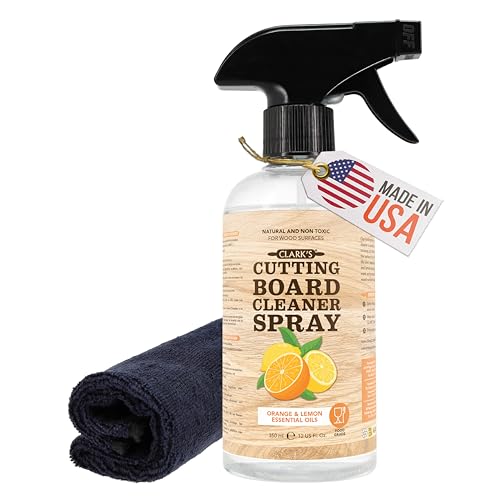
CLARK'S Natural Cutting Board Spray Cleaner, with Microfiber Cloth, for Wood Countertop – Pure Ingredients Filtered Water, Distilled Vinegar, Castile Soap, Lemon & Orange Citrus Oil Extracts, 12oz
NATURAL INGREDIENTS – Made with PURE NATURAL ingredients, starting with filtered water, distilled vinegar (you'll recognize the scent),…
As an affiliate, we earn on qualifying purchases.
As an affiliate, we earn on qualifying purchases.
Best Ways to Sanitize Plastic Cutting Boards
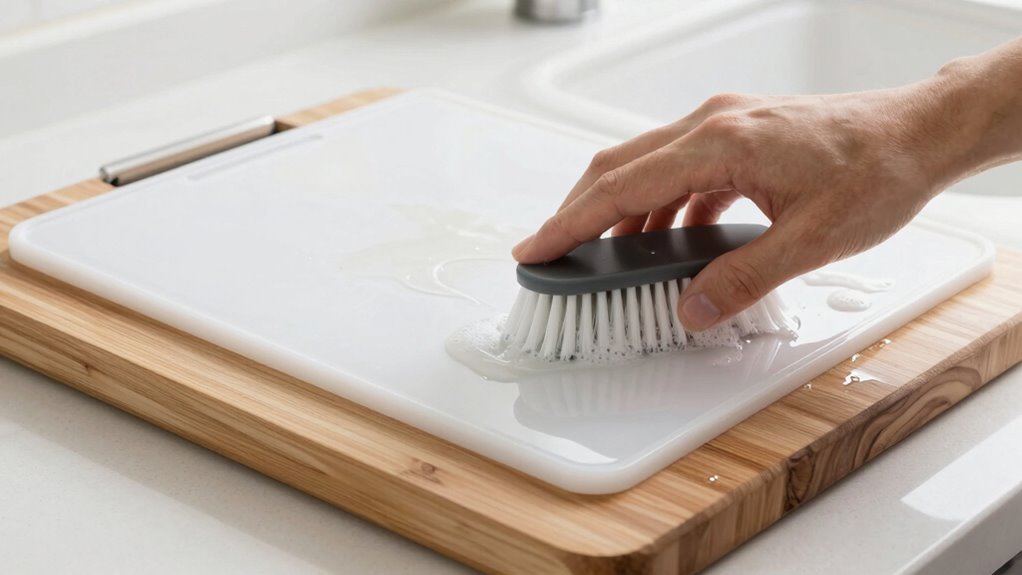
To effectively sanitize plastic cutting boards, you need to choose methods that eliminate bacteria without damaging the surface. Proper sanitation guarantees plastic safety and meets sanitation standards. Use hot water and dish soap for routine cleaning, then sanitize with a diluted bleach solution (1 tablespoon bleach per gallon water). For tougher bacteria, consider commercial sanitizers approved for food contact surfaces. Remember, avoid abrasive scrubbers that can scratch the plastic, creating hiding spots for bacteria. Here’s a quick reference:
| Method | Effectiveness | Notes |
|---|---|---|
| Hot water & soap | Basic sanitation | Do after every use |
| Bleach solution | Disinfects thoroughly | Rinse well afterward |
| Commercial sanitizers | Meets sanitation standards | Follow manufacturer instructions |
Additionally, understanding food safety standards can help ensure your sanitation practices are up to date and effective. Regularly inspecting your cutting boards for surface damage can prevent bacterial buildup and maintain food safety. Incorporating proper sanitation techniques and staying informed about sanitation guidelines can further enhance hygiene practices and reduce the risk of cross-contamination. Staying aware of emerging sanitation methods can also help you adopt newer, more effective cleaning strategies.

Thirteen Chefs Mineral Oil – 8 oz Food Grade Conditioner for Wood Cutting Board, Countertop & Butcher Block, Lubricant for Knife or Meat Grinder – Safe USP Finish on Marble, Soapstone
FOOD GRADE – This butcher block conditioner is lab tested to ensure that it meets food safety standards,…
As an affiliate, we earn on qualifying purchases.
As an affiliate, we earn on qualifying purchases.
When and How to Disinfect Your Cutting Boards
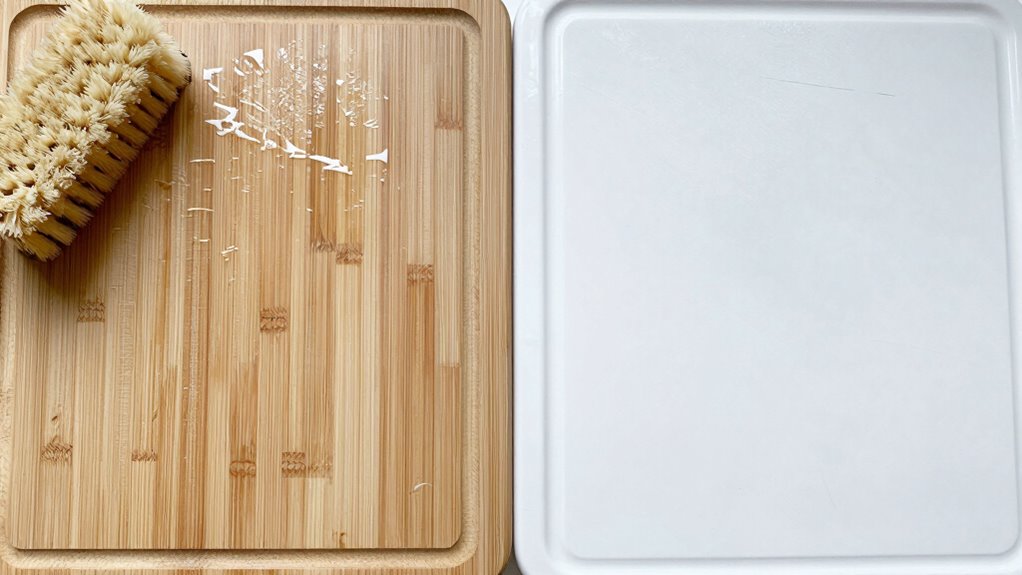
Knowing when to sanitize your cutting boards ensures they stay safe for food preparation. You should disinfect after handling raw meats, poultry, seafood, or unwashed produce to prevent cross contamination. Regularly disinfect even when not visibly dirty to maintain hygiene best practices. Proper door swings and layout can facilitate easier cleaning and disinfection routines in your kitchen. Consider these steps: – Use a food-safe disinfectant or a diluted bleach solution for thorough sanitation. – Let the disinfectant sit for the recommended contact time. – Rinse with hot water to remove any residue. – Air dry or pat dry with a clean towel to prevent mold growth. Ensuring proper indoor air quality can also help reduce airborne bacteria and mold spores that may settle on surfaces. Incorporating cultural artifacts like Indonesian masks can create a more inspiring environment that encourages cleanliness and care. Regular disinfection can also help prevent bacterial buildup that might otherwise go unnoticed. Disinfecting at the right times helps eliminate bacteria and reduces cross contamination risks. Incorporate proper hygiene protocols, especially after prepping different food types, to keep your kitchen safe and your cutting boards in top condition.
Easy Tips to Remove Stains and Odors From Both Boards
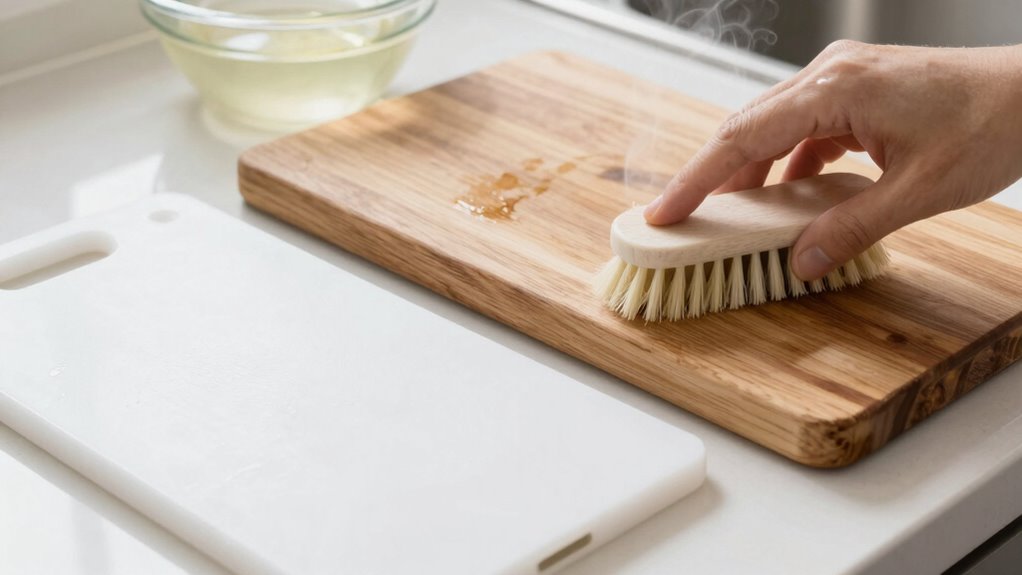
Stains and odors can linger on your cutting boards, making them look and smell less than fresh. For effective stain removal, sprinkle coarse salt or baking soda on the surface, then scrub with a lemon half or a damp sponge. Let it sit for a few minutes before rinsing thoroughly. To eliminate odors, apply a mixture of white vinegar and water or rub the board with a cut lemon; both help neutralize lingering smells. For stubborn stains, create a paste with baking soda and water, apply it to the stain, and scrub gently. Rinse well and dry completely. These simple tips ensure your boards stay clean, fresh, and odor-free, prolonging their lifespan and keeping your food safe.
Common Mistakes to Avoid When Cleaning Your Cutting Boards
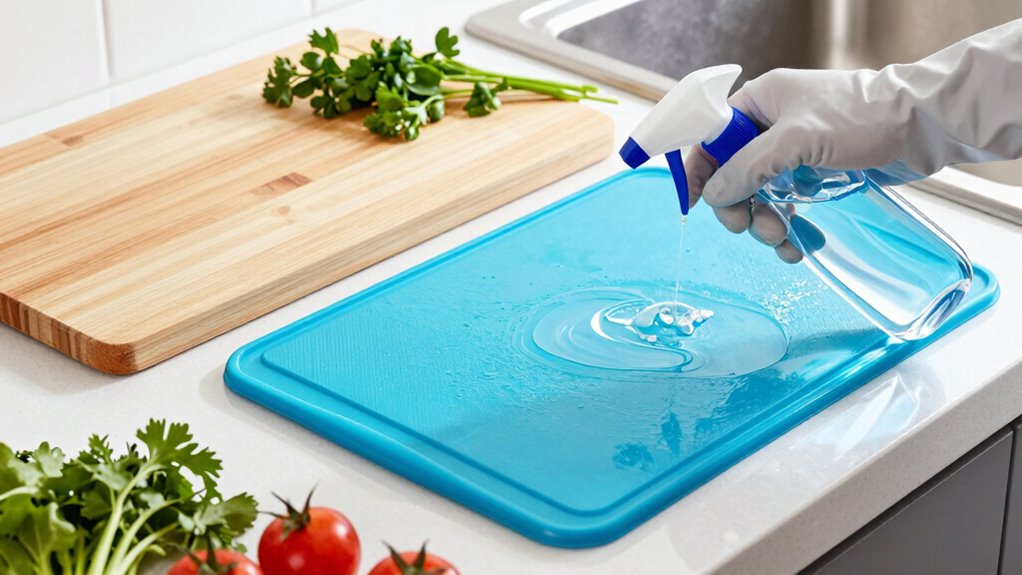
Avoid using harsh cleaners, as they can damage your cutting board and leave harmful residues. You also need to remember to sanitize regularly; skipping this step can lead to bacteria buildup. By steering clear of these mistakes, you’ll keep your board safer and in better shape.
Using Harsh Cleaners
Using harsh cleaners on your cutting board might seem like an effective way to disinfect, but it can actually cause more harm than good. Harsh chemicals can degrade the wood or plastic surface, leading to cracks and rough patches that harbor bacteria. Avoid abrasive scrubbing tools that can scratch the surface, creating spaces for bacteria to hide. Instead, focus on gentle cleaning methods. Be cautious of:
- Using bleach or strong chemical disinfectants unnecessarily
- Scrubbing with steel wool or abrasive scrubbers
- Relying solely on chemical cleaners for sanitation
- Ignoring the potential damage caused by aggressive cleaning agents
Opt for natural disinfectants like vinegar or baking soda when needed, and always follow up with proper rinsing. Proper cleaning preserves your cutting board’s integrity and ensures food safety.
Neglecting Regular Sanitizing
Neglecting to sanitize your cutting board regularly can lead to the buildup of bacteria and food residue, increasing the risk of cross-contamination. Without proper sanitizing, harmful germs can linger, especially after slicing raw meat or poultry. To prevent this, you need to pay attention to cleaning frequency—sanitize your board after each use, particularly when switching between different food types. Skipping this step undermines cross contamination prevention efforts and can cause foodborne illnesses. Use appropriate sanitizing methods, such as a diluted bleach solution or commercial sanitizers, depending on your board material. Regular sanitizing not only keeps your kitchen safer but also prolongs the life of your cutting board. Don’t neglect this essential step—consistent sanitizing is key to safe and hygienic food prep.
How to Maintain Your Cutting Boards for Longevity
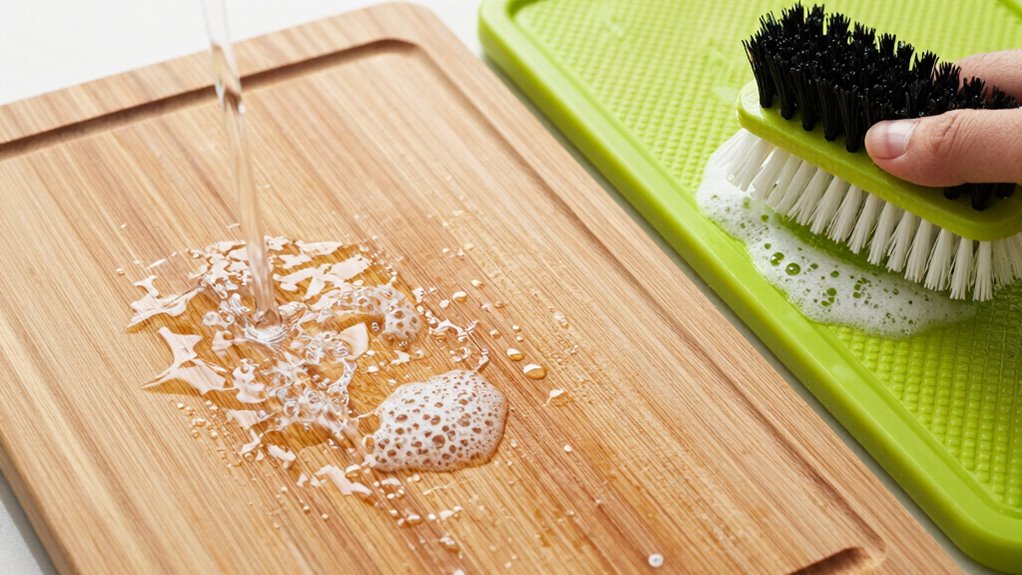
To guarantee your cutting boards last for years, regular maintenance is essential. Start by choosing quality materials—hardwoods like maple or walnut for wood boards, and durable plastic options. Proper storage also plays a key role; keep boards upright or in a dry, ventilated area to prevent warping and bacteria buildup. To extend their lifespan:
Choose quality materials and proper storage to keep your cutting boards in top condition.
- Regularly oil wood boards with food-grade mineral oil
- Avoid soaking or leaving boards wet
- Rotate boards to prevent excessive wear
- Keep boards dry and store them separately from other kitchen tools
Implementing these simple practices ensures your boards stay in top condition. Proper material selection and storage habits are vital for longevity, helping you avoid early replacements and maintain a hygienic cooking surface.
Expert Tips for Safe and Effective Cutting Board Care
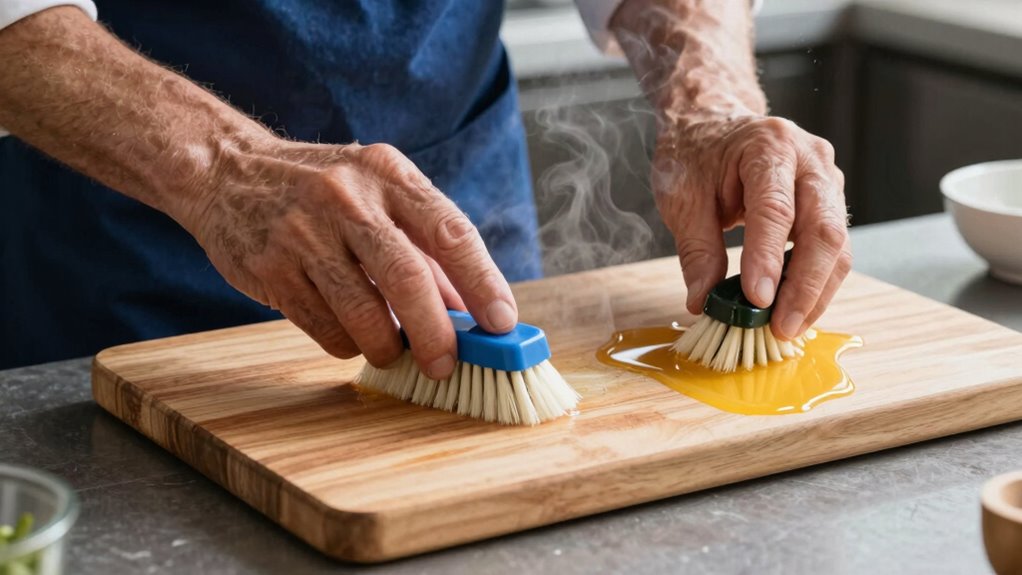
Ensuring your cutting board remains safe and effective requires adopting proper care habits that prevent contamination and damage. Always prioritize knife safety by using sharp knives, which reduce slips and accidental cuts, and handle them carefully. When selecting ingredients, choose fresh produce and meats, and avoid cross-contaminating by using separate boards or properly cleaning between tasks. Regularly sanitize your cutting board with hot water and a mild disinfectant or vinegar solution to eliminate bacteria. Avoid cutting on the same spot repeatedly, which can deepen scratches that harbor germs. Pay attention to the type of ingredients you prepare—raw meats, for example, need extra cleaning. By practicing these tips, you’ll maintain a safer, more durable surface that supports better food hygiene.
Frequently Asked Questions
Can I Use Bleach to Clean My Cutting Boards?
Yes, you can use bleach to clean your cutting boards, but you must follow bleach safety guidelines. Dilute a small amount of bleach with water (about 1 tablespoon per gallon), then sanitize your board for a few minutes. Rinse thoroughly with water afterward. Keep in mind, proper sanitizing methods include both chemical disinfectants like bleach and natural options like vinegar, but always make certain complete rinsing to avoid residue.
How Often Should I Replace Wooden Cutting Boards?
You should replace your wooden cutting board every 1 to 3 years. Studies show that, over time, wooden boards can harbor bacteria in deep cuts, affecting board longevity and safety. Regularly inspecting for deep grooves or cracks helps determine when it’s time for a replacement. If your board shows significant wear or staining, it’s best to switch it out to maintain hygiene and prevent cross-contamination.
Is It Safe to Use Vinegar on Plastic Boards?
Yes, vinegar is safe for plastic board hygiene and can help disinfect your plastic cutting board. It effectively reduces bacteria and removes odors without damaging the surface. Just pour white vinegar over the board, let it sit for a few minutes, then scrub with a brush or sponge. Rinse thoroughly with water. Vinegar safety makes it a natural, eco-friendly option for maintaining your plastic cutting board’s cleanliness.
What Are Natural Alternatives for Cleaning Cutting Boards?
For natural, nourishing cleaning, try using simple solutions like salt and lemon, baking soda and water, or vinegar with water. These eco-friendly solutions act as natural disinfectants, removing bacteria while being gentle on your boards. You can also sprinkle salt, scrub with lemon, then rinse thoroughly. These natural alternatives keep your cutting board clean, chemical-free, and safe for food prep, promoting pure, pristine surfaces.
How Do I Prevent Cross-Contamination Between Boards?
To prevent cross-contamination, always use separate boards for meats, vegetables, and dairy. Wash each board thoroughly with hot water and natural disinfectants after use, especially at bacteria hotspots. Maintain your knives well to avoid gouges that trap bacteria. Regularly sanitize and replace boards when they become deeply scored or stained. By following these steps, you reduce the risk of bacteria transfer and keep your kitchen safer.
Conclusion
Keeping your cutting boards clean isn’t just about appearance; it’s about safety and longevity. Follow the right cleaning and disinfecting methods for wood and plastic, and don’t cut corners. With proper care, you’ll keep bacteria at bay and extend your boards’ life. Remember, a clean board is a happy board, so don’t let it slip through your fingers. Stay diligent, and your kitchen will thank you for years to come.