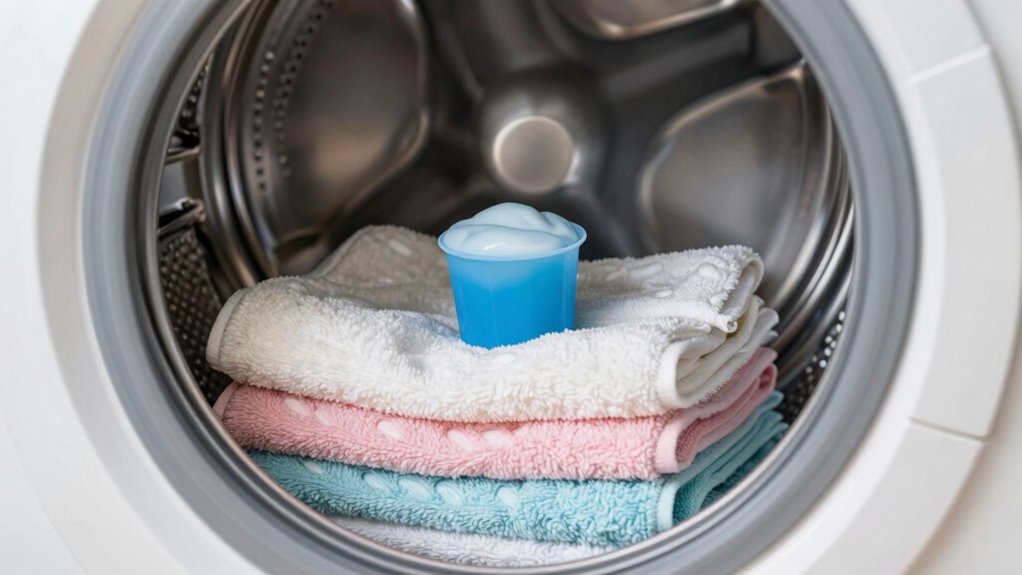

Using more laundry detergent than recommended might seem like it cleans better, but it actually causes residue buildup on your clothes and inside your machine. Overusing detergent can dull or stiffen fabrics, trap dirt, and lead to mold and odors. It also wastes resources and harms the environment. To keep your laundry fresh and your appliances running smoothly, it’s best to stick to proper doses—learn more about getting it right below.
Key Takeaways
- Using the recommended detergent amount ensures effective cleaning without residue buildup or damage to fabrics and appliances.
- Overusing detergent can cause soap scum, stiff clothes, and mold growth inside washing machines.
- Excess detergent pollutes water and harms the environment, while also wasting resources and energy.
- Proper measurement prevents skin irritation and long-term health issues caused by chemical residues on clothes.
- Adjusting detergent based on water type and load size optimizes cleaning and reduces unnecessary waste.

Ultra Concentrated Liquid Laundry Detergent Soap, 64 loads (32 oz), Long Lasting Scent, 90% Less Plastic, No Harsh Chemicals, Juniper Sandalwood, Defeats Stains & Odors, HE/Standard Compatible
CLEAN ALWAYS MEANS CLEAN: Clean isn’t just a state, it’s a feeling we facilitate. Just one half ounce…
As an affiliate, we earn on qualifying purchases.
As an affiliate, we earn on qualifying purchases.
How Much Laundry Detergent Do You Really Need?
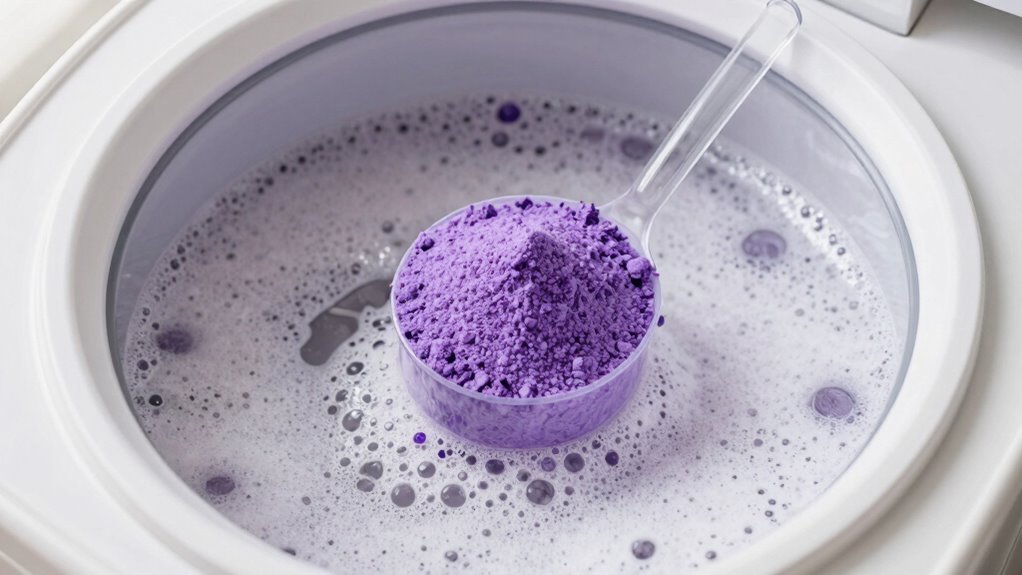
Many people tend to use more laundry detergent than necessary, but doing so doesn’t lead to cleaner clothes. In fact, overusing detergent can cause buildup and waste money. To get ideal cleaning, follow the recommended amounts on your detergent brand’s label. If you’re interested in eco friendly options, many brands now offer eco-conscious formulas that are effective in smaller doses. These environmentally friendly options often have concentrated formulas, meaning you need less detergent per load. Keep in mind that the size of your load and the level of dirt also influence how much detergent you should use. Using too much not only wastes product but can also harm your washing machine and clothes over time. Stick to recommended dosages for the best results and sustainability. Understanding detergent concentration can help you optimize your laundry routine and reduce waste. Additionally, being aware of product ingredients can assist you in choosing detergents that are both effective and gentle on the environment. Recognizing proper dosing techniques is essential for maintaining your laundry equipment and ensuring the longevity of your clothes. For example, measuring your detergent accurately can prevent overuse and improve cleaning efficiency, and understanding detergent labels can help you select the right amount for each load.

2Pcs Silicone Laundry Detergent Cup, Laundry Detergent Measuring Cup, Silicone Dispenser Cups Reusable for Liquid Flexible Washable Liquid Measuring Cups for Home, Dormitory, Hotel
Neat and portable: Our laundry detergent measuring cup has a maximum capacity of 3.4 ounces or 100 ml….
As an affiliate, we earn on qualifying purchases.
As an affiliate, we earn on qualifying purchases.
Why Using Too Much Detergent Can Damage Your Clothes and Washer
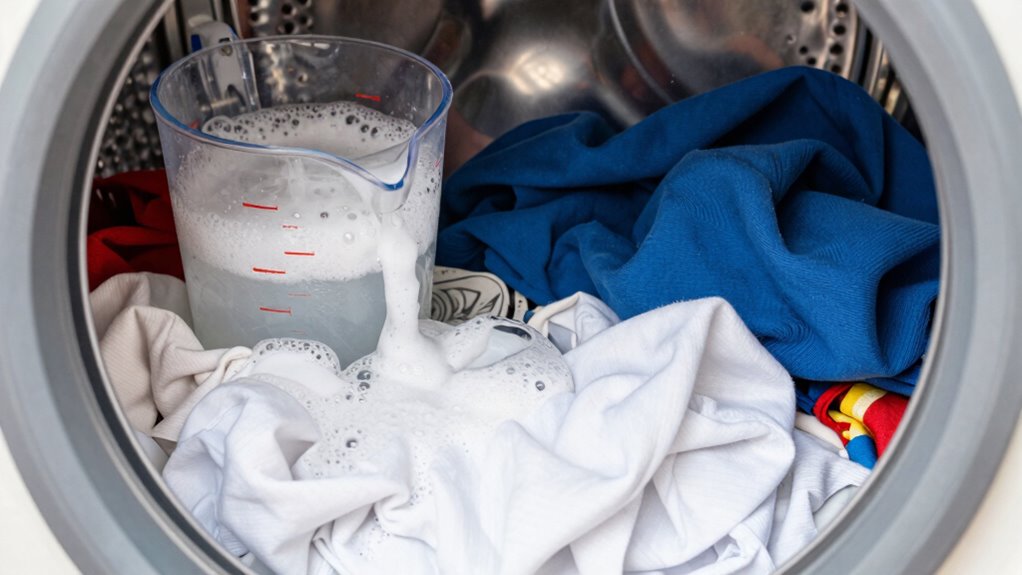
Using too much detergent can cause serious damage to both your clothes and washing machine. Excess detergent leaves residue that traps dirt, making stain removal harder. It can also harm fabrics, causing them to wear out faster or lose softness. Overuse can interfere with fabric softener’s effectiveness, leaving your clothes stiff. Plus, too much foam can clog your washer’s drainage system, reducing its lifespan. To prevent damage, follow recommended amounts. Additionally, using excessive detergent can negatively impact your air purifier by leaving residues that diminish its efficiency over time. Being mindful of proper detergent dosage helps maintain the longevity of your appliances and preserves the quality of your laundry. Recognizing the impact of overuse on your appliances encourages better maintenance and efficiency. Proper detergent amount also ensures optimal cleaning without unnecessary waste or harm. Using the correct amount of detergent can also help prevent the buildup of residues, which can be detrimental to your washing machine’s components.

ARM & HAMMER Sensitive Skin Free & Clear Liquid Laundry Detergent, 105 fl oz, 105 Loads
One 105 fl oz bottle of ARM & HAMMER Sensitive Skin Free & Clear Liquid Laundry Detergent, Free…
As an affiliate, we earn on qualifying purchases.
As an affiliate, we earn on qualifying purchases.
How to Measure Laundry Detergent Correctly
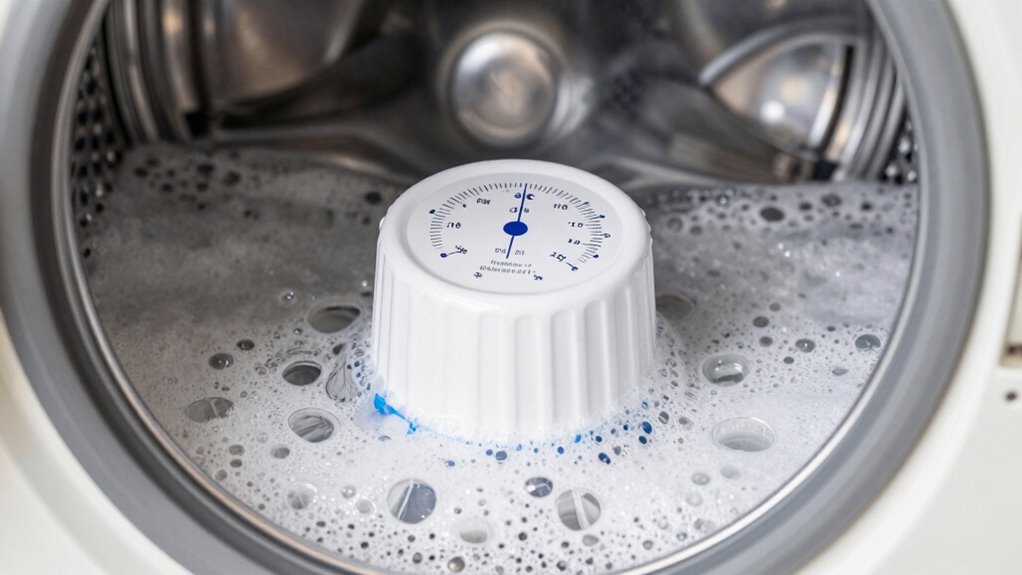
To avoid the damage caused by overusing detergent, it’s important to measure the right amount for each load. Use measuring spoons to guarantee accuracy, following the instructions on your detergent’s label. For liquid detergents, fill the spoon to the recommended line, then pour directly into the washing machine’s dispenser or drum. If you prefer detergent pods, simply toss one into the drum before adding clothes. Avoid eyeballing or guessing, as too much detergent can lead to residue buildup and inefficient cleaning. Always check the load size and soil level; smaller or lightly soiled loads require less detergent. Accurate measurement helps protect your clothes, washer, and the environment, ensuring your laundry comes out fresh and clean every time.

Gain Liquid Laundry Detergent, Original Scent, 154 fl oz, 107 Loads, Freshness + Odor Fighting, High Efficiency Washing Machine Liquid Cleaning Soap
LONG-LASTING FRESHNESS: this laundry detergent is engineered with fragrance capsules that break as you move about your day…
As an affiliate, we earn on qualifying purchases.
As an affiliate, we earn on qualifying purchases.
Signs You’re Using Too Much Detergent
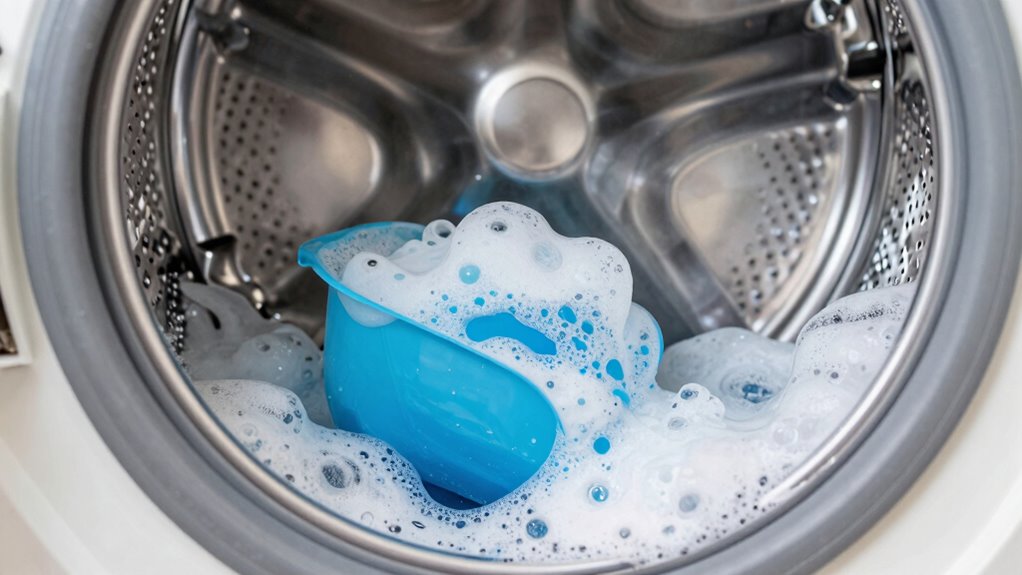
If you notice a film or residue on your clothes after washing, you might be using too much detergent. You could also experience more skin irritation or find that odors don’t fully go away. These signs often mean you’re overdoing it on the detergent, which can cause more problems than it solves. Using excessive detergent can also lead to residue buildup, making your clothes look dull and dingy over time. Additionally, overusing detergent can contribute to environmental issues like water pollution, further emphasizing the importance of proper dosing. The efficiency of detergents can vary depending on the amount used, affecting both cleaning performance and environmental impact. Being aware of detergent efficiency can help you optimize your laundry routine and avoid these issues.
Residue on Clothes
When you use too much detergent, residue can cling to your clothes, leaving them looking dull and feeling stiff. This buildup can interfere with fabric softener’s effectiveness, making your clothes less soft and more rigid. Excess detergent often traps dirt and stains, making stain removal harder over time. You might notice a filmy layer on your garments or a greasy feel after washing. The residue can also cause unpleasant odors that linger despite repeated washes. To avoid this, use the recommended amount of detergent and opt for proper rinsing cycles. Proper dosage not only preserves your clothes but also reduces water and energy consumption, aligning with eco-friendly HVAC practices. Additionally, choosing the right detergent type can help prevent excess buildup and improve overall cleaning results. Using too much detergent can also contribute to increased water usage, which impacts environmental sustainability and increases utility bills. Being mindful of indoor air quality can also help reduce lingering odors caused by detergent residue, creating a fresher living environment.
Increased Skin Irritation
Using too much laundry detergent can lead to increased skin irritation, as excess residue often remains on your clothes and skin after washing. This buildup can cause your skin to become more sensitive over time, making you prone to irritation and discomfort. If you notice redness, itchiness, or rashes after doing laundry, it could be a sign you’re using too much detergent. Overuse can also trigger allergy flare-ups, especially if you have existing skin sensitivities. The residue left on fabrics can cling to your skin, intensifying irritation and worsening allergic reactions. Additionally, using excessive detergent can negatively impact the environment by increasing water pollution chemical runoff. To prevent this, stick to recommended amounts and rinse clothes thoroughly. Proper dosage helps keep your skin healthier and reduces the risk of irritation caused by lingering detergent residue, which can cause long-term skin issues. Being mindful of detergent application techniques can further help minimize skin problems and protect your overall skin health. Choosing eco-friendly detergents with biodegradable formulas can also reduce environmental impact and skin sensitivities.
Persistent Odors
Persistent odors lingering on your clothes can be a clear sign you’re using too much detergent. When you overdo it, the excess soap can trap dirt and bacteria, making scent masking ineffective. You might notice the smell persists even after washing, which indicates the detergent isn’t doing its job properly. To fix this, cut back on the amount you use and ensure proper rinsing. Proper dosage promotes better odor elimination and prevents buildup. Using the right amount helps your laundry stay clean, fresh, and free of lingering odors. Additionally, emotional dysregulation associated with improper detergent use can lead to frustration and dissatisfaction with your laundry results.
Residue and Buildup: How Over-Detergent Causes Problems
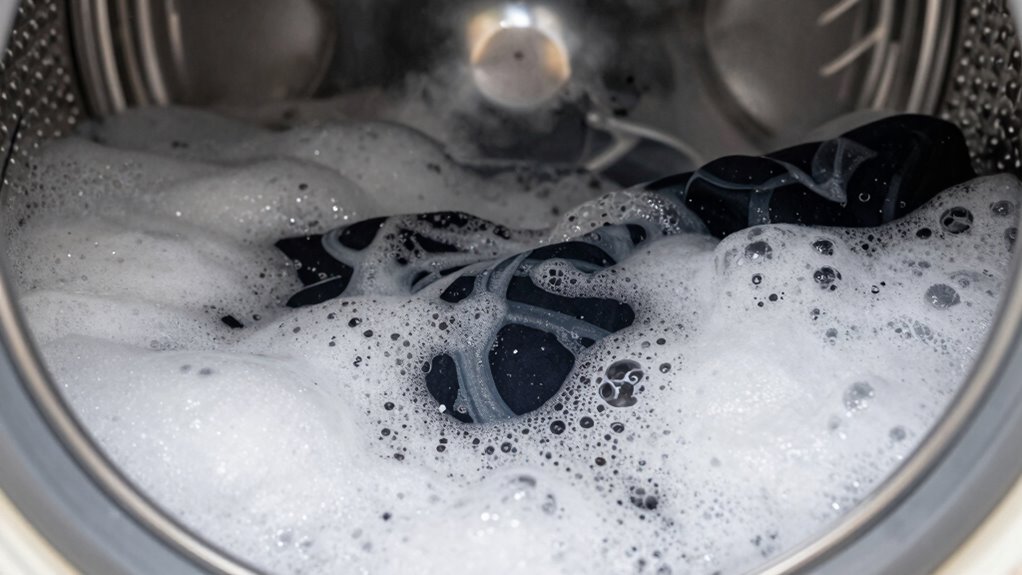
Overusing laundry detergent can backfire, leaving behind residue that clings to your clothes and washing machine. This residue buildup occurs when too much detergent doesn’t rinse out completely, creating a film on fabrics. Over time, detergent residue accumulates, making clothes feel stiff and dull. It can also trap dirt and bacteria, reducing your laundry’s cleanliness. In your washing machine, excess detergent can cause soap scum to form on the drum and hoses, impairing its function. This buildup may lead to odors and even mold growth. To avoid these problems, use the recommended amount of detergent. Less is often more, helping ensure your clothes rinse thoroughly and your machine stays clean and efficient. Proper dosing keeps residue and detergent buildup at bay.
Health Risks of Using Excess Laundry Detergent
Applying too much laundry detergent not only leaves residue on your clothes and machine but also poses health risks. Excess detergent can cause skin irritations and trigger detergent allergies, especially for sensitive individuals. Breathing in detergent fumes or residues may lead to respiratory issues over time. Additionally, using too much detergent increases environmental impact, as chemicals wash into water systems, harming aquatic life and polluting ecosystems. These unnecessary chemicals can also accumulate in your home, affecting indoor air quality and your family’s health. Vetted – wave and wind Using the correct amount of detergent helps prevent overuse and reduces chemical buildup. Proper detergent measurement ensures you use only what’s necessary, avoiding waste and potential health hazards. By using the right amount, you reduce the risk of skin reactions, respiratory problems, and environmental damage. Smart money tips can help you save money and avoid waste by using the correct detergent amount. Keeping detergent use in check promotes healthier living and a cleaner planet, proving that more isn’t always better.
Tips for Adjusting Detergent Use for Hard Water and Delicates
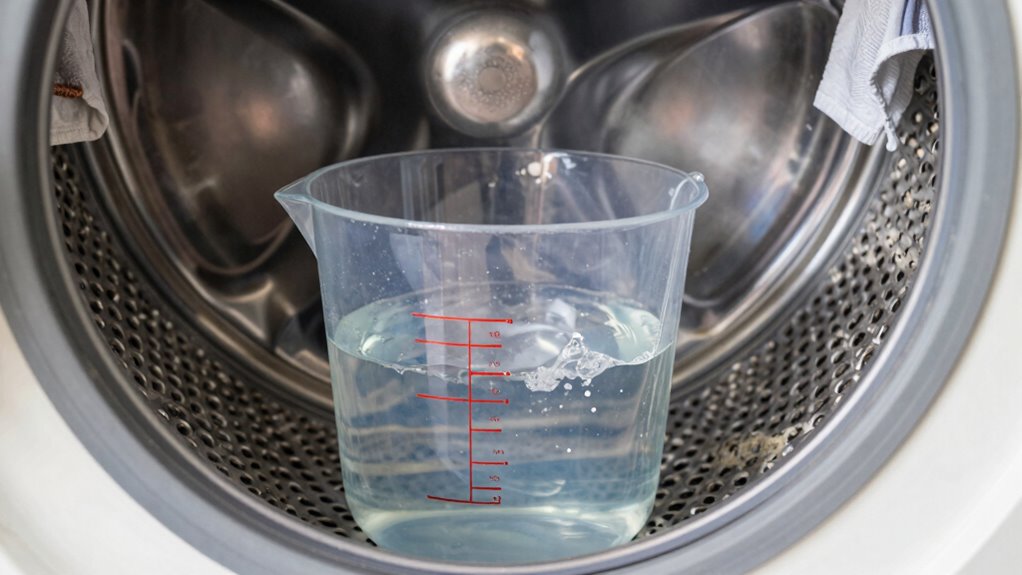
When washing clothes in hard water, you need to modify your detergent amount because the minerals can interfere with cleaning effectiveness. To combat this, consider water softening options like adding a water softener or using detergents formulated for hard water. This helps your detergent work better and reduces residue buildup. For delicate fabrics, use a gentler cycle and less detergent to prevent damage and prolong their life. It’s also helpful to pre-soak delicate items or wash them separately with a small amount of detergent. Always follow the manufacturer’s instructions for both your water type and fabric care. Adjusting your detergent use based on water hardness and fabric delicacy ensures cleaner clothes without risking damage or excessive soap residue.
Tools and Expert Tips for Proper Laundry Detergent Dosing
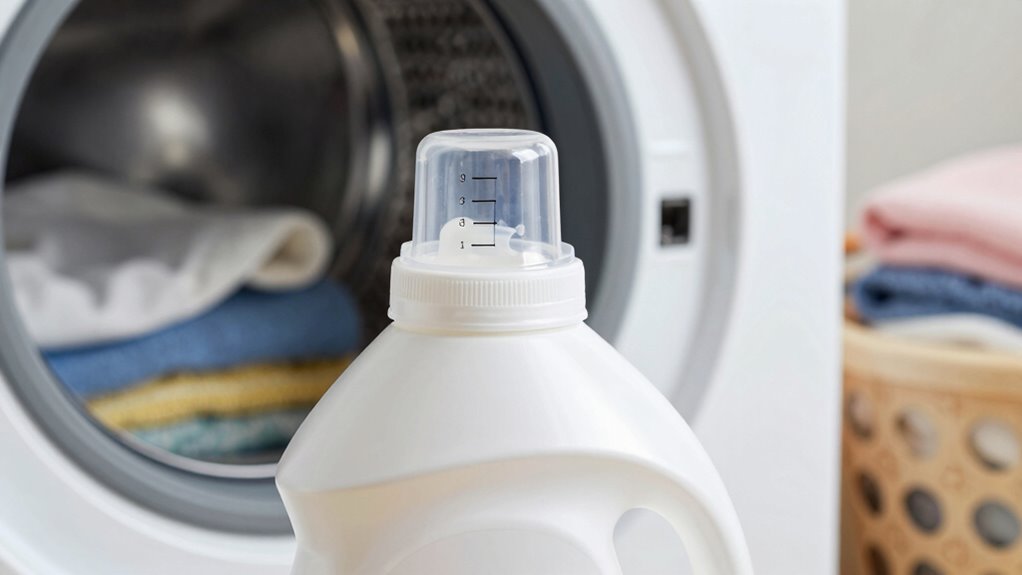
Using the right tools and expert tips can make laundry detergent dosing more accurate and effective. Start with proper laundry tools like measuring cups, detergent dispensers, or built-in scoop features on bottles to guarantee precise detergent measurement. These tools help prevent overuse or underuse, saving money and protecting your clothes. Always read the manufacturer’s instructions for the correct amount based on load size and soil level. Consider using a digital scale for exact detergent measurement if you want even more precision. Experts also recommend keeping your tools clean to avoid residue buildup, which can affect dosing accuracy. By using the right laundry tools and following expert tips, you’ll improve cleaning results while reducing waste and avoiding detergent-related damage.
Frequently Asked Questions
Can Using Less Detergent Still Clean My Clothes Effectively?
Yes, using less detergent can still clean your clothes effectively. When you choose the right water temperature, it helps activate the detergent’s cleaning power and improves stain removal. Using the correct amount prevents residue buildup and saves money, while still maintaining cleanliness. Adjust your detergent amount based on load size and fabric type, and you’ll find that less detergent can do just as much good without sacrificing clean, fresh-smelling clothes.
Are There Specific Detergents Better for Sensitive Skin?
Think of your laundry routine as a gentle dance—you want products that move softly without causing a stumble. For sensitive skin, opt for hypoallergenic formulas and fragrance-free options that respect your skin’s delicate nature. These detergents are designed to clean effectively without harsh chemicals or added perfumes, making them ideal for those with allergies or irritation. Stick with gentle, skin-friendly choices to keep your clothes fresh and your skin happy.
How Often Should I Replace My Laundry Detergent?
You should replace your laundry detergent when it nears its expiration date or shows signs of spoilage, like clumping or a strange smell. Proper detergent storage—keeping it in a cool, dry place—helps extend its shelf life. Check the label for a recommended shelf life, usually around one year. Regularly inspect your detergent to guarantee it remains effective, and replace it promptly to keep your laundry fresh and clean.
Does the Type of Washing Machine Affect Detergent Dosage?
Yes, the type of washing machine influences detergent dosage. Different washer types, like high-efficiency (HE) machines or standard models, require specific detergent compatibility. HE washers need low-sudsing, HE-compatible detergents, and using too much can cause excess suds and poor rinsing. Always check your machine’s manual for recommended detergent amounts and compatibility to guarantee effective cleaning without wasting detergent or damaging your washer.
What Are Eco-Friendly Alternatives to Traditional Laundry Detergents?
You can switch to eco-friendly laundry detergents that use biodegradable formulas and plant-based ingredients. These alternatives are gentle on the environment and effective at cleaning your clothes without harsh chemicals. Look for products labeled as biodegradable or plant-based, and you’ll reduce your ecological footprint. Plus, they often come in eco-friendly packaging, making it easier to stay sustainable while keeping your laundry fresh and clean.
Conclusion
Remember, using more detergent isn’t a secret shortcut—it’s like pouring rocket fuel on your clothes and washer. Too much can turn your laundry room into a chemical battleground, damaging fabrics, clogging machines, and even risking health. Stick to the right amount, measure carefully, and your laundry will stay fresh, clean, and happy. Trust me, a little goes a long way—more detergent only makes your laundry day an epic disaster!