
When choosing between mesh, leather, and fabric chairs, you’ll find mesh offers superior breathability and cooling, making it ideal for long hours, but it can stretch or tear over time. Leather provides a sleek, durable look but tends to crack and needs regular conditioning to prevent wear. Fabric chairs are cozy and stylish but may stain and wear faster, requiring more frequent cleaning. Keep exploring to find the best fit and learn how to maintain your chair’s longevity.
Key Takeaways
- Mesh chairs offer superior breathability and airflow, enhancing comfort during long periods, unlike leather which traps heat, and fabric which varies with textile quality.
- Leather chairs are durable and easy to clean but require regular conditioning to prevent cracking, while fabric needs careful stain management and frequent cleaning.
- Mesh chairs are lightweight and resistant to tearing, suitable for high-traffic environments, whereas leather develops a patina over time, and fabric may show wear and staining.
- Leather provides a sleek, professional look with firm support but less ventilation; fabric offers softness and coziness, and mesh combines comfort with excellent ventilation.
- Maintenance varies: leather needs conditioning; fabric requires stain removal; mesh benefits from proper ventilation; all need regular cleaning to prolong lifespan.
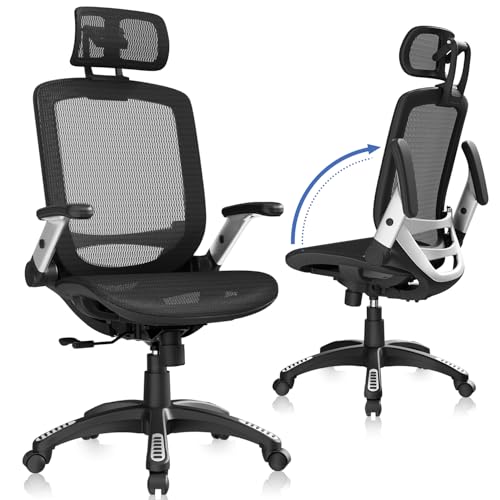
GABRYLLY Ergonomic Office Chair, High Back Home Desk Chair with Headrest, Flip-Up Arms, 90-120° Tilt Lock and Wide Cushion, Big and Tall Mesh Chairs for Man Woman, Black Task Chair
【ERGONOMIC OFFICE CHAIR】- The ergonomic chair provides 4 supporting points(head/ back/ hips/ hands) and a proper lumbar support….
As an affiliate, we earn on qualifying purchases.
As an affiliate, we earn on qualifying purchases.
How Do Mesh, Leather, and Fabric Chairs Compare in Comfort?

When it comes to comfort, mesh, leather, and fabric chairs each offer distinct experiences. Mesh chairs excel in providing excellent ergonomic support, thanks to their breathability and flexible design that molds to your body. This performance-enhancing feature makes them ideal for long hours at a desk. Additionally, their adjustability options allow users to customize support for maximum comfort. Leather chairs, on the other hand, deliver a sleek aesthetic appeal, giving your workspace a professional and luxurious look. While they may not be as breathable, they offer firm support and a smooth feel that many find comfortable. Fabric chairs strike a balance, offering softness and a cozy touch that enhances comfort for extended sitting. Their aesthetic appeal varies depending on the fabric, but they generally provide a warm, inviting vibe. Each material caters to different preferences for comfort and style.

La-Z-Boy 1104593 Bradley Bonded Leather Executive Chair
Executive office chair with a swivel seat for maximum workspace use
As an affiliate, we earn on qualifying purchases.
As an affiliate, we earn on qualifying purchases.
Which Chair Materials Are the Most Durable and Last Long?
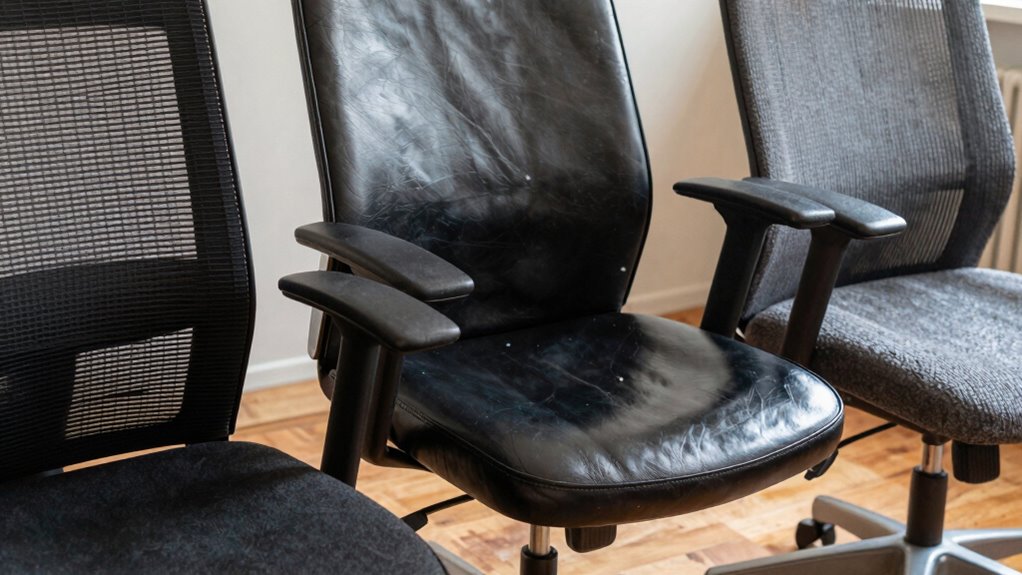
Choosing a durable chair depends largely on the materials used in its construction. In a durability comparison, leather often leads due to its material longevity, resisting wear and tear over time. Leather chairs tend to age well, developing a patina that adds character, making them a long-lasting choice if maintained properly. Support networks for new fathers can also influence the longevity of the chair, as proper maintenance and care are easier when mental health and physical well-being are prioritized. Mesh chairs, while durable, primarily excel in breathability but may show signs of stretching or tearing after extended use. Additionally, the water resistance of fabric chairs varies depending on treatment, impacting their lifespan in environments prone to spills. Fabric chairs usually have a shorter lifespan, especially if exposed to heavy use or spills, as their material can wear out faster. Factors such as material quality and construction also play a significant role in longevity, alongside regular cleaning and care. Ultimately, your choice depends on how much wear and tear the chair will endure. Leather offers the best longevity, but mesh and fabric can also last with proper care and usage.
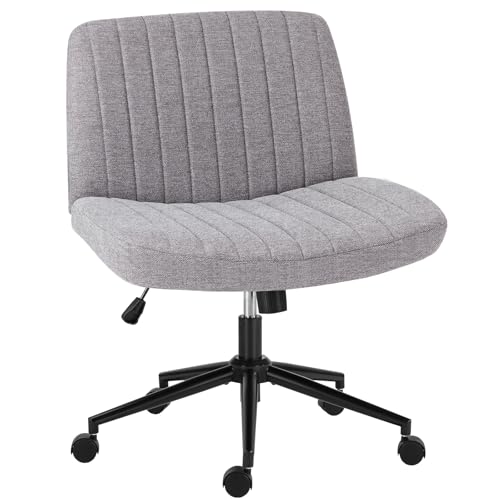
OLIXIS Criss Cross Chair with Wheels Wide Cross Legged Office Desk Vanity Chair Comfy Fabric Armless Adjustable Swivel for Home Computer Task Gray
【Comfortable Wide Seat】Enjoy all-day comfort with this desk chair's wide cushioned seat, perfect for sitting cross-legged. High-density sponge…
As an affiliate, we earn on qualifying purchases.
As an affiliate, we earn on qualifying purchases.
What Maintenance Challenges Are Common With Mesh, Leather, and Fabric Chairs?

You’ll find that each chair type faces unique maintenance issues, especially when it comes to stains and spills. Leather can stain easily if not treated, while fabric tends to absorb liquids more quickly, making cleanup a challenge. Mesh chairs generally resist spills but can wear out faster, affecting their overall durability. Additionally, understanding the material properties can help you choose the best chair for your needs and ensure proper maintenance over time. Regularly inspecting fabric fibers can prevent minor damage from becoming more serious, extending the lifespan of your chair. Being aware of wear and tear patterns associated with each material can also aid in proactive maintenance efforts. Recognizing cleaning techniques suitable for each material can further simplify upkeep and preserve the chair’s appearance. Considering material-specific vulnerabilities can help you develop effective cleaning routines tailored to each type of chair.
Stain and Spill Management
Stain and spill management varies substantially among mesh, leather, and fabric chairs, each presenting unique maintenance challenges. With fabric chairs, spills can seep into upholstery patterns, making cleaning tricky and often requiring specialized stain removers. Color matching becomes important if stains cause discoloration, especially on patterned fabrics. Leather chairs tend to resist spills better but can stain if liquids sit too long or if the dye reacts. Cleaning involves gentle wiping and avoiding harsh chemicals that might damage the surface. Mesh chairs usually handle spills easily—just wipe with a damp cloth—but stains are less of a concern since the material doesn’t absorb liquids. Material permeability also influences how quickly a spill can penetrate and cause lasting damage. Moreover, understanding the material’s durability helps in selecting appropriate cleaning methods and prolonging the chair’s lifespan. Overall, understanding how each material responds to stains helps you choose the right cleaning method and maintain your chair’s appearance.
Durability and Wear
Each chair material faces distinct durability and wear challenges that can impact its long-term performance. Mesh chairs tend to resist tearing but can sag or lose their shape over time, affecting their aesthetic appeal. Proper ventilation can help maintain mesh fabric’s integrity and prevent mold or mildew buildup. Additionally, mesh’s breathability can reduce discomfort during extended use. Mesh chairs are also more susceptible to shape deformation if not cared for properly, which can compromise comfort. Regular inspections can identify early signs of wear and tear, allowing for timely maintenance or replacement. Leather chairs are durable but may crack or fade with prolonged use, demanding regular conditioning to maintain their look. Fabric chairs often show signs of wear, such as pilling or staining, which can diminish their appearance. From a cost effectiveness perspective, mesh offers a lower initial investment but may require replacement sooner. Leather, though pricier upfront, can last longer if properly maintained. Fabric chairs are typically more affordable but may need more frequent cleaning or repairs to stay in good condition. Additionally, understanding wear patterns helps you choose a chair that balances durability with your aesthetic and budget needs.

Ergonomic Mesh Office Chair with Flip-Up Arms, Adjustable Height, Breathable Mesh Back & Thick Cushion Seat, 360° Swivel Rolling Computer Desk Chair, BIFMA Certified, Supports 300 lbs (Black)
Durable & Certified Strength: Built with aerospace-grade polymer, this sturdy frame supports up to 300 lbs and meets…
As an affiliate, we earn on qualifying purchases.
As an affiliate, we earn on qualifying purchases.
How Can You Keep Your Fabric Chairs Clean and Spot-Free?
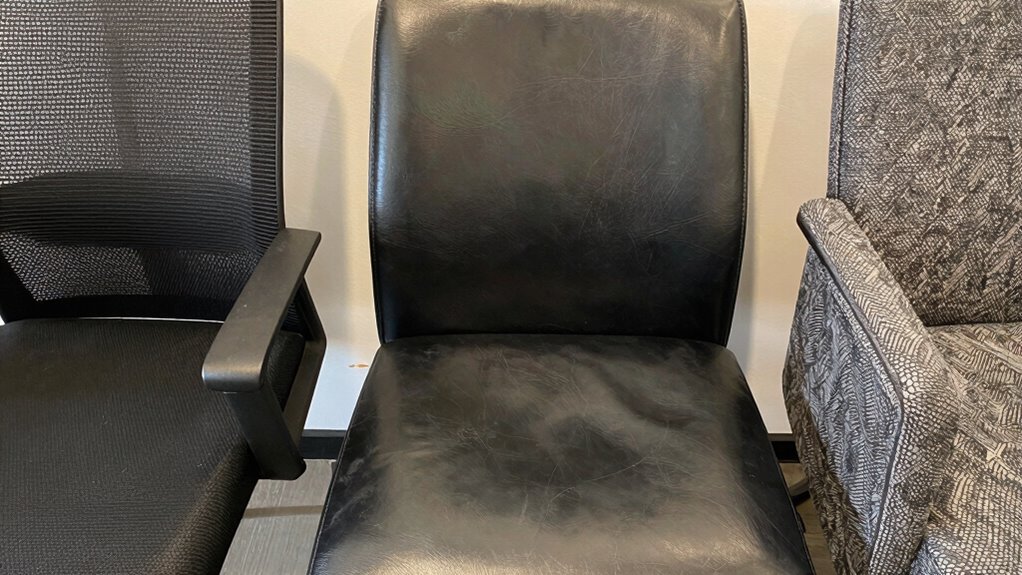
To keep your fabric chairs looking fresh, start by vacuuming regularly to remove dust and debris. When stains happen, act quickly with the right cleaning products to prevent them from setting. Using suitable cleaners and techniques will help maintain their spot-free appearance over time. Additionally, avoid using harsh chemicals that may damage the fabric or cause discoloration fabric chair maintenance. For stubborn stains, consider using appropriate stain removal methods to effectively restore your chair’s appearance without harming the material. Proper fabric hygiene practices are essential to prolong the life of your chairs and keep them looking their best.
Regular Vacuuming Techniques
Regular vacuuming is one of the easiest and most effective ways to keep your fabric chairs looking fresh and clean. To maximize results, develop a consistent cleaning schedule—ideally once a week—to prevent dust and dirt buildup. Use vacuum techniques that involve gentle, overlapping passes with a brush attachment to lift debris from the fabric’s surface and fibers. Pay special attention to seams and crevices where dirt tends to hide. Adjust the suction to avoid damaging delicate fabrics. Regular vacuuming not only maintains appearance but also prolongs the lifespan of your chair. For stubborn dirt, consider using a handheld vacuum or upholstery brush for targeted cleaning. Staying disciplined with your cleaning schedule ensures your fabric chairs stay spotless and inviting. Incorporating proper maintenance practices can further enhance the durability and appearance of your fabric furniture. Additionally, understanding filtration and suction basics can help you choose the right vacuum settings for different fabric types, ensuring thorough cleaning without damage. Being familiar with vacuum filter types can also improve cleaning efficiency and protect your upholstery from dust and allergens. Moreover, selecting vacuums with advanced dust removal technology can boost overall cleaning performance and health benefits.
Tackle Stains Promptly
Promptly addressing stains on your fabric chairs prevents them from setting and becoming harder to remove later. When spills happen, act quickly by blotting the area with a clean, damp cloth to lift the stain. Regular pet hair removal is essential, especially if you have pets, to prevent hair from embedding into the fabric and complicating stain removal. For allergy considerations, clean stains promptly to reduce dust and allergens that can settle in the fabric fibers. Avoid rubbing, which can spread stains or push them deeper. Keep an eye on the stain’s progress, and don’t wait too long before tackling it. Quick action minimizes permanent marks and helps maintain a clean, fresh-looking chair, making your fabric furniture more inviting and easier to care for. Incorporating child-friendly cleaning routines can also help maintain a safe and healthy environment for your family.
Use Suitable Cleaning Products
Choosing the right cleaning products is essential for keeping your fabric chairs looking fresh and spotless. Start by establishing a cleaning schedule that matches your chair’s usage and fabric type. Always check the manufacturer’s guidelines to guarantee material compatibility before applying any product. Use a gentle fabric cleaner or a mix of mild detergent and water for routine cleaning, avoiding harsh chemicals that can damage the fabric. For stubborn spots, test the cleaner on a small, inconspicuous area first. Regularly vacuum your chair to remove dust and debris, and clean spills promptly. By selecting suitable cleaning products and adhering to proper schedules, you’ll maintain your fabric chairs’ appearance and prolong their lifespan without risking damage.
Do Leather Chairs Tend to Crack or Wear Over Time?

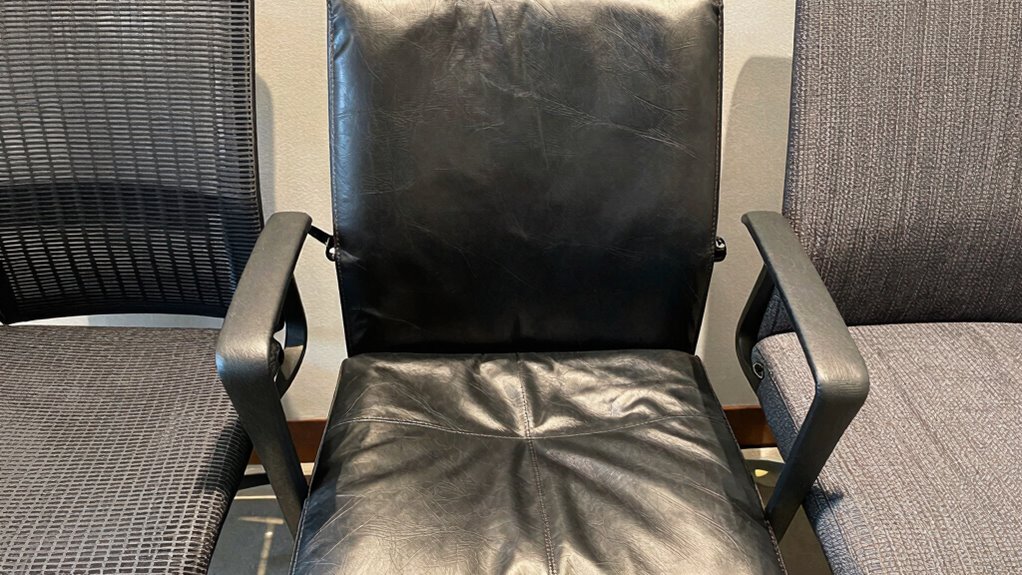
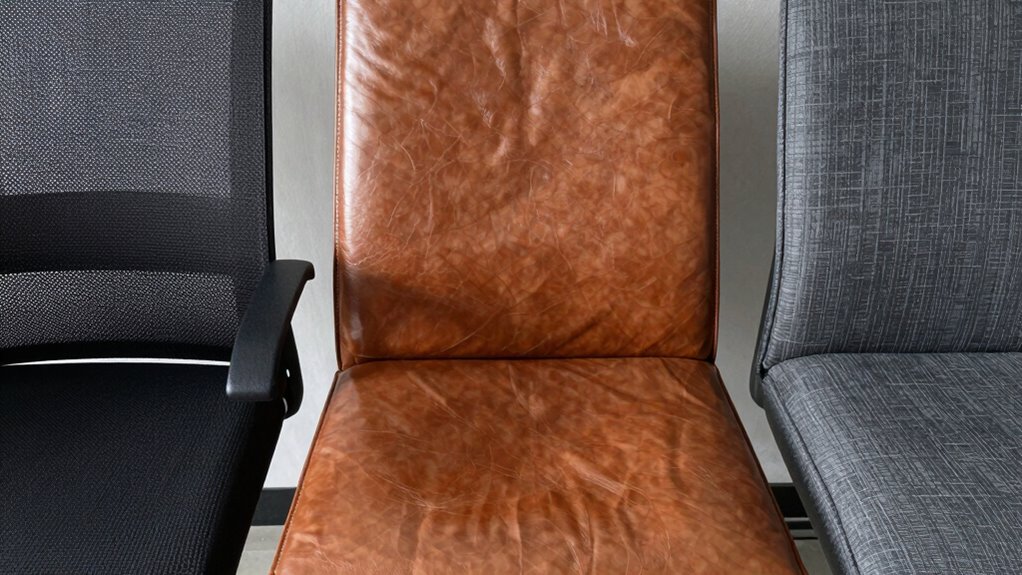
Leather chairs can develop cracks or show signs of wear over time, especially if you don’t maintain them properly. Leather cracking is a common issue caused by exposure to sunlight, heat, or dry air, which accelerates the aging process. Over time, regular wear and tear can lead to the surface becoming brittle or flaky. If you neglect conditioning your leather, it loses its flexibility and develops visible creases or cracks. However, with proper care—using suitable leather conditioners and avoiding extreme environmental conditions—you can markedly slow down this process. Keep in mind that high-quality leather tends to age more gracefully, often developing a desirable patina, but even the best leather needs attention to prevent excessive wear and tear.
Which Chairs Offer the Best Breathability and Cooling?
If you’re looking for chairs that keep you cool and comfortable during long periods of sitting, breathability and ventilation are key factors to contemplate. A thorough breathability comparison shows that mesh chairs excel in airflow, providing superior cooling comfort. Fabric chairs also offer decent ventilation, especially if made with breathable materials. Leather chairs, on the other hand, tend to trap heat and moisture, reducing cooling comfort markedly. To maximize cooling benefits, consider these points:
Mesh chairs offer superior airflow for cool, comfortable long sitting sessions.
- Mesh chairs promote ideal airflow, reducing heat buildup.
- Fabric options with breathable textiles enhance ventilation.
- Leather’s lack of breathability makes it less suitable for hot environments.
- Proper ventilation can improve overall comfort during extended use.
Choosing the right chair depends on your need for breathability and cooling comfort during long sitting sessions.
Are Mesh, Leather, and Fabric Chairs Suitable for High-Traffic Spaces?
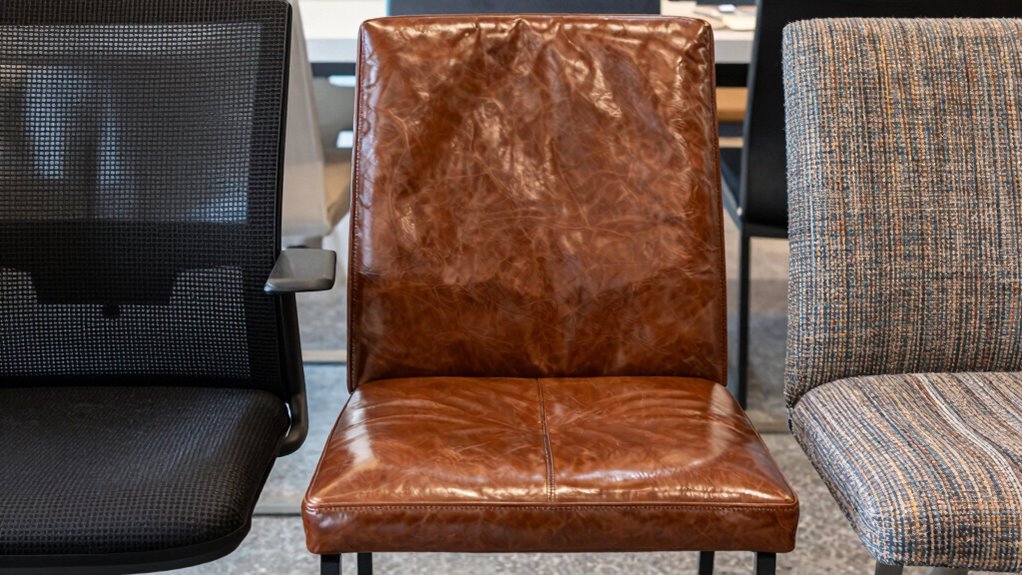
Mesh chairs are generally well-suited for high-traffic spaces because their durable construction and breathable design can withstand frequent use without quickly showing wear. They support office ergonomics by providing flexible movement and proper lumbar support, which helps keep users comfortable during long hours. Their open-weave material allows air to circulate, reducing heat buildup and enhancing comfort in busy environments. Additionally, mesh chairs often have a sleek, modern aesthetic appeal that fits well in professional settings, maintaining a clean and contemporary look despite heavy use. Leather and fabric chairs may not endure high traffic as well, as their materials can wear more quickly or stain easily. Overall, mesh chairs combine durability, comfort, and visual appeal, making them a practical choice for high-traffic workspaces.
How Do You Decide Which Chair Material Is Best for Your Needs?
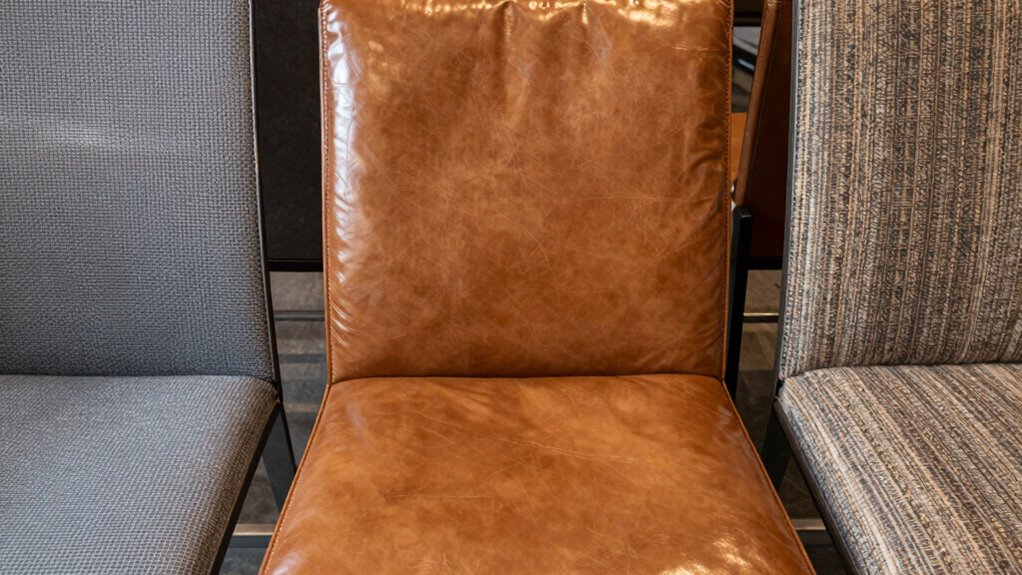
Choosing the right chair material depends on your specific needs and environment. To decide, consider how important ergonomic support and aesthetic appeal are to you. If you prioritize breathability and modern looks, mesh offers excellent airflow and a sleek appearance. Leather provides a luxurious feel and easy cleaning but may lack breathability. Fabric chairs often strike a balance, offering comfort and variety in style. Think about your workspace’s climate, your aesthetic preferences, and how much support you need for long hours.
- Comfort and ergonomic support tailored to your posture
- Aesthetic appeal matching your decor
- Durability for high-traffic use
- Ease of maintenance and cleaning
Tips for Maintaining and Caring for Your Office or Home Chairs
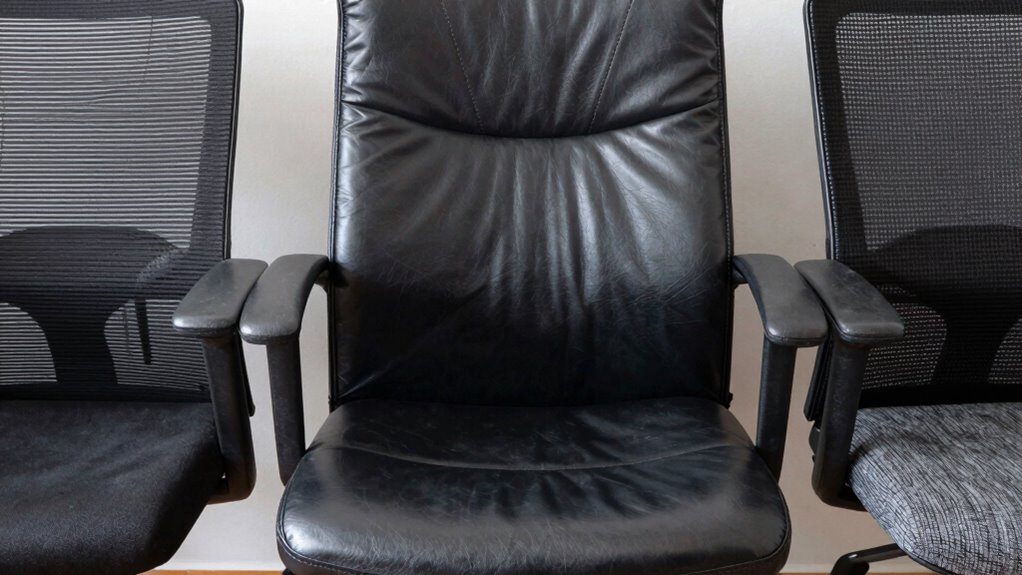
Maintaining your office or home chairs regularly can extend their lifespan and keep them looking and functioning their best. Proper care preserves their ergonomic benefits and enhances aesthetic appeal. Start by cleaning your chairs weekly with suitable cleaners—fabric, leather, or mesh—based on material. Check and tighten screws or bolts to prevent wobbling. Protect fabric and mesh from direct sunlight to avoid fading. Use covers or cushions to preserve comfort and appearance. For leather, apply conditioner periodically to prevent cracking. Below is a quick guide:
| Task | Frequency | Benefit |
|---|---|---|
| Deep cleaning | Monthly | Keeps aesthetic appeal |
| Tightening hardware | Every 3 months | Maintains ergonomic benefits |
| Protect from sunlight | Regularly | Preserves material integrity |
Frequently Asked Questions
Which Chair Material Is Most Resistant to Stains and Spills?
Leather chairs are the most resistant to stains and spills because their surface is less porous, making spill prevention easier. You’ll find that leather resists liquid absorption, giving you more time to clean up spills before they set. Mesh and fabric chairs tend to absorb liquids more quickly, increasing the risk of stains. So, if stain resistance is your priority, leather is the best choice for spill prevention and easy maintenance.
How Eco-Friendly Are Mesh, Leather, and Fabric Chair Options?
You’ll find that mesh chairs are generally more eco-friendly, thanks to sustainable manufacturing practices and less material waste. Leather, especially synthetic types, often involves less eco-friendly processes and chemicals, raising sustainability concerns. Fabric chairs vary widely; natural fibers are more eco-friendly, but synthetic fabrics may pose environmental issues. When choosing, consider sustainability considerations and opt for brands committed to eco-friendly manufacturing to reduce your environmental impact.
Can You Easily Replace or Upgrade Chair Cushions or Covers?
You can usually remove upholstery or cushions easily for cleaning or replacement, especially with fabric chairs designed for cushion customization. Leather chairs often have fixed covers, making replacement trickier, while mesh chairs typically don’t feature cushions. If you want to upgrade or replace your chair cushions, check if the upholstery is removable. This way, you can refresh your chair’s look and comfort without buying a new one.
Are There Health Concerns Associated With Prolonged Use of Any Material?
Sure, prolonged use of any chair material can subtly impact your health. You might think you’re safe, but allergen accumulation in fabric or leather could trigger allergies, while mesh’s breathability offers ergonomic benefits. Over time, poor ventilation or material sensitivities may cause discomfort or respiratory issues. So, while no material is inherently dangerous, staying aware of potential allergen buildup and choosing breathable options can help keep your health in check.
What Are the Typical Costs Associated With Maintaining Each Chair Type?
You’ll find that mesh chairs typically have the lowest maintenance costs, mainly needing occasional cleaning. Leather chairs cost more due to regular conditioning and potential repairs, but they’re quite durable if cared for properly. Fabric chairs sit somewhere in between, requiring regular vacuuming and occasional stain treatment. When comparing costs, consider durability factors—mesh offers longevity with minimal upkeep, while leather’s higher initial cost pays off with long-term durability.
Conclusion
Choosing the right chair depends on your comfort preferences, maintenance willingness, and space. Did you know that mesh chairs are 20% more breathable than leather or fabric options? By understanding each material’s durability, cleaning needs, and comfort levels, you can make an informed decision that suits your lifestyle. Investing in the right chair can boost your productivity and comfort—so weigh your options carefully to find the perfect fit for your space.