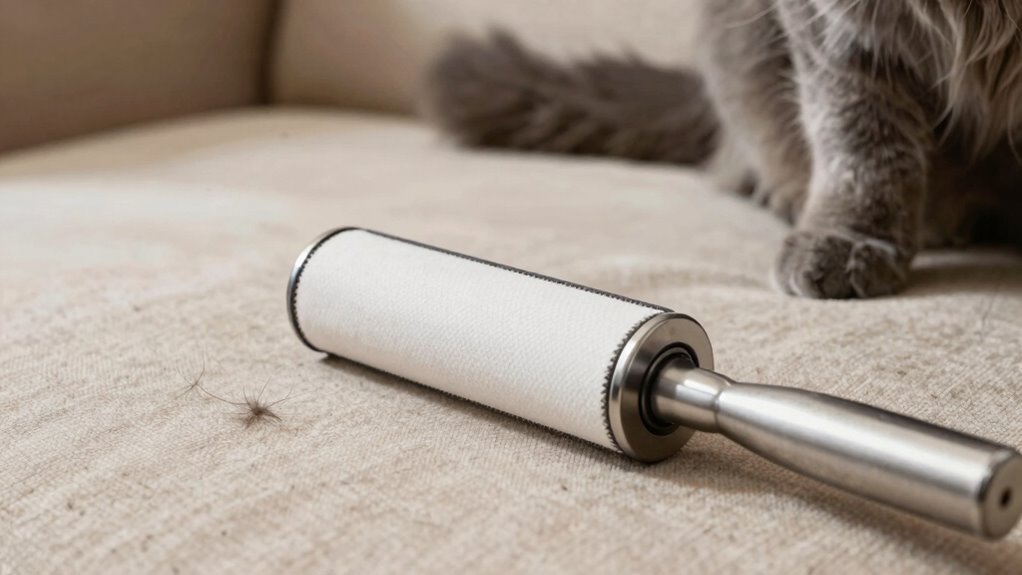

To remove pet hair from everything without losing your mind, use the right tools like lint rollers, rubber gloves, and vacuums with strong attachments. Regularly dust and vacuum furniture, floors, and clothing, and try natural remedies like damp microfiber cloths or vinegar solutions. Combine quick techniques with routine cleaning to keep pet hair under control. If you want smarter, easier ways to stay fur-free, there’s more useful advice to help simplify your routine.
Key Takeaways
- Use a combination of rubber gloves, lint rollers, and microfiber tools for quick, effective pet hair removal on various surfaces.
- Regularly vacuum with attachments and HEPA filters to trap pet dander and fur efficiently.
- Employ natural remedies like damp microfiber cloths and vinegar solutions to loosen and lift pet hair.
- Focus on targeted brushing with rubber or silicone brushes to dislodge hair from upholstery and fabrics.
- Maintain a routine schedule of cleaning and tool replacement to prevent buildup and reduce pet hair stress.

Lint Rollers for Pet Hair, Sticky, Remover for Couch, Clothes Furniture and Carpet. Dog Hair Remover Cat Hair, Animal Fur, Fuzz. 5 Large Lint Rollers
Sticky & easy peel off: excellent roller for picking up dust, dirt, lint and removing pet hair. The…
As an affiliate, we earn on qualifying purchases.
As an affiliate, we earn on qualifying purchases.
Why Pet Hair Sticks to Everything : The Science Explained
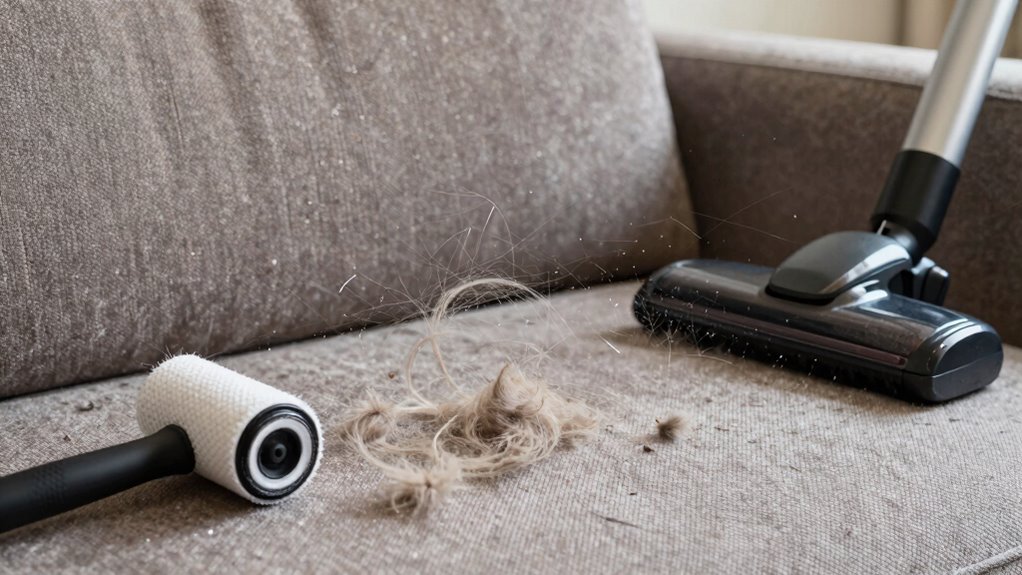
Ever wonder why pet hair seems to cling to everything in your home? It all comes down to dander buildup and static cling. Pet dander, tiny skin flakes, easily mixes with airborne dust and settles on surfaces, creating a sticky layer that attracts more hair. Static electricity also plays a big role; when furniture and fabrics rub against each other, they generate static charge, causing pet hair to cling tightly. This static cling makes hair difficult to remove, especially from carpets and upholstery. Additionally, the fine texture of pet hair allows it to embed deeply into fibers, making it stick around longer. Recognizing how Static electricity interacts with pet hair can lead to more effective removal techniques. Understanding the fiber structure of different surfaces can also influence how well pet hair is removed. Recognizing the material composition of your furniture and clothing can help you choose the most suitable cleaning tools. Moreover, choosing the right cleaning tools that match the surface type can significantly improve removal efficiency. Being aware of static charge buildup during cleaning can help you choose methods that minimize hair adhesion.

Pet Hair Remover Glove – Gentle Pet Grooming Glove Brush – Deshedding Glove – Massage Mitt with Enhanced Five Finger Design – Perfect for Dogs & Cats with Long & Short Fur – 1 Pack (Right-hand), Blue
Gentle Grooming Massage – Brush away mats, light tangles and loose undercoat with a soft, flexible groomer that…
As an affiliate, we earn on qualifying purchases.
As an affiliate, we earn on qualifying purchases.
The Best Tools to Remove Pet Hair Effectively
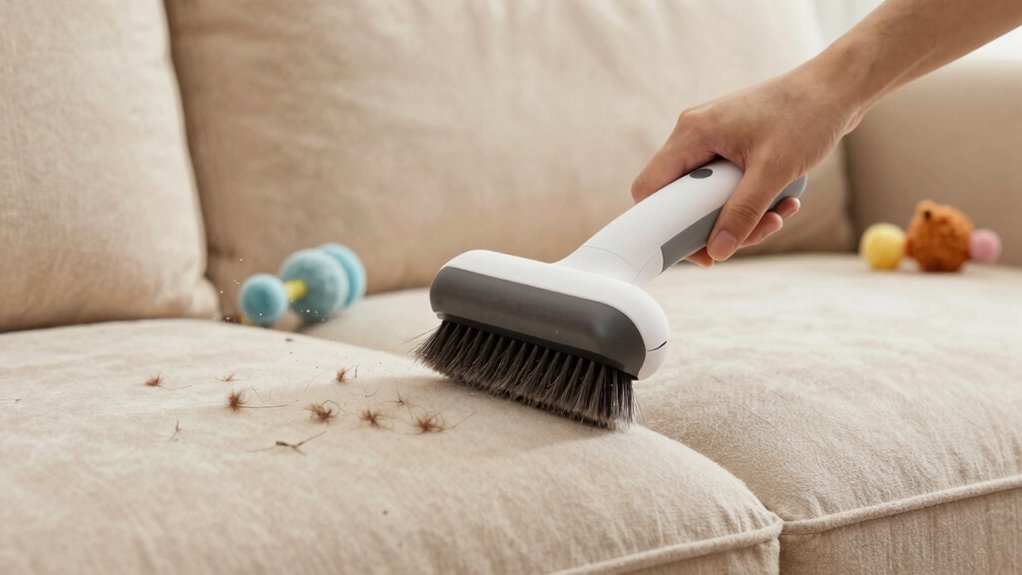
To remove pet hair effectively, you’ll want to choose the right tools, like effective brushes and strong vacuum attachments. These tools can make a big difference in cleaning pet hair from different surfaces. Incorporating performance cookies can help you analyze your cleaning habits and identify the most effective methods for removing pet hair. Additionally, selecting tools that are designed to maximize efficiency can streamline your cleaning process and save you time. Using high-quality tools ensures you are maintaining a clean environment and reducing pet hair buildup over time. Considering breed-specific traits can also help determine the best cleaning approach for different types of pet hair and shedding patterns.
Effective Brush Options
Choosing the right brush can make a significant difference in effectively removing pet hair from your furniture and clothing. The best tools for pet hair removal rely on proper brushing techniques, which maximize hair lift and minimize mess. Consider these effective brush options:
- Rubber bristle brushes for quick pet hair removal on upholstery
- Lint rollers for on-the-go pet hair pickup
- Upholstery brushes with stiff bristles for stubborn hair
- Silicone grooming gloves for gentle, efficient cleaning
- Static cling brushes that attract pet hair instantly
Using these brushes with consistent brushing techniques helps loosen and lift pet hair without damaging surfaces. Proper brushing techniques are essential to achieving the best results and preventing static buildup. Regular use of appropriate cleaning tools can also prevent pet hair from accumulating excessively over time. Additionally, choosing tools with anti-static properties can help prevent static buildup that attracts more hair during cleaning. Incorporating electric pet hair removal tools can also enhance your cleaning routine by providing more efficient results, especially on larger surfaces. Properly maintained tools with non-abrasive surfaces will ensure you don’t damage delicate fabrics while removing hair effectively.
Powerful Vacuum Attachments
Powerful vacuum attachments are among the most effective tools you can use to remove pet hair quickly and thoroughly. They maximize automatic suction, making cleanup effortless and reducing the strain on your hands. Handheld power attachments are perfect for targeting tricky spots like furniture, car interiors, and tight corners where pet hair tends to hide. The strong airflow combined with specialized brushes lifts hair from fabrics and carpet fibers without needing excessive effort. Many models offer adjustable settings, so you can switch between surfaces easily. Using these attachments guarantees you get deep into fibers, removing pet hair at the source. Regular use of glycolic acid products can also help maintain healthy skin after cleaning, preventing irritation. With the right tools, your cleaning routine becomes faster and more effective, leaving your home free of pet hair and feeling fresh.

Bissell Pet Hair Eraser Allergen Lift-Off with Powerful Suction, HEPA, Tangle-Free Brush Roll, 39883
POWERFUL SUCTION. Dirt, fur & dust don’t stand a chance against the Pet Hair Eraser Allergen Lift-Off vacuum’s…
As an affiliate, we earn on qualifying purchases.
As an affiliate, we earn on qualifying purchases.
How to Use Lint Rollers and Sticky Sheets for Top Results
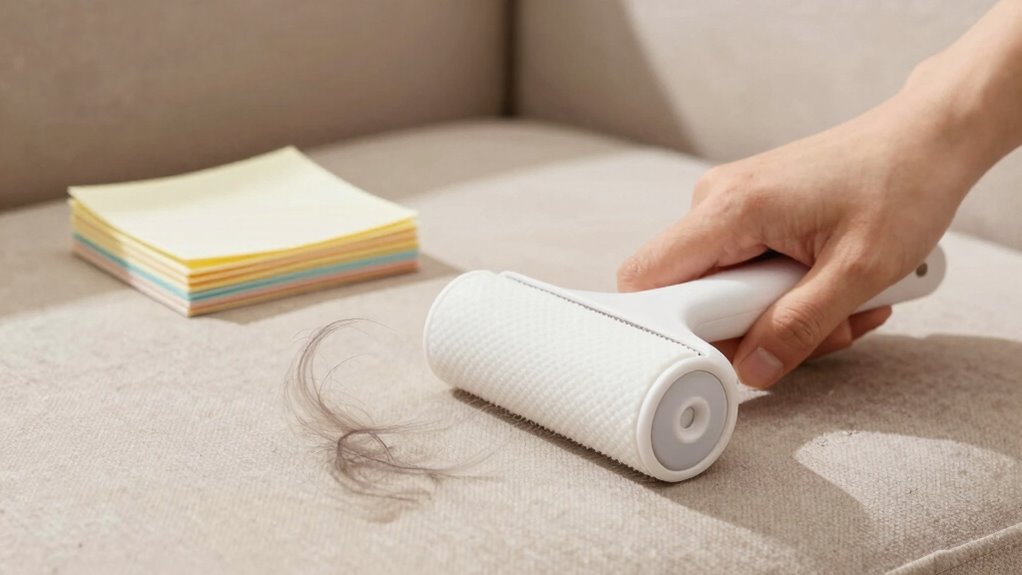
Lint rollers and sticky sheets are quick and effective tools for removing pet hair from clothing and furniture. To maximize their effectiveness, use the right pet hair removal tools and master lint roller techniques. Before rolling, guarantee your fabric is smooth to improve contact. Here are some tips:
- Roll in one direction to pick up more hair.
- Apply gentle pressure without pressing too hard.
- Use multiple sticky sheets or replace the roller’s sheet frequently.
- Focus on seams and textured areas for thorough removal.
- Keep a lint roller handy for quick touch-ups on clothing.
- Ensure you are using proper grooming techniques to reduce shedding at the source, making hair removal easier. Additionally, choosing safe and effective solar system design practices can prevent damage to your property, similar to how proper grooming can prevent excessive pet hair buildup. Regular cleaning routines and proper maintenance can also enhance filtration and suction efficiency, reducing the amount of pet hair that accumulates on surfaces. Incorporating regular brushing can significantly decrease loose hair and make lint roller use more effective. These simple steps make lint rollers and sticky sheets your go-to solution. They’re perfect for fast, mess-free pet hair removal, saving you time and frustration.

Amazon Basics Microfiber Cleaning Cloths, Ultra Absorbent, Lint Free, Streak Free, Non-Abrasive, Reusable and Washable, 16" x 12", Blue/White/Yellow, Pack of 24
Microfiber 16 x 12-inch cleaning cloth (24-pack); ideal for cleaning cars, trucks, boats, and more
As an affiliate, we earn on qualifying purchases.
As an affiliate, we earn on qualifying purchases.
Removing Pet Hair From Furniture and Upholstery
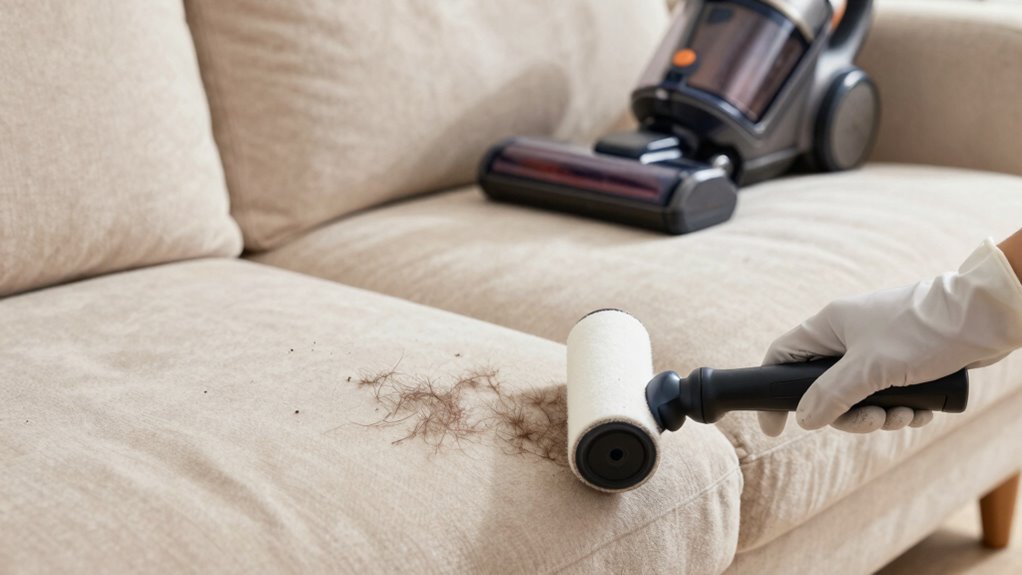
To effectively remove pet hair from furniture and upholstery, start with a lint roller for quick results. You can also try rubber gloves, which help loosen hair with a simple swipe. For ongoing maintenance, vacuum regularly to keep surfaces hair-free and fresh. Additionally, using a vacuum with pet hair attachment can significantly improve your cleaning efficiency and help prevent buildup.
Use a Lint Roller
Ever wondered how to quickly and effectively remove pet hair from your furniture? A lint roller is a simple tool that can make a big difference. Its sticky surface easily lifts pet hair buildup, improving lint roller efficiency with minimal effort. To get the best results, press firmly and roll over the fabric, focusing on areas with the most hair. Keep a few rollers handy for quick touch-ups. Here are some tips to maximize its effectiveness:
- Use a fresh sheet for each section
- Roll in different directions for thorough removal
- Apply more pressure on stubborn hair
- Store rollers in an accessible spot
- Combine with other cleaning tools for ultimate results
- Maintenance of lint rollers ensures they stay effective over time.
- Regularly cleaning or replacing your lint roller sheets helps maintain their adhesiveness and effectiveness. Additionally, using a lint roller on upholstery and fabric surfaces regularly can prevent pet hair buildup before it becomes overwhelming.
- Using a lint roller on different fabric types can enhance its ability to remove pet hair from various surfaces. Incorporating appropriate cleaning techniques can further improve your pet hair removal routine.
Try Rubber Gloves
Rubber gloves are an effective and inexpensive way to remove pet hair from furniture and upholstery. Simply put them on and dampen slightly with water. As you glide your hands over the fabric, pet hair clings to the gloves, making removal quick and easy. The rubber glove benefits include increased grip and static attraction, which helps lift hair more efficiently than using a cloth or brush. This method works well on sofas, chairs, and car seats, especially when dealing with stubborn pet hair. Plus, it’s a mess-free solution that requires minimal effort and supplies. Afterward, just rinse the gloves off to remove accumulated pet hair, ready to use again. This simple trick makes pet hair removal less frustrating and keeps your furniture looking fresh.
Vacuum Regularly
Regularly vacuuming your furniture and upholstery is one of the most effective ways to keep pet hair under control. Consistent pet hair maintenance prevents buildup and reduces allergens in your home, helping with allergy prevention. Use a vacuum with a HEPA filter for best results. Focus on:
- Using upholstery attachments for deep cleaning
- Vacuuming in multiple directions to loosen hair
- Emptying the canister frequently
- Paying attention to corners and crevices
- Vacuuming at least twice a week
This routine minimizes pet hair accumulation, making your space cleaner and healthier. Regular vacuuming not only keeps hair at bay but also improves air quality, especially for allergy sufferers. Make it a habit, and you’ll notice less pet hair and fewer allergy symptoms over time.
Quick Ways to Get Pet Hair Off Clothing and Fabrics
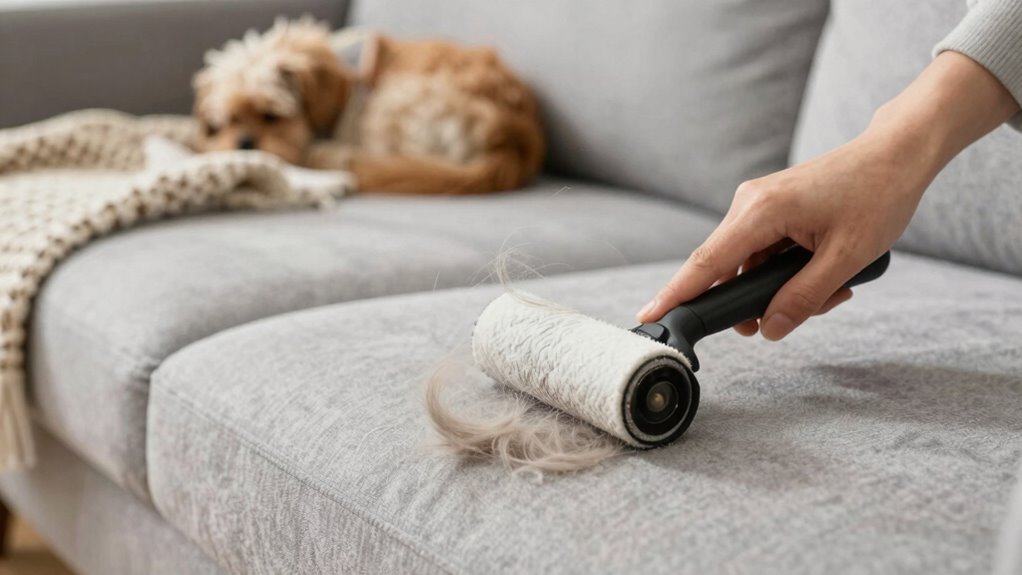
When pet hair clings to your clothing and fabrics, quick action can make a big difference. Use simple pet hair removal hacks like a lint roller or sticky tape to lift hair instantly. For instant fabric cleaning tips, try a damp rubber glove; run your hand over the fabric to gather hair quickly. You can also use a fabric softener spray to loosen stubborn hair before brushing or wiping. To visualize this, consider the table below:
| Method | Effectiveness |
|---|---|
| Lint roller or sticky tape | Fast, no fuss |
| Damp rubber glove | Easy, reusable |
| Fabric softener spray | Loosens hair, less static |
| Dryer sheet | Removes hair with static charge |
These quick tricks save time and keep your clothes looking fresh without stress.
Keeping Floors Fur-Free: Techniques That Work
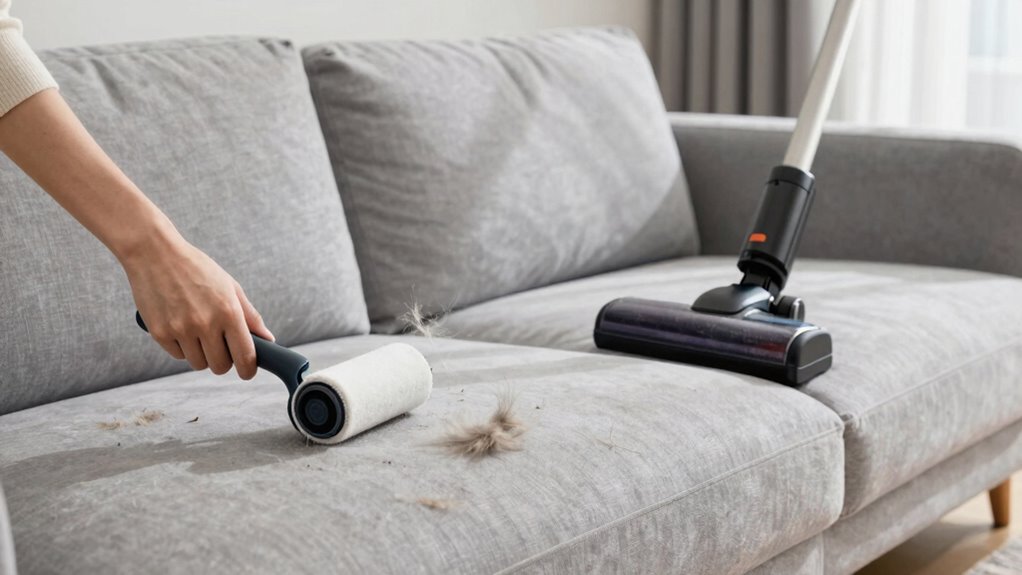
Pet hair doesn’t stay confined to clothing and fabrics; it often settles into your floors, making cleanup a constant challenge. To keep your floors fur-free, focus on effective techniques that target pet dander and fur shedding. Regular sweeping with a microfiber broom lifts loose fur before it spreads. Use a vacuum with a HEPA filter to trap pet dander and fur, especially in carpets and rugs. Consider a rubber broom or squeegee for hard floors; their static charge pulls fur away easily. Damp microfiber cloths or mop pads pick up stubborn pet hair without scattering it. Ultimately, scheduling routine deep cleanings prevents buildup and maintains a fresh, fur-free environment. Consistency is key to making your floors look clean and feeling allergen-free.
Natural Remedies and Home Methods for Pet Hair Removal
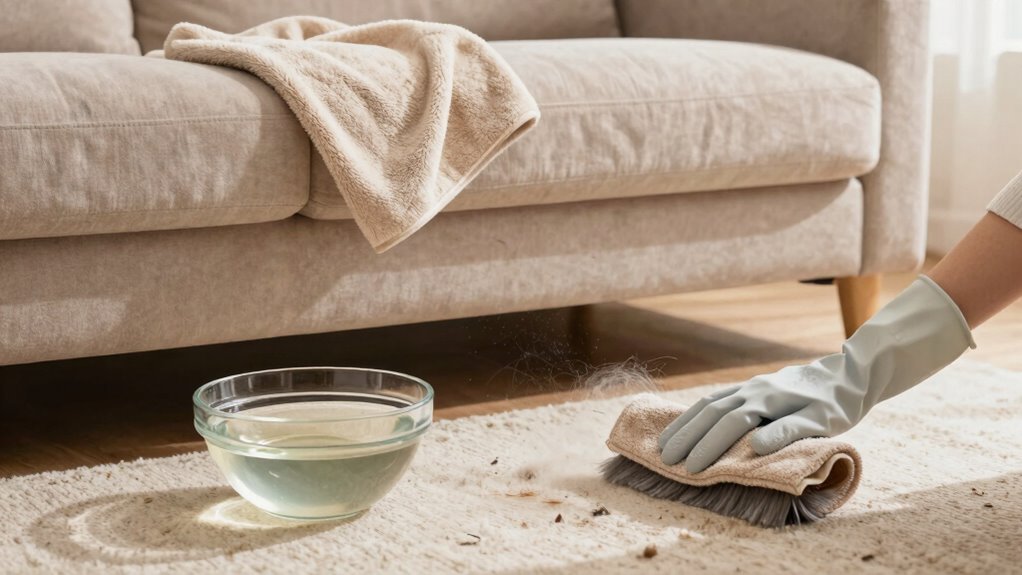
Natural remedies and home methods can be highly effective for pet hair removal without harsh chemicals or special tools. Using items you already have can save money and reduce chemical exposure. For example, a damp rubber glove can pick up pet hair from upholstery when you rub it over surfaces. Similarly, a mixture of white vinegar and water can help loosen hair on fabrics and carpets.
| Method | How it Works |
|---|---|
| Rubber gloves | Creates static, lifts hair |
| White vinegar solution | Breaks down hair bonds on surfaces |
| Lint rollers (DIY) | Sticky surface traps hair |
| Damp microfiber cloth | Picks up hair easily |
Easy Routines to Reduce Pet Hair in Your Home
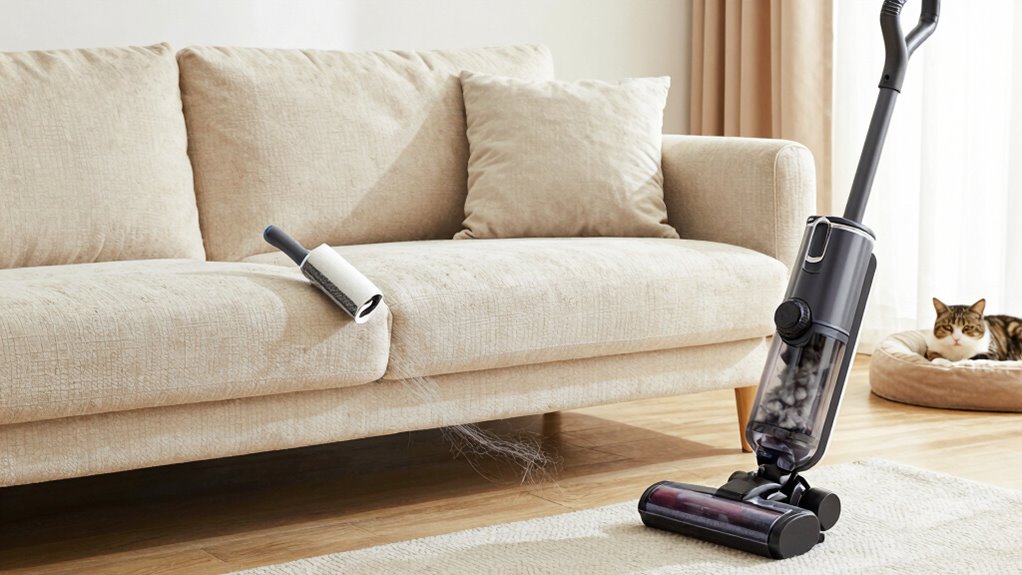
Implementing simple daily routines can markedly reduce the amount of pet hair that accumulates in your home. Consistent grooming tips, like brushing your pet regularly, help minimize shedding and lower pet hair allergies. Establish a routine to vacuum high-traffic areas daily, preventing hair buildup before it spreads. Use washable slipcovers on furniture so you can easily remove hair-laden covers and keep your space cleaner. Encourage your pet to stay off furniture with designated spots, reducing pet hair on your favorite surfaces. Lastly, regularly lint-roll or brush clothing and bedding to eliminate loose hair quickly. These easy routines not only keep your home cleaner but also improve air quality and reduce allergy symptoms related to pet hair. Staying consistent makes a noticeable difference in managing pet hair effectively.
Troubleshooting Pet Hair Problems and FAQs
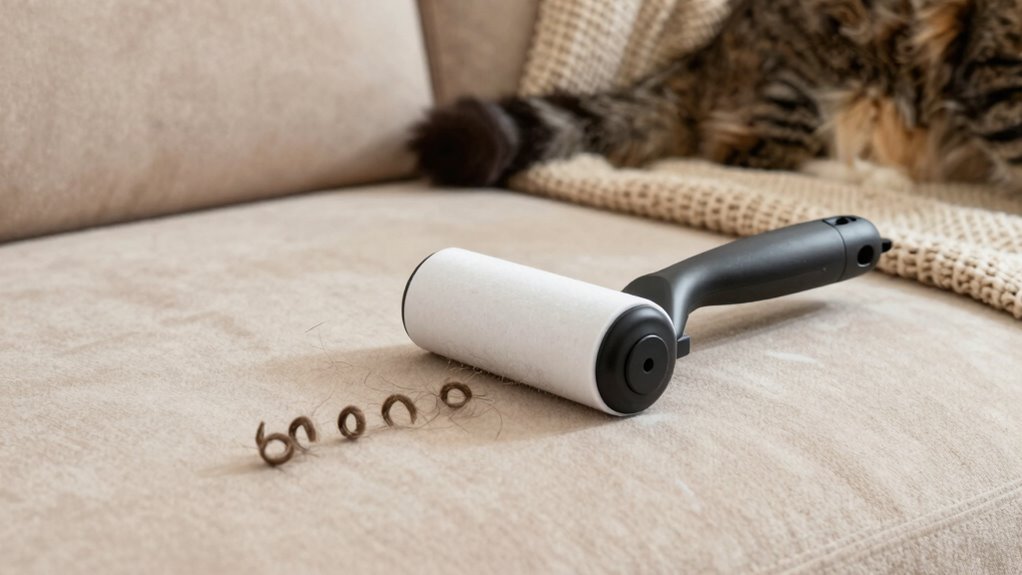
Despite your best efforts, pet hair can still become a persistent problem, especially in certain areas or on specific fabrics. If you’re dealing with pet hair allergies, it’s essential to identify problem spots and use effective cleaning tools like rubber gloves or lint rollers. Common FAQs include why pet hair clings to furniture and how often you should vacuum. Troubleshooting these issues involves adjusting your pet grooming tips, such as regular brushing and bathing, to reduce shedding at the source. If hair still lingers, consider using washable slipcovers or air purifiers to improve air quality. Remember, consistent routines combined with the right tools help manage pet hair and minimize allergy symptoms, making your home more comfortable for everyone.
Frequently Asked Questions
Can Certain Fabrics Prevent Pet Hair From Sticking?
Certain fabrics, like shedding proof textiles and those treated with fabric repellents, do help prevent pet hair from sticking. You should opt for smooth, tightly woven materials such as leather or microfiber, which resist hair buildup better than plush or fuzzy fabrics. Applying fabric repellents can add an extra layer of protection, making it easier to keep pet hair off your furniture and clothing.
How Often Should I Clean My Pet’s Bedding?
Don’t wait for a “Golden Age” to clean your pet’s bedding—clean it weekly to control pet hair myths and shedding cycles. Regular washing helps remove loose hair, dirt, and odors, keeping your pet comfortable and your home cleaner. If your pet sheds heavily, consider more frequent washes. Staying consistent prevents hair buildup and minimizes allergens, making your environment healthier for everyone.
Are There Eco-Friendly Pet Hair Removal Options?
Yes, there are eco-friendly pet hair removal options. You can use eco-friendly tools like rubber brushes or silicone gloves that are reusable and gentle on the environment. Natural remedies, such as a mixture of vinegar and water, can help loosen pet hair from fabrics without chemicals. These options are safe for your pets and sustainable, making cleaning more eco-conscious and effective.
Will Grooming My Pet Reduce Shedding Indoors?
Grooming your dog regularly can substantially reduce shedding indoors. By brushing your pet often, especially with proper tools, you remove loose fur before it falls around your home. Focus on consistent dog grooming, which helps control shedding reduction and keeps your pet comfortable. Not only does this minimize pet hair around your living space, but it also promotes healthier skin and coat, making your home cleaner and more enjoyable for everyone.
How Do I Remove Pet Hair From Car Interiors?
To remove pet hair from car interiors, start with vacuum techniques using a brush attachment to loosen hair from seats and carpets. For stubborn hair, try a rubber glove or fabric coating spray to lift it easily. You can also use a lint roller or damp cloth to pick up remaining hair. Regular cleaning and applying fabric coatings can make future pet hair removal less of a hassle.
Conclusion
So, there you have it—your foolproof guide to banishing pet hair without turning into a compulsive lint-rolling maniac. With a little patience and these clever tricks, you’ll reclaim your furniture, clothes, and sanity. Who knew that conquering fur could be so satisfying? Now, go forth, wield your tools wisely, and remember: in the battle against pet hair, a little humor and a lot of spray can make all the difference.