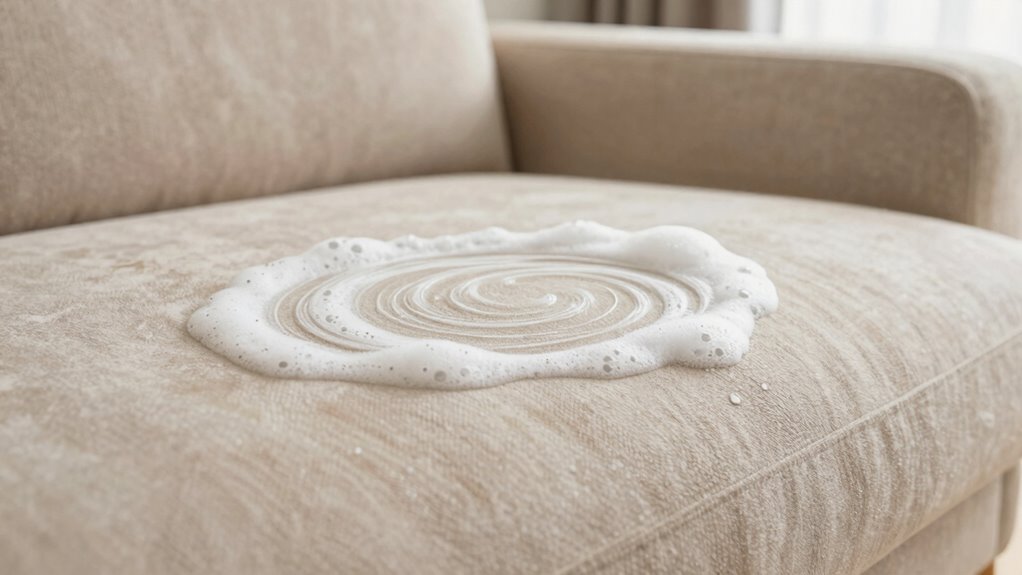

To prevent permanent stains, act quickly by blotting spills with a clean cloth and avoid rubbing. Use fabric protection sprays and only clean with products compatible with your sofa’s fabric. Always test cleaning methods on hidden areas first to minimize damage. Regular maintenance, like deep cleaning every 6-12 months, and proactive measures—such as pet grooming and using trays—help keep your sofa fresh and stain-free. Continue with this guide to learn more tips.
Key Takeaways
- Act quickly on spills by blotting with a clean, absorbent cloth to prevent stain setting.
- Test cleaning solutions on hidden fabric areas to ensure colorfastness and avoid damage.
- Use fabric protection sprays regularly to create a barrier against future stains.
- Perform routine deep cleanings every 6-12 months to remove dirt and allergens, prolonging fabric life.
- Keep pets groomed and use trays or slipcovers to reduce the risk of permanent stains.
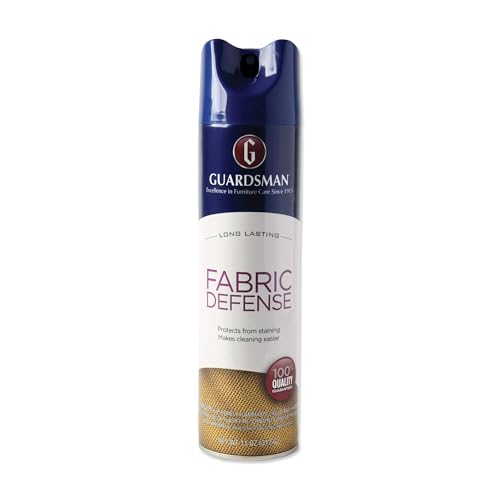
Guardsman Fabric Defense & Upholstery Water Repellent Spray, Protector & Stain Prevention for Microfiber, Rugs, Carpeting, Fabric Furniture, Apparel, and Shoes, Unscented, 11 oz
Provides ultimate stain; dirt; and waterproofing defense for any fabric upholstery; including leather; suede; and nubuck; great for…
As an affiliate, we earn on qualifying purchases.
As an affiliate, we earn on qualifying purchases.
What Are Common Couch Stains and How Do They Set?
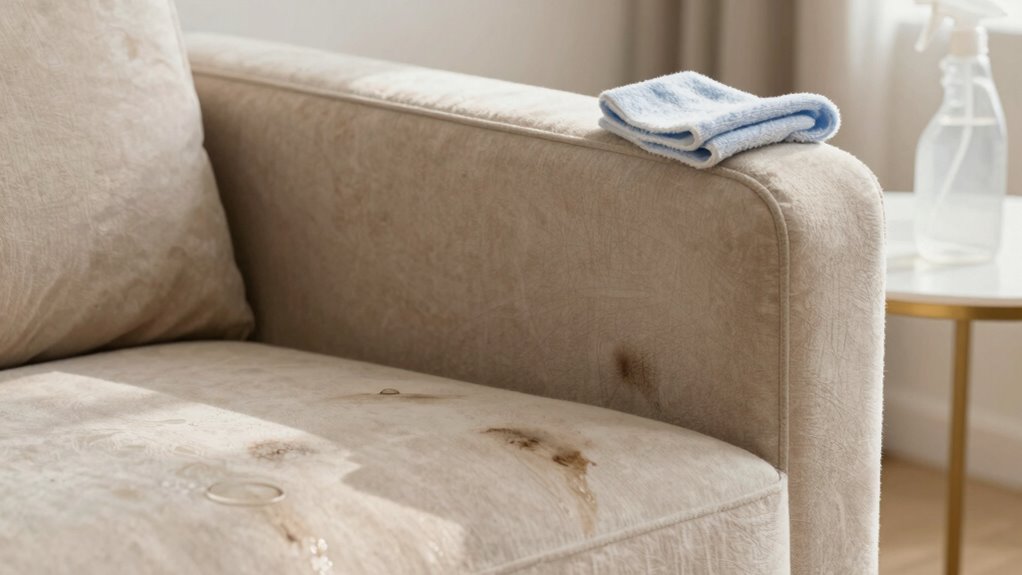
Have you ever wondered why certain stains on your couch seem to become more stubborn over time? When spills happen, liquids seep into the fabric, causing it to deteriorate if left untreated. Over time, this fabric deterioration weakens fibers, making stains harder to remove. Additionally, stains like wine, coffee, or pet messes can lead to allergen buildup, which worsens over time if not cleaned properly. The allergens, including pet dander, dust mites, and pollen, cling to the fabric, creating a layer that’s tough to eliminate later. The longer these stains sit, the more they embed into the upholstery, making cleaning more difficult and increasing the risk of permanent damage. Recognizing these common stains early helps prevent long-term issues and keeps your couch looking fresh. Regular upholstery maintenance can help prevent these issues from developing into permanent stains. Proper cleaning also helps preserve the fabric integrity, ensuring your furniture remains durable and attractive. Understanding the causes of stains can also guide you in choosing the most effective cleaning methods and prevent future damage. Additionally, being aware of the types of stains that are more likely to become permanent can inform your immediate response to spills. Being proactive with stain prevention techniques can further reduce the chance of permanent marks forming.
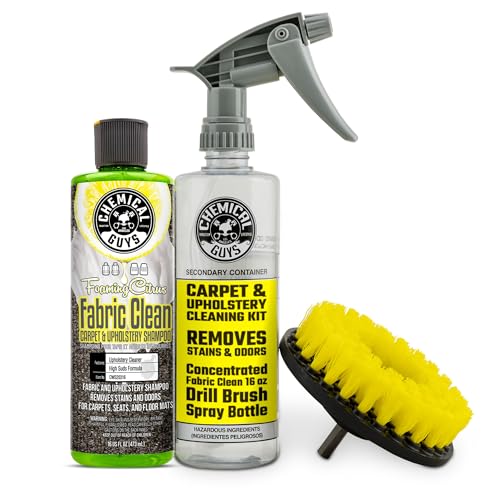
Chemical Guys Foaming Citrus Fabric Clean Drill Brush Kit – High Foaming Stain and Odor Remover, Upholstery, Floor Mat & Car Carpet Cleaner, Deep Cleans & Deodorizes, Citrus Scent – 16 fl oz
FOAMING FABRIC CLEAN KIT (HOL315) – Trusted by detailers and car care enthusiasts, this car detailing kit deep…
As an affiliate, we earn on qualifying purchases.
As an affiliate, we earn on qualifying purchases.
How Can You Treat Stains Immediately to Stop Them From Setting?
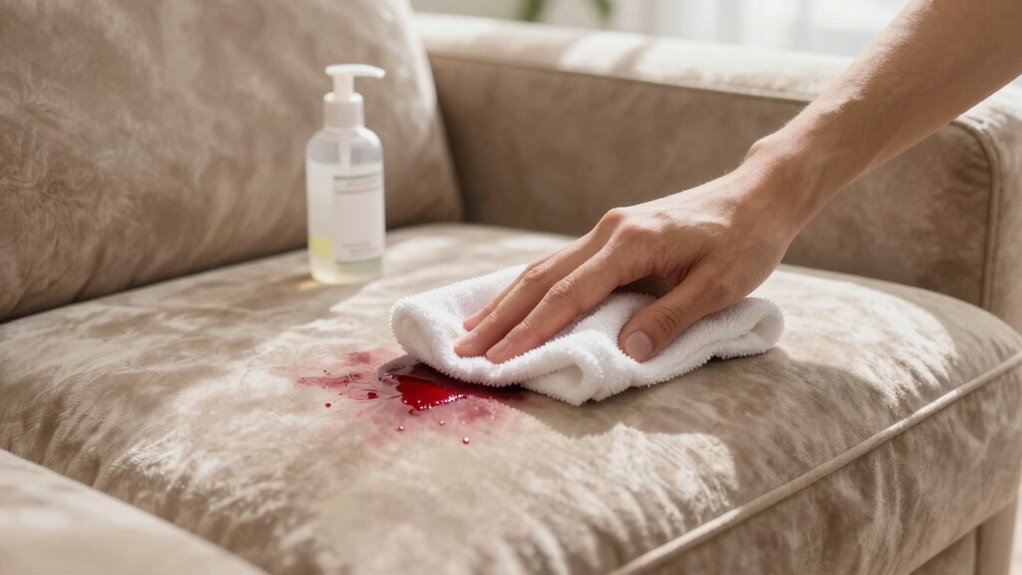
Act quickly when a spill occurs to prevent stains from setting. The sooner you respond, the better your chances of avoiding permanent marks. Blot the spill gently with a clean, absorbent cloth—never rub, as that can spread the stain. Applying a fabric protection spray can create a stain-resistant barrier, making future spills easier to clean. If the stain is stubborn, use a mild cleaning solution suitable for your couch fabric, and treat the area immediately. Always test any cleaning product on a small, hidden section first. Prompt action combined with fabric protection measures helps prevent stains from setting deeply into the fibers, saving you time and money on more intensive cleaning later. Understanding stain prevention techniques can further enhance your ability to protect your furniture. Quick response is your best defense against lasting stains.
pet stain and odor remover for furniture
As an affiliate, we earn on qualifying purchases.
As an affiliate, we earn on qualifying purchases.
Which Cleaning Products Are Best for Your Couch Fabric?
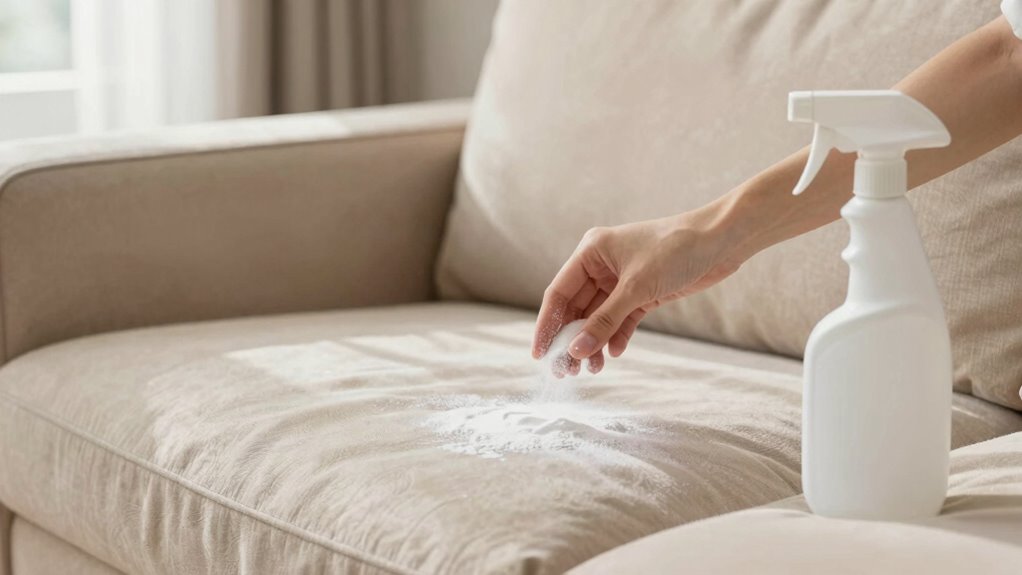
Choosing the right cleaning products for your couch fabric depends on the material and the type of stain. For delicate fabrics like silk or velvet, use gentle fabric conditioners designed specifically for those materials, avoiding harsh chemicals that could damage or discolor the fabric. For more durable fabrics like microfiber or polyester, eco-friendly cleaners are excellent options—they’re effective and safer for the environment. Always select products labeled compatible with your couch’s material, and consider natural or biodegradable options to minimize chemical exposure. Avoid using bleach or strong solvents unless specified by the manufacturer. Using the correct cleaning products helps preserve the fabric’s integrity and appearance, reducing the risk of permanent stains. Additionally, understanding the history of pinball machines can help you choose appropriate cleaning techniques for vintage or collectible couches featuring pinball-themed upholstery. When in doubt, consult the manufacturer’s guidelines or test a small, hidden area first. Also, selecting appropriate cleaning methods based on fabric type can further prevent damage and staining. Being aware of fabric-specific cleaning tips can ensure better maintenance and longevity of your furniture. Incorporating traditional Indigenous wellness practices such as mindful cleaning routines can promote a more holistic approach to furniture care. Moreover, using appropriate cleaning tools can enhance the effectiveness of your cleaning routine and prevent accidental damage.

BISSELL Little Green Mini Portable Carpet and Upholstery Deep Cleaner, Car/Auto Detailer, with HydroRinse Self-Cleaning Tool and 4" Tough Stain Tool, Tea Green, 4075
EVERY PURCHASE SAVES PETS. Every purchase makes it possible for BISSELL to continue our support of BISSELL Pet…
As an affiliate, we earn on qualifying purchases.
As an affiliate, we earn on qualifying purchases.
Should You Test Cleaning Methods in Hidden Areas First?
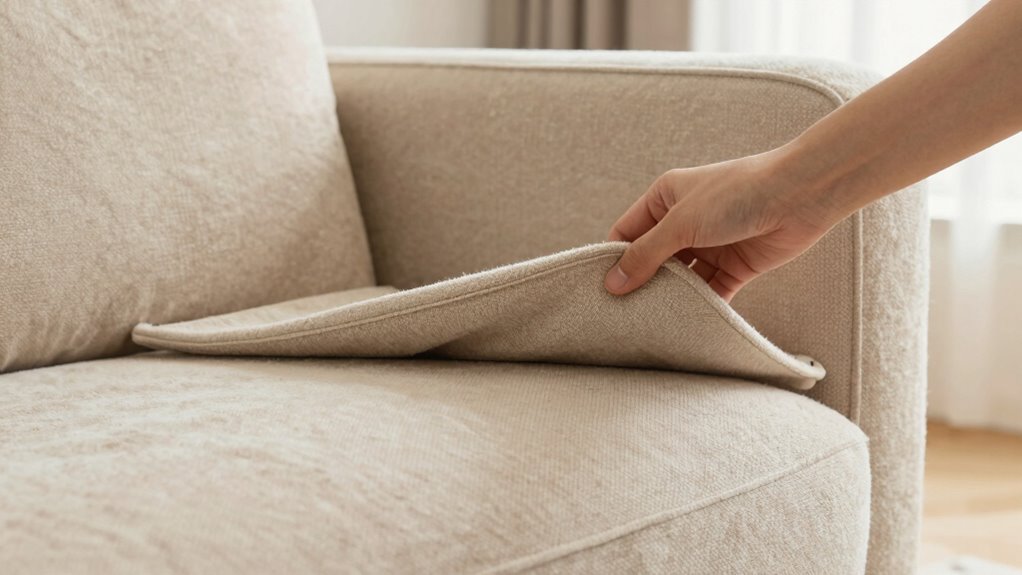
Before cleaning your couch, it’s smart to do a patch test in a hidden area to avoid surprises. Pick a small, inconspicuous spot and check for color fastness after applying your cleaning method. This simple step helps guarantee your couch stays looking great without unintended damage. Additionally, understanding the importance of Free Floating in outdoor environments can inform how you handle cleaning to prevent water damage or residue buildup. Regular Gear Inspection of your cleaning tools ensures they remain effective and safe for use. For added protection, consider using Safety Glasses to shield your eyes from splashes or debris during cleaning. Being aware of proper Leash Etiquette can also help prevent accidental damage when moving furniture or cleaning around pets. Recognizing the role of Cleaning Solutions in preventing residue buildup can further enhance your cleaning effectiveness.
Patch Test First
To avoid unwanted damage or discoloration, it is essential to perform a patch test before applying any cleaning method to your couch. This helps you gauge how the fabric’s pH reacts to the cleaner and preserves its stain resistance. Select a small, inconspicuous area, like the underside or a hidden corner, and apply a small amount of the cleaning solution. Wait a few minutes to check for any color fading, discoloration, or fabric damage. If the fabric’s pH shifts or the stain resistance diminishes, try a gentler solution. Conducting this test guarantees your cleaning method won’t cause permanent harm, keeping your couch looking fresh and stain-free in the long run. Always prioritize patch testing as an indispensable first step.
Choose Hidden Spot
Is testing cleaning methods in hidden spots really necessary? Yes, it’s a smart step before treating visible areas. Hidden spots, like the fabric underneath cushions or inside seams, are less noticeable but can reveal important fabric details. Checking these areas helps you gauge how your chosen cleaning solution interacts with the fabric pH and avoid damage. Use a small, inconspicuous spot to test, ensuring the cleaner won’t cause discoloration or weakening. If the fabric reacts negatively—fading, bleeding, or texture changes—try a gentler method or consult a professional. Remember, understanding fabric pH levels helps prevent permanent stains and deterioration. Testing hidden spots first gives you confidence that the cleaning process will be safe and effective, protecting your couch’s appearance and longevity. Additionally, piercing aftercare is essential to prevent infections that could compromise fabric integrity during cleaning or maintenance. Being aware of the fabric type and its cleaning compatibility can further ensure your cleaning efforts do not cause unintended damage.
Verify Color Fastness
Verifying color fastness is a key step to guarantee your cleaning method won’t cause discoloration. Before applying any cleaner, test it on a hidden area to check for fabric dyes or potential color bleeding. This simple step can save you from permanent stains. Use a white cloth or paper towel to dab the spot gently. If color transfers, avoid aggressive cleaning or consider professional help. Additionally, understanding fabric dye stability can help you choose the safest cleaning approach. Here’s what to watch for:
| Test Area | What to Observe |
|---|---|
| Fabric Dyes | No color transfer or fading |
| Color Bleeding | No bleeding onto cloth or paper |
If the fabric dyes or color bleeding appear, switch to milder solutions or consult a professional. Testing in hidden spots ensures your sofa’s color remains vibrant and unblemished. Conducting a color fastness test can provide further assurance of your chosen cleaning method. Moreover, being aware of chemical reactions during cleaning can help you avoid unexpected discoloration or damage. Knowing how different fabric types respond to cleaning agents can further protect your furniture. Incorporating cultural artifacts like Indonesian masks can also add a unique aesthetic to your space while maintaining its integrity.
How Often Should You Clean and Maintain Your Couch?
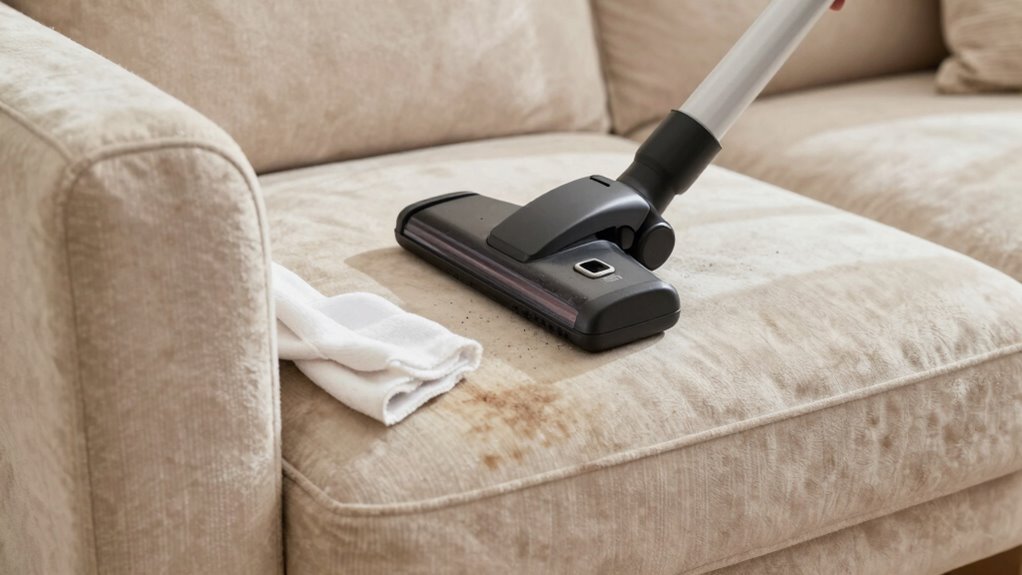
You should establish a regular cleaning schedule to keep your couch looking its best. Spot clean spills and stains as soon as they happen to prevent permanent damage. For deep cleaning, aim for every 6 to 12 months, depending on usage and exposure. Additionally, maintaining proper humidity levels can help prevent mold and damage to your upholstery. Proper air circulation can also contribute to preserving your couch’s condition over time. Incorporating lifestyle habits that promote cleanliness and organization can further extend the lifespan of your furniture.
Regular Cleaning Schedule
Maintaining a regular cleaning schedule is essential for keeping your couch looking its best and extending its lifespan. To prevent stains and dirt buildup, clean your couch weekly with vacuuming and gentle spot cleaning. Consider applying fabric protection and stain-resistant treatments periodically to enhance durability. Here’s a simple guide:
| Frequency | Cleaning Tasks | Benefits |
|---|---|---|
| Weekly | Vacuum and wipe with a damp cloth | Prevents dust and debris buildup |
| Monthly | Spot clean spills immediately | Minimizes stain setting |
| Every 6-12 months | Reapply fabric protection or treatments | Keeps fabric stain resistant |
Sticking to this schedule helps maintain your couch’s appearance and reduces the need for deep cleaning later.
Spot Cleaning Promptly
Prompt and consistent spot cleaning is key to keeping your couch looking fresh and preventing stains from setting. Acting quickly helps maintain fabric protection and enhances stain resistance. When spills happen, don’t wait—address them immediately to avoid permanent marks. Regularly inspecting your furniture ensures you catch messes early. Use these tips to stay ahead:
- Blot spills gently with a clean cloth to absorb liquids.
- Avoid rubbing, which can spread stains or damage fabric.
- Use appropriate stain removers suited for your couch’s fabric.
- Consider applying fabric protection treatments to boost stain resistance.
Deep Cleaning Frequency
Regularly scheduled deep cleaning is essential to keep your couch looking its best and prolong its lifespan. How often you should deep clean depends on usage and fabric type, but generally, aim for every 6 to 12 months. Consistent cleaning helps maintain fabric protection and enhances stain resistance, making it easier to prevent permanent stains. If you have pets, children, or high traffic, consider more frequent cleanings. Using professional cleaning methods or quality at-home products guarantees deep dirt, dust, and allergens are removed, boosting fabric protection. This regular maintenance keeps your couch fresh, extends its life, and reduces the need for harsh stain removal later. Staying consistent with deep cleaning is a simple but effective way to preserve your furniture’s appearance and functionality.
What Preventative Measures Can Keep Your Sofa Stain-Free?
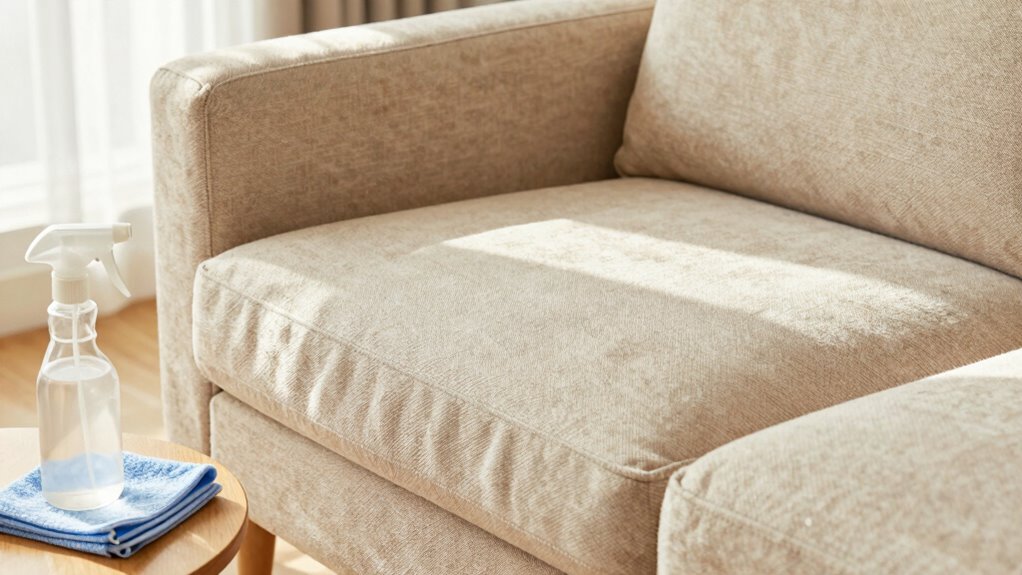
To keep your sofa looking its best and free of stains, taking simple preventative steps makes a big difference. Regularly applying fabric protection creates a barrier against spills and dirt, making cleaning easier. Use a lint roller or vacuum with a brush attachment to remove pet hair, preventing buildup that can stain or damage fabric. Keep a tray or coaster nearby to catch spills before they reach the cushion. Establish a no-food policy on the sofa to avoid accidental stains. Additionally, groom your pets frequently to reduce shedding and consider using slipcovers that are washable. These habits not only help maintain a clean appearance but also extend your sofa’s lifespan, keeping it stain-free longer.
When Is It Time to Call a Professional for Tough Stains?
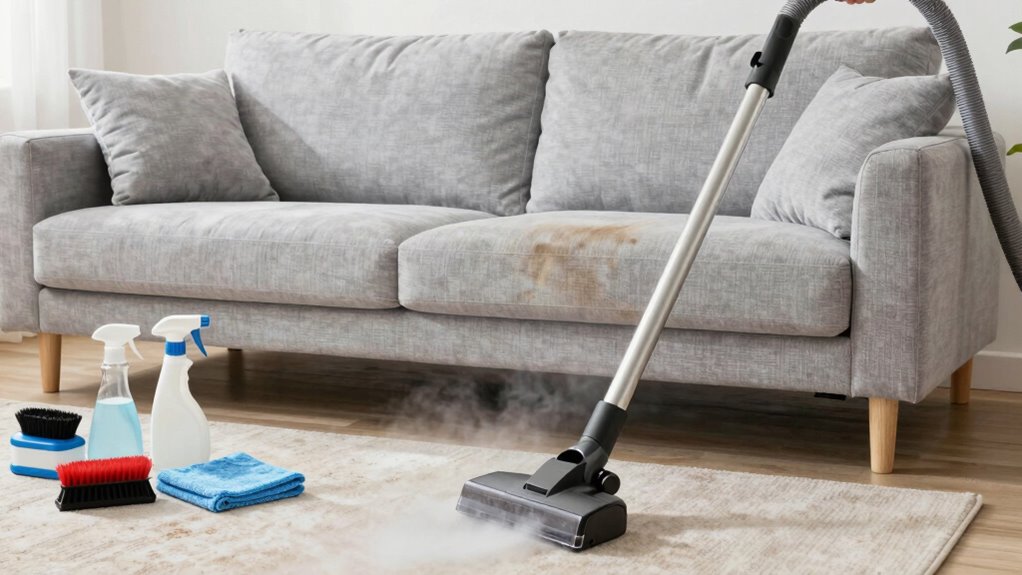
Even with diligent prevention, some stains can become stubborn enough that DIY tips for stain removal just won’t do the trick. If you’ve tried multiple cleaning methods and the stain remains, it’s time to call a professional. Persistent stains from ink, wine, or pet accidents often require specialized equipment and cleaning solutions that go beyond basic DIY tips. Attempting to remove these tough stains yourself can sometimes worsen the damage or set the stain deeper into the fabric. Recognize when cleaning efforts aren’t making progress, and don’t hesitate to seek expert help. Professionals have the experience and tools to treat stubborn stains effectively, preserving your sofa’s appearance and longevity. Knowing when to call in the pros ensures your couch stays clean without risking permanent damage.
Tips for Keeping Your Sofa Clean and Fresh Long-Term

Keeping your sofa looking fresh and clean over time requires consistent care and smart habits. Knowing your fabric types helps you choose the right cleaning tips, preventing damage and stains from setting in. Regularly vacuum your sofa to remove dust and debris, especially in crevices. Spot clean spills immediately with a gentle cloth and mild cleaning solution suited for your fabric. Rotate cushions to ensure even wear and avoid uneven fading. Use protective treatments like fabric sealants where applicable. Avoid harsh chemicals that can harm delicate materials. Schedule professional cleanings periodically for deep dirt removal. Staying proactive with these cleaning tips keeps your sofa looking new longer, ensuring it remains a comfortable, inviting centerpiece in your home.
Frequently Asked Questions
Can Pet Hair and Dander Affect Couch Stain Prevention?
Pet hair and dander can impact your couch stain prevention by trapping dirt and oils, making stains harder to remove. Regular pet hair removal helps keep your couch cleaner and prevents buildup. Additionally, controlling allergens reduces the risk of stains caused by dust or pet-related messes. Consistently vacuum and brush your pets, and use allergen control products to maintain a cleaner, stain-resistant surface.
What Are Eco-Friendly Cleaning Options for Delicate Fabrics?
Imagine your delicate fabric as a fragile butterfly, needing gentle care. You should choose eco-friendly cleaning options like natural fiber or plant-based cleaners, which work softly yet effectively. These eco-conscious solutions break down dirt without harsh chemicals, protecting your fabric’s integrity. By opting for natural and plant-based products, you not only keep your couch safe but also contribute to a healthier environment, making your space both beautiful and sustainable.
How Do Humidity and Temperature Influence Stain Setting?
Humidity and temperature markedly influence stain setting on your couch. High humidity increases moisture absorption, causing stains to set deeper into fabric fibers. Conversely, temperature fluctuations can cause the fabric to expand and contract, making stains more challenging to remove. To prevent permanent stains, act quickly when spills occur, and maintain a stable environment with consistent humidity and temperature levels, reducing the chances of moisture absorption and stain fixation.
Are There Specific Stains More Likely to Become Permanent?
Think of certain stains as stubborn weeds that take root quickly. You’re more likely to face permanent marks from stains involving fabric dyes, like wine or ink, which seep deep into fibers. Using the wrong cleaning products can lock these stains in, making them impossible to remove. Act fast with appropriate solutions, and always test cleaning products first, to prevent irreversible damage to your couch’s fabric.
How Can Regular Vacuuming Help Prevent Stains?
Regular vacuuming helps prevent stains by maintaining a high vacuum frequency, which removes debris before it can settle and cause lasting damage. You should vacuum your couch at least once a week, especially in high-traffic areas, to effectively lift dirt, dust, and crumbs. This debris removal minimizes the risk of stains setting in and becoming permanent, keeping your couch cleaner and extending its lifespan.
Conclusion
Keeping your couch spotless takes effort, but with the right techniques, you can prevent stubborn stains from taking hold. Act quickly, use suitable products, and test first to avoid making things worse. Regular maintenance and smart preventative measures will save you time and money in the long run. Remember, a stitch in time saves nine—address stains early, and your sofa will stay fresh and inviting for years to come.