
To create a bedroom climate that promotes sleep comfort, focus on maintaining a cool, steady temperature around 60-67°F with seasonal adjustments. Keep humidity between 40-50% to prevent mold and allergies. Use breathable bedding and mattresses, and guarantee good air quality through ventilation and air purifiers. Control lighting and noise for a peaceful environment. Setting up your space carefully can make a big difference in your sleep quality—discovery continues beyond this overview.
Key Takeaways
- Maintain a cool, consistent temperature between 60-67°F to promote deep, uninterrupted sleep.
- Use breathable bedding and sleepwear made from natural fabrics like cotton or linen for temperature regulation.
- Control humidity levels between 40-50% to prevent mold growth and reduce allergy symptoms.
- Ensure proper ventilation with fresh air and minimize electromagnetic interference for a peaceful environment.
- Eliminate clutter and use calming lighting to create a relaxing, distraction-free bedroom atmosphere.

LANE LINEN 100% Organic Cotton King Size Sheets Set, Soft & Comfy All Season Breathable Sheets King Size, Percale Weave Fully Elasticized Eco Friendly Naturally Cooling King White Bed Sheets
Pure Organic Comfort: Experience the luxurious comfort of our Lane Linen cotton sheets king size set, meticulously crafted…
As an affiliate, we earn on qualifying purchases.
As an affiliate, we earn on qualifying purchases.
Why Your Bedroom Environment Impacts Sleep Quality
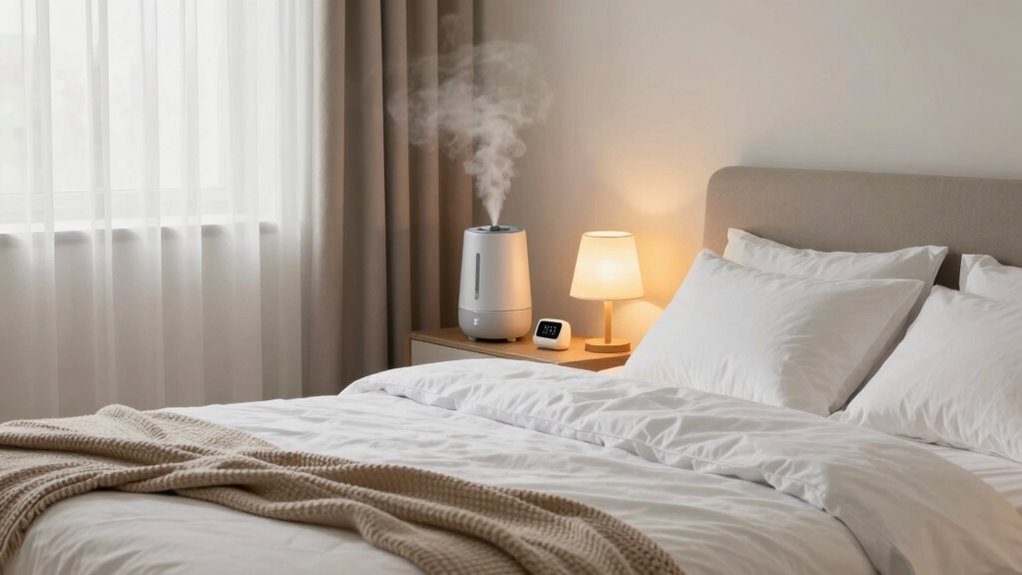
Your bedroom environment plays a crucial role in determining the quality of your sleep. Good sleep hygiene starts with creating a space that promotes relaxation and rest. An organized bedroom minimizes clutter, reduces stress, and makes it easier to unwind. When your bedroom is tidy, it signals your brain that it’s time to sleep, helping you fall asleep faster. Proper bedroom organization also ensures essential items are within reach, so you’re not disturbed searching for things in the middle of the night. A clean, well-organized space supports healthy sleep habits by reducing distractions and creating a calming atmosphere. Additionally, choosing the right clothing and bedding can enhance comfort and temperature regulation during sleep. Remember, your environment influences your sleep quality, so invest time in maintaining an orderly bedroom for more restful nights. Incorporating sleep-friendly lighting can further improve your sleep environment by promoting melatonin production and relaxation. Ensuring good air quality can also positively impact your sleep by maintaining proper ventilation and reducing allergens. Proper cabling and electronic devices management helps minimize electromagnetic interference and visual distractions that can disrupt sleep. Maintaining optimal humidity levels in your bedroom can also improve comfort and respiratory health during sleep.

LEVOIT Air Purifiers for Bedroom Home Dorm, AHAM VERIFIED, 3-in-1 Filter Cleaner With Aroma Pad, Filters Smoke, Allergens, Pet Dander, Odor, Dust, Office, Desktop, Core Mini-P, White
𝗥𝗘𝗠𝗢𝗩𝗘 𝗣𝗢𝗟𝗟𝗨𝗧𝗔𝗡𝗧𝗦 𝗘𝗩𝗘𝗥𝗬𝗪𝗛𝗘𝗥𝗘: Our Pre-Filter and Main Filter capture allergens as lint, hair, pet dander, pet hair, fine…
As an affiliate, we earn on qualifying purchases.
As an affiliate, we earn on qualifying purchases.
How to Set the Perfect Temperature for Restful Sleep
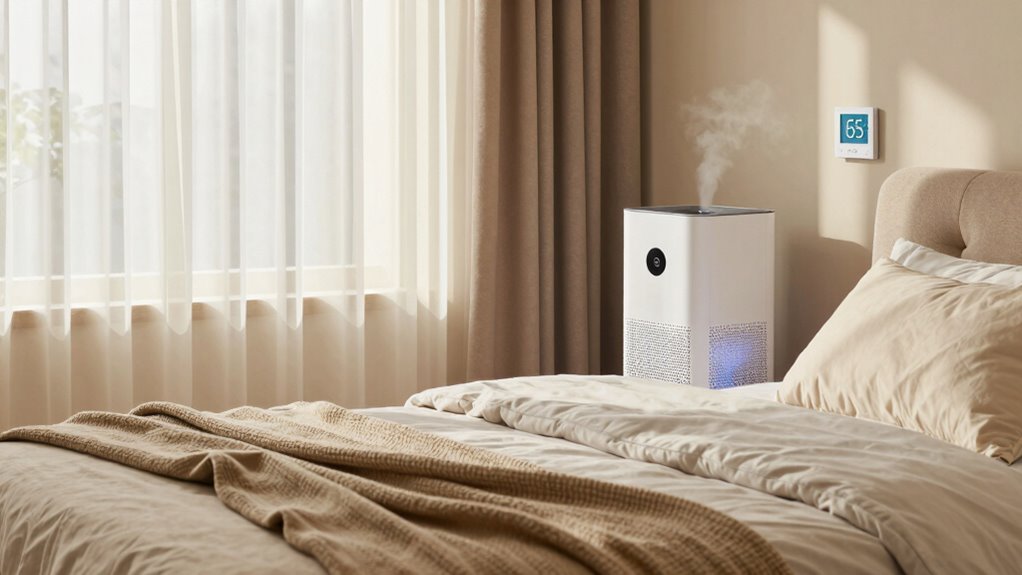
Setting the right temperature is key to a good night’s sleep, and the ideal range is usually between 60-67°F. You should adjust this based on the season, keeping your room cooler in summer and warmer in winter. Using sleep accessories like breathable sheets or a fan can help fine-tune your comfort and improve rest. Incorporating body-based techniques such as gentle stretching or relaxation exercises can further promote better sleep quality.
Ideal Temperature Range
Finding the right temperature for your bedroom is essential for a restful night’s sleep. The ideal range typically falls between 60-67°F (15-19°C), helping your sleep cycle stay steady. Temperatures too high or low can cause temperature fluctuations that disrupt REM sleep and make falling asleep harder. When your room stays within this range, your body can naturally cool down, signaling it’s time to rest. Keep in mind that individual preferences may vary slightly, so adjust within this spectrum to find what feels best for you. Maintaining a consistent temperature minimizes disruptions, allowing your body to enter deeper sleep stages more easily. Additionally, thermal regulation plays a significant role in sleep quality by helping your body maintain optimal core temperature throughout the night. Proper indoor air quality can also influence your body’s ability to regulate temperature effectively, promoting more restful sleep. Ensuring good air circulation can further enhance thermal regulation and overall comfort. Using sleep-friendly devices such as thermostats or fans can help you better control your bedroom environment. Creating an environment with appropriate humidity levels can further support thermal comfort and improve sleep quality. By keeping your bedroom within this suitable temperature range, you support a more restorative sleep and wake up feeling refreshed.
Adjusting for Seasons
Seasonal changes can considerably affect your bedroom’s ideal temperature, so adjusting your setup throughout the year helps maintain restful sleep. During colder months, switch to seasonal bedding like flannel sheets or heavier blankets to stay warm without overheating. In warmer months, opt for lightweight sheets and breathable fabrics such as cotton or linen. Wardrobe adjustments also play a role; wear warmer pajamas or layers in winter, and lighter, moisture-wicking sleepwear in summer. Keep your thermostat set appropriately—around 65-68°F (18-20°C)—and tweak as needed for comfort. To further enhance your sleep environment, consider Free Floating decor arrangements that adapt to seasonal themes and promote a calming atmosphere. Additionally, choosing seasonally appropriate sleepwear can significantly improve your sleep quality by helping regulate your body temperature. Incorporating seasonal bedding options allows you to easily modify your sleeping environment, ensuring comfort in every season. By adapting your bedding and clothing with the seasons, you create a stable sleep environment, preventing temperature-related disruptions and ensuring more restful, uninterrupted sleep year-round. Properly managing your bedroom temperature can also involve utilizing smart thermostats, which offer precise control and can adapt to your sleep patterns for optimal comfort.
Using Sleep Accessories
Using sleep accessories can be an effective way to fine-tune your bedroom’s temperature for ideal rest. Items like breathable sheets, weighted blankets, and cooling pillows help regulate your body temperature and enhance bedroom comfort. For warmer nights, choose lightweight, moisture-wicking fabrics that keep you cool without overheating. Conversely, during colder months, layered blankets or heated pads can provide extra warmth. Adjustable fans or bedside heaters allow you to customize airflow and temperature quickly. These sleep accessories work together to create a balanced environment, preventing overheating or chills that disrupt sleep. To ensure safety when using additional heating devices, consider essential safety tips for portable oil radiators, which can help prevent accidents and maintain a safe sleeping environment. Additionally, understanding the best gear and knife roundups for smart shopping can help you select reliable and safe heating options. Properly selecting temperature-regulating sleep accessories can make a significant difference in achieving restful sleep. For example, incorporating sleep environment optimization strategies can further enhance your bedroom climate. By selecting the right accessories, you can optimize your bedroom climate effortlessly, ensuring your sleep stays comfortable and restorative throughout the night.

Smart Humidifiers Large Room Bedroom Home, 2.11Gal(8L) Quiet Top Fill Cool Mist Humidifier, Smart App & Remote Control, 3 Speed Humidifier with 360° Nozzle, Humidity Setting for Baby Office(Blue)
【Smart App & Remote & Touch Control】Connect the smart humidifier to the smart(TUYA) app to easily set up…
As an affiliate, we earn on qualifying purchases.
As an affiliate, we earn on qualifying purchases.
Controlling Humidity for Comfort and Allergy Prevention
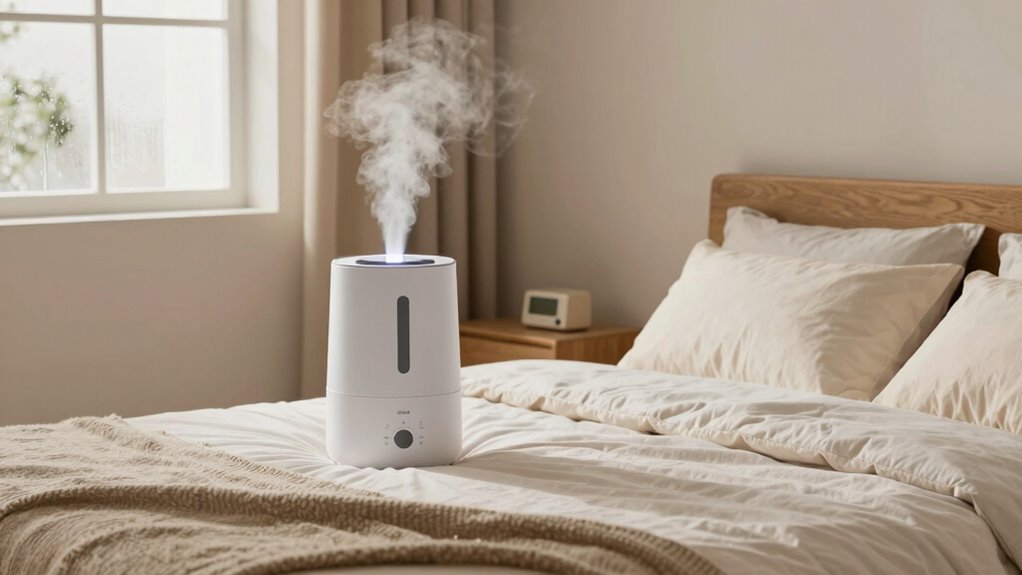
Maintaining the right humidity levels in your bedroom can substantially boost comfort and reduce allergy symptoms. Using dehumidifiers effectively helps keep moisture in check, preventing excess dampness. Keeping humidity in check also prevents mold growth, protecting your health and your space. Proper ventilation and the use of indoor air quality gear such as HEPA filters can further improve air cleanliness and reduce airborne allergens. Additionally, understanding how dream symbolism relates to environmental factors can help you create a conducive sleeping environment. For example, adjusting humidity levels with humidistat devices can provide precise control and maintain optimal conditions throughout the night. Incorporating humidity monitoring with digital sensors allows for real-time adjustments, ensuring consistent comfort and health benefits.
Optimal Humidity Levels
Keeping your bedroom’s humidity levels in the right range is essential for both comfort and health. When humidity is balanced, air circulation improves, preventing stuffiness and reducing mold growth. Aim for a humidity level between 40% and 60%, which supports effective temperature regulation, keeping your room neither too dry nor too damp. Proper humidity helps your body maintain a comfortable temperature, making it easier to fall asleep and stay asleep. Too high humidity can cause discomfort and promote allergens, while too low can dry out your skin and respiratory passages. Using your ventilation system or opening windows periodically can help uphold these ideal levels. Consistently monitoring humidity ensures you create a sleep-friendly environment that promotes relaxation and overall well-being.
Using Dehumidifiers Effectively
Dehumidifiers are a practical solution for controlling bedroom humidity levels and enhancing overall comfort. To use them effectively, set the device to maintain humidity between 40-50%, which helps prevent excess moisture. Regularly empty the water tank or connect a drain hose for continuous operation. Keep doors and windows closed while the dehumidifier runs to maximize humidity control. Use the dehumidifier consistently, especially during humid seasons or if you notice dampness or musty odors. Proper humidity control not only boosts comfort but also plays an essential role in mold prevention, reducing the risk of mold spores thriving in your sleeping environment. Understanding humidity levels is key to maintaining a healthy bedroom climate. By maintaining ideal humidity levels with your dehumidifier, you create a healthier, more comfortable bedroom environment.
Preventing Mold Growth
Controlling humidity levels in your bedroom is one of the most effective ways to prevent mold growth and improve allergy symptoms. Mold thrives in damp environments, so maintaining moisture control is essential. Use a dehumidifier or ventilation to keep humidity below 50%, reducing the risk of mold spores settling and growing. Regularly check for leaks or condensation that can increase moisture levels. Keep your bedding, curtains, and carpets dry, and promptly address any signs of dampness or mold spots. Proper moisture control not only prevents mold but also creates a healthier sleeping environment, reducing allergy triggers. Staying vigilant about humidity helps you maintain a clean, comfortable bedroom that promotes better sleep and overall well-being.

Northern Lights Projector White Noise Sound Machine for Sleep, 18-Color 15 White Noise Machine for Sleeping, Bluetooth Aurora Light Projector for Bedroom Aurora Projector,Shower Light Ambient Lighting
🌹【NORTHERN LIGHTS PROJECTOR WHTITE NOISE MACHINE 4 IN 1: Northern lights projector+Bluetooth speaker+ Shower lamp+Cozy room decor】Northern lights…
As an affiliate, we earn on qualifying purchases.
As an affiliate, we earn on qualifying purchases.
Choosing Mattresses and Bedding That Promote Better Sleep
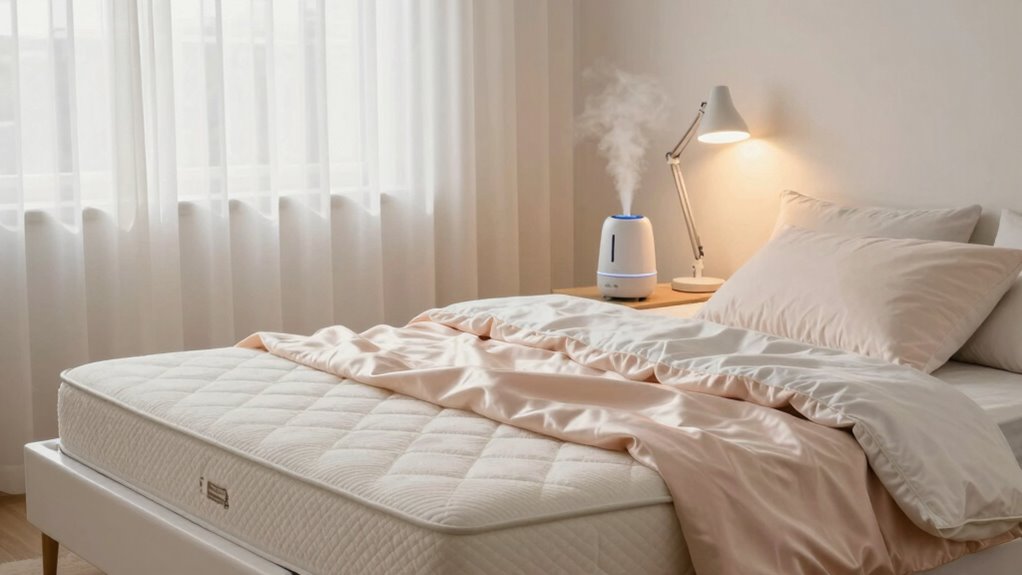
Choosing the right mattress and bedding is essential for creating a sleep-friendly environment. When selecting a mattress, consider mattress types such as memory foam, innerspring, or hybrid, based on your comfort preferences and support needs. Each type offers different benefits, so choose one that aligns with your sleep style. For bedding materials, opt for breathable fabrics like cotton, linen, or bamboo, which help regulate temperature and wick away moisture. Avoid synthetic materials that trap heat and cause discomfort. The right combination of mattress type and bedding materials can improve sleep quality by maintaining a comfortable temperature and reducing disruptions. Prioritizing these choices guarantees your sleep environment promotes restfulness and helps you wake up feeling refreshed.
Improving Air Quality With Ventilation and Purifiers
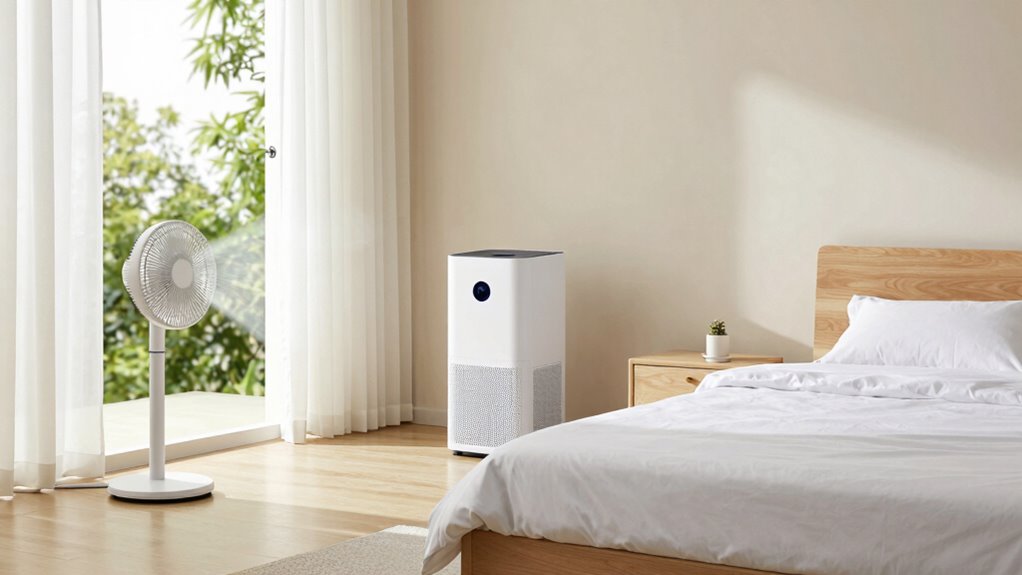
Have you considered how your bedroom’s air quality affects your sleep? Improving it can make a significant difference. Effective ventilation strategies help circulate fresh air, reducing pollutants and excess moisture. Air purification devices, like HEPA filters, remove airborne allergens, dust, and toxins that can disrupt rest. To optimize your bedroom environment, consider these points:
- Regularly open windows to promote cross-ventilation
- Use air purifiers to filter out harmful particles
- Maintain proper humidity levels to prevent mold and dryness
- Keep vents and filters clean for maximum efficiency
Reducing Noise and Light for a More Restful Night

Since noise and light disruptions can substantially interfere with your sleep, taking steps to minimize them can greatly improve your rest quality. Start by applying soundproofing techniques, such as adding rugs, wall panels, or weatherstripping to reduce external sounds. Installing blackout window treatments, like thick curtains or blackout shades, blocks out unwanted light, creating a dark environment conducive to sleep. Consider sealing gaps around windows and doors to prevent light leaks and noise infiltration. Using earplugs or white noise machines can also help mask persistent sounds. Creating a quiet, dark bedroom signals to your body that it’s time to rest, making it easier to fall asleep and stay asleep throughout the night. Small adjustments can make a significant difference in your sleep comfort.
Tips to Keep Your Bedroom Climate Consistent Night After Night
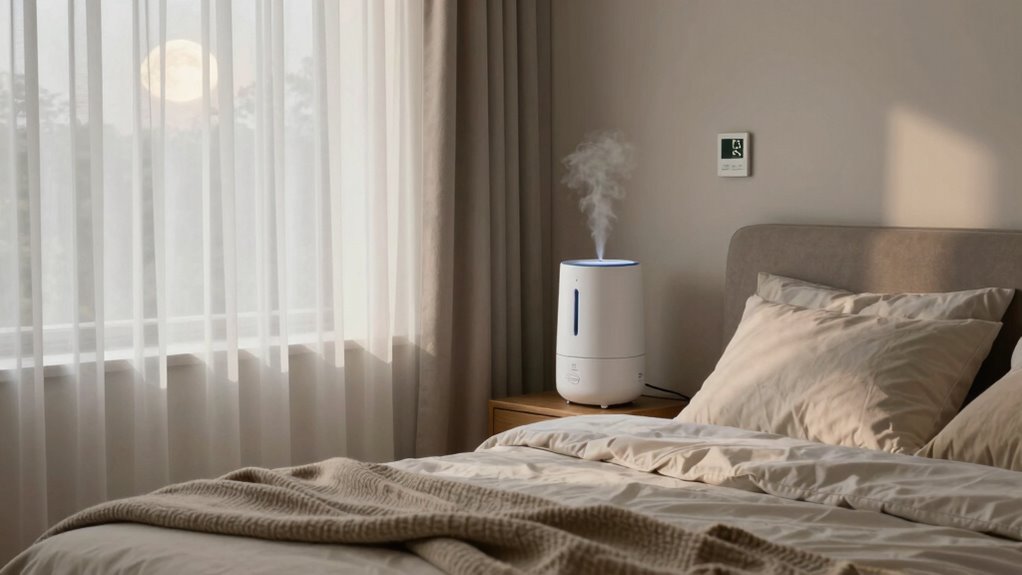
Maintaining a consistent bedroom climate each night helps your body settle into a restful sleep pattern. To achieve this, focus on stabilizing factors like temperature, humidity, and airflow. Your sleep position can influence how comfortable you feel, so find one that minimizes strain and promotes relaxation. Keep your bedroom decor simple and soothing to avoid visual distractions that disrupt your sleep environment.
Consider these tips:
- Use a programmable thermostat to maintain a steady temperature
- Invest in breathable bedding suited to your sleep position
- Keep window coverings consistent to control light and airflow
- Choose calming, clutter-free decor to foster a tranquil atmosphere
Consistency in these areas ensures your body adapts easily, making restful sleep more natural night after night.
Frequently Asked Questions
How Does Ambient Noise Affect Sleep Quality?
Ambient noise can disrupt your sleep, making it harder to fall asleep or stay asleep. White noise and sound masking help by creating a consistent, soothing background sound that blocks out sudden noises or disturbances. This steady noise calms your mind and reduces the impact of environmental sounds, promoting deeper, more restful sleep. Incorporate a white noise machine or sound masking device to improve your sleep quality and wake feeling refreshed.
What Are the Best Plants to Improve Bedroom Air Quality?
When it comes to bedroom greenery, you’re killing two birds with one stone. Air purifying plants like snake plants, peace lilies, and pothos are excellent choices to boost air quality. They naturally filter toxins and increase humidity, creating a healthier sleep environment. Incorporate these air purifying plants into your space to breathe easier and enjoy fresher air every night, making your bedroom a true sanctuary.
How Often Should I Replace My Bedding for Optimal Comfort?
You should replace your bedding every 7 to 10 days to maintain ideal comfort and good sleep hygiene tips. Regular bedding maintenance prevents dust mites, allergens, and bacteria buildup, ensuring a cleaner sleeping environment. Fresh sheets feel more comfortable and promote better sleep quality. Keep an eye on signs of wear or stains, and don’t forget to wash pillowcases and duvet covers regularly to support your overall sleep health.
Can Smart Technology Help Regulate Bedroom Climate Automatically?
Yes, smart technology can help regulate your bedroom climate automatically. Smart thermostats adjust the temperature based on your preferences and room conditions, ensuring ideal comfort. Automated blinds can control sunlight and airflow, creating the perfect environment for sleep. These devices work together seamlessly, allowing you to set and forget, so you wake up feeling refreshed without manually changing settings. Embrace smart tech for a more comfortable, restful night.
What Are Some Natural Remedies for Improving Sleep Environment?
You can improve your sleep environment naturally with herbal remedies like chamomile or lavender, which promote relaxation. Incorporate natural sleep aids such as a soothing scent diffuser or a warm, herbal tea before bed. Keep your room dark and cool, and use breathable bedding to enhance comfort. These small changes create a calming atmosphere, helping you fall asleep faster and enjoy more restful sleep every night.
Conclusion
Creating the perfect bedroom climate means controlling temperature, managing humidity, improving air quality, and minimizing noise and light. It’s about setting the scene for restful sleep, ensuring comfort, promoting relaxation, and fostering consistency. When you optimize these elements, you invite deep, uninterrupted rest, waking refreshed and rejuvenated. Remember, a well-balanced environment isn’t just about comfort; it’s about nurturing your health, your peace, and your well-being every night. Sleep better, feel better, live better.