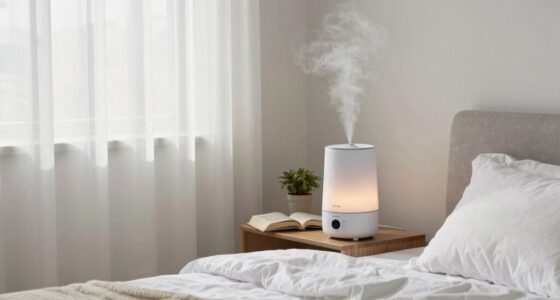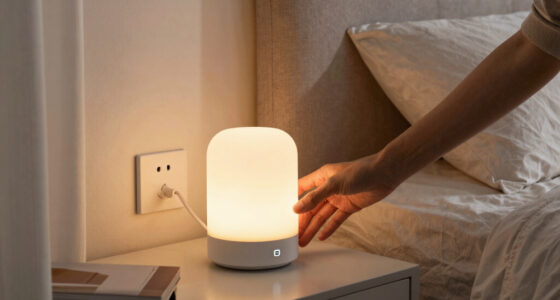

To create a sleep-friendly bedroom, focus on four key elements: temperature, light, sound, and air quality. Keep your room cool between 60-67°F, use blackout curtains to block bright light, and add white noise or earplugs to minimize disturbances. Improve air quality with proper ventilation, plants, and filters. Small adjustments in these areas can make a big difference in sleep quality—exploring further can help you customize your ideal sleep environment effortlessly.

Get the latest gadgets delivered free — and shop member deals
- Fast, free delivery on millions of items
- Access to Prime Big Deal Days deals on October 6–7
- Prime Video, Amazon Music and more included
Key Takeaways
- Maintain a bedroom temperature between 60-67°F using thermostats with sensors and scheduling features.
- Use blackout curtains, dimmable lighting, and calming scents to optimize lighting for sleep.
- Incorporate white noise machines, soundproofing, and sealing gaps to minimize external noise disruptions.
- Ensure air quality with HEPA purifiers, indoor plants, and proper ventilation for fresh, allergen-free air.
- Use breathable bedding materials and regulate airflow to prevent heat buildup and moisture, promoting comfort.
As an affiliate, we earn on qualifying purchases.
What Are the Core Elements of a Sleep-Friendly Bedroom
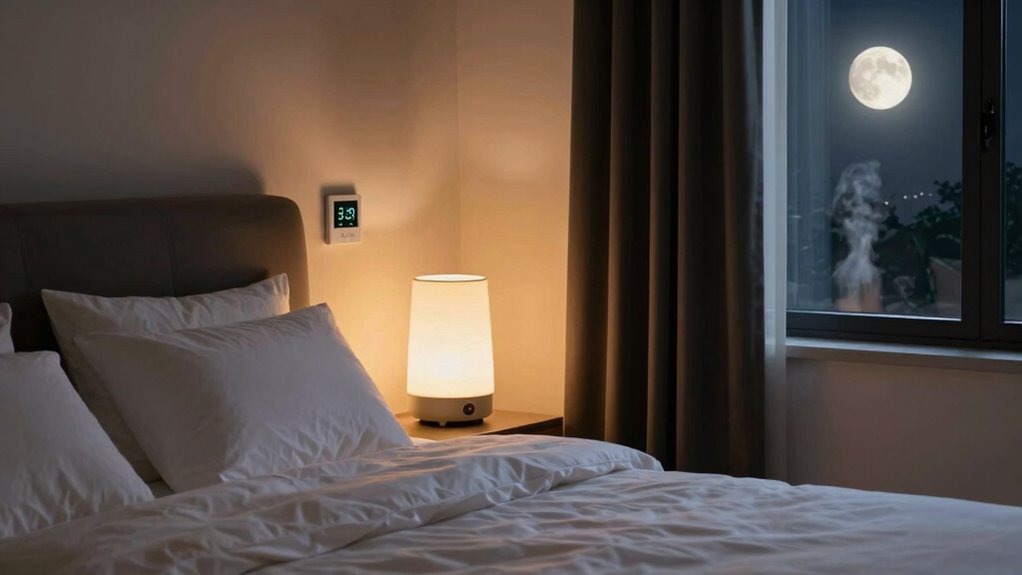
A good night’s sleep begins with three core elements: comfort, darkness, and silence. Your bedroom decor plays a vital role in creating a cozy environment that promotes relaxation. Choose calming colors, soft bedding, and minimal clutter to enhance comfort. Sleep aids like supportive pillows and comfortable mattresses help your body unwind fully. Darkness is essential; consider blackout curtains or sleep masks to block out light, signaling your brain it’s time to rest. Silence is equally important—use earplugs or white noise machines if needed. When these core elements come together, your bedroom transforms into a sanctuary for restorative sleep. Additionally, maintaining optimal room temperature can significantly improve sleep quality by preventing discomfort and promoting relaxation. Incorporating soundproofing techniques can further enhance your sleep environment by reducing external noise disruptions.
As an affiliate, we earn on qualifying purchases.
How to Optimize Bedroom Temperature for Better Sleep
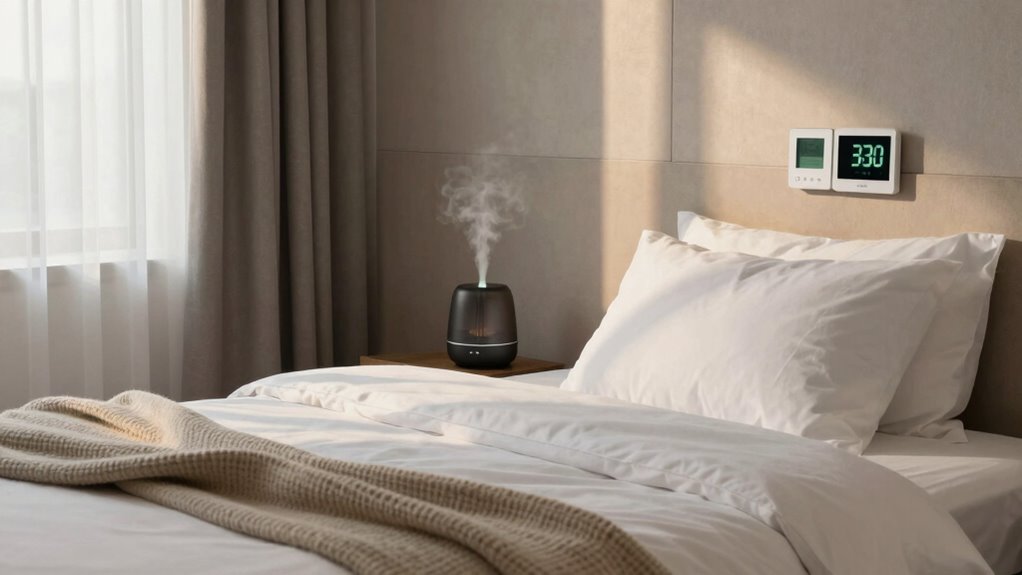
To improve your sleep, focus on maintaining a comfortable room temperature, typically between 60-67°F. Choose breathable bedding materials to help regulate your body heat overnight. Additionally, adjusting your thermostat strategically can make a big difference in creating the perfect sleeping environment. Understanding molecular-scale circuits can inspire innovative approaches to optimizing environmental controls, leading to more precise temperature regulation. Recognizing early warning signs of discomfort can also help you make timely adjustments for better sleep quality. Being aware of environmental monitoring techniques can further enhance your ability to fine-tune your bedroom conditions for optimal rest. Incorporating smart thermostats that utilize advanced sensor technology can further optimize your bedroom climate automatically.
Maintain Optimal Room Temperature
Maintaining the right room temperature is essential for a restful night’s sleep, as your body functions best within a specific thermal range. A cool, comfortable environment helps you fall asleep faster and stay asleep longer. To achieve this, consider your bedroom decor and how it influences temperature, such as minimizing thick curtains or bulky furniture that trap heat. Establish consistent sleep routines by adjusting your thermostat before bed, aiming for around 60-67°F (15-19°C). Keep a thermometer nearby to monitor the temperature and make small adjustments as needed. Remember, small changes can markedly improve sleep quality. Proper temperature control creates an ideal setting that supports your body’s natural sleep cycle and enhances overall comfort during the night. Streamlining AI Agent Governance can help ensure your smart home devices operate securely and efficiently to maintain optimal conditions. Incorporating temperature regulation techniques can further optimize your sleep environment and promote better rest. Additionally, understanding credit card insights can assist in budgeting for home upgrades, such as smart thermostats or climate control devices, to improve sleep quality. Moreover, utilizing natural cooling methods, like cross-ventilation or reflective window coverings, can help sustain a comfortable room temperature without relying solely on electronic devices. Implementing these climate control strategies can make a significant difference in achieving consistent, restful sleep.
Use Breathable Bedding Materials
Choosing breathable bedding materials can substantially enhance your sleep environment by helping regulate your body temperature throughout the night. Natural fibers and breathable fabrics allow air to flow, reducing heat buildup and moisture. This airflow minimizes sweating and discomfort, creating a more restful sleep setting. When selecting bedding, prioritize fabrics like cotton, linen, or bamboo, which wick away moisture and promote airflow. Consider the table below to compare common materials:
| Material | Breathability | Durability | Feel |
|---|---|---|---|
| Cotton | High | Moderate | Soft, smooth |
| Linen | Very high | High | Crisp |
| Bamboo | High | Moderate | Silky, cool |
Using the right breathable materials helps maintain a consistent temperature, supporting restorative sleep and overall well-being. Additionally, understanding how microplastics in dust can impact indoor air quality highlights the importance of choosing breathable, natural fabrics to reduce potential pollutants in your sleep environment. Selecting materials that minimize indoor pollutants can further improve your sleep quality and health. Incorporating natural fibers into your bedding can also contribute to better air quality and reduce exposure to synthetic materials, especially since some fabrics can trap dust mites and other allergens.
Adjust Thermostat Strategically
Adjusting your thermostat is a key step in creating a comfortable sleep environment, especially after selecting breathable bedding. Proper thermostat placement assures even temperature distribution, preventing cold or hot spots in your room. Use temperature monitoring devices to keep track of your ideal sleep temperature, which is typically around 60-67°F (15-19°C). A high-quality thermostat can also help maintain consistent climate control throughout the night to enhance sleep quality. Additionally, choosing thermostats with smart features can optimize energy use while maintaining the perfect sleeping environment. Incorporating temperature regulation technology can further refine your sleep conditions by automatically adjusting settings based on your preferences. Ensuring your thermostat is properly calibrated is essential for maintaining accurate temperature readings and achieving consistent comfort. Proper calibration can prevent temperature fluctuations caused by sensor inaccuracies, ensuring your environment remains stable.
As an affiliate, we earn on qualifying purchases.
Choosing the Right Lighting to Create a Restful Sleep Environment
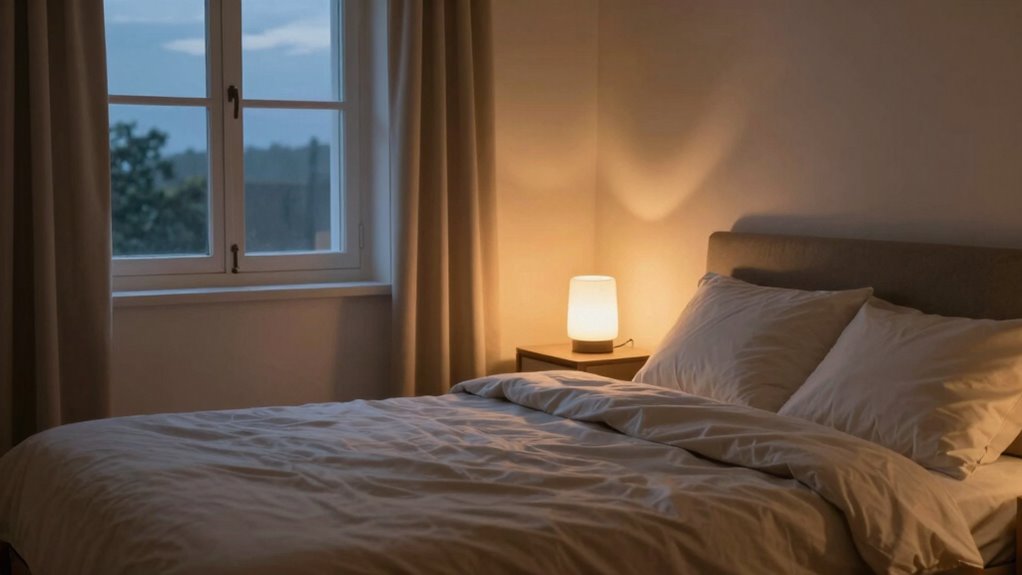
The right lighting can make a significant difference in creating a peaceful sleep environment. You should explore various lighting options that promote relaxation, such as warm LED bulbs or soft, ambient lamps. Avoid harsh, bright lights before bed, as they can interfere with melatonin production. Installing light dimming features allows you to gradually lower the brightness as bedtime approaches, signaling to your body that it’s time to wind down. Consider using bedside lamps with adjustable settings or smart bulbs that can be scheduled for dimming. By controlling light intensity and choosing calming lighting options, you create a soothing atmosphere that helps you fall asleep faster and enjoy more restorative rest. Proper lighting is a simple yet effective way to enhance your sleep environment.
As an affiliate, we earn on qualifying purchases.
Controlling Noise and Sound for More Restful Nights
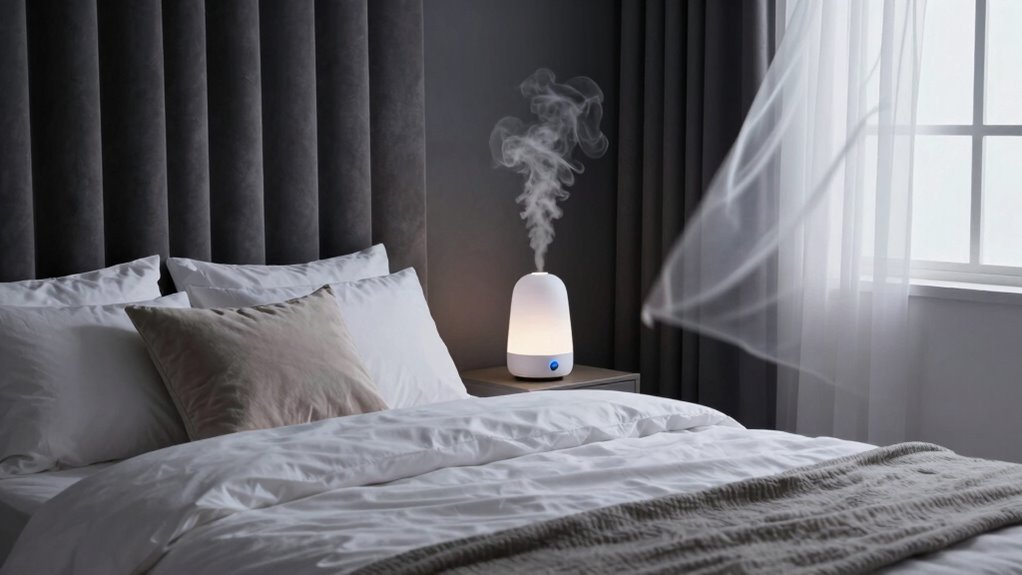
To improve your sleep, managing noise levels is essential. Using white noise machines, installing soundproofing measures, and reducing external sounds can make a big difference. These steps help create a quieter, more restful bedroom environment. Incorporating soundproofing techniques tailored to your space can further enhance your sleep quality. Additionally, selecting appropriate insulation materials can significantly reduce the transmission of noise through walls and ceilings. Being aware of sound transmission principles can help you make more effective choices in soundproofing your bedroom. Understanding acoustic treatments can also contribute to better noise control, ensuring a more peaceful sleep setting. Exploring cabling and mounting solutions for soundproofing equipment can optimize your setup and improve overall effectiveness.
Use White Noise Machines
White noise machines can be a game-changer when it comes to creating a peaceful sleep environment. They use consistent sound masking to drown out disruptive noises, helping you fall asleep faster and stay asleep longer. By providing a steady background noise, you reduce the impact of sudden sounds like traffic or household activity. When choosing a white noise machine, consider features like volume control, sound variety, and size for your space. Using white noise regularly can improve sleep quality and create a calming atmosphere in your bedroom. Remember, a well-chosen sound masking device can make all the difference for restful nights. Incorporating a white noise machine into your sleep routine helps block out distractions and promotes deeper, uninterrupted rest.
Install Soundproofing Measures
Installing soundproofing measures can considerably reduce noise disturbances and create a more peaceful sleeping environment. Start by applying soundproofing techniques like acoustic insulation in your walls, floors, and ceilings to block external noise. Use dense materials such as mineral wool or foam panels to absorb sound waves and prevent them from passing through. Consider adding mass-loaded vinyl barriers or acoustic curtains to further enhance soundproofing. Seal gaps and cracks around windows, doors, and electrical outlets to eliminate sound leaks. Installing door sweeps and weatherstripping also helps minimize noise entry. These measures are simple yet effective ways to reduce sound transmission, making your bedroom quieter and more conducive to restful sleep.
Limit External Noise Sources
External noise can considerably disturb your sleep, so taking steps to limit its impact is essential for a restful night. You can reduce noise by installing soundproof curtains that block out street sounds and using acoustic panels inside your room to absorb residual noise. These solutions create a quieter environment that promotes better sleep quality. To maximize effectiveness, consider:
- Closing curtains early to prevent noise infiltration
- Positioning acoustic panels strategically on walls facing noise sources
- Sealing gaps around windows and doors to prevent sound leaks
Improving Air Quality to Boost Sleep Comfort
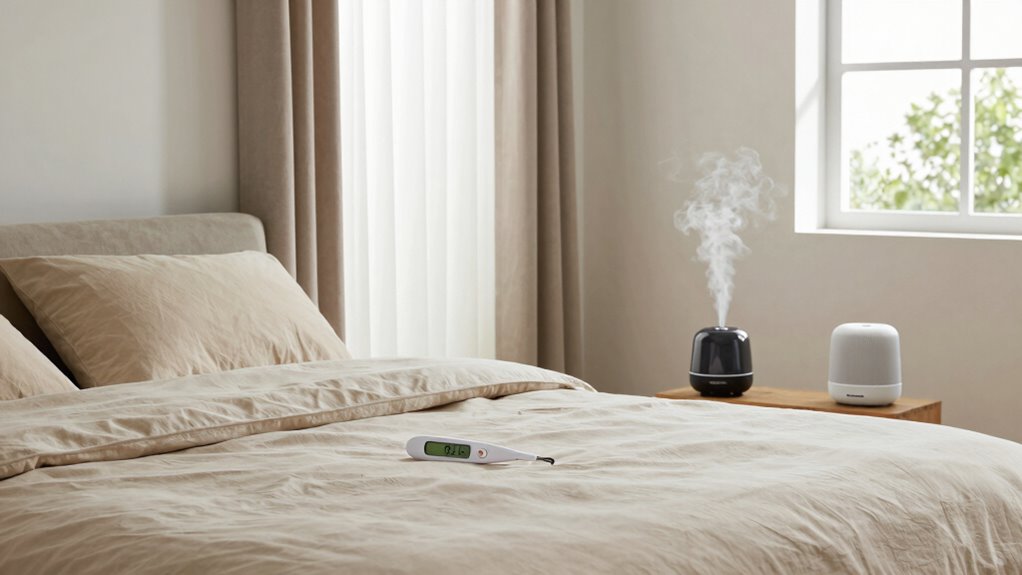
Since your bedroom’s air quality directly affects your ability to fall asleep and stay asleep, taking steps to improve it can make a noticeable difference in your overall sleep comfort. One effective method is air purification, which removes pollutants, allergens, and odors from the air. Using an air purifier with a HEPA filter can markedly reduce airborne irritants. Additionally, incorporating indoor plants can naturally enhance air quality by absorbing toxins and increasing humidity. Plants like snake plants or pothos are easy to care for and help purify the air without creating extra noise or clutter. By focusing on these strategies, you create a cleaner, fresher environment that supports restful sleep and overall well-being.
Simple Tips to Enhance Your Bedroom for Better Sleep
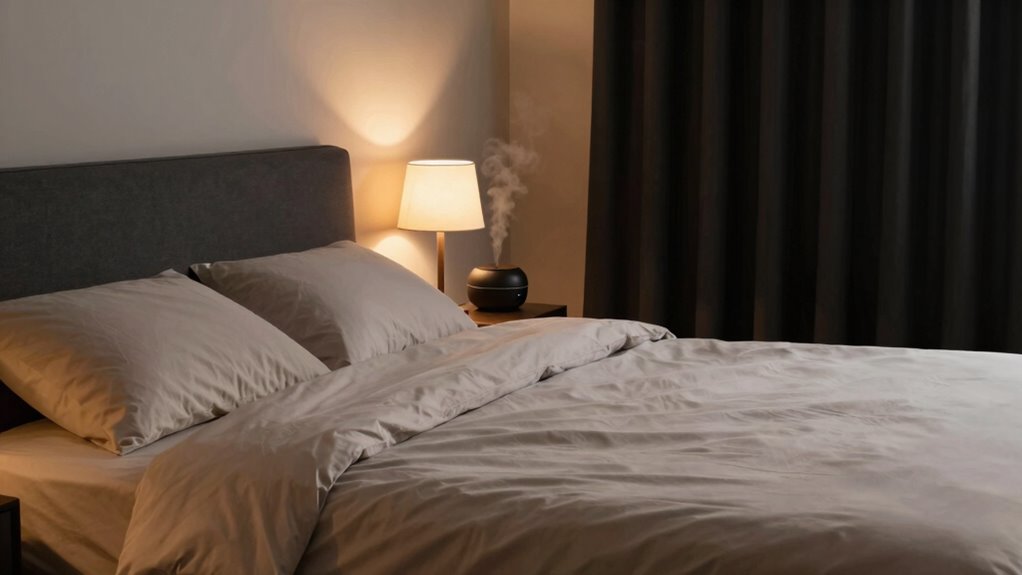
To create a more inviting sleep environment, focus on simple changes that make your bedroom more conducive to rest. Start with decorating ideas that promote calm, such as soothing colors and clutter-free surfaces. Incorporate cozy bedding and minimal decor to reduce distractions. Adjust your sleep position tips by choosing a pillow that aligns with your preferred posture, supporting spinal health and comfort. To enhance your space further, consider these tips:
- Use blackout curtains to block unwanted light
- Add soft, adjustable lighting for relaxing evenings
- Incorporate calming scents like lavender to promote relaxation
These small adjustments help create a restful atmosphere, making it easier to unwind and improve sleep quality each night.
Troubleshooting Common Sleep Environment Challenges
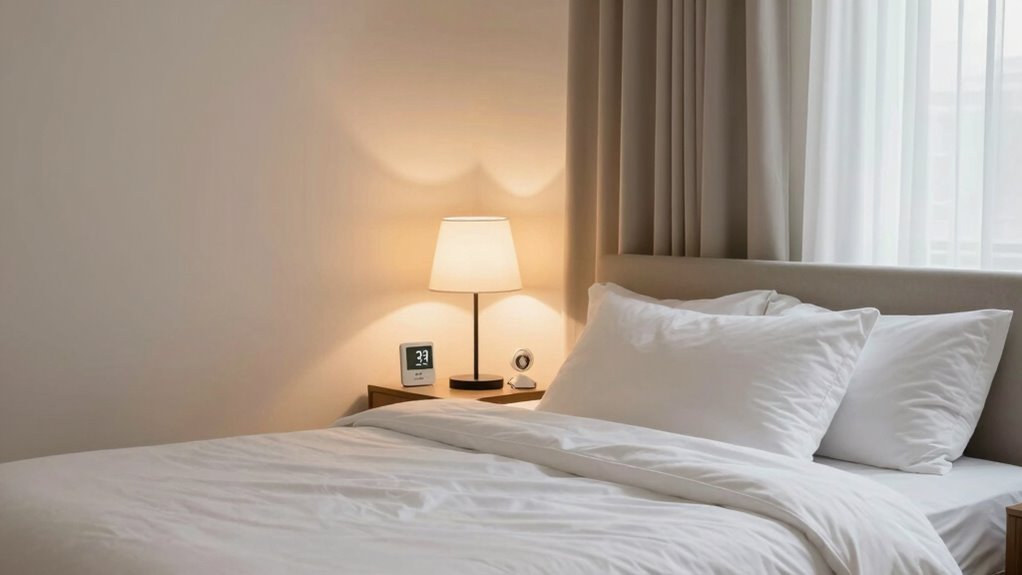
Despite your best efforts to create an ideal sleep environment, you might still encounter common challenges that disrupt rest. Issues like discomfort from poor sleep posture or an unsupportive mattress firmness can cause wakefulness. To troubleshoot, evaluate your mattress and sleeping position. Adjusting mattress firmness or trying different sleep postures can alleviate pain and improve sleep quality. Use the table below to identify and address typical challenges:
| Challenge | Solution | Notes |
|---|---|---|
| Back pain from mattress | Try a firmer or softer mattress | Experiment until comfortable |
| Disrupted sleep posture | Use supportive pillows | Maintain spinal alignment |
| Restlessness due to discomfort | Adjust mattress or pillows | Find ideal support |
| Soreness or stiffness | Consider mattress upgrade | Ensure proper firmness |
Addressing these issues helps create a more restful sleep environment.
Frequently Asked Questions
How Does Mattress Choice Impact Overall Sleep Comfort?
Your mattress choice hugely impacts sleep comfort. Opting for memory foam provides excellent contouring and pressure relief, helping you relax faster. The firmness level is equally important; too soft can cause misalignment, while too firm may lead to discomfort. By selecting a mattress with the right firmness and material, you support your body properly, reduce tossing and turning, and wake up feeling more refreshed and ready for the day.
Can Fragrances or Scents Improve Sleep Quality?
Yes, fragrances and scents can improve your sleep quality through aromatherapy benefits. Choose calming scents like lavender or chamomile, which promote relaxation and reduce anxiety. To maximize benefits, opt for natural essential oils and avoid overpowering fragrances. Use a diffuser or pillow spray for even distribution. Proper scent selection tips include testing small amounts first and selecting scents that personally soothe you, helping you unwind and enjoy restful sleep.
What Are the Best Plants for Purifying Bedroom Air?
Imagine waking up refreshed, breathing in crisp, clean air. You should consider air purifying plants like snake plants, pothos, and peace lilies for your bedroom gardening. These plants naturally filter toxins and improve air quality, creating a healthier space. Incorporate them into your bedroom to enjoy fresher air overnight. With their lush leaves and calming presence, they’re your natural allies for better sleep and a more serene environment.
How Often Should I Replace My Bedding for Optimal Sleep?
You should replace your bedding every 7 to 10 days to maintain ideal sleep hygiene routines and bedding maintenance. Regularly changing sheets reduces dust mites, bacteria, and allergens that can disrupt sleep quality. If you sweat heavily or have allergies, consider changing more frequently. Keep your bedding fresh and clean by washing at high temperatures and using hypoallergenic detergents, ensuring a healthier and more restful sleeping environment.
Are There Specific Sleep Aids That Enhance Bedroom Comfort?
Imagine your bedroom as a sanctuary—peaceful and inviting. Using a sleep mask blocks out unwanted light, creating darkness that signals your body to wind down. White noise acts like a gentle lullaby, masking disruptive sounds and soothing your mind. These sleep aids enhance comfort by fostering a calm environment, helping you fall asleep faster and stay asleep longer. Incorporate them into your routine for truly restful nights.
Conclusion
By fine-tuning your bedroom’s temperature, lighting, sound, and air, you create a sanctuary that beckons restful sleep. Picture slipping between cool, crisp sheets as gentle moonlight filters through curtains, while soft whispers of air and soothing sounds cradle you into dreams. When your sleep environment feels just right, each night becomes a peaceful retreat—your personal haven of comfort and tranquility, ready to recharge you for the day ahead.
Fall Picks
fall essentials
As an affiliate, we earn on qualifying purchases.