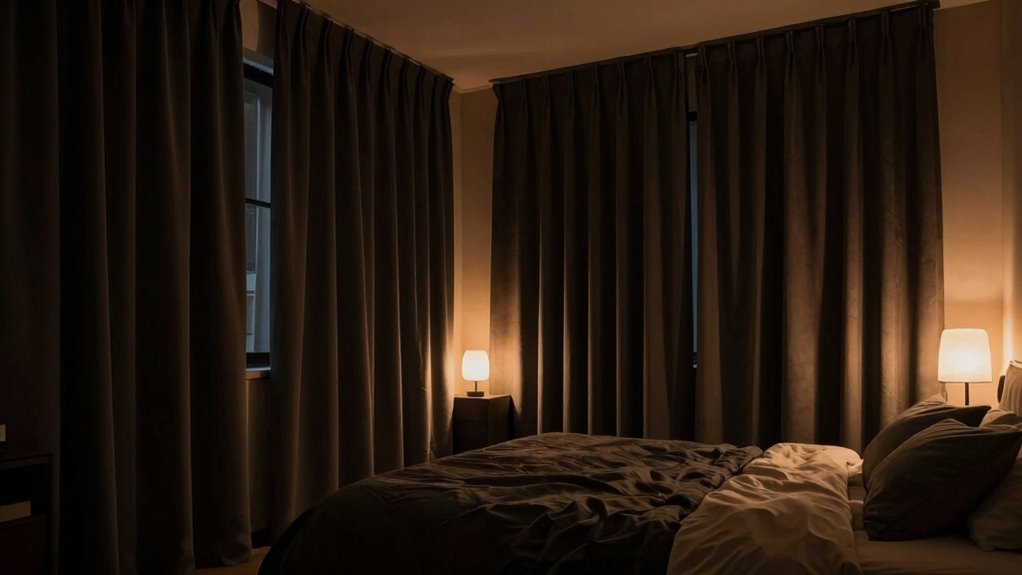

To fix a bedroom that feels too bright at night, start by checking for outside light leaks from streetlights or passing cars and block them with blackout curtains, layered window coverings, or reflective films. Seal gaps around windows and doors, turn off or cover interior lights, and consider using a sleep mask. Properly adjusting decor and adding blackout options can make your room much darker—keep going for more tips to achieve total darkness.

Get the latest gadgets delivered free — and shop member deals
- Fast, free delivery on millions of items
- Access to Prime Big Deal Days deals on October 6–7
- Prime Video, Amazon Music and more included
Key Takeaways
- Block external light sources with blackout curtains, window films, or reflective coatings.
- Seal window gaps and door cracks with weatherstripping or blackout tape to prevent light leaks.
- Use layered window coverings and heavy bedding to enhance room darkness.
- Install dim, warm lighting and avoid bright overhead lights for a calming sleep environment.
- Choose high-quality blackout materials and ensure proper installation for long-lasting darkness.
As an affiliate, we earn on qualifying purchases.
How to Identify and Block External Light Sources in Your Bedroom
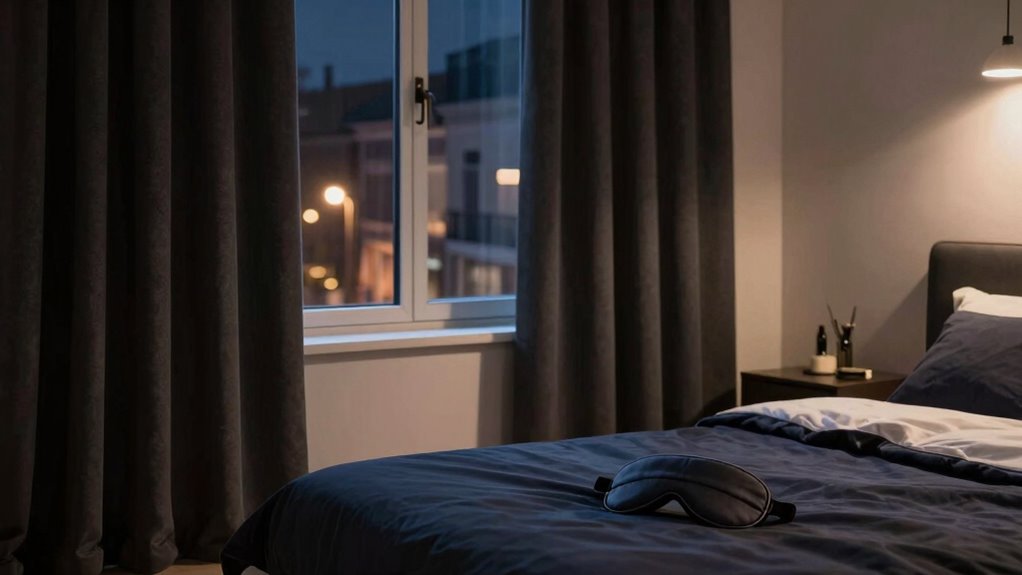
External light sources can make your bedroom feel too bright at night, but identifying them is the first step to creating a darker, more restful space. Start by examining your room at night to spot outdoor streetlights that shine directly into windows or cast shadows inside. Check for neighboring window glare caused by lights from nearby houses or buildings. Sometimes, outdoor lights are obvious, but glare from streetlights or passing cars can also disturb your sleep. Use a flashlight to see if external lights penetrate your window when it’s dark outside. Once identified, you can consider ways to block or redirect these sources, like installing outdoor curtains, trimming tree branches, or adding window coverings. Recognizing these sources is vital for achieving a darker, more peaceful bedroom environment. Understanding external light sources is essential for effectively reducing unwanted illumination, especially when considering light pollution and its impact on sleep quality. Additionally, employing light-blocking window treatments can significantly enhance your bedroom’s darkness. Being aware of digital light emissions from devices or nearby sources can also help you create a more sleep-friendly environment by reducing overall light exposure.
Furthermore, understanding the types of external lighting that contribute to light pollution can guide you in selecting the most effective blocking solutions.
As an affiliate, we earn on qualifying purchases.
Choosing the Best Window Coverings to Keep Your Room Dark
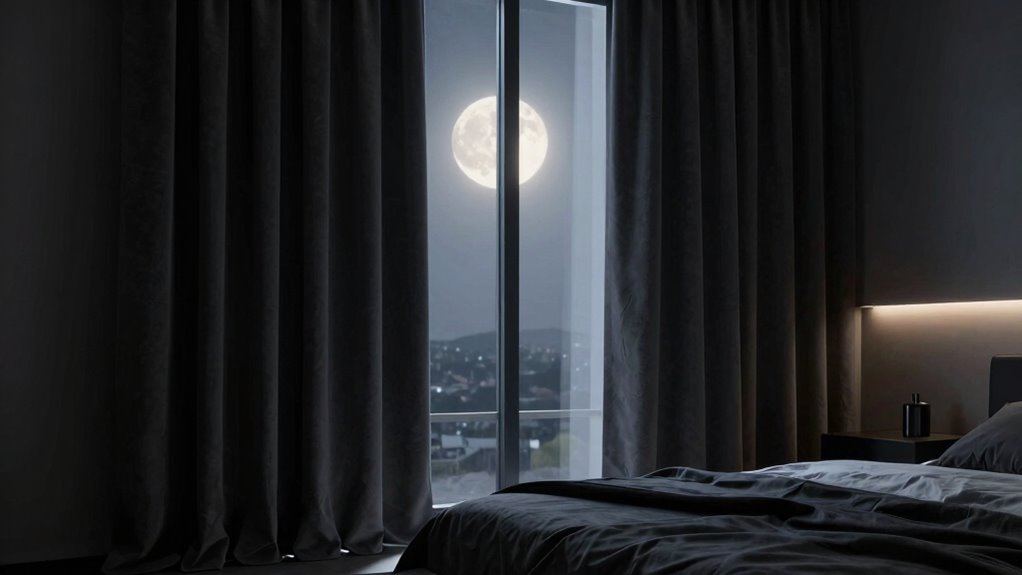
Choosing the right window coverings is essential for blocking out unwanted light and creating a dark, restful bedroom environment. Blackout window treatments, like blackout curtains or shades, are highly effective at preventing outside light from seeping in. They are designed with dense fabrics or special linings that absorb light, ensuring your room stays dark all night. Additionally, reflective window films can be applied directly to your windows to reflect sunlight and streetlights away from your room, further reducing brightness. These films are easy to install and work continuously to minimize external light sources. Incorporating light control options that are specifically designed for light management can enhance the effectiveness of your setup. Using light-blocking materials with reflective films provides a thorough solution, giving you complete control over your room’s darkness and helping you enjoy better sleep even in brightly lit areas. Considering window placement can also influence how much light enters and can guide your choice of coverings for optimal darkness. Selecting proper installation techniques ensures that the coverings function as intended without gaps or leaks.
As an affiliate, we earn on qualifying purchases.
Effective Nighttime Lighting Strategies to Minimize Brightness
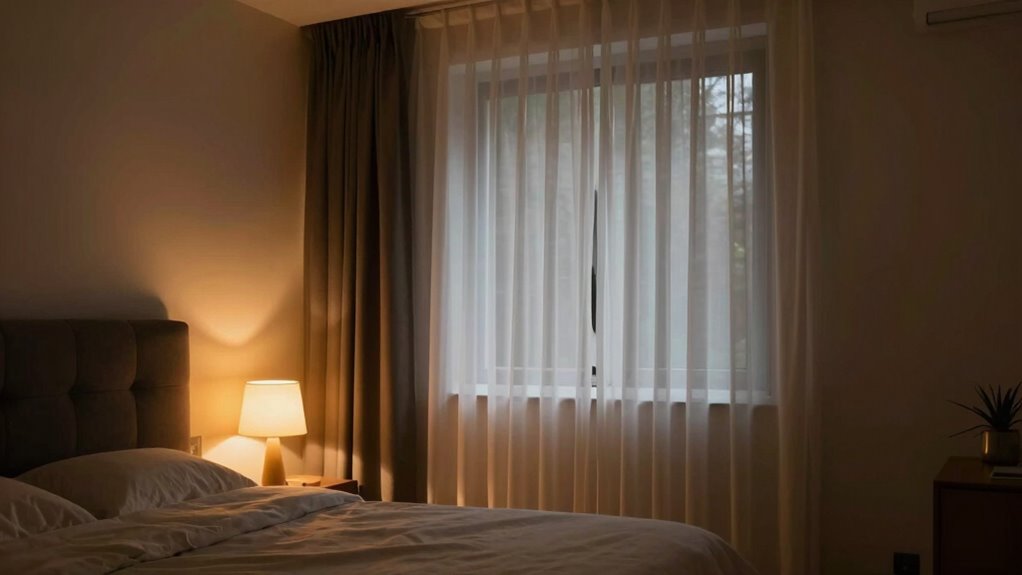
To effectively minimize brightness at night, you need to incorporate strategic lighting solutions that provide enough illumination for safety and comfort without overwhelming your space. Use dimmable lights or install soft, warm bulbs to create a calming nighttime ambiance that promotes relaxation. Consider placing lamps with shaded covers or using indirect lighting to diffuse harsh light. Avoid bright overhead fixtures, which can disrupt your sleep environment. Instead, opt for low-level lighting near pathways or bedside lamps to gently guide you without causing glare. Using layered lighting allows you to adjust brightness levels based on your needs, helping you wind down comfortably. Incorporating household safety products such as night lights can further enhance safety without adding unnecessary brightness. Additionally, selecting appropriate bulbs with a lower lumen output can help create a more subdued environment. Understanding the importance of light temperature can also help you choose lighting that promotes relaxation and restful sleep. The placement of lighting fixtures within your bedroom can significantly influence the overall brightness and ambiance. Properly calibrated smart lighting controls can enable you to effortlessly adjust lighting levels remotely or via automation, further supporting a peaceful sleep setting. These strategies help maintain a peaceful, sleep-friendly environment while ensuring you’re safe and comfortable during nighttime hours.
door and window weatherstripping
As an affiliate, we earn on qualifying purchases.
As an affiliate, we earn on qualifying purchases.
DIY Hacks and Budget Tips to Darken Your Bedroom
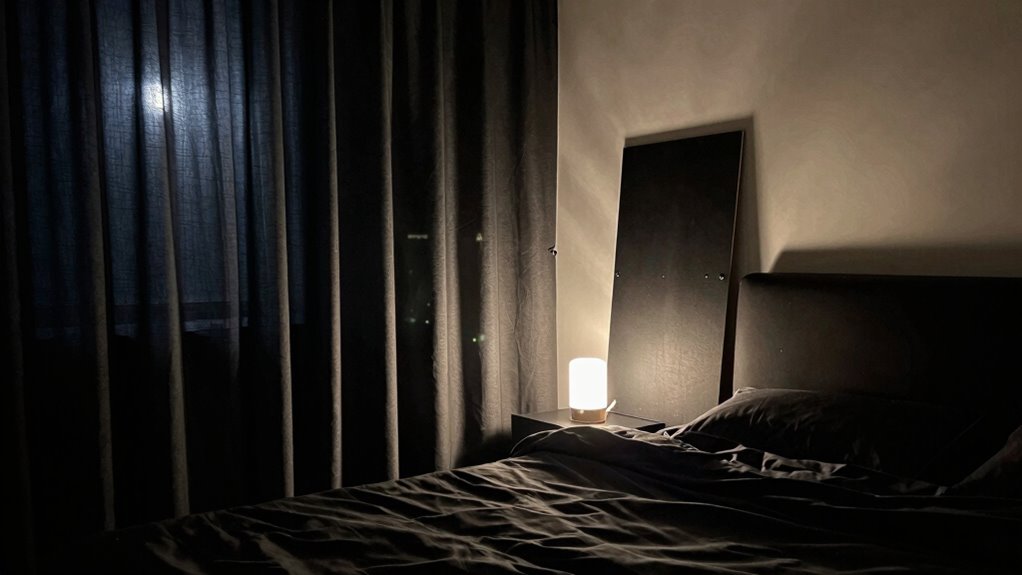
You can easily darken your bedroom on a budget with simple DIY hacks. Installing dark curtains or blinds makes an immediate difference, and window films or tapes offer a quick solution for extra shading. Layering your bedding not only adds comfort but also helps block light from reaching your eyes. Incorporating innovative materials into your window treatments can further improve light-blocking effectiveness.
Use Dark Curtains or Blinds
Dark curtains or blinds are among the most effective and budget-friendly ways to block out unwanted light at night. They are a versatile window treatment option that instantly transforms your room into a darker, more restful space. Blackout curtains, in particular, offer significant benefits by preventing light from seeping through the fabric, giving you complete darkness and better sleep quality. You can choose from various styles and materials to match your decor and budget. Installing these curtains or blinds is simple and cost-effective, making them a popular DIY solution. Not only do they improve sleep, but they also help reduce outside noise and temperature fluctuations. Choosing the right materials can further enhance their effectiveness in creating a cozy, dark environment that’s perfect for nighttime relaxation. Additionally, proper installation ensures maximum light blockage and long-term durability of your window treatments. Using light-blocking fabrics can further improve their ability to darken your room effectively.
Install Window Films or Tapes
Installing window films or tapes offers an easy and affordable way to block out unwanted light at night. With simple window film installation or tape application, you can transform your bedroom into a darker retreat. Choose opaque or tinted films for maximum blackout, and guarantee the surface is clean before applying. Using tape application, you can seal gaps around the edges or cover small cracks that let in light. To help you decide, here’s a quick comparison:
| Method | Pros | Cons |
|---|---|---|
| Window Film | Durable, reusable, neat | Slightly more involved to install |
| Tape Application | Quick, inexpensive, flexible | Less durable, may peel over time |
| Both | Cost-effective, DIY friendly | Requires careful prep |
| Best for | Larger windows, quick fixes | Small cracks, quick shading |
Additionally, proper window preparation can improve the effectiveness and longevity of your chosen method. Ensuring your windows are properly cleaned and prepped before application will help achieve better results and extend the lifespan of your DIY fixes. Using high-quality materials can also enhance durability and overall blackout effectiveness, making your bedroom more comfortable at night. Being aware of cable failures and proper installation techniques can further improve your blackout solutions and avoid future issues.
Opt for Layered Bedding
Layered bedding offers an effective and budget-friendly way to reduce light in your bedroom at night. By layering blankets, quilts, and extra sheets, you create a barrier that helps block out stray light sources. Thick or heavy bedding can also improve your sleep comfort, making it easier to stay asleep despite external brightness. Choose darker-colored fabrics or blackout materials for added light-blocking benefits. Incorporating light-blocking techniques such as layered bedding can further enhance the darkness of your room. Not only does this approach help darken your room, but it also adds texture and coziness to your space, enhancing overall sleep quality. Incorporating Victorian-inspired bedroom decor elements can further contribute to a darker, more immersive sleeping environment. You don’t need expensive blackout curtains—layered bedding can be a simple, affordable hack to make your bedroom darker and more restful during the night.
Arranging Your Bedroom and Decor for Maximum Darkness
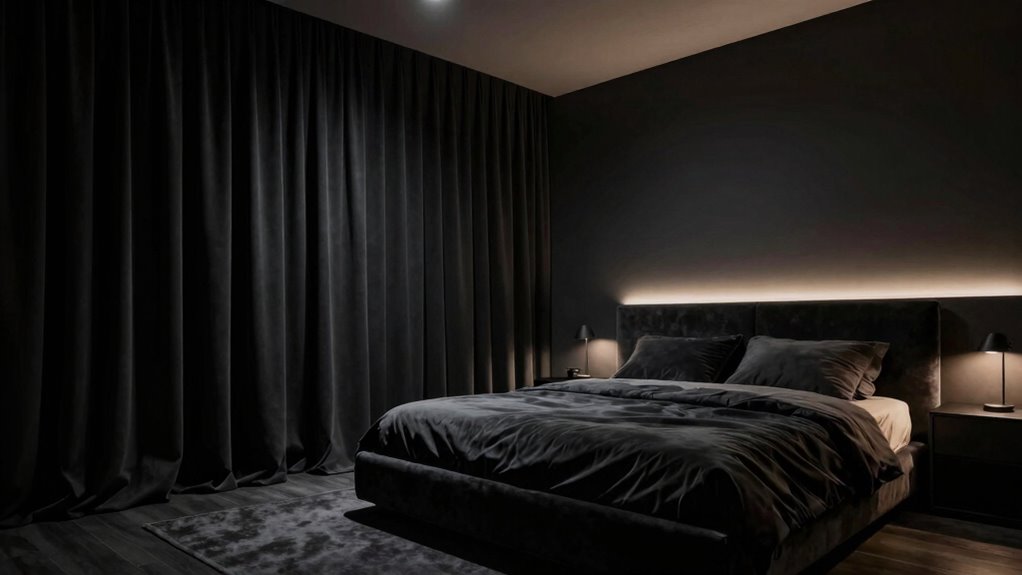
To block out unwanted light, consider using heavy curtains or blinds that fit snugly over your windows. Layering window coverings, like adding blackout shades behind curtains, can considerably improve darkness. With the right arrangement, your bedroom will feel much cozier and more restful at night.
Use Heavy Curtains or Blinds
Heavy curtains or blinds are one of the most effective ways to block out unwanted light and create a darker sleeping environment. They help reduce light pollution from streetlights or passing cars, ensuring your room stays dark all night. Look for blackout fabrics, which are specially designed to absorb light and prevent it from seeping in through windows. When choosing your window coverings, consider these options:
- Thick, plush curtains that hang close to the wall
- Blackout blinds with a tight seal
- Layering curtains and blinds for extra darkness
- Installing a rod that extends beyond the window frame
- Using tiebacks to keep curtains fully closed
These simple steps can transform your bedroom into a dark, cozy retreat, promoting better sleep and reducing nighttime disturbances.
Add Layered Window Coverings
By combining different window treatments, you can maximize darkness in your bedroom and block out more light. Layered window coverings are a practical solution, giving you flexibility and enhanced light control. Start with blackout curtain options, which are designed to block most light and prevent it from seeping through gaps. Add a set of blinds or shades underneath to further improve darkness and adjust light levels during the night. This layering not only increases privacy but also minimizes light leaks around the edges. Make sure each layer fits snugly to prevent any gaps where light can escape. With this approach, you’ll create a more restful sleeping environment, ensuring your bedroom feels truly dark and cozy at night.
Troubleshooting Light Leaks and Maintaining a Dark Room
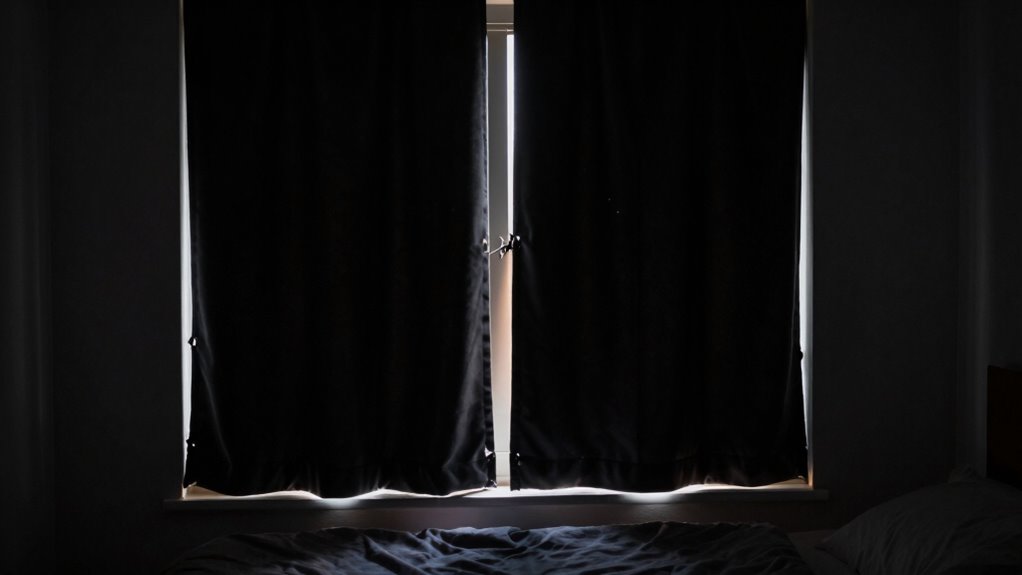
Light leaks are a common cause of a bedroom feeling too bright at night, and identifying them is the first step toward creating a darker environment. Light pollution from outside or interior lighting can seep through gaps, making your room brighter than desired. To troubleshoot, check for tiny cracks around windows, door frames, or outlets where light might escape. Seal gaps with weatherstripping or blackout tape. Consider using blackout curtains or adding a fabric layer behind blinds to block residual light. Also, switch off or cover any unnecessary interior lighting, like LEDs or digital displays, that might contribute to unwanted illumination.
- Inspect window frames and door seals for cracks
- Use blackout tape or weatherstripping
- Add extra layers of window coverings
- Cover or turn off interior lights
- Use a sleep mask to block remaining light
Frequently Asked Questions
Can Blackout Curtains Be Harmful to Sleep Quality?
Blackout curtains aren’t harmful to your sleep quality; in fact, they can improve it by blocking out light. Different blackout curtain types use various dyeing techniques to guarantee complete darkness, which helps regulate your sleep cycle. Just make sure you choose high-quality curtains that fit well and are free of harmful dyes. Properly installed blackout curtains create a dark, cozy environment, promoting better rest and overall sleep health.
Are There Specific Colors That Help Reduce Light Reflection?
You should choose colors based on color psychology and their ability to improve light absorption. Darker shades like deep blue, charcoal, or muted greens help reduce light reflection and create a calming environment. These colors absorb more light, minimizing glare and making your bedroom feel darker at night. Opt for matte finishes to enhance light absorption further. By selecting these hues, you’ll enjoy a more restful, less reflective sleeping space.
How Does Room Ventilation Affect Perceived Brightness?
Think of your room as a cozy cave; good ventilation keeps the darkness deep and inviting. When you improve window insulation and boost air circulation, you prevent outside light from sneaking in and reduce glare, making your space feel dimmer. Proper airflow also helps your brain relax, enhancing your sleep quality. So, by managing ventilation, you control the perceived brightness, turning your room into a restful retreat.
Can Plants Help in Darkening a Room Naturally?
Plants can help in darkening a room naturally through strategic plant placement and natural shading. By positioning tall or dense plants near windows or light sources, you create a barrier that blocks excess light, reducing brightness. Use plants with broad leaves to maximize shading and place them thoughtfully to avoid blocking airflow. This natural approach enhances comfort without relying solely on curtains or blinds, making your room darker and more restful.
What Safety Measures Should I Consider With DIY Blackout Solutions?
Think of your safety as the sturdy foundation of your sleep sanctuary. When creating DIY blackout window treatments, guarantee cords are secured and out of reach to prevent accidents. Use non-toxic, flame-retardant fabrics for peace of mind. Double-check that all materials are stable and won’t fall or cause injury. By prioritizing safety precautions, you turn your darkened dream space into a cozy, secure retreat where restful nights flourish.
Conclusion
Just like a fortress guarding its secrets, your bedroom can become a sanctuary of darkness with the right strategies. By identifying light sources, choosing smart coverings, and arranging your space thoughtfully, you turn the night into your ally. Remember, even in the darkest hours, a little effort keeps your room serene—so you can rest like a hero in your own shadowed haven. Embrace these tips and reclaim your peaceful, night-friendly space.
Fall Picks
fall essentials
As an affiliate, we earn on qualifying purchases.