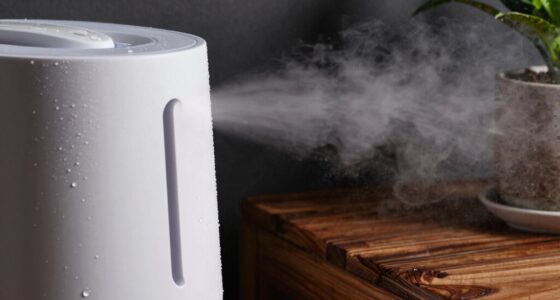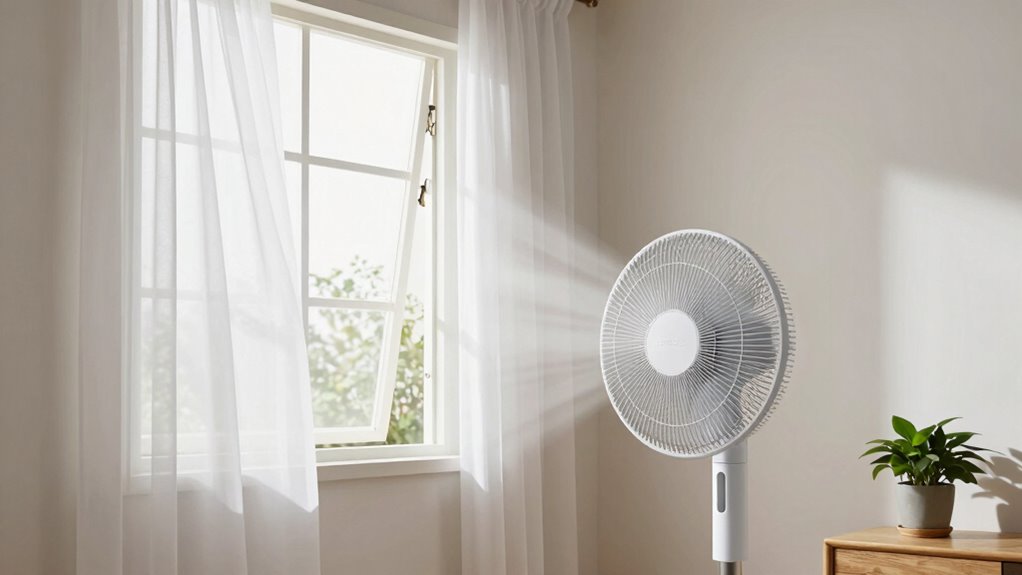

To improve airflow in a stuffy room, start by opening windows on opposite sides to create cross-ventilation. Fully open doors and remove any blockages like furniture from vents or windows. Use fans, placing them strategically near windows or doors to pull in fresh air or push out stale air. Rearrange furniture to keep pathways clear, and maintain your ventilation filters and systems. Adding indoor plants can also naturally improve air quality. If you want more tips, keep exploring these steps.
Key Takeaways
- Open windows on opposite sides of the room to create natural cross-ventilation.
- Fully open doors and seal gaps with weatherstripping to improve airflow pathways.
- Use ceiling and oscillating fans to circulate air effectively throughout the space.
- Rearrange furniture to clear airflow routes and prevent blockages near vents and windows.
- Add indoor plants or natural air purifiers to enhance air freshness and reduce stuffiness.

Lasko Wind Machine Fan, Air Circulator Fan with 3 Speeds, 20" Model 3300, Gray
3 HIGH-PERFORMANCE SPEEDS: Enjoy custom cooling comfort with this powerful fan featuring three high-performance speeds; great floor fans…
As an affiliate, we earn on qualifying purchases.
As an affiliate, we earn on qualifying purchases.
Why Good Airflow Is Key to a Comfortable Room
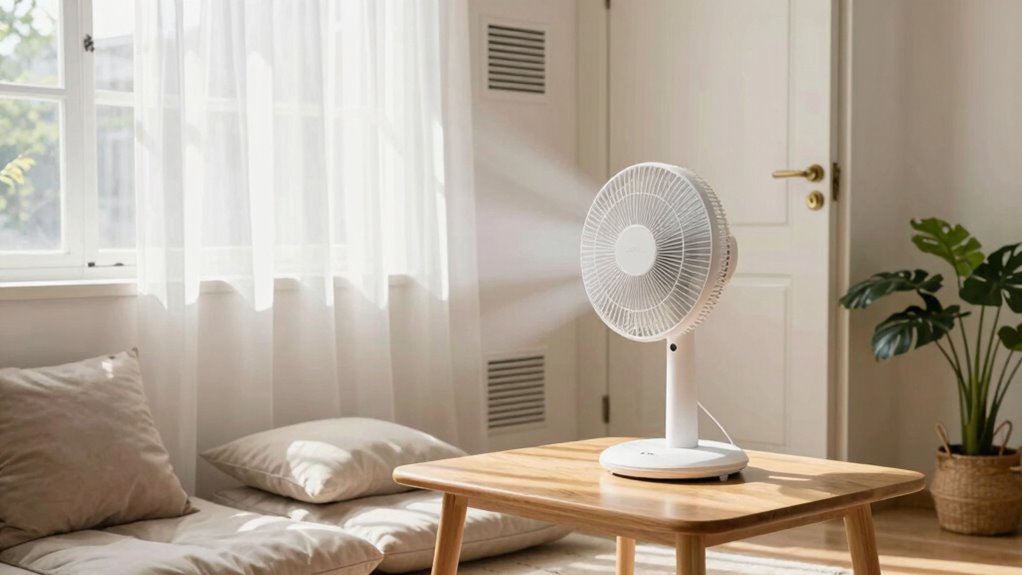
Good airflow is essential for creating a comfortable room because it helps regulate temperature and keeps the air fresh. When air circulates well, it improves air quality by reducing indoor pollutants and excess humidity. Efficient ventilation ensures that stale air is replaced with fresh air, preventing stuffiness and odors. Proper airflow also supports your health by minimizing airborne allergens and pollutants. You’ll notice a more pleasant environment when the ventilation efficiency is high, making your space feel less confined or claustrophobic. Good airflow isn’t just about comfort but also about maintaining a healthier living space. By guaranteeing proper circulation, you create an atmosphere where you can breathe easier and stay more alert. Additionally, understanding indoor air quality gear can help you select the right solutions to enhance airflow in your space. Recognizing the importance of ventilation systems can guide you toward effective improvements. Ultimately, good airflow is the foundation of a room that feels fresh, clean, and inviting, especially when you optimize airflow patterns to suit your environment. Incorporating proper airflow management can further enhance your space’s overall comfort and health benefits.

6 Inch Fresh Air Intake Inline Filter Box With 3 Layers Pre-filter Activated Carbon and HEPA filter HVAC System Heating And Cooling Ventilation
1. For Hvac System To Box|High-Efficiency Filtration:Equipped with a HEPA filter, this inline filter box traps dust, dirt,…
As an affiliate, we earn on qualifying purchases.
As an affiliate, we earn on qualifying purchases.
Figuring Out What’s Causing Your Room to Feel Stuffy
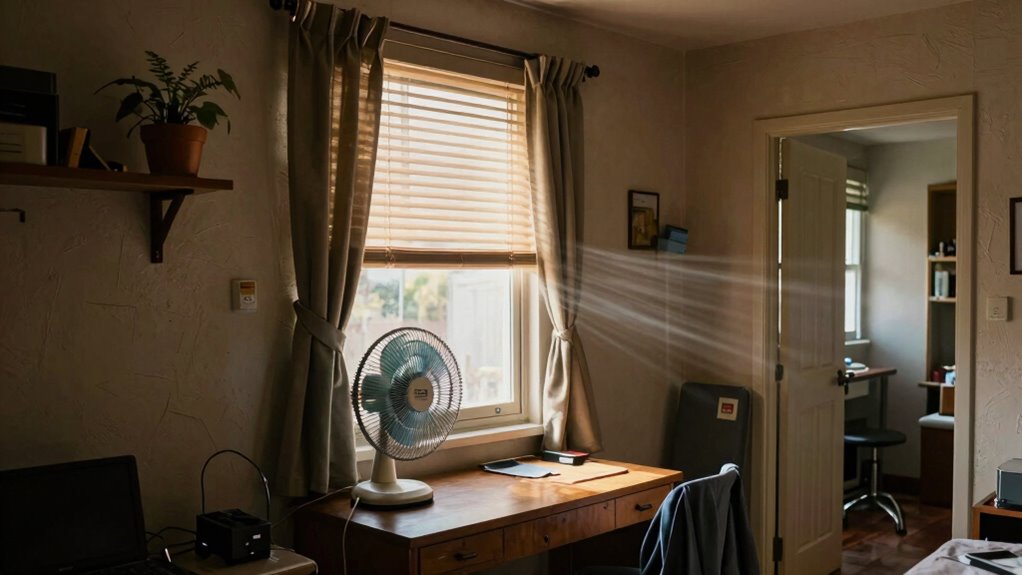
Have you ever walked into a room that feels heavy or stagnant despite having the windows open? If so, it’s time to identify the cause. First, check airflow sensors—these devices can signal if airflow is blocked or uneven. Next, inspect ventilation filters; clogged filters restrict air circulation and trap stale air. Consider the following:
If a room feels heavy, check airflow sensors and ventilation filters for blockages or malfunctions.
- Blocked vents or registers
- Dirty or clogged ventilation filters
- Malfunctioning airflow sensors
- Poor placement of furniture obstructing airflow
- The presence of cultural elements such as halal decor that may influence room layout and airflow patterns, potentially affecting ventilation efficiency and airflow balance. Additionally, microplastics in dust can accumulate in ventilation systems, further impairing air quality and circulation. Improving airflow dynamics can significantly enhance overall room freshness and comfort.
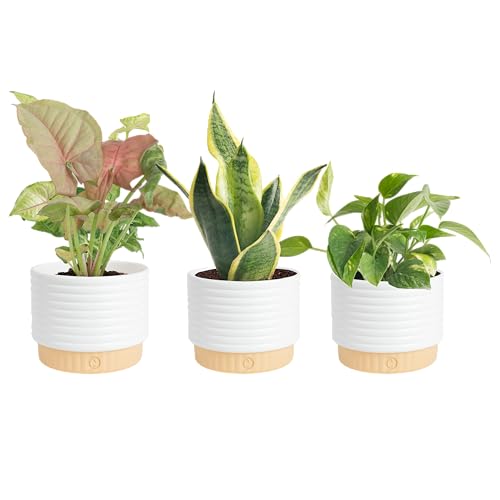
Costa Farms Live Indoor House Plants (3-Pack), Hand Selected Easy to Maintain Indoor Assorted Houseplants in Plant Pots, Curated Air Purifying Mix, Low Light, Home Office Decor Plant Gift
THE PERFECT MOTHER'S DAY GIFT: Treat Mom to a curated bundle of three beautiful live houseplants, perfect for…
As an affiliate, we earn on qualifying purchases.
As an affiliate, we earn on qualifying purchases.
How to Open Windows and Doors for Better Airflow
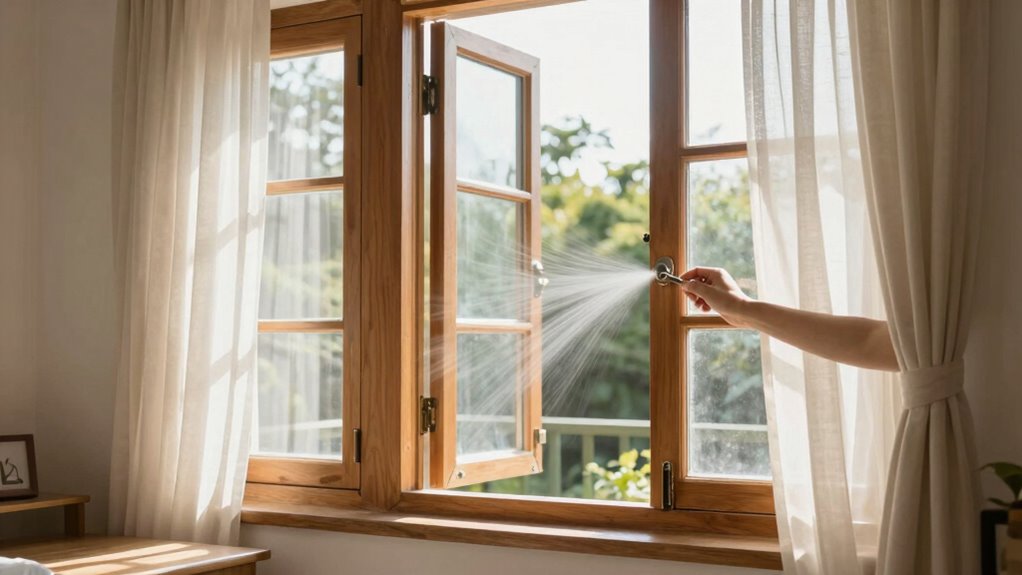
To maximize airflow, consider the placement of your windows and doors to create natural cross-ventilation. Opening doors strategically can also help direct air through your space effectively. By understanding ideal window positions and door strategies, you can markedly improve your indoor air quality. Additionally, using adaptive, long-term structures can help maintain better airflow over time.
Optimal Window Placement
Are you maximizing your windows and doors for ideal airflow? Proper window placement can make a big difference in ventilating a stuffy room. Focus on window orientation—opening windows on opposite sides of the room creates a natural cross-breeze that clears stale air. Be mindful of exterior obstructions like trees, buildings, or fences that block airflow; choose windows free of these barriers. Incorporating AI-driven climate insights can help determine the best window positioning based on local airflow patterns. Additionally, understanding airflow dynamics can assist in optimizing window operation for continuous ventilation. Recognizing ventilation principles can further enhance your ability to utilize natural airflow effectively. Considering natural ventilation strategies, such as the timing of opening and closing windows, can significantly improve air circulation. Implementing proper window operation techniques ensures that fresh air circulates efficiently, transforming your space into a cooler, more comfortable environment.
Effective Door Strategies
Maximizing airflow isn’t just about where you place your windows; it also depends on how you open and coordinate your doors and windows. To improve ventilation, guarantee your doors are fully open when possible, creating a clear path for air to flow through. Check door seals and replace any that are worn or damaged, as they can restrict airflow and trap stale air inside. Pay attention to threshold gaps—small spaces at the bottom of doors—since sealing these gaps with weatherstripping can help control airflow direction. When opening doors, create a cross-breeze by positioning them opposite windows or vents. Properly managing door seals and threshold gaps ensures smoother airflow, reducing stuffiness and promoting fresh air circulation in the room.

Prime-Line U 9939 Wood Window Vent Lock (2 Pack)
Typically mounts onto the edge of the upper vertical sliding window used to secure in a closed or…
As an affiliate, we earn on qualifying purchases.
As an affiliate, we earn on qualifying purchases.
Using Fans to Improve Indoor Air Circulation
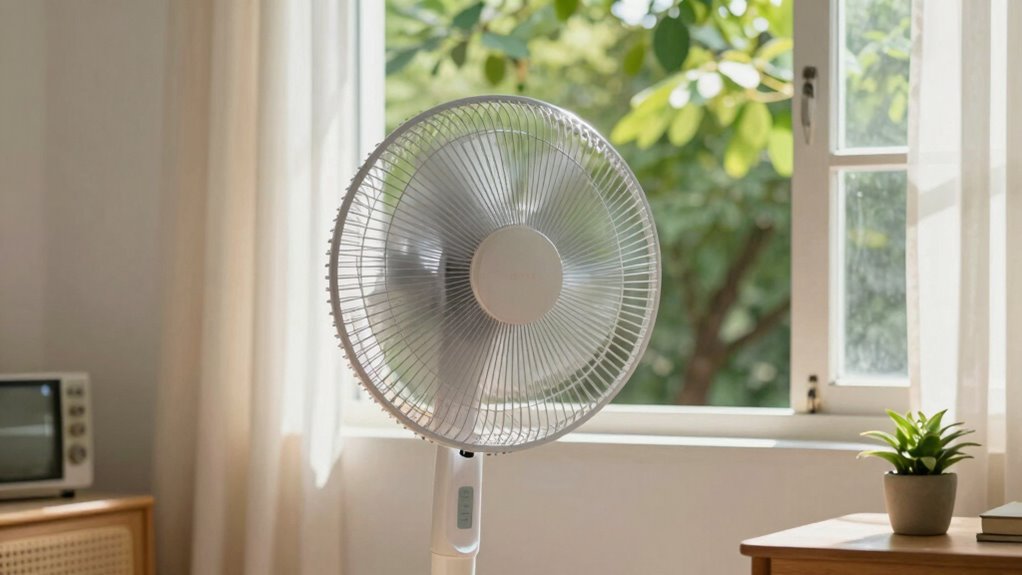
To boost indoor airflow with fans, you need to consider the best placement—positioning fans where they can move air effectively. Ceiling fans are especially useful for circulating air across the entire room, while oscillating fans help cover wider areas. Using the right type of fan in the right spot can make a noticeable difference in air quality and comfort. Additionally, proper fan placement can optimize air circulation protocols, ensuring more consistent airflow throughout the space. Ensuring proper fan positioning also minimizes dead zones where air may stagnate, further enhancing ventilation. Employing safety tips for DIY installation can help prevent accidents and ensure fans are securely mounted for optimal airflow.
Optimal Fan Placement
Proper fan placement is essential for enhancing indoor air circulation effectively. To maximize airflow patterns and boost fan efficiency, position fans where they can move air across the room’s occupied areas. Place fans near windows or doorways to draw in fresh air or push stale air out. Avoid blocking airflow with furniture or walls, which hampers circulation. For best results, set fans at an angle to direct air toward the center of the room or toward vents and openings. Keep fans at a height where they can circulate air evenly without creating turbulence. Additionally, using fans with optimal airflow design can further enhance circulation efficiency. Incorporating smart fan controls can help automate fan operation based on room conditions, ensuring consistent airflow. Ensuring fans are the correct size for the space is also crucial for effective air movement. Remember, strategic placement ensures air moves smoothly, reducing stuffiness and improving comfort.
Use Ceiling Fans
Have you considered how ceiling fans can boost your indoor air circulation? Proper ceiling fan installation ensures even airflow throughout the room, helping to reduce stuffiness. Once installed, adjusting the fan speed settings can markedly improve air movement; running the fan at a higher speed creates a steady breeze that helps circulate stale air. In warmer months, set the fan to rotate counterclockwise to push air downward, creating a cooling effect. During cooler months, reverse the direction to pull air upward, distributing warm air more evenly. Ceiling fans are a simple, cost-effective way to enhance airflow without cluttering your space. Regular maintenance, like cleaning the blades, keeps the fan operating efficiently and maximizes its air circulation benefits. Exploring wall art trends, such as digital frames and interactive murals, can also improve your space’s ambiance and air quality by making it feel more inviting. Additionally, choosing energy-efficient fans with eco-friendly features can reduce your environmental impact while maintaining optimal airflow. Properly selecting and positioning ceiling fan size ensures the most effective air circulation tailored to your room’s dimensions, especially when considering the room’s airflow patterns for optimal comfort.
Oscillating Fan Benefits
Oscillating fans are an effective way to distribute air evenly throughout your space, preventing hot or stuffy spots. They improve airflow by moving air across different areas, making the room feel cooler and more comfortable. One of the key oscillating fan benefits is their ability to cover a wider area compared to stationary fans, ensuring consistent circulation. Additionally, oscillating fans are energy efficient, providing effective airflow without markedly increasing your electricity bills. They’re easy to operate and adjustable, allowing you to customize the direction and speed. Using oscillating fans can also help reduce reliance on air conditioning, further saving energy. Overall, they’re a simple, cost-effective solution to enhance indoor air circulation and improve room comfort.
- Wide coverage area
- Adjustable oscillation settings
- Energy-efficient operation
- Cost-effective cooling solution
Rearranging Furniture to Help Air Move Freely
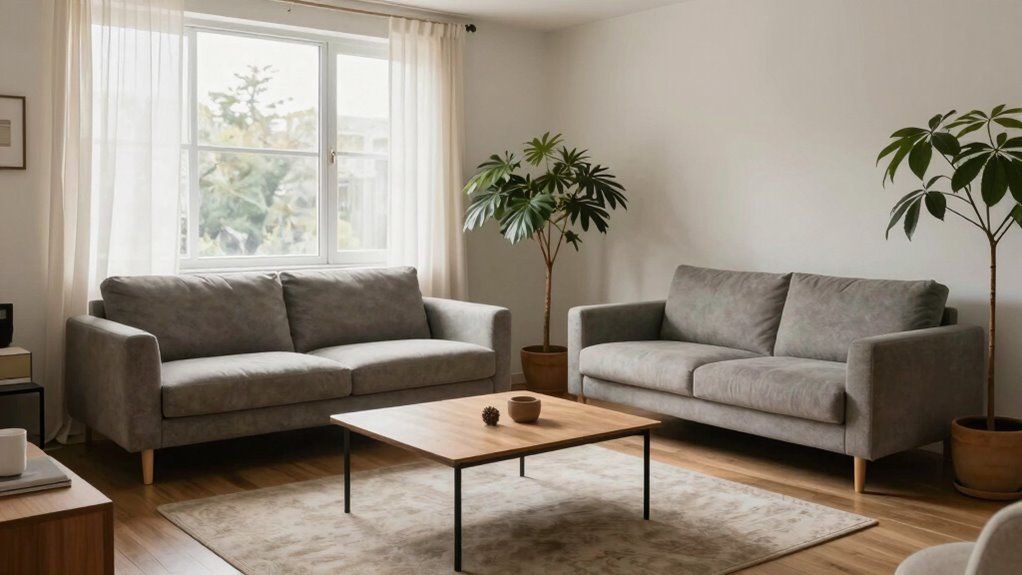
To improve airflow in your space, start by rearranging your furniture to create clear pathways for air to circulate freely. Proper furniture arrangement avoids blocking vents or windows and encourages smooth airflow throughout the room. Arrange larger pieces like sofas and cabinets against walls, leaving enough space to prevent congestion. Use the table below to guide your layout:
| Furniture Piece | Ideal Placement | Airflow Pathway Tip |
|---|---|---|
| Sofa | Against wall | Keep central areas open |
| Coffee table | Away from vents | Avoid obstructing air routes |
| Bookshelves | Near corners | Leave gaps for circulation |
Effective airflow pathways depend on strategic placement, ensuring air can move unobstructed and refresh the room efficiently.
Maintaining Your Ventilation Systems for Fresh Air
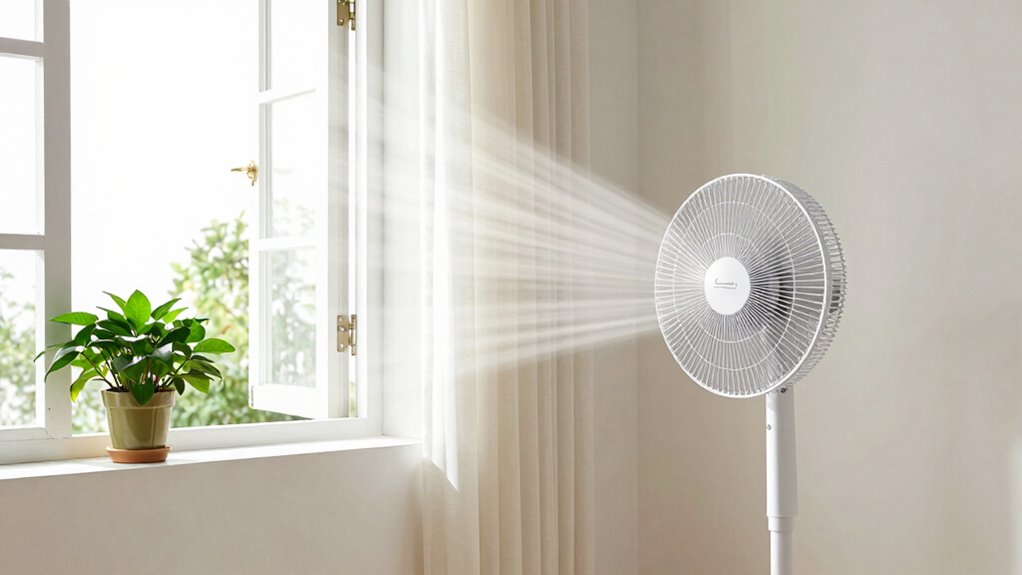
Regularly maintaining your ventilation systems guarantees they operate efficiently and provide fresh air. Proper upkeep ensures air filter maintenance is current, preventing dust and allergens from circulating. Check and replace filters as needed, especially if airflow seems reduced. Humidity control is essential; keep levels balanced to prevent mold and musty odors that hinder air quality. Regularly inspect vents and ducts for blockages or dust buildup. Keep fans and exhaust systems clean to ensure they work effectively. Additionally, verify that vents aren’t obstructed by furniture or debris. Proper maintenance prolongs system lifespan and guarantees continuous fresh airflow.
- Change air filters regularly
- Monitor and adjust humidity levels
- Clean vents and ducts periodically
- Inspect fans and exhausts for blockages
Adding Plants and Natural Purifiers to Boost Air Quality
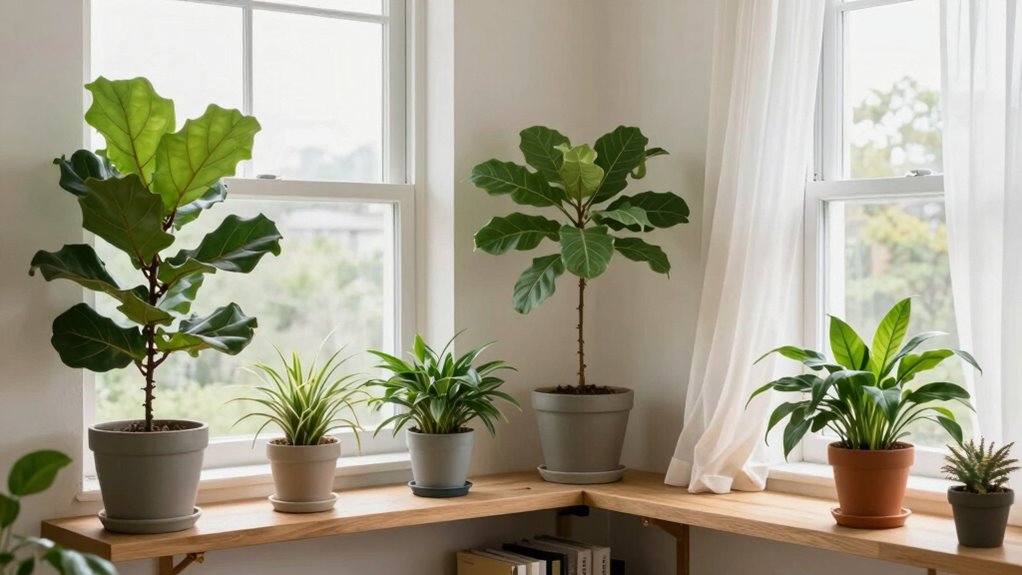
Incorporating indoor plants and natural air purifiers can substantially enhance your home’s air quality. Indoor plants like snake plants, pothos, and peace lilies naturally filter toxins and release oxygen, making the air fresher and healthier to breathe. Natural purifiers such as activated charcoal and bamboo charcoal absorb odors and pollutants without chemicals, improving air clarity. Placing a few well-chosen plants around your room not only beautifies the space but also boosts humidity and reduces airborne contaminants. Regularly watering and maintaining your plants guarantees they stay effective. By adding these natural elements, you create a cleaner, more breathable environment, which can help alleviate stuffiness and improve airflow naturally. This simple step makes a noticeable difference in indoor air quality with minimal effort.
Frequently Asked Questions
How Often Should I Clean or Replace My Air Filters?
You should clean or replace your air filter every 1 to 3 months to guarantee ideal filter maintenance. The air filter lifespan varies depending on usage, filter type, and indoor air quality. Regularly checking your filter helps prevent buildup, maintains airflow, and improves air quality. Don’t wait until it’s visibly dirty—replacing it on a consistent schedule keeps your space fresh and ensures your HVAC system runs efficiently.
Can Air Purifiers Effectively Reduce Indoor Odors?
Think of an air purifier as a detective sniffing out odors—you’ll find it effective for reducing indoor smells. While some air purifier myths suggest they eliminate all odors instantly, they work best with proper odor removal techniques like regular cleaning and ventilation. Using an air purifier alongside these methods boosts air quality, making your space fresher. Just remember, it’s not magic—consistent upkeep is key to odor control.
What Are the Signs of Poor Ventilation in a Room?
You notice poor ventilation when air quality indicators like musty smells, condensation, or visible mold appear. You might also feel stuffy, dizzy, or have headaches. Conduct a ventilation assessment by checking for drafts, ensuring vents are open, and observing window airflow. If these signs persist, it indicates your room needs better airflow, prompting you to improve ventilation for healthier indoor air quality.
How Does Humidity Affect Indoor Air Quality?
Sure, high humidity makes your indoor air quality worse—who would’ve guessed? Humidity control is key because excess indoor moisture promotes mold, dust mites, and musty odors, making the air uncomfortable and unhealthy. Low humidity can dry out your skin and irritate your respiratory system. So, keeping humidity levels balanced helps improve air quality, creating a more comfortable, healthier environment where you can breathe easier and avoid that stuffy, damp feeling.
Are There Safe Ways to Introduce Fresh Air Without Drafts?
Yes, you can introduce fresh air safely through natural ventilation while preventing drafts. Keep windows slightly open on opposite sides of the room to encourage airflow without creating strong gusts. Use draft stoppers or weather stripping around window frames to minimize unwanted drafts. Additionally, consider installing adjustable vents or using ceiling fans on low speed to circulate fresh air gently, maintaining comfort and improving indoor air quality safely.
Conclusion
By following these simple steps, you’ll breathe invigorating life into your stuffy room, turning it into a breezy oasis. Think of airflow as a gentle river, carrying away stale air and inviting in lively, crisp currents. With open windows, fans, and a little rearranging, you’ll create a revitalizing breeze that dances through your space. Soon, your room will feel like a breath of fresh mountain air—invigorating, open, and full of life.