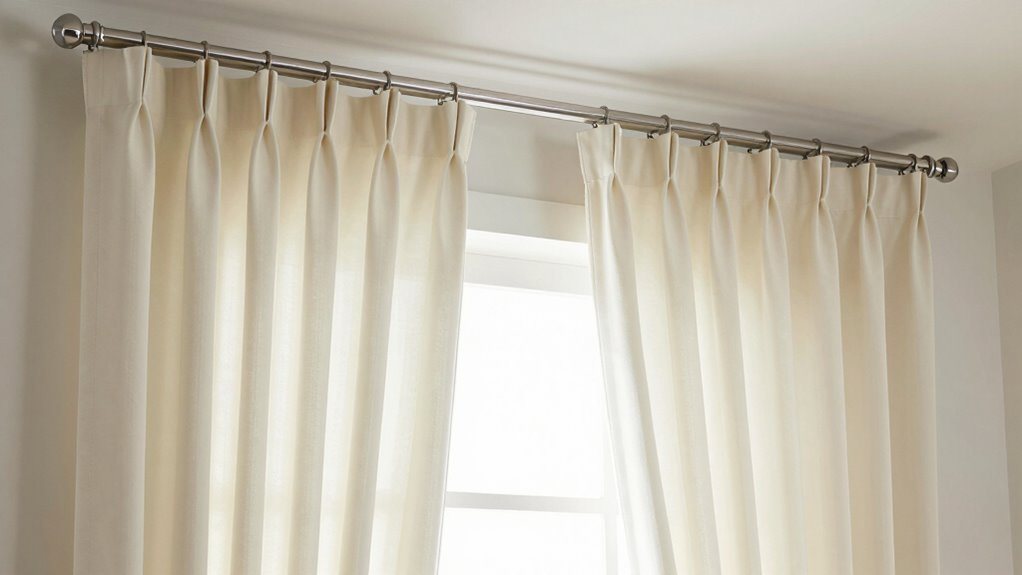

To hang curtains evenly, start by accurately measuring your window and curtain area, including extra inches for fullness and hardware support. Use a level to mark precise spots for your curtain rod, ensuring straight alignment. Choose sturdy hardware and install it carefully, double-checking measurements and levelness. Hang curtains in sections, then fine-tune for a seamless look. Continue exploring these tips to master a polished, professional finish effortlessly.

Get the latest gadgets delivered free — and shop member deals
- Fast, free delivery on millions of items
- Access to Prime Big Deal Days deals on October 6–7
- Prime Video, Amazon Music and more included
Key Takeaways
- Measure window width and add extra inches for fullness and support before purchasing hardware.
- Use a level to ensure curtain rods are perfectly horizontal during installation.
- Mark mounting points precisely with painter’s tape or a pencil for accurate placement.
- Double-check all measurements and levelness before drilling to prevent tilting or uneven hanging.
- Adjust and fine-tune the curtains after hanging for a polished, professional appearance.
As an affiliate, we earn on qualifying purchases.
Why Even Spacing Makes Your Curtains Look Professional

Even spacing between your curtains and their mounting points can markedly enhance the overall look of your window treatment. When you guarantee equal gaps, you create symmetry balance, which is key to a polished, professional appearance. This consistent spacing helps your curtains hang evenly, avoiding awkward bunching or sagging that can disrupt the aesthetic harmony of your space. Proper spacing highlights the clean lines and structure of your curtains, making your window look more intentional and refined. It also draws the eye evenly across the window, reinforcing a sense of order and design cohesion. Additionally, paying attention to mount leveling can prevent uneven sagging and ensure your curtains stay aligned over time. Being mindful of installation techniques and hardware choices can further improve the durability and appearance of your window treatment. To achieve this, using a level during installation is a simple yet effective way to maintain consistent spacing and alignment accuracy. Moreover, understanding the importance of window measurements can help you select the right curtain size and placement for a flawless look.
As an affiliate, we earn on qualifying purchases.
Measure Your Window and Curtain Area Accurately
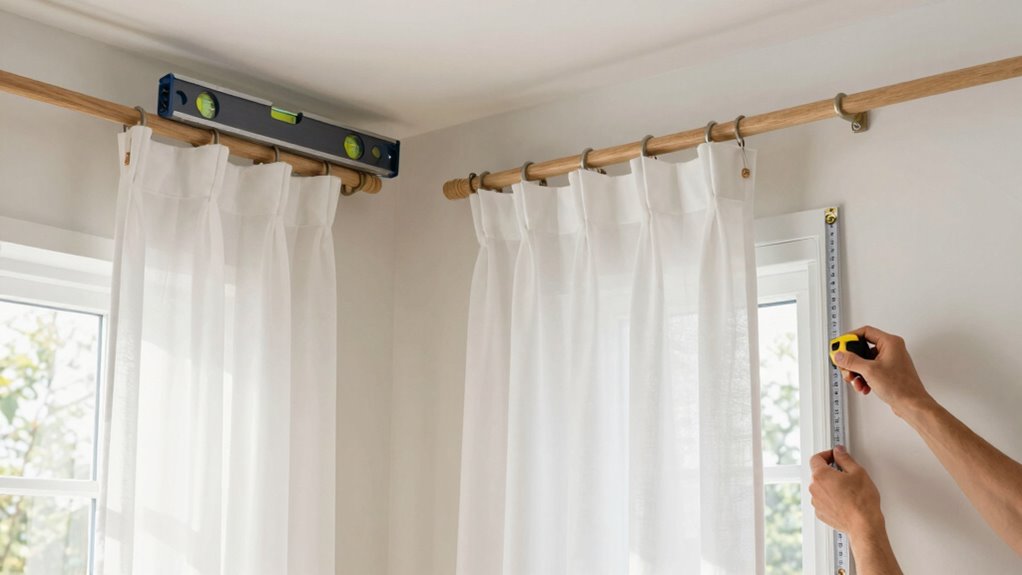
Start by grabbing a measuring tape to get precise dimensions of your window and wall area. Be sure to measure both the width and height, noting each number carefully. Record all your measurements so you can plan your curtain placement accurately. Additionally, consider proper storage of your measurements and tools to ensure accuracy during your project. Keeping your measurements organized can help prevent errors and streamline the installation process, especially when working with accurate measurements for a professional-looking finish. Using ergonomic techniques when measuring can also reduce fatigue and improve precision throughout the process. Remember that contrast ratio and other projector specifications can influence how you plan your space, ensuring your curtains do not block or interfere with the optimal viewing area. Incorporating mindful planning can further enhance your overall project efficiency and satisfaction.
Use a Measuring Tape
To make certain your curtains hang evenly, it’s essential to measure your window and curtain area accurately. Grab a measuring tape and determine the width and height of your window, plus the space where you’ll hang the curtain rod. Knowing these measurements helps you choose the right fabric selection for your curtains, ensuring they’re not too heavy or lightweight. Accurate measurements also guide your selection of curtain rod styles, so they fit properly and support the fabric without sagging. Be precise with your measurements, including extra inches for hems and hems allowances, to avoid surprises later. Using a measuring tape guarantees your curtains will hang evenly, look professional, and complement your space perfectly, saving you time and frustration during installation. Proper measurement is a crucial step in achieving a polished and balanced curtain setup. Additionally, understanding curtain weight can help you select the appropriate fabric and hardware to ensure durability and proper drape over time. Knowing your hardware support needs is equally important to prevent sagging and maintain the desired look. Taking into account installation height can also impact how your curtains fall and how easily they can be opened or closed. Being aware of fabric type can further influence the overall appearance and functionality of your curtains.
Measure Wall and Window
Measuring your wall and window accurately is essential before hanging curtains, as it guarantees they fit perfectly and hang evenly. Start by determining the width and height of your window, considering the curtain fabrics you plan to use. If you want a fuller look, add extra inches to the width when measuring. Don’t forget to measure the distance from the window frame to where you want the curtain rod to sit, ensuring decorative rods are positioned correctly for aesthetics and function. Accurate measurements help you choose the right curtain length and rod placement, preventing sagging or bunching. Keep your tape straight and steady for precise readings. Taking these measurements carefully ensures your curtains will hang evenly and look polished once installed. Understanding the significance of precise measurements can help prevent common hanging errors and create a balanced, harmonious appearance. Additionally, being mindful of common measuring mistakes can improve your overall results and save time during installation. Incorporating the proper measuring techniques can further enhance your curtain-hanging success.
Record Your Measurements
How can you guarantee your measurements are accurate enough for perfectly hung curtains? Start by recording precise measurements of your window and curtain area. Use a tape measure to note the width and height, ensuring you include extra inches for fabric selection and curtain rod styles. Remember, choosing the right fabric impacts how much fullness your curtains need, so measure accordingly. For the curtain rod, measure the distance beyond the window frame to allow the rod to extend past the window edges—this helps create a fuller, more elegant look. Double-check your measurements before purchasing fabric or curtain hardware. Accurate measurements prevent gaps, uneven hems, and ill-fitting curtains, making the entire hanging process smoother and more successful. Additionally, understanding the importance of measurement accuracy can help you achieve a professional-looking finish, especially when considering backyard transformation essentials that require precise planning. Paying close attention to measurement precision ensures your curtains hang evenly, enhancing the overall aesthetic of your space. Being aware of measurement consistency can also minimize errors during installation, leading to a more polished result.
As an affiliate, we earn on qualifying purchases.
Pick the Right Hardware for an Even Curtain Hang
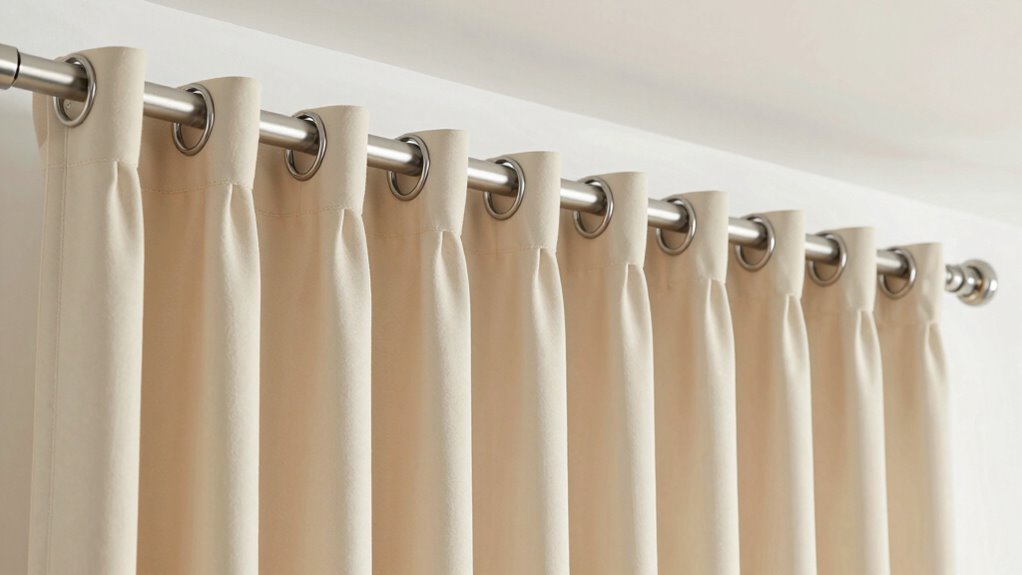
Choosing the right hardware sets the foundation for a balanced curtain hang. You’ll need to pick the appropriate types and measure carefully for proper spacing. Doing this guarantees your curtains hang evenly and look polished. Additionally, incorporating curtain accessories like specialized brackets or hooks can further enhance stability and appearance. When selecting hardware, consider leadership qualities such as attention to detail and strategic planning, which ensure your project is executed smoothly and with precision. Being mindful of ethical consumer choices can also help you select sustainable and responsibly sourced materials, contributing to a more environmentally friendly home decor. Recognizing potential early warning signs in your hardware options can prevent issues later on, ensuring your curtains stay secure over time.
Choose Appropriate Hardware Types
Selecting the right hardware is vital for achieving a neat, even curtain hang. You want to choose hardware that supports your curtain weight and complements your room’s style. Consider your curtain rod materials, such as metal or wood, which impact durability and appearance. Wall anchors are indispensable if you’re installing into drywall—they guarantee your hardware stays secure and prevents sagging.
Here are key points to keep in mind:
- Match curtain rod materials to your decor and weight needs
- Use strong wall anchors for heavy curtains or drywall installation
- Select hardware that can support the length and weight of your curtains
Proper hardware choices prevent uneven hanging and ensure your curtains stay perfectly aligned.
Measure for Proper Spacing
Measuring for proper spacing guarantees your curtains hang evenly and look polished. To verify this, select the right hardware based on your fabric selection and curtain rod style. Different fabrics may require sturdier rods or lighter options, while various styles can influence the spacing needed for a balanced look. Use the table below to determine your ideal measurements:
| Fabric Type | Curtain Rod Style | Recommended Spacing (inches) |
|---|---|---|
| Heavy | Decorative | 4-6 |
| Light | Minimalist | 2-3 |
| Sheer | Slim | 1-2 |
| Velvet | Ornate | 4-5 |
| Linen | Classic | 3-4 |
Accurate measurement ensures your curtains hang evenly, creating a sleek and polished appearance.
As an affiliate, we earn on qualifying purchases.
Mark Exactly Where Your Curtains Should Hang
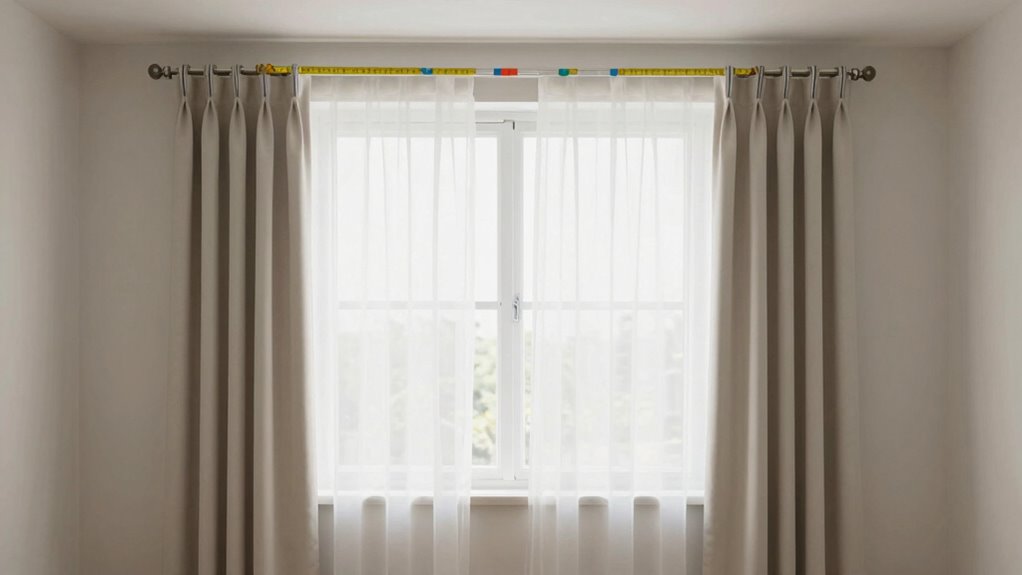
Before you start hanging your curtains, it’s crucial to mark exactly where they should hang. This ensures your curtains hang evenly and look polished. Consider your fabric selection, as heavier fabrics may require different placement than lighter ones. Take into account your chosen curtain rod styles, which influence the height and width of your marks. To make precise marks, use painter’s tape or a pencil to outline where the top of the curtain will sit. Keep these points in mind:
- Measure the width of your window and add extra for curtain fullness
- Decide on the curtain rod style and height for a balanced look
- Mark the ideal curtain height, considering fabric weight and style
These steps help you visualize the final look and make hanging your curtains straightforward.
Use a Level to Keep Your Curtain Lines Straight

Using a level is vital to guarantee your curtain lines stay straight and even. Before drilling, place the level on your marked line to ensure it’s perfectly horizontal. Proper drill placement is essential; a slight tilt can cause uneven curtains. Adjust the drill’s angle to match the level’s bubble, ensuring the curtain rod will hang straight. Pay close attention to curtain rod angles to prevent them from tilting or sloping. Double-check the level after each drill spot to maintain accuracy. This simple step helps you avoid crooked curtains and uneven gaps. Taking the time to use a level guarantees your curtains look polished and professional, saving you from future readjustments. It’s a small detail that makes a big difference in achieving a seamless, balanced look.
Hang Curtains in Sections for Better Alignment

Hanging curtains in sections can considerably improve alignment, especially on large or wide windows. This method allows you to focus on each part separately, ensuring even spacing and straight lines. When selecting fabric, choose materials that hang well and complement your curtain rod styles for a cohesive look. Using sections also helps you manage different fabric types or patterns more easily, avoiding bunching or uneven draping.
- Break wide windows into manageable sections for precise placement
- Match fabric weights and textures for seamless appearance
- Choose curtain rod styles that support sectional hanging for stability
This approach simplifies hanging, giving you better control over alignment and overall presentation. It’s particularly helpful when working with varied fabric selections or multiple curtain rod styles.
Adjust and Fine-Tune for a Seamless, Even Look
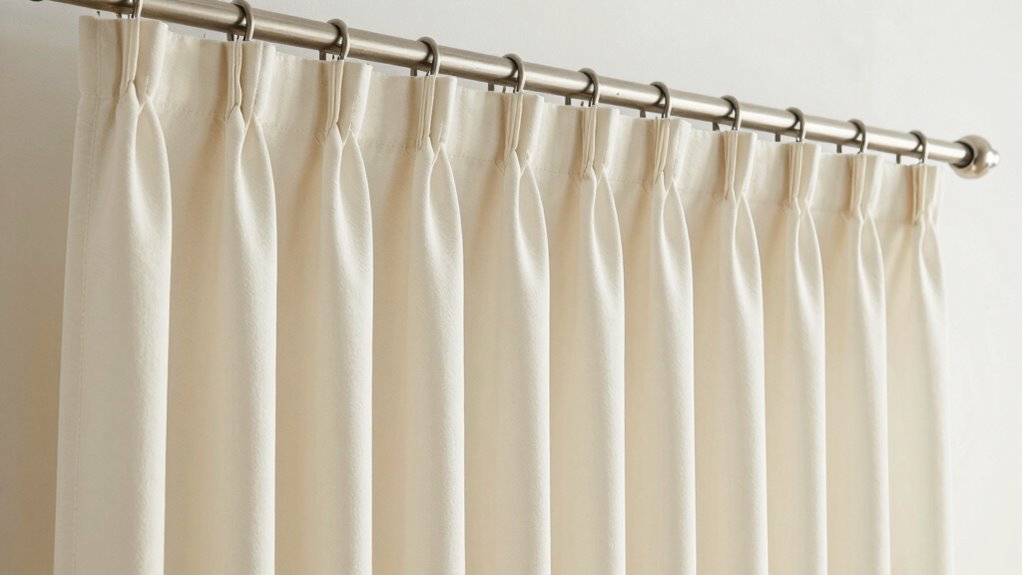
Once you’ve hung your curtains in sections, the final step is to adjust and fine-tune them for a seamless, even look. Start by checking the curtain fabric for any uneven draping or bunching, and gently straighten the fabric along the curtain rods. If some areas appear too long or short, adjust the curtain hooks or rings to level out the fabric. Make sure the curtain rods are perfectly level, as even a slight tilt can cause uneven hanging. Use a level tool if needed. Smooth out any puckering or gaps by repositioning the fabric and hooks. Small tweaks here make a big difference, ensuring your curtains hang evenly and look polished. With careful adjustment, you’ll achieve a professional, seamless finish.
Quick Fixes for Uneven Curtains After Hanging
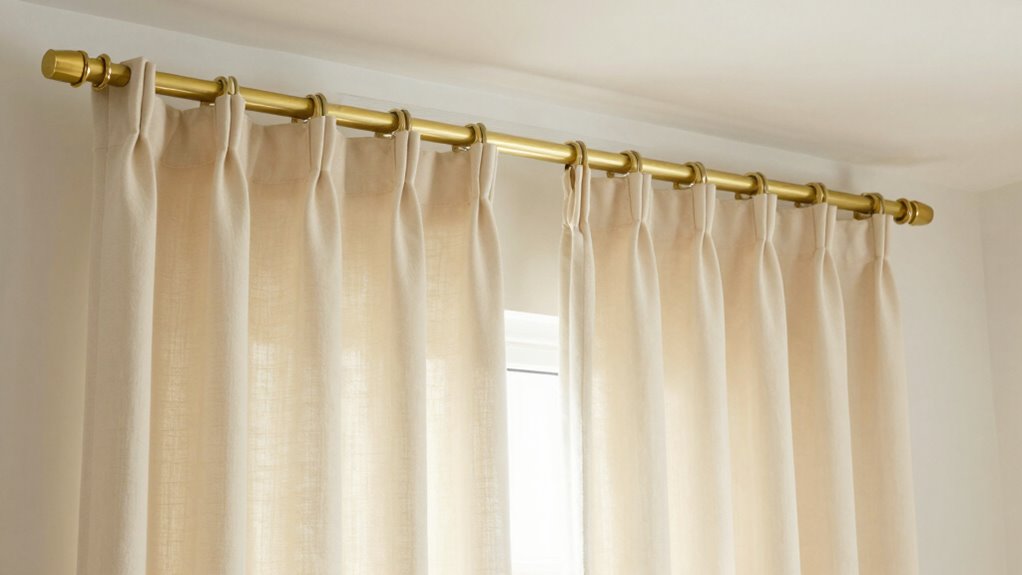
Sometimes, despite your careful adjustments, curtains still hang unevenly. To fix this quickly, consider adjusting the fabric choices—switch to heavier materials that hang more evenly or opt for fabrics with better weight distribution. Check your curtain rod styles; a sturdier, more secure rod can prevent sagging or uneven draping. You can also use small, discreet clips or curtain weights at the bottom edges to balance uneven hems. Additionally, ensure the curtain rings or hooks are evenly spaced, as uneven placement can cause imbalance. These simple tweaks can often correct hanging issues without re-hanging everything. Remember, choosing the right fabric and curtain rod style makes a significant difference in how evenly your curtains hang, reducing the need for constant adjustments.
Tips for Hanging Multiple Curtains Evenly and Efficiently
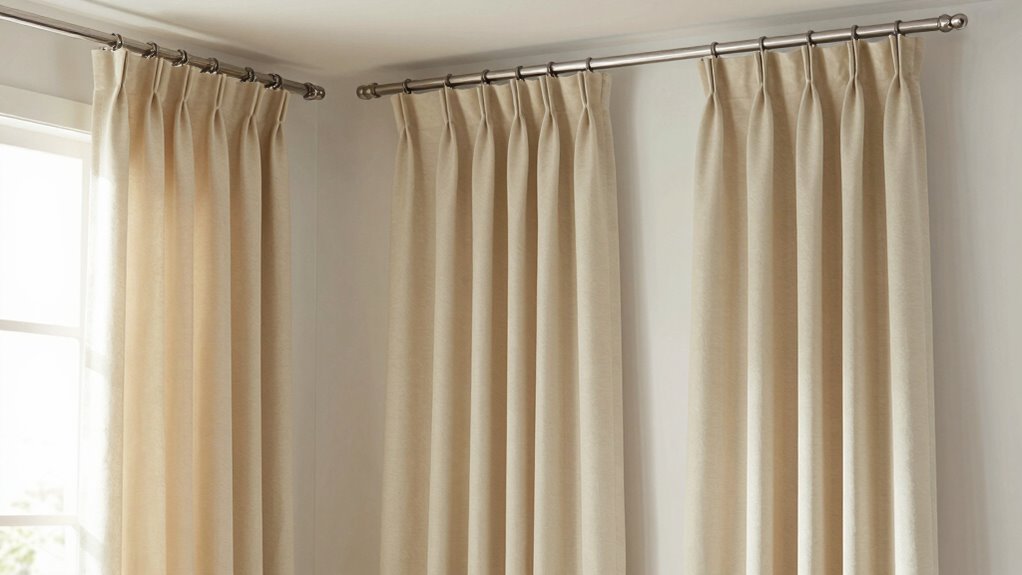
To guarantee multiple curtains hang evenly and look cohesive, start by measuring and marking each curtain placement accurately. Consider fabric patterns when spacing curtains to ensure designs align properly, especially with stripes or prints. Choose curtain styles with consistent rod placements to simplify hanging. Use a level to mark the same height on each wall, preventing uneven drapes. For multiple panels, hang them at the same distance from the wall’s edge to maintain symmetry. Group curtains with compatible styles and weights to avoid uneven sagging. When hanging different fabric types, adjust tension to prevent one from drooping. By planning your measurements carefully and paying attention to fabric patterns and curtain styles, you’ll achieve a polished, uniform look efficiently.
Frequently Asked Questions
How Can I Hide Curtain Hardware for a Cleaner Look?
You can hide curtain hardware by using curtain rod covers, which slip over the rod for a seamless look. Alternatively, explore decorative hardware options like finials or sleek brackets that blend with your decor, reducing visual clutter. These choices give your window treatments a cleaner, more polished appearance, making the hardware less noticeable while adding style. Just select the right covers or hardware that complement your curtains and room design.
What Tools Are Essential for Hanging Curtains Evenly?
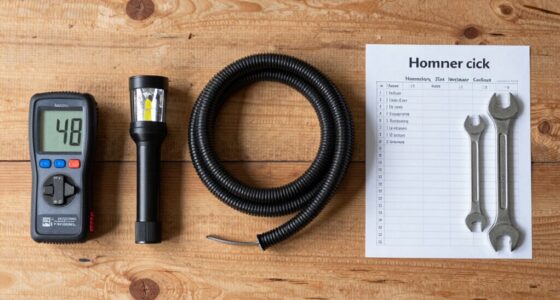
To hang curtains evenly, you’ll need a measuring tape, a level, and a pencil. Use the level to guarantee your curtain rod is straight, regardless of the curtain rod type you choose. When selecting fabric, consider choosing lightweight or medium-weight options for easier handling. Measure carefully, mark your positions precisely, and double-check with the level before installing to achieve a balanced, professional look.
How Do I Prevent Curtains From Sagging Over Time?
To prevent curtains from sagging over time, you should regularly check your drapery maintenance and adjust accordingly. Choose curtain fabric choices that are sturdy and less prone to stretching, such as heavy linen or velvet. Use proper curtain rods with strong brackets and avoid overloading them. Additionally, consider adding support like curtain tiebacks or valances to distribute weight evenly, helping your curtains stay in place and look great longer.
Can I Hang Curtains Without Drilling Into the Wall?
Hanging curtains without drilling is like finding a secret passage; it’s possible with the right tools. You can use curtain rod alternatives like tension rods or adhesive curtain hooks that cling securely without damage. These options are perfect if you want to avoid drilling, especially on delicate walls. Just make certain your chosen method supports the weight of your curtains for a neat, hassle-free look.
What’s the Best Way to Match Curtain Length to Window Size?
To match curtain length to your window size, first measure your window’s height and width accurately. Use these measurements as your curtain length measurement, adding a few extra inches for hem and drape. For perfect window size matching, make certain your curtains are slightly longer than the window height for a luxurious look or just touching the sill for a cleaner finish. This way, your curtains will complement your window perfectly.
Conclusion
With a little patience and attention to detail, you’ll turn your curtains into a polished masterpiece, like a painter perfecting each stroke. When you hang them evenly, they’ll flow like a gentle river, bringing harmony and elegance to your space. Remember, every careful measurement and level line is like laying a solid foundation for beauty. Soon, your windows will tell a story of craftsmanship, making your room feel as inviting as a warm embrace.
Halloween Picks
halloween
As an affiliate, we earn on qualifying purchases.