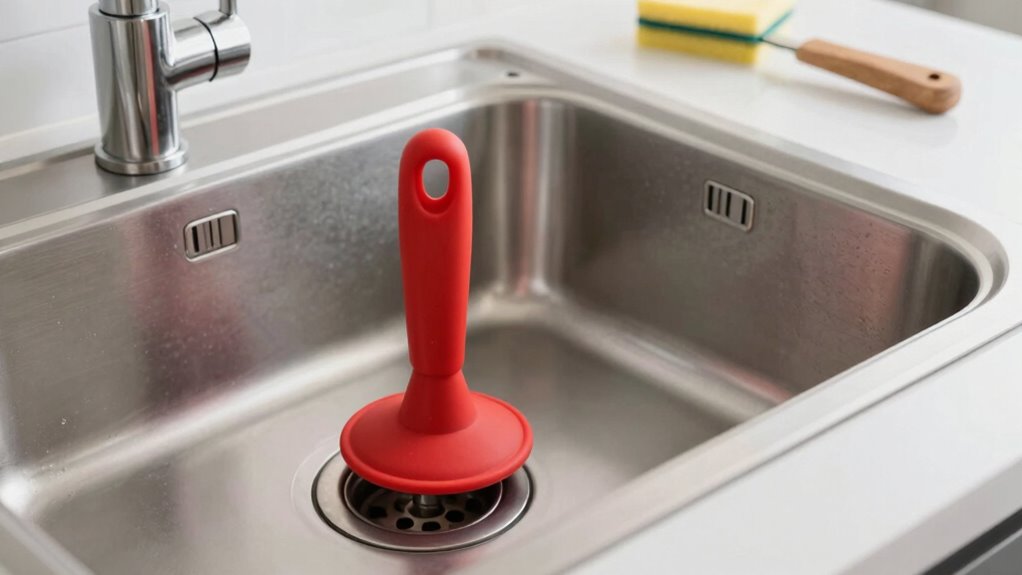

To unclog your sink smartly before it worsens, watch for early signs like slow drainage or gurgling sounds. Use simple tools like a plunger first, ensuring a good seal, then try a drain snake if needed. Natural solutions like baking soda and vinegar or pouring boiling water weekly can prevent buildup. Choosing durable drain guards and avoiding harsh chemicals also helps. For effective, long-term fixes, learn more about safe techniques and preventative tips.

Get the latest gadgets delivered free — and shop member deals
- Fast, free delivery on millions of items
- Access to Prime Big Deal Days deals on October 6–7
- Prime Video, Amazon Music and more included
Key Takeaways
- Regularly flush the drain with hot water, baking soda, and vinegar to prevent buildup before clogs form.
- Use drain guards to catch debris and clean them frequently to avoid initial blockages.
- Address slow drainage early with plunger or drain snake to prevent a full clog from developing.
- Avoid chemical cleaners; opt for eco-friendly solutions like baking soda and vinegar to maintain pipes.
- Recognize early signs like gurgling or odors to act promptly and prevent worsening clogs.
As an affiliate, we earn on qualifying purchases.
How to Recognize Early Signs of a Clogged Sink
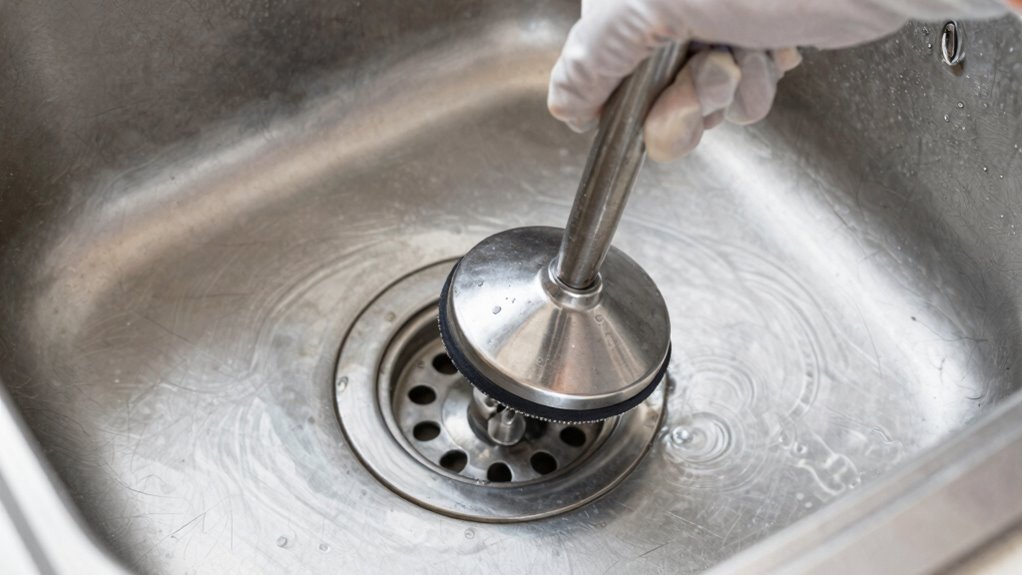
Recognizing early signs of a clogged sink can save you from costly repairs and messy backups. Pay attention to clog symptoms like slow drainage or water pooling in the basin, which serve as early warning signs of a blockage. If you notice water lingering longer than usual after a wash or rinse, it indicates the drain isn’t flowing freely. You might also hear gurgling sounds or notice unpleasant odors, signaling buildup farther down the pipe. These early warning signs often appear before a complete clog occurs, giving you a chance to act fast. Catching these symptoms early helps prevent more severe issues and makes unclogging easier. Additionally, understanding drainage dynamics and how water flows through your plumbing system can help you identify potential problems before they escalate. Familiarity with main drain lines and their layout can empower you to troubleshoot effectively. Being aware of common causes of clogs, such as hair, grease, or debris, can further improve your chances of preventing a blockage altogether. Recognizing changes in water flow patterns can also alert you to developing issues before they turn into full blockages, especially when combined with an understanding of microplastics in dust and how they can affect your plumbing.
As an affiliate, we earn on qualifying purchases.
Essential Tools for Unclogging Your Sink

To effectively unclog your sink, you need the right tools on hand. Basic plumbing maintenance requires a few essentials: a drain snake or auger to break up stubborn clogs, and a plunger for quick, effective pressure. A bucket or small container helps contain water or debris during cleanup. Gloves protect your hands and promote good kitchen hygiene. A flashlight makes it easier to see inside the drain, especially in tight spaces. These tools prevent minor issues from escalating into major problems, saving you money and frustration. Having the proper equipment ready ensures you can address clogs promptly, maintaining both your plumbing system and your kitchen’s cleanliness. Simple, reliable tools are your first line of defense against stubborn sink blockages. Understanding regional flavors and chicory/coffee insights can also inspire creative solutions for stubborn clogs, especially if coffee grounds or tea leaves have contributed to the blockage. Additionally, knowing the common causes of clogs helps you prevent future issues effectively, and applying a systematic testing methodology can assist in diagnosing persistent problems more efficiently.
eco-friendly drain cleaner baking soda vinegar
As an affiliate, we earn on qualifying purchases.
As an affiliate, we earn on qualifying purchases.
Step-by-Step: Using a Plunger Effectively
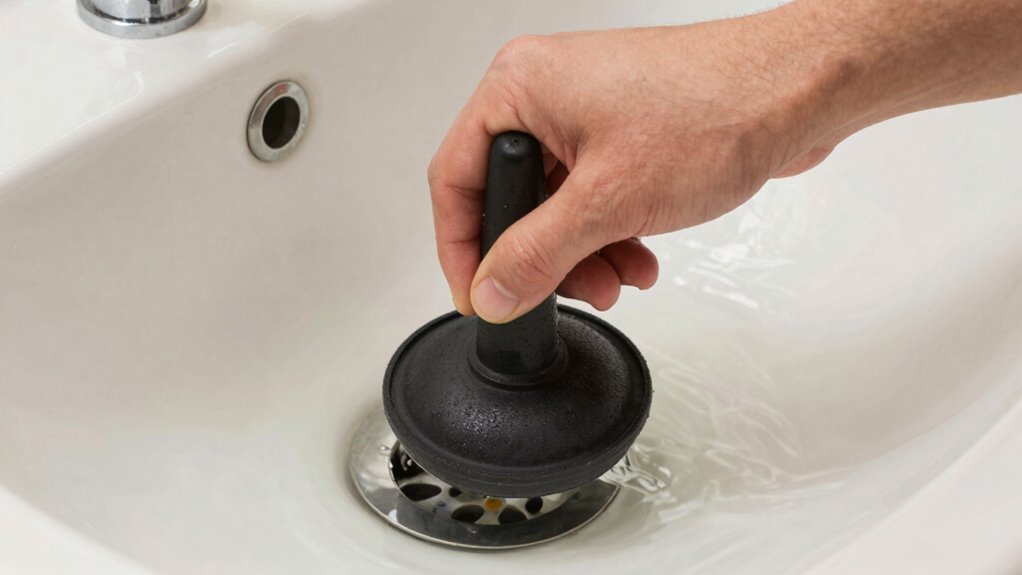
Using a plunger effectively is key to clearing minor sink clogs quickly. Start by ensuring you have an appropriate plunger, with a cup size that fits your drain. Place the plunger over the drain, creating an effective sealing around the opening. Make sure there’s enough water in the sink to cover the cup for better pressure. Use firm, steady pushes, applying consistent pressure with the handle. Avoid breaking the seal; if water leaks around the edges, readjust your position. The plunger technique relies on creating and releasing pressure to dislodge the blockage. Continue with steady, controlled plunges until you notice the water begins to drain smoothly. Proper sealing is essential for generating the force needed to clear the clog efficiently. Additionally, ensuring the plumbing is well-maintained can prevent future sink blockages from occurring. Regular maintenance can also prevent clogs, saving you time and effort in the long run. Understanding the pressure dynamics involved can help you apply the correct force during plunging, especially when combined with knowledge of plumbing systems. Remember, a well-maintained plumbing system can significantly reduce the chances of future clogs.
As an affiliate, we earn on qualifying purchases.
When and How to Use a Drain Snake or Auger

A drain snake or auger becomes necessary when a plunger or other simple methods fail to clear a stubborn clog. Use it when you suspect the blockage is deep within the pipe, especially if your pipes are made of materials like PVC or metal that resist chemical cleaners. Before inserting the auger, verify your drain venting system isn’t causing pressure issues—poor venting can worsen clogs or prevent water from draining. Feed the auger slowly into the drain, turning the handle clockwise to break up or hook the clog. Be cautious not to force it, as forcing can damage delicate pipe materials. Proper technique and appropriate tool selection can make unclogging more effective and prevent damage. Once the obstruction is loosened or removed, run hot water to flush out any remaining debris. Additionally, using a drain cleaning tool that is suitable for your specific pipe material can reduce the risk of accidental damage during the process. Understanding pipe material considerations can help you choose the safest and most effective method for your plumbing system. Being aware of clog prevention strategies can also help avoid future issues and keep your drains flowing smoothly.
Natural and Chemical Methods to Clear Your Sink

When simple tools like a plunger or drain snake don’t do the trick, natural and chemical methods can help clear stubborn sink clogs. Eco-friendly solutions like baking soda and vinegar are effective DIY remedies that break down debris without harsh chemicals. Chemical drain cleaners work fast but can damage pipes and harm the environment, so use them sparingly. Consider this table for clarity:
| Method | Pros | Cons |
|---|---|---|
| DIY remedies | Safe, inexpensive | May take longer |
| Eco-friendly solutions | Environmentally safe | Less potent for severe clogs |
| Chemical cleaners | Quick results | Potential pipe damage, toxic |
Additionally, understanding passive voice detection can improve clarity in your writing. Choose wisely based on clog severity and your eco-conscious preferences.
Tips to Prevent Future Clogs and Keep Your Sink Flowing

To keep your sink flowing smoothly, make regular drain cleanings part of your routine. Using drain guards helps catch debris before it causes clogs, saving you trouble later. Also, steer clear of harsh chemicals that can damage pipes and lead to bigger problems down the line. Incorporating gentle, natural remedies like essential oils for drain cleaning can further support clear pipes without harmful effects. Regularly checking for clog prevention techniques can help identify potential issues early and maintain optimal drain health. Understanding the basics of car repair can also inspire you to troubleshoot minor plumbing issues around the house.
Regular Drain Cleaning
Regular drain cleaning is essential to keep your sink flowing smoothly and prevent stubborn clogs. It helps you avoid common plumbing myths that might lead to misuse of chemicals or neglect. Understanding sink material differences also guides your cleaning approach, ensuring you don’t damage delicate surfaces. Incorporate routine flushing with hot water, baking soda, and vinegar to break down buildup before it becomes a problem. Being aware of future economies and UBI debates can also inform your maintenance choices, such as investing in durable fixtures or eco-friendly cleaning options. Here’s a quick comparison:
| Sink Material | Cleaning Method | Caution |
|---|---|---|
| Porcelain | Gentle scrubbing, vinegar | Avoid abrasive cleaners |
| Stainless | Hot water, baking soda | No harsh chemicals |
| Cast Iron | Mild soap, hot water | Prevent rusting |
| Acrylic | Soft cloth, mild soap | No abrasive pads |
| Composite | Warm water, gentle scrub | Avoid high heat |
Regular cleaning keeps your sink clear and durable, preventing future clogs.
Use Drain Guards
Installing drain guards is one of the simplest and most effective ways to keep your sink flowing freely. Drain guard installation is quick and inexpensive, preventing hair, food particles, and debris from entering your pipes. The sink cover benefits include reducing the risk of clogs and minimizing unpleasant odors caused by trapped debris. By catching messes at the surface, you won’t have to deal with stubborn blockages later. Make sure to clean your drain guard regularly to maintain ideal flow. Choosing the right size and style ensures it fits your sink properly and works effectively. Using drain guards is a proactive step that saves you time and money, helping you avoid future plumbing issues and keep your sink functioning smoothly. Proper maintenance of your drain guard can extend its effectiveness and ensure your home stays safe from unexpected plumbing problems. Additionally, selecting high-quality materials for your drain guard can increase its durability and longevity. Regular inspection and timely replacement can further enhance your plumbing system’s performance over time.
Avoid Harmful Chemicals
Avoiding harmful chemicals is essential for maintaining a healthy and efficient drainage system. Instead of relying on harsh chemical drain cleaners, consider eco friendly solutions like baking soda and vinegar, which safely break down minor clogs without damaging pipes or harming the environment. Regular DIY maintenance can help prevent future issues; pour boiling water down your drain weekly to clear grease and soap buildup. Avoid chemical products that can corrode pipes and pose health risks. By choosing natural alternatives and staying consistent with simple cleaning routines, you keep your sink flowing smoothly. This proactive approach not only protects your plumbing but also promotes a safer, greener household. Taking these steps ensures your drain stays clear without risking damage or exposure to dangerous chemicals.
Frequently Asked Questions
How Often Should I Check for Early Signs of a Clog?
You should check for warning signs during routine inspections at least once a month. Keep an eye on slow drainage, gurgling sounds, or foul odors, as these are early indicators of a clog. Regularly monitoring these warning signs helps you catch problems early, preventing bigger issues down the line. Staying proactive with routine inspections guarantees your sink stays clear and functions smoothly, saving you time and costly repairs.
Can I Use Household Items to Clear a Stubborn Clog?
Yes, you can use household items to clear a stubborn clog. Natural remedies like baking soda and vinegar work well, creating a fizzy reaction that helps break down buildup. DIY tools such as a plunger or a drain snake can also be effective. Just pour baking soda, then vinegar, and let it sit before flushing with hot water. These simple methods often resolve minor clogs without harsh chemicals.
What Are the Risks of Using Chemical Drain Cleaners?
Using chemical drain cleaners is like inviting a wild chemical reaction party in your pipes—except the aftermath isn’t so party-worthy. They can damage your plumbing, cause dangerous chemical reactions, and harm the environment. Plus, they might eat away at your pipes over time. So, if you value your plumbing and the planet, steer clear of these caustic concoctions and opt for safer, eco-friendly solutions instead.
How Do I Prevent Clogs Caused by Hair or Grease?
To prevent clogs caused by hair and grease, you should use hair prevention tools like drain screens or filters to catch hair before it enters the pipes. For grease control, avoid pouring fats down the drain; instead, wipe greasy dishes with paper towels and dispose of the waste properly. Regularly clean your drain with natural solutions like baking soda and vinegar to keep buildup at bay and maintain smooth flow.
When Should I Call a Professional Plumber Instead of DIY?
If your sink refuses to drain despite DIY efforts, it’s time to call a professional plumber. Ignoring persistent clogs can lead to plumbing emergencies and costly repairs down the line. Don’t wait until a minor issue turns into a major disaster; a pro can diagnose hidden problems and fix them safely. Trust your instincts—when in doubt, seek expert help to prevent future headaches and protect your home.
Conclusion
By catching clogs early, you prevent a full-blown disaster—no need to summon a plumber from the days of yore. Keep your tools handy, follow the steps, and consider natural methods to avoid harsh chemicals. Remember, a well-maintained sink is like a trusty steed: it’s there when you need it most. Stay vigilant, act swiftly, and you’ll keep your drain flowing smoothly, ensuring your daily routine doesn’t turn into a Trojan horse of frustration.
Fall Picks
fall essentials
As an affiliate, we earn on qualifying purchases.