Nonstick, stainless steel, and cast iron cookware each serve different needs in your kitchen. Nonstick pans are great for delicate foods like eggs and pancakes, thanks to easy food release. Stainless steel offers versatility for searing and simmering, while cast iron excels at high-heat tasks like frying and searing. Knowing how to use and take care of each can make your cooking more efficient and enjoyable—if you want to discover how to choose and maintain them, keep exploring.
Key Takeaways
- Nonstick pans excel at gentle cooking tasks like eggs and pancakes due to easy food release and quick cleanup.
- Stainless steel cookware is versatile, durable, and ideal for searing, browning, and high-temperature cooking.
- Cast iron offers superior heat retention, perfect for searing, frying, and slow-cooking, but requires regular seasoning.
- Each cookware type has specific maintenance needs and suits different cooking techniques and foods.
- Choosing the right cookware depends on your cooking style, durability needs, and maintenance preferences.

CAROTE Nonstick Frying Pan Skillet,Non Stick Granite Fry Pan Egg Pan Omelet Pans, Stone Cookware Chef's Pan, PFOA Free,Induction Compatible(Classic Granite, 8-Inch)
Eco-friendly Classic Granite – Non-stick Granite Material, PFOS,PFOA free, our cookware ensures your daily cooking is always safer…
As an affiliate, we earn on qualifying purchases.
As an affiliate, we earn on qualifying purchases.
What Are Nonstick, Stainless Steel, and Cast Iron Cookware?
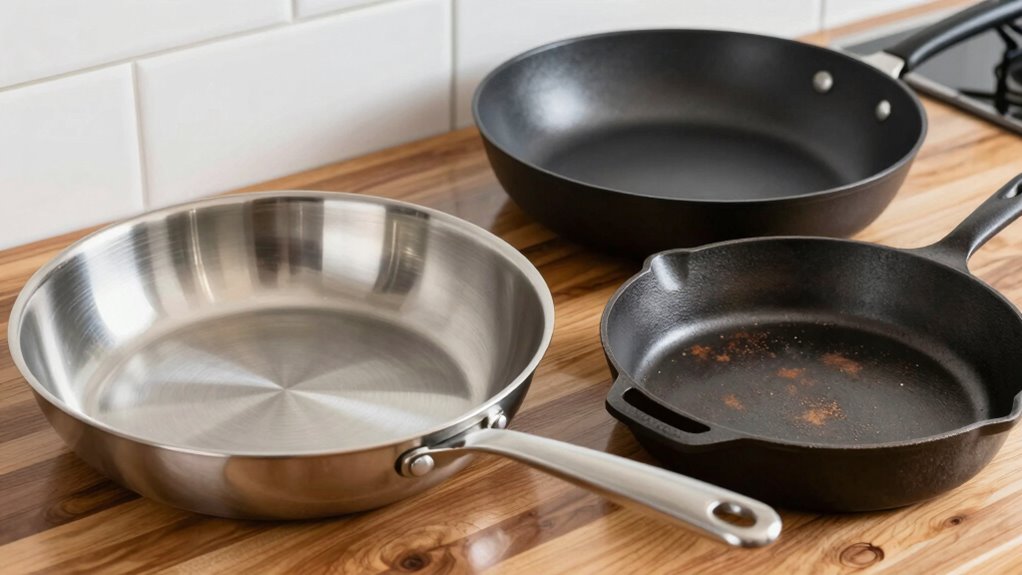
What are the differences between nonstick, stainless steel, and cast iron cookware? Nonstick pans excel at cooking techniques that require easy food release and quick cleanup, thanks to their coated surfaces. They’re lightweight and convenient but tend to have lower cookware durability, especially if scratched or overheated. Stainless steel cookware is versatile and durable, suitable for browning, searing, and simmering. It withstands high heat and frequent use, making it ideal for various cooking techniques. Cast iron cookware is legendary for its exceptional durability and heat retention, perfect for searing, frying, and slow cooking. Although heavy and requiring regular seasoning, cast iron can last a lifetime. Each type serves different cooking techniques and offers unique strengths, making them essential additions to your kitchen arsenal. Understanding heat retention is key to selecting the right cookware for specific culinary tasks. Additionally, material composition impacts how each type heats and responds to temperature changes during cooking.

Cuisinart Stainless Steel, 5.5 Quart Sauté Pan w/ Cover, Helper Handle, Chef's Classic, 733-30H
EXCEPTIONAL DESIGN: The 5.5-Quart Saute Pan with Helper Handle and Flavor Lock Lid has straight high sides and…
As an affiliate, we earn on qualifying purchases.
As an affiliate, we earn on qualifying purchases.
How Do These Cookware Types Perform in the Kitchen?
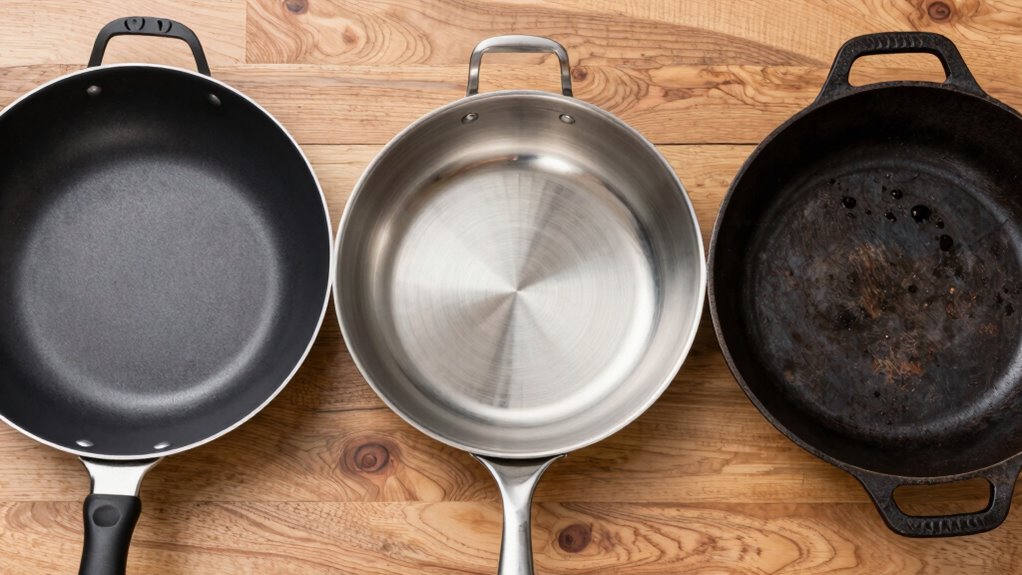
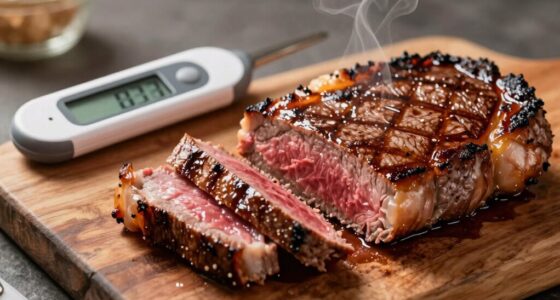
Each cookware type performs differently depending on the cooking task at hand. Nonstick pans excel for gentle tasks like eggs and pancakes, thanks to their easy release and even heat distribution. Stainless steel cookware is ideal for pan searing techniques; it heats quickly and evenly, creating a perfect crust on meats. Cast iron offers superior heat retention, making it excellent for high-temperature searing and frying. To maximize performance, consider the thermal conductivity of each material to match your cooking needs. Understanding the cooking techniques best suited to each type can help you achieve optimal results. 1. Use stainless steel for quick, even heat distribution during pan searing. 2. Rely on cast iron’s heat retention for consistent results in high-heat cooking. 3. Reserve nonstick for delicate foods that require gentle handling and easy cleanup. Additionally, understanding the cultural significance of cookware types can help in selecting the right tool for traditional recipes and cooking styles.
Understanding these qualities helps you choose the right cookware for each task, ensuring better results in your kitchen.

Lodge Seasoned Cast Iron Skillet – PFAS-Free, Non-Toxic Cookware – Use with an Oven, Stove, Grill, or Campfire – Naturally Non-Stick & Oven Safe – 10.25 Inches
Quality Cast Iron Frying Pan: The Lodge Seasoned Cast Iron Skillet is loved for its great heat retention,…
As an affiliate, we earn on qualifying purchases.
As an affiliate, we earn on qualifying purchases.
Which Cookware Is Best for Delicate Tasks Like Eggs and Pancakes?
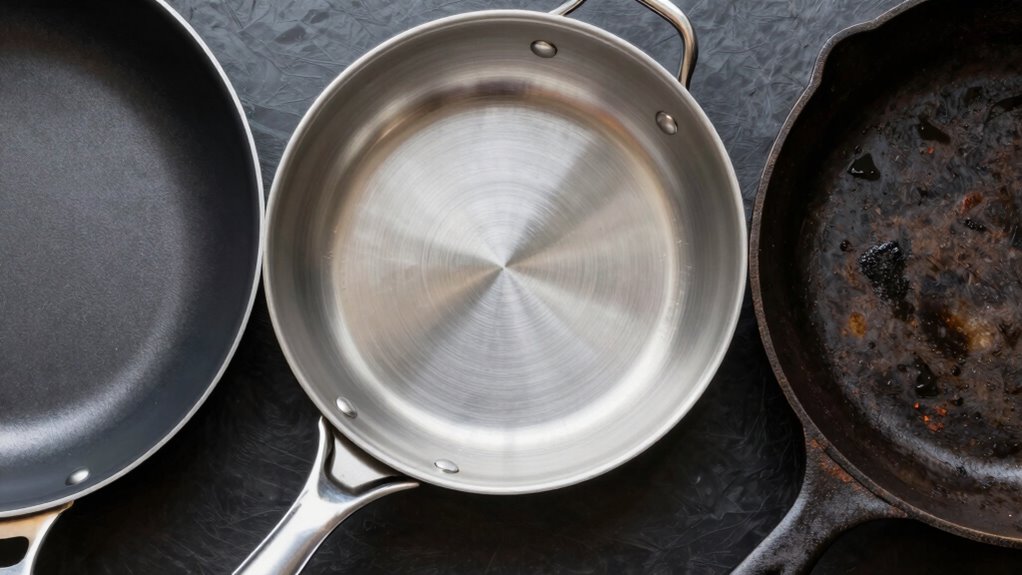
When cooking delicate foods like eggs and pancakes, choosing the right cookware can make all the difference. Nonstick pans are ideal for eggs because they prevent sticking, making eggs cooking easier and cleaner. For pancakes, a well-seasoned cast iron skillet offers excellent heat retention for even pancake flipping. Stainless steel can work, but it requires more oil and skill to prevent sticking. Here’s a quick comparison:
| Feature | Nonstick | Cast Iron | Stainless Steel |
|---|---|---|---|
| Eggs cooking | Best for easy release | Good with seasoning | Possible with oil |
| Pancake flipping | Easy, due to smooth surface | Great heat retention | Requires skill to avoid sticking |
| Maintenance | Low | High (seasoning needed) | Moderate |
Additionally, understanding proper cookware maintenance can extend the lifespan of your cookware and improve cooking results. Using the right cookware also involves considering natural materials and their impact on both cooking efficiency and environmental sustainability. Selecting cookware made from non-toxic materials can further promote healthier cooking. Properly selecting cookware can also contribute to energy efficiency in your kitchen. Being aware of environmentally friendly options can help you make more sustainable choices when upgrading your cookware collection.
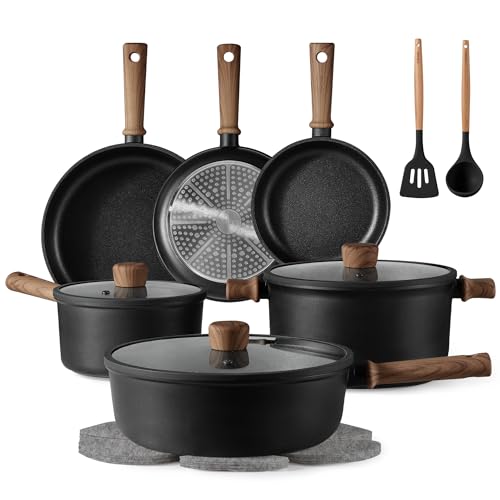
CAROTE Nonstick Pots and Pans, Induction Titanium Cookware Set 16pcs Kitchen Cooking Sets, Pot and Pan Non Stick w/Frying pan (PFOS, PFOA Free)
Superior Nonstick Performance: Featuring a titanium nonstick coating, our pots and pans set offers exceptional durability and effortless…
As an affiliate, we earn on qualifying purchases.
As an affiliate, we earn on qualifying purchases.
What Are the Pros and Cons of Nonstick, Stainless Steel, and Cast Iron?
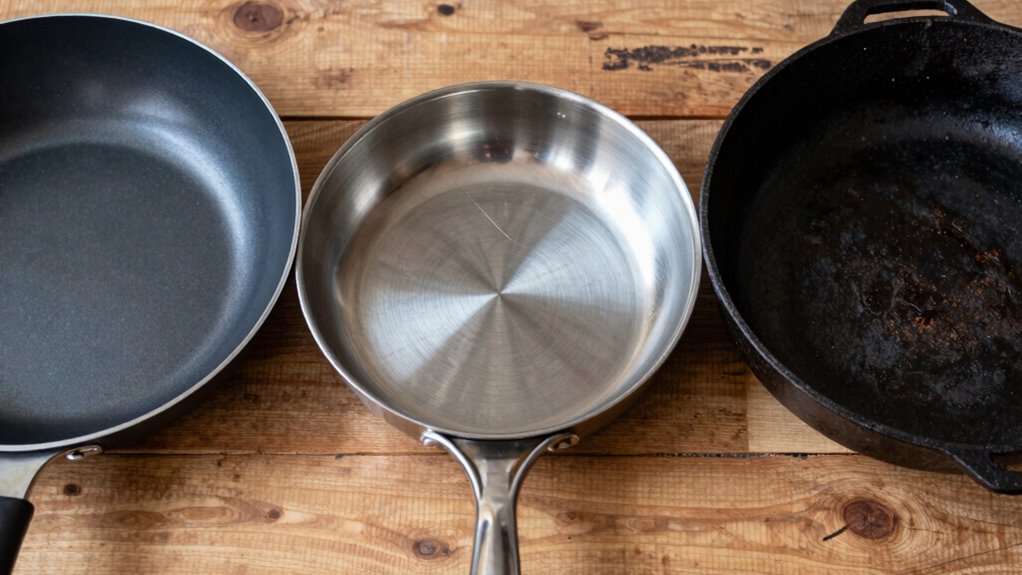
Choosing the right cookware depends on weighing their advantages and disadvantages. Nonstick, stainless steel, and cast iron each offer unique benefits and limitations.
Choosing cookware involves balancing benefits like durability, ease of use, and aesthetic appeal.
- Nonstick cookware provides easy food release and quick cleanup but has limited cookware durability and can lose its coating over time. Its sleek aesthetic appeal often looks modern, but it’s less suited for high-heat cooking.
- Stainless steel is highly durable, resistant to scratching, and maintains an attractive shine, making it a popular choice for many kitchens. However, it may require more oil and skill to prevent sticking.
- Cast iron is renowned for its unmatched cookware durability and excellent heat retention. Its rustic aesthetic appeal adds charm, but it’s heavy and needs regular seasoning to prevent rust.
How Should You Care for and Maintain Your Cookware?
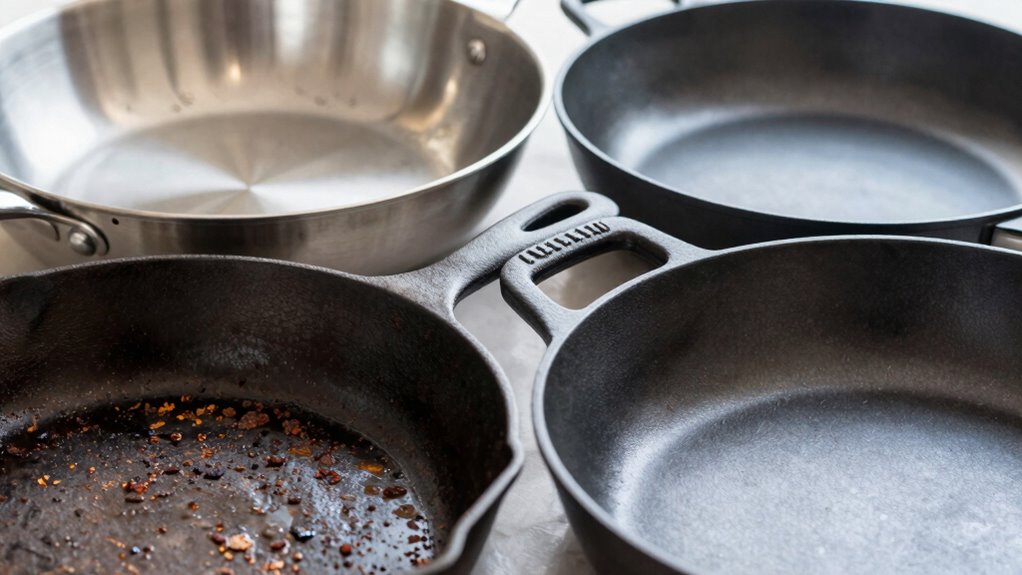
Proper care and maintenance are key to keeping your cookware in top shape and extending its lifespan. For cast iron, seasoning it regularly creates a natural nonstick surface and protects against rust. To do this, apply a thin layer of oil and heat it in the oven. Stainless steel cookware benefits from regular polishing to maintain its shine and remove stains. Use a stainless steel cleaner or a paste of baking soda and water for stubborn spots. Avoid abrasive scrubbers that can scratch surfaces. Nonstick pans require gentle cleaning to preserve the coating—avoid metal utensils and harsh detergents. Proper storage also helps prevent damage. Additionally, understanding retirement planning can help you make informed financial choices for the future. With consistent care, your cookware will perform well and last for years, making your cooking experience more enjoyable. Emotional well-being is also important, as caring for your cookware can be a mindful and satisfying routine that promotes a sense of accomplishment and reduces stress.
Which Cookware Is Right for Your Cooking Style and Budget?
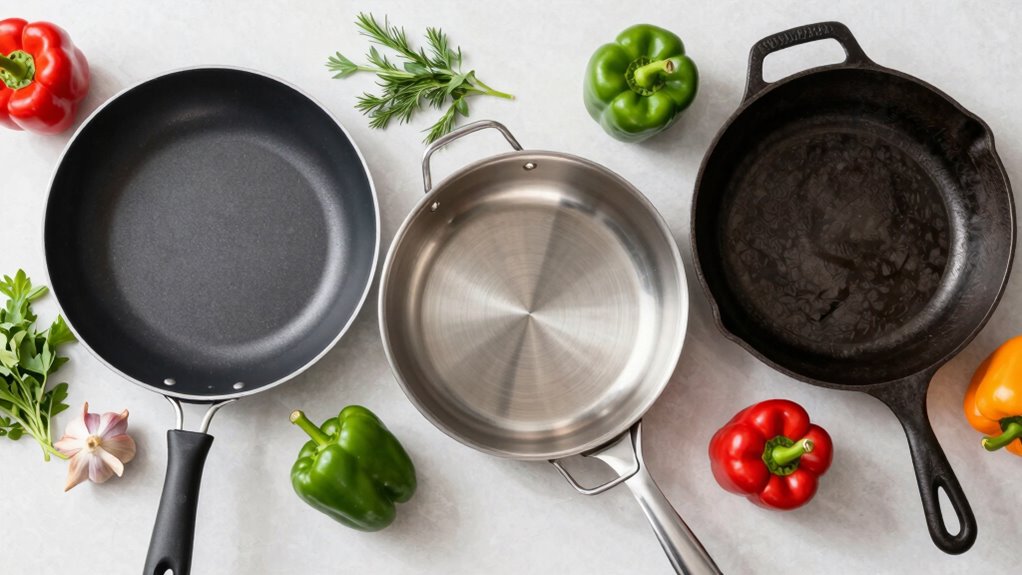
Selecting the right cookware depends on your cooking style and budget, as different materials offer unique advantages. To make an informed choice, consider these factors:
Choosing cookware tailored to your style and budget enhances cooking efficiency and enjoyment.
- Cooking needs: If you prefer low-fat cooking or easy cleanup, nonstick options are ideal. For durability and high-heat searing, cast iron or stainless steel excel.
- Budget: Cast iron can be affordable and long-lasting, while high-quality stainless steel may cost more upfront but offers versatility.
- Alternative cookware options: Explore ceramic or aluminum cookware, which often provide lighter weight and different heat conduction qualities. Comparing these options through cookware material comparisons helps you pick the best fit for your culinary routines without overspending.
Frequently Asked Questions
Can Nonstick Coatings Withstand High-Temperature Cooking?
Nonstick coatings generally can’t withstand high-temperature cooking, as their durability decreases with excessive heat. Most nonstick pans have low to medium heat limitations to prevent damage and preserve their nonstick properties. When you cook at high temperatures, you risk compromising the coating’s durability, which can lead to peeling or degradation. To maintain your nonstick pan’s longevity, stick to recommended heat levels and avoid exposing it to high heat whenever possible.
Is Stainless Steel Cookware Suitable for Induction Stoves?
Yes, stainless steel cookware is suitable for induction stoves because of its induction compatibility. You can easily test this by checking if a magnet sticks to the bottom—if it does, your stainless steel cookware will work well. Stainless steel offers excellent durability, making it a reliable choice for induction cooking. So, you’re all set for efficient, even heating with your stainless steel pots and pans on an induction stove.
How Long Does Cast Iron Cookware Typically Last?
Cast iron cookware typically lasts a lifetime, thanks to its exceptional durability. With proper care, your cast iron can serve you for decades or even generations. Its long cookware lifespan is due to its sturdy construction and ability to develop a natural nonstick surface over time. Regular seasoning and avoiding harsh cleaners help maintain its durability, ensuring you get the most out of your cast iron for years to come.
Are There Health Concerns With Nonstick Chemicals?
You should be aware of nonstick chemical concerns, as some nonstick coatings contain chemicals like PFOA and PTFE that can release fumes when overheated, posing health risks. To guarantee cookware safety, avoid scratching or damaging the nonstick surface and replace it if it shows wear. Choosing alternatives like stainless or cast iron can also minimize exposure, giving you peace of mind while cooking.
Which Cookware Is Easiest for Beginner Cooks to Use?
Think of a nonstick pan as your first guiding star in the kitchen—easy to handle and forgiving. It’s perfect for beginner cooks because it requires less oil and simplifies cleaning. With basic cooking skills and a focus on kitchen safety, you’ll find nonstick cookware intuitive and stress-free, helping you build confidence. Its user-friendly nature makes it the ideal choice for those just starting their culinary journey.
Conclusion
Choosing the right cookware can transform your kitchen adventures from chaos to culinary mastery. Whether you’re flipping delicate eggs on nonstick, searing steaks in cast iron, or simmering sauces in stainless steel, the right tools make all the difference. Don’t settle for mediocrity—equip yourself with the perfect set and release your inner chef. Your cooking game will skyrocket, and you’ll wonder how you ever survived without these kitchen superheroes. The power is in your hands—make it count!