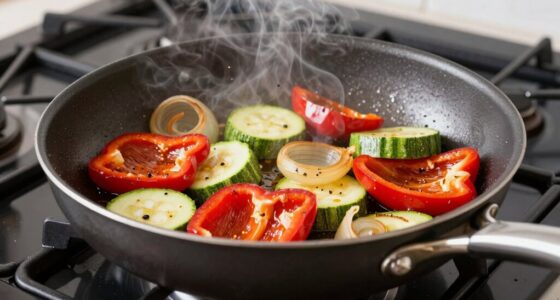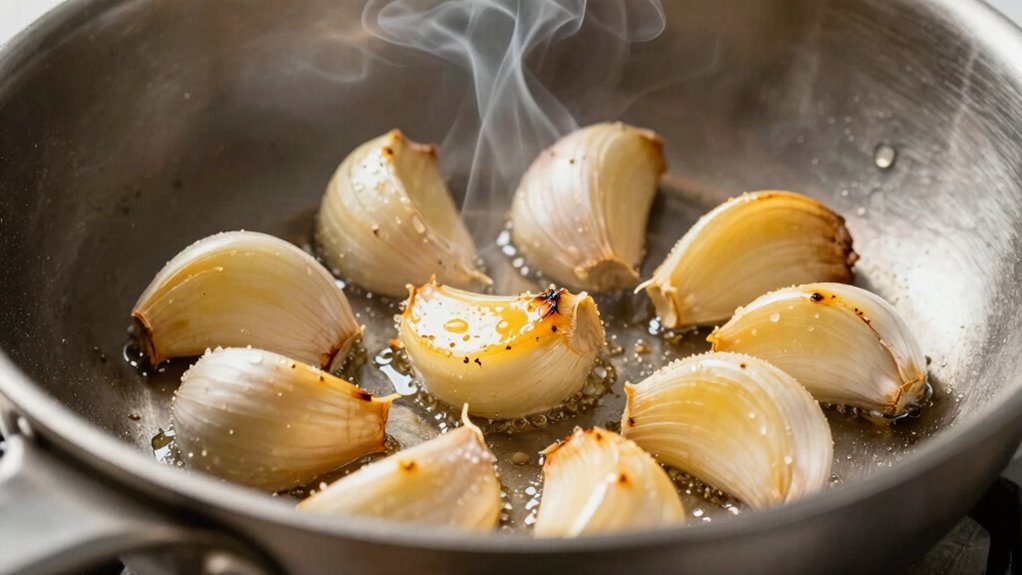
To prevent garlic from burning, add it only after your oil is hot but not smoking, usually within 30 seconds to a minute of cooking. Stir constantly and keep the heat at medium-low or low, watching for a golden hue. Remove the garlic quickly once its aroma peaks. If you keep these timing tips in mind, you’ll master flavorful garlic without burning. Keep going, and you’ll discover more ways to perfect your cooking technique.

Get the latest gadgets delivered free with Prime
- Fast, free delivery on millions of items
- Prime Video, Amazon Music and more included
- Member-only deals all year
Key Takeaways
- Add garlic after the oil is hot but not smoking to prevent burning and bitterness.
- Stir garlic constantly and cook on medium-low or low heat for even, gentle sautéing.
- Watch for a golden hue and remove garlic promptly once aroma peaks.
- Use a non-stick pan to prevent sticking and burning during cooking.
- Adjust heat immediately if garlic sizzles aggressively or starts to brown.
As an affiliate, we earn on qualifying purchases.
Why Timing Is Key to Perfectly Cooked Garlic
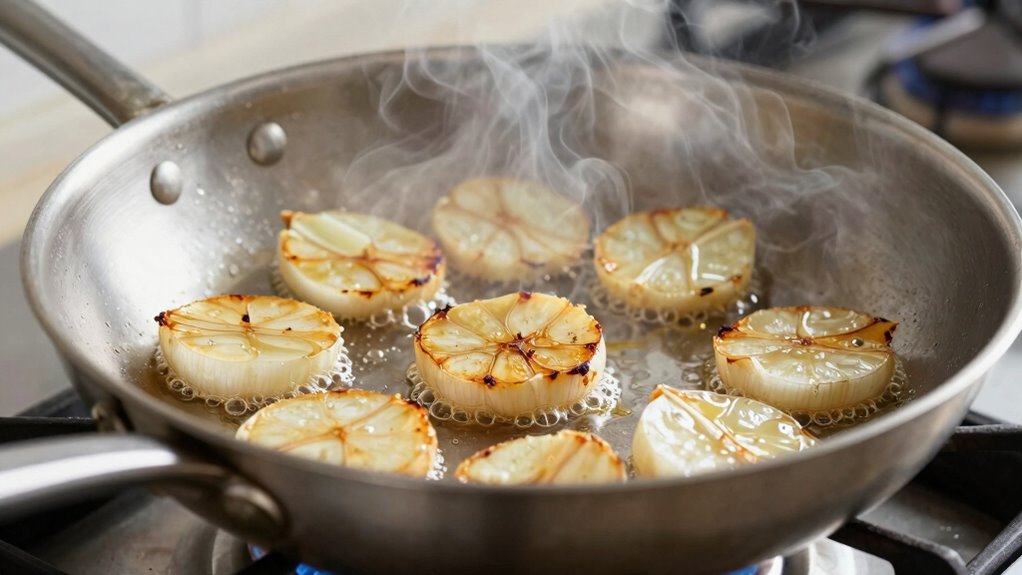
Timing is vital when cooking garlic because it can quickly go from fragrant and flavorful to bitter and burnt. If you add garlic too early or leave it on the heat too long, the garlic aroma will turn sharp and unpleasant, ruining your dish. Proper timing guarantees you develop a rich, aromatic flavor without risking burnt bits that can compromise kitchen safety. Burning garlic releases smoke and potentially harmful fumes, so staying attentive is essential. Understanding heat control ensures you can better manage cooking times and prevent overcooking. Additionally, consistent stirring helps distribute heat evenly and prevents garlic from sticking or burning. By adding garlic at the right moment—usually after your oil has heated and just before mixing ingredients—you preserve its delicate aroma and avoid risking accidents or smoke alarms. Remember, precise timing keeps your kitchen safe and your garlic tasting perfect. Utilizing quality kitchen tools such as a reliable stovetop or timer can help you better manage cooking times and prevent overcooking. Paying attention to cooking temperature can further enhance your control over garlic doneness and flavor. A thorough understanding of cooking techniques can also help you develop a more intuitive sense of timing for perfect results.
As an affiliate, we earn on qualifying purchases.
Choose the Right Pan and Tools to Prevent Burning
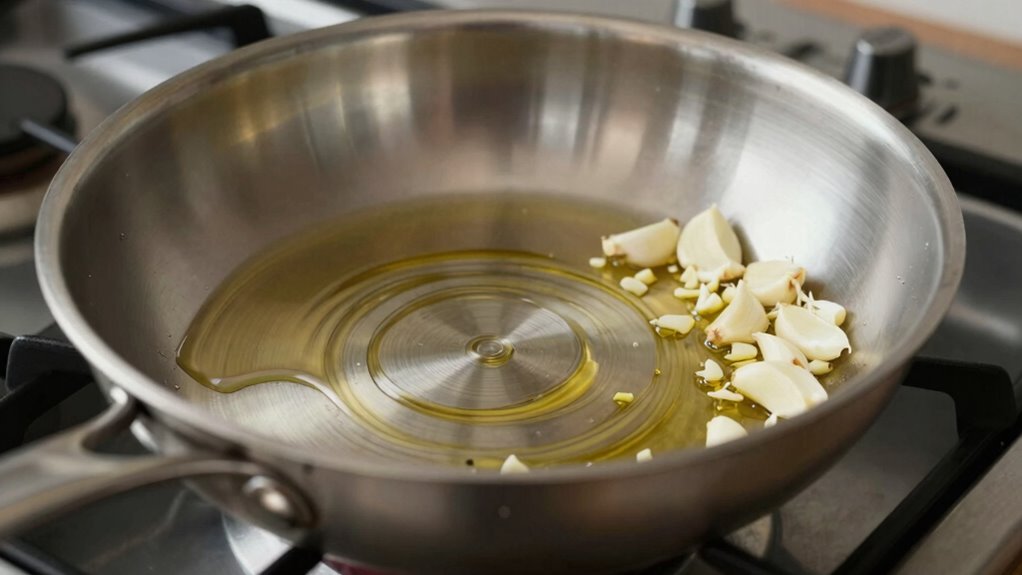
Using a non-stick pan helps prevent garlic from sticking and burning. Sharp, wooden tools allow you to stir gently without damaging the garlic or causing splatters. Choosing the right pan and tools makes it easier to cook garlic evenly and avoid burnt bits. Additionally, practicing timing and patience during cooking can prevent garlic from burning, ensuring optimal flavor and texture. Being mindful of heat control is also essential to avoid overheating the garlic and causing it to burn quickly. Proper cooking techniques can further enhance your ability to cook garlic perfectly without burning. Incorporating temperature regulation is crucial for maintaining consistent heat and preventing premature burning. Paying attention to garlic size and cut helps ensure even cooking and reduces the risk of burning.
Choosing Non-Stick Pans
Choosing the right non-stick pan is essential for preventing garlic from burning, as it guarantees even heat distribution and makes stirring easier. Non-stick benefits include easier cleanup and reduced need for excess oil, which helps control cooking temperature. When selecting a pan, consider pan size considerations; a slightly larger pan provides ample space for garlic to cook evenly without overcrowding, which can cause uneven heating. A medium-sized non-stick skillet is ideal for most garlic sautéing tasks. Ensure your pan has a good non-stick coating that won’t degrade quickly with heat. This allows you to cook garlic at a controlled temperature, reducing the risk of burning. Additionally, selecting a store return policies and hours for popular retailers can help ensure you choose a durable pan that fits your needs. Investing in a high-quality non-stick coating can significantly improve your cooking experience and prevent sticking or burning. When choosing cookware, paying attention to thermal conductivity helps maintain consistent heat and avoid hot spots that may cause garlic to burn. Ultimately, a high-quality non-stick pan provides the ideal surface for delicate ingredients like garlic, giving you better control and consistent results.
Using Sharp, Wooden Tools
To prevent garlic from burning, selecting the right tools is just as important as choosing the right pan. Using sharp knives helps you finely mince garlic, reducing uneven cooking. Wooden utensils are gentle on your cookware and won’t scratch non-stick surfaces, helping maintain even heat distribution. Here are four tips:
- Use sharp knives for precise chopping, avoiding uneven bits that can burn quickly.
- Choose wooden utensils to stir garlic gently and prevent scratching your pan.
- Preheat your pan properly to ensure consistent heat, reducing the risk of burning.
- Keep garlic moving in the pan with a wooden spoon to prevent sticking and scorching.
- Proper heat management in your garlic can enhance your dish without increasing the risk of burning, so consider adding herbs or spices during the cooking process. Additionally, understanding heat distribution properties of your cookware can help you better control cooking temperature and prevent burning. Using smart kitchen appliances with temperature sensors can further optimize your cooking process and protect delicate ingredients like garlic. Being aware of cooking fundamentals allows you to develop more consistent and controlled techniques.
As an affiliate, we earn on qualifying purchases.
When’s the Best Time to Add Garlic to Your Dish?
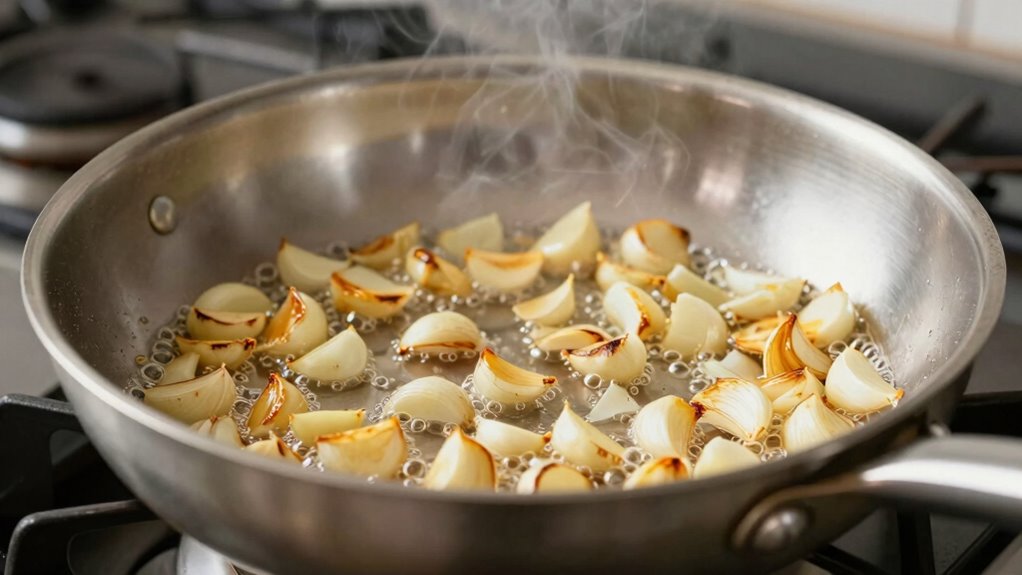
You should add garlic early in cooking to develop its flavor, but wait until the pan is hot enough for a gentle sizzle. This helps release its aroma without burning it. Knowing the right moment guarantees your garlic enhances the dish instead of turning bitter. Proper cleaning techniques] can also prevent burnt-on residue that might affect your cooking temperature.
Add Garlic Early
Adding garlic early in the cooking process can deepen its flavor and infuse your dish with a rich, aromatic base. To do this effectively, consider these points:
- Use fresh garlic stored properly in a cool, dark place to prevent sprouting and spoilage.
- Choose garlic varieties like softneck for milder sweetness or hardneck for robust flavor, depending on your dish.
- Slice or mince garlic thinly to release more aroma without burning.
- Cook on medium-low heat to allow garlic to soften gradually, avoiding the quick burn that happens at high temperatures.
Timing and proper storage are key—adding garlic early can boost flavor without risking bitterness if you pay attention to these details.
Wait for Sizzle
When is the right moment to add garlic to your dish? Wait until your oil is hot enough to create a gentle sizzle. This ensures the garlic releases its aroma without burning. Proper garlic storage keeps cloves firm and fresh, making it easier to judge the right time for cooking. Pay attention to your kitchen ventilation—good airflow helps disperse any initial garlic fumes and prevents them from settling and burning. Proper cabling and installation practices can also influence your stove’s performance and safety during cooking. Once the oil starts to shimmer and you hear that soft sizzling sound, it’s a sign to add garlic. Timing matters: adding garlic too early risks overcooking, while waiting too long can mean missing out on its full flavor. Sizzle signals the perfect moment to infuse your dish with garlic’s rich aroma. Good airflow in your kitchen can also help keep your cooking environment safe and comfortable. Additionally, maintaining proper kitchen safety practices ensures a pleasant and stress-free cooking experience. Proper cooking techniques can further enhance the flavor and prevent burning.
As an affiliate, we earn on qualifying purchases.
How Long Should You Cook Garlic to Avoid Burning?
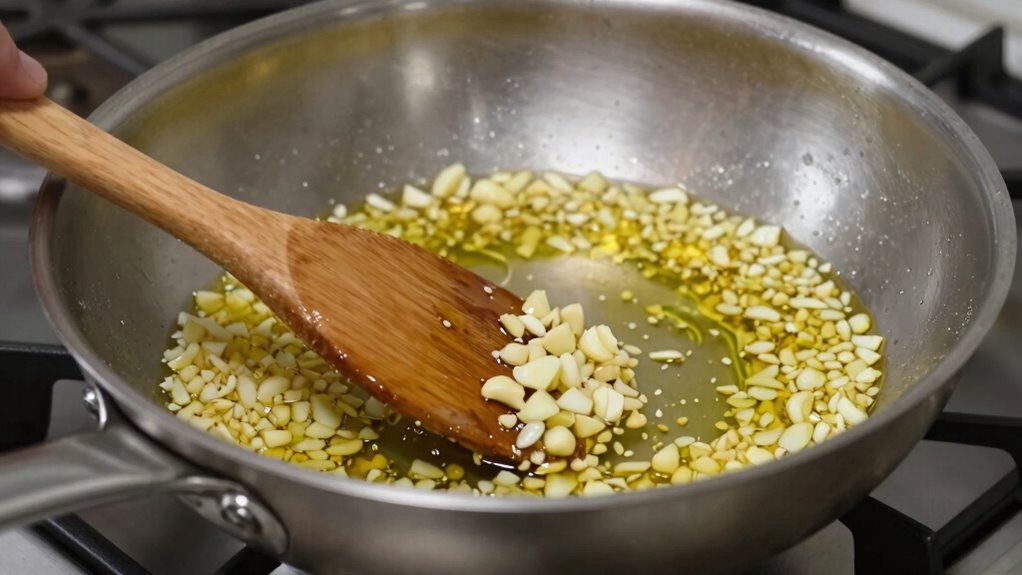
To prevent garlic from burning, it’s essential to cook it just long enough to release its aroma without overdoing it. Generally, garlic needs about 30 seconds to 1 minute in hot oil to develop that enticing garlic aroma. Overcooking can quickly lead to bitterness and potential kitchen safety hazards from burnt oil. To get it right:
Cook garlic just 30 seconds to 1 minute in hot oil for perfect aroma and safety.
- Add garlic when oil is hot but not smoking.
- Stir constantly to ensure even cooking.
- Watch closely for a golden hue—don’t wait for browning.
- Remove garlic promptly once aroma peaks, avoiding residual heat that can cause burning.
- Proper timing and temperature control are crucial in preventing garlic from burning and ensuring optimal flavor development. Additionally, using a thermometer can help maintain the ideal temperature for gentle cooking. Being attentive to heat levels can make the difference between perfectly cooked garlic and burnt bits.
Timing is key to lock in flavor and maintain kitchen safety. Properly cooked garlic enhances your dish without the risk of burnt bits or smoke.
Temperature Tips for Gentle, Even Sautéing
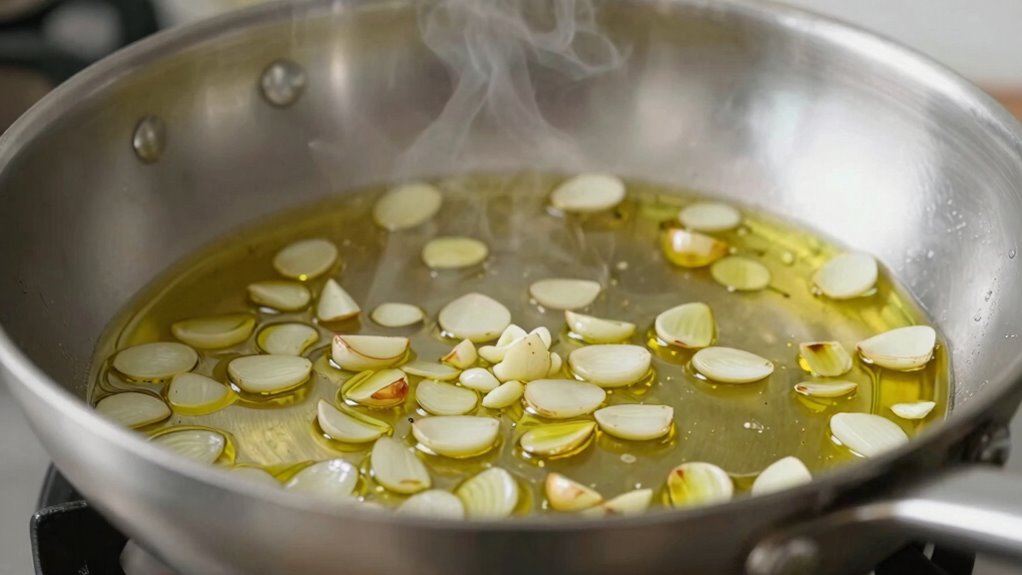
Maintaining a steady, gentle heat is essential for sautéing garlic evenly without burning it. To do this, start with your pan on medium-low or low heat, especially if you’re working with fresh garlic, which cooks quickly. Proper garlic storage in a cool, dry place helps prevent mold and keeps cloves firm, making them easier to sauté gently. Different garlic varieties, like softer-shelled softneck or robust hardneck, may respond differently to heat; softer varieties can burn faster, so adjust your temperature accordingly. Keep the heat low enough to allow the garlic to release its aroma without sizzling aggressively. Stir constantly to distribute heat evenly. This careful temperature control helps achieve perfectly sautéed garlic without the risk of burning.
How to Recognize When Garlic Is About to Burn
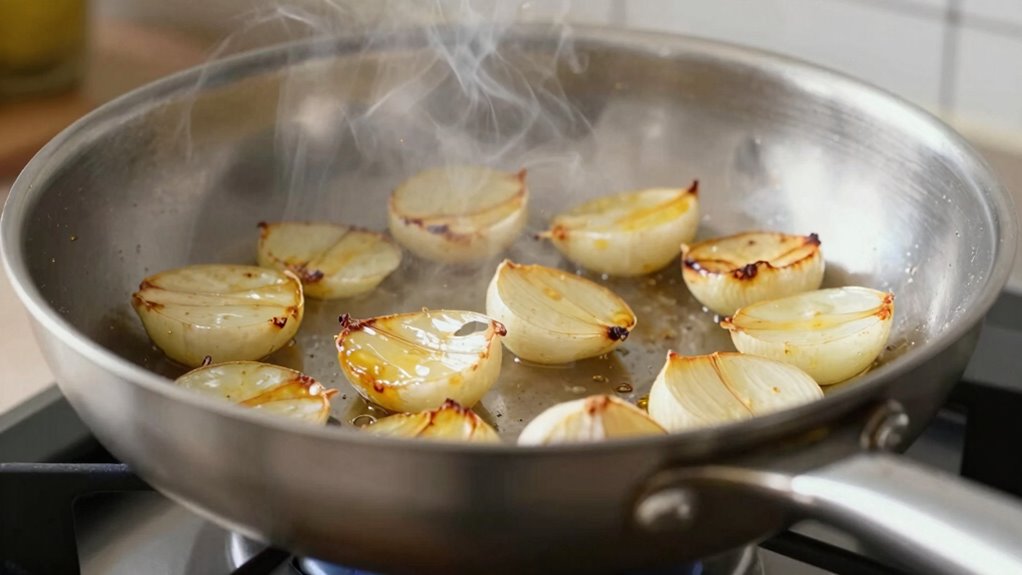
Garlic signals its impending burn by releasing a sharp, acrid aroma that quickly becomes overpowering. When you notice this, it’s a sign to act fast. Here’s how to recognize when garlic is about to burn:
- The garlic aroma intensifies and turns pungent, indicating the start of burning.
- The garlic begins to turn golden, but not yet brown—stay alert.
- The flavor balance shifts from sweet and savory to bitter and sharp.
- You notice a slight smoking or sizzling sound, warning you to lower the heat immediately.
Paying attention to these signs helps you prevent charring, preserving the garlic’s flavor and aroma. Recognizing these cues ensures your garlic enhances, rather than ruins, your dish.
Quick Fixes If You Burn Your Garlic
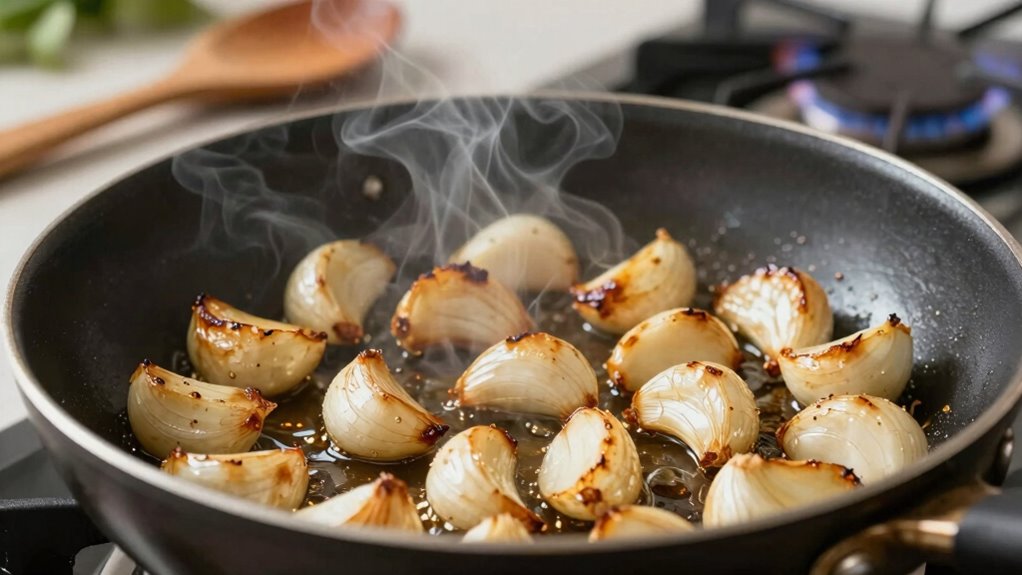
If you’ve accidentally burned your garlic, don’t panic. To salvage your dish, immediately remove the pan from heat to stop further burning. Pour in a splash of water, broth, or wine to deglaze the pan, which helps lift the burnt garlic aroma and prevents it from overpowering your dish. If the garlic is only slightly burnt, carefully transfer the unburned portions to a new pan, leaving behind the charred bits. In many culinary traditions, garlic’s aroma is cherished, so quick action can preserve the flavor and aroma. Remember, burning garlic can happen easily, but with prompt fixes, you can still enjoy a flavorful dish without the bitterness that ruins the culinary experience.
Raw vs. Cooked Garlic: When and Why to Use Each
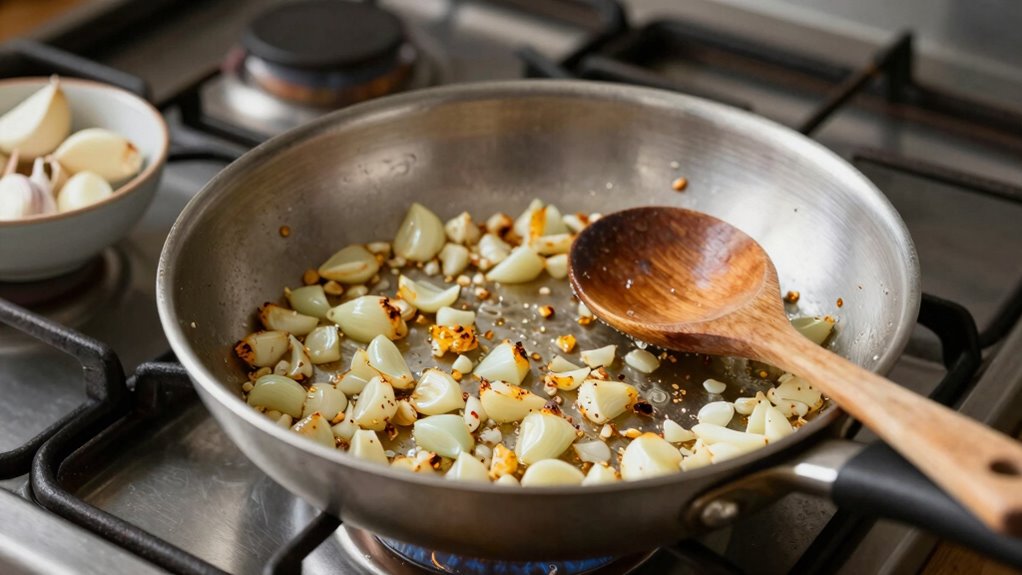
Understanding when to use raw versus cooked garlic can elevate your dishes. Raw garlic offers a sharp, pungent flavor that enhances salads, dressings, and dips, preserving its nutrients and maximizing garlic preservation. Cooked garlic develops a mellow, sweet taste, making it ideal for sautés, roasts, and sauces. Consider these points:
- Use raw garlic for vibrant flavor and maximum health benefits, especially when garlic cultivation was recent.
- Cook garlic to reduce sharpness and bring out sweetness, especially when garlic has been stored for a while.
- When garlic isn’t freshly harvested, cooking helps soften its flavor and improve its texture.
- For dishes requiring a subtle garlic background, lightly cook or roast to prevent burning and preserve garlic’s delicate nuances.
Choosing the right method depends on the flavor profile you desire and the stage of garlic preservation.
What to Do If You Burn Your Garlic
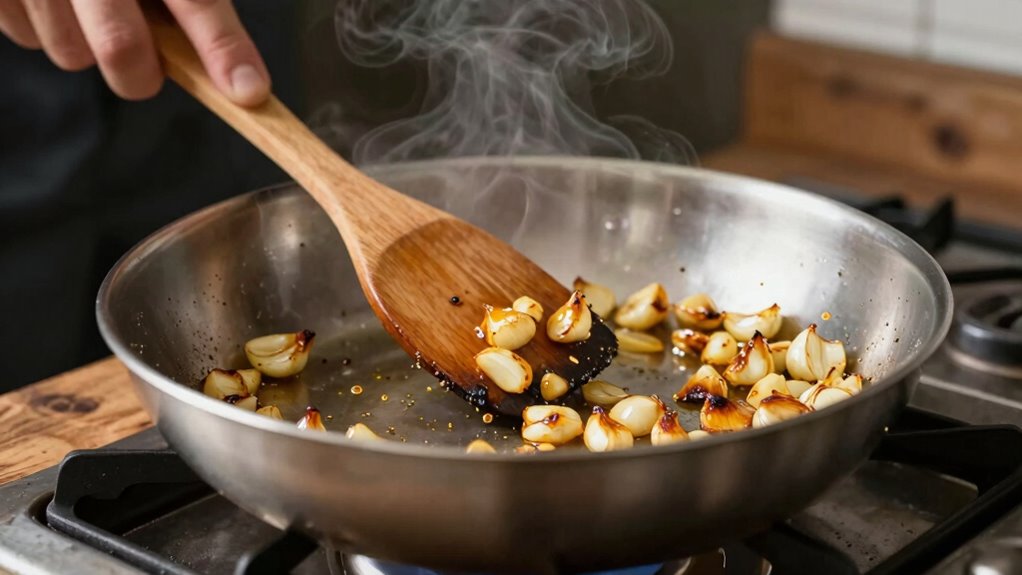
Burning garlic can happen quickly and can ruin the flavor of your dish. If you accidentally burn it, don’t panic. First, remove the pan from heat immediately. If the garlic is only slightly burnt, try to salvage your dish by adding a splash of water or broth to dilute the burnt flavor. To prevent future mishaps, consider how garlic storage affects cooking; fresher garlic burns less easily than older garlic varieties.
| Step | Action | Tip |
|---|---|---|
| Remove from heat | Stop cooking immediately | Prevent further burning |
| Adjust your dish | Add liquid to dilute burnt flavor | Use broth or water |
| Rethink garlic storage | Store garlic properly to avoid overcooking | Keep in a cool, dry place |
Frequently Asked Questions
Can I Save Burnt Garlic in My Dish?
Yes, you can save a dish with burnt garlic by quickly removing it from heat to prevent further flavor loss. To preserve garlic’s flavor, consider adding fresh garlic or herbs later in cooking. If the burnt garlic has affected the dish’s aroma, a splash of acid like lemon juice or vinegar can help mask the bitterness. Proper garlic preservation techniques also guarantee your future dishes stay flavorful and aromatic.
Does Adding Salt Prevent Garlic From Burning?
Adding salt doesn’t really prevent garlic from burning. Salt effects are more about seasoning and drawing out moisture, which can sometimes help control the heat, but it’s not a reliable method for burning prevention. To avoid burning garlic, you should cook it over medium or low heat and stir frequently. Timing is key; add garlic later in the cooking process to prevent it from burning quickly and losing flavor.
Is It Better to Chop or Mince Garlic for Sautéing?
Chopping garlic creates a coarser texture, while mincing produces tiny pieces that release more flavor. I once tried both for a stir-fry; mincing added a robust aroma, but the smaller pieces burned faster. For sautéing, if you want a stronger flavor impact without risking burning, go for mincing—but watch the heat closely. Chopping is better if you prefer a milder taste and a better texture that resists overcooking.
How Does Oil Type Affect Garlic Burning Risk?
Choosing the right oil impacts garlic burning risk because some oils, like olive oil, smoke at lower temperatures, increasing the chance of burning and flavor transfer. Use oils with higher smoke points, such as grapeseed or avocado oil, to better control oil smoke and prevent garlic from burning. This way, you protect garlic’s delicate flavor, ensuring it cooks evenly without developing bitter tastes.
Can I Reuse Burnt Garlic for Flavor?
You can reuse burnt garlic for flavor, but it’s not ideal. Store garlic properly to preserve its flavor, and avoid burning it in the first place. If you do burn garlic, scrape off the charred bits and add fresh garlic for a better taste. Keep in mind, burnt garlic can add a bitter note, so consider how it affects your dish’s flavor before reusing it.
Conclusion
Mastering garlic timing can elevate your cooking—did you know that garlic’s flavor peaks at just 30 seconds to a minute of sautéing? Burn it, and you risk bitter tastes that can ruin your dish. So, stay attentive, use the right tools, and keep your heat gentle. With practice, you’ll consistently achieve perfectly fragrant, flavorful garlic that complements every meal without the burnt bitterness. Happy cooking!
Halloween Picks
halloween
As an affiliate, we earn on qualifying purchases.