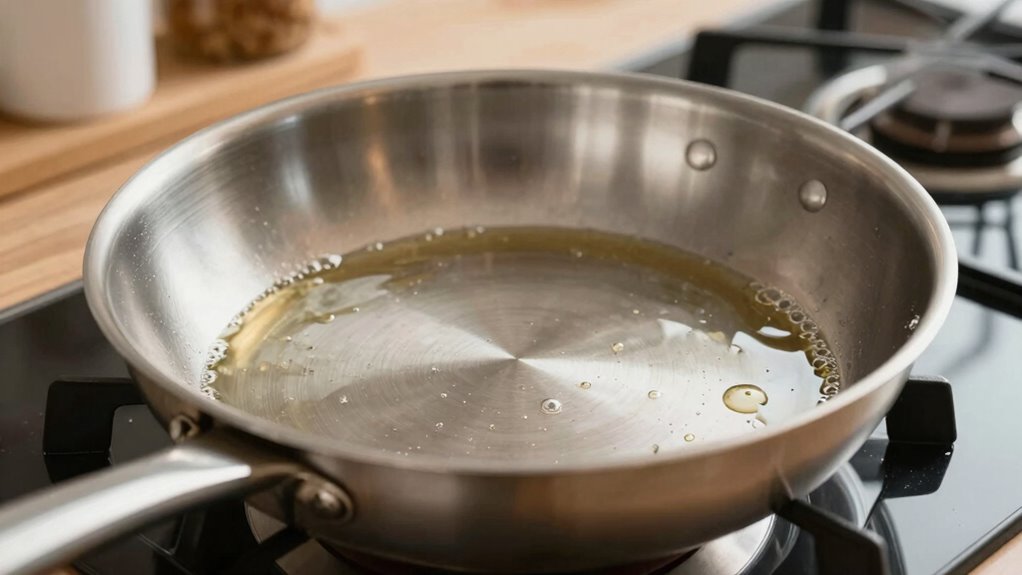
The “pan heat” rule to prevent food from sticking is simple: preheat your pan thoroughly over medium heat until it’s evenly warm, then add oil and wait until it shimmers or slightly sizzles. This ensures the surface develops a natural non-stick barrier and cooks food evenly. Avoid cold pans or pouring oil into a cold pan, as these cause sticking. To discover more tips on mastering proper heat and seasoning, keep exploring further.
Key Takeaways
- Preheat the pan over medium heat until it is evenly warm before adding oil.
- Wait until the oil shimmers or sizzles, indicating the pan has reached the optimal temperature.
- Add oil after preheating to develop a seasoned surface that reduces sticking over time.
- Avoid pouring oil into a cold pan; instead, heat the oil briefly until it just starts to shimmer.
- Adjust the heat as needed during cooking to maintain proper temperature and prevent sticking or burning.
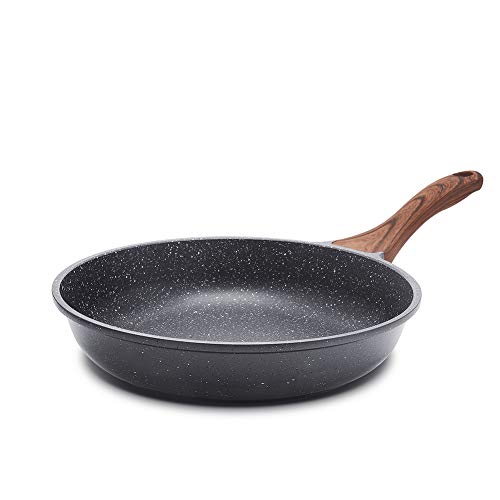
SENSARTE Nonstick Frying Pan Skillet, Swiss Granite Coating Omelette Pan, Healthy Stone Cookware Chef's Pan, PFOA Free (8/9.5/10/11/12.5 Inch) (9.5 Inch)
SWISS NON-STICK COATING – Switzerland ILAG nonstick coating, PFOA free, safe and healthy.
As an affiliate, we earn on qualifying purchases.
As an affiliate, we earn on qualifying purchases.
Why Does Food Stick to Your Pan: And How Can Heating Help?
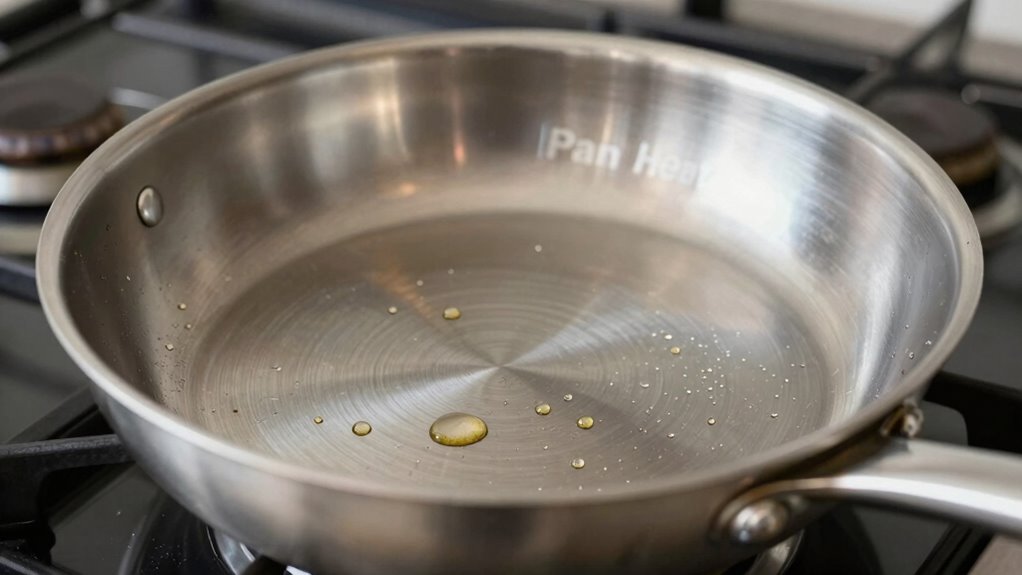
Have you ever wondered why food often sticks to your pan? The answer lies in proper heat management and oil seasoning. When your pan doesn’t heat evenly or quickly, food sticks because the surface isn’t hot enough to create a non-stick barrier. Using the right amount of oil helps develop a seasoned surface that improves with heat retention, making food less likely to stick over time. Heating your pan thoroughly before adding ingredients allows the oil to spread evenly, creating a barrier that prevents sticking. Good heat retention ensures consistent temperature, which is vital for preventing food from sticking and burning. Additionally, understanding thermal conductivity can help you select the best cookware for even heating. Remember, a well-heated, seasoned pan with proper oil application is your best defense against food sticking and makes cooking smoother and more successful. Proper pan preheating techniques can also significantly reduce sticking and improve your cooking results. Properly managing heat transfer ensures your pan maintains an even temperature, which is essential for consistent cooking performance. To optimize your cooking, paying attention to pan material properties can also enhance heat distribution and reduce sticking issues. Developing a good seasoning layer over time further minimizes food sticking and enhances non-stick qualities.

Lodge Seasoned Cast Iron Skillet – PFAS-Free, Non-Toxic Cookware – Use with an Oven, Stove, Grill, or Campfire – Naturally Non-Stick & Oven Safe – 10.25 Inches
Quality Cast Iron Frying Pan: The Lodge Seasoned Cast Iron Skillet is loved for its great heat retention,…
As an affiliate, we earn on qualifying purchases.
As an affiliate, we earn on qualifying purchases.
How to Properly Preheat Your Pan for Non-Stick Results
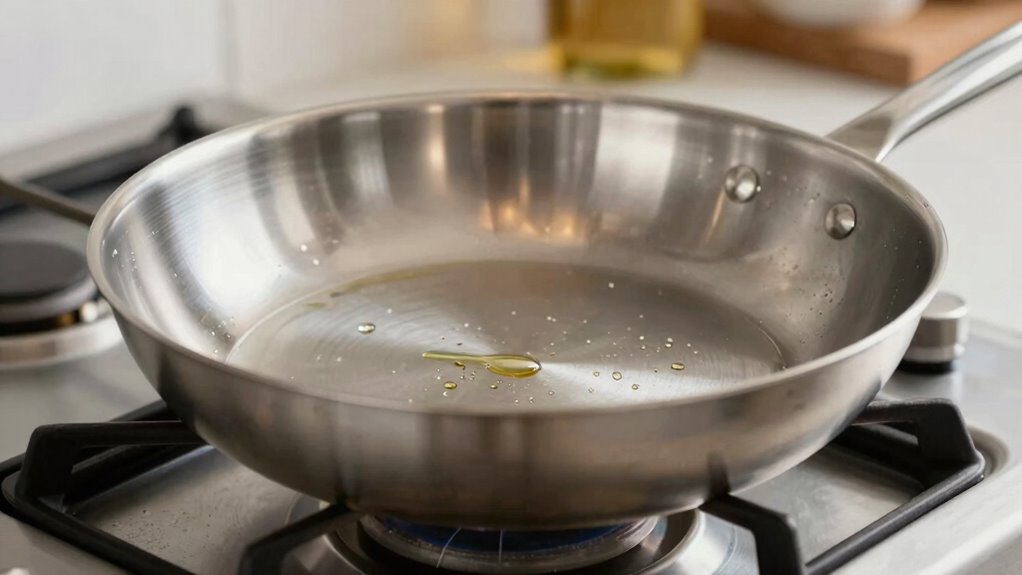
Preheating your pan properly is key to achieving non-stick results. Start by heating it over medium heat until it’s evenly warm. This allows you to apply seasoning techniques that develop a natural non-stick surface, especially if you’re using cast iron or carbon steel. To guarantee safety and longevity, follow pan cleaning tips by removing any old residue and avoiding soap that can strip seasoning. Once the pan is hot, add a small amount of oil, swirling to coat the surface evenly. This creates a barrier that prevents sticking and helps build a seasoned layer. Proper preheating ensures your food slides right off and reduces the need for excessive oil, making your cooking healthier and more efficient.

CRAFT911 Candy Thermometer with Pot Clip – Deep Fry Oil Thermometer for Frying and Candle Making
ACCURATE FAST READINGS (No More Burned Candy) — Our candy deep fry thermometer provides instant and accurate temperature…
As an affiliate, we earn on qualifying purchases.
As an affiliate, we earn on qualifying purchases.
What Signs Show Your Pan Is Hot Enough to Cook?
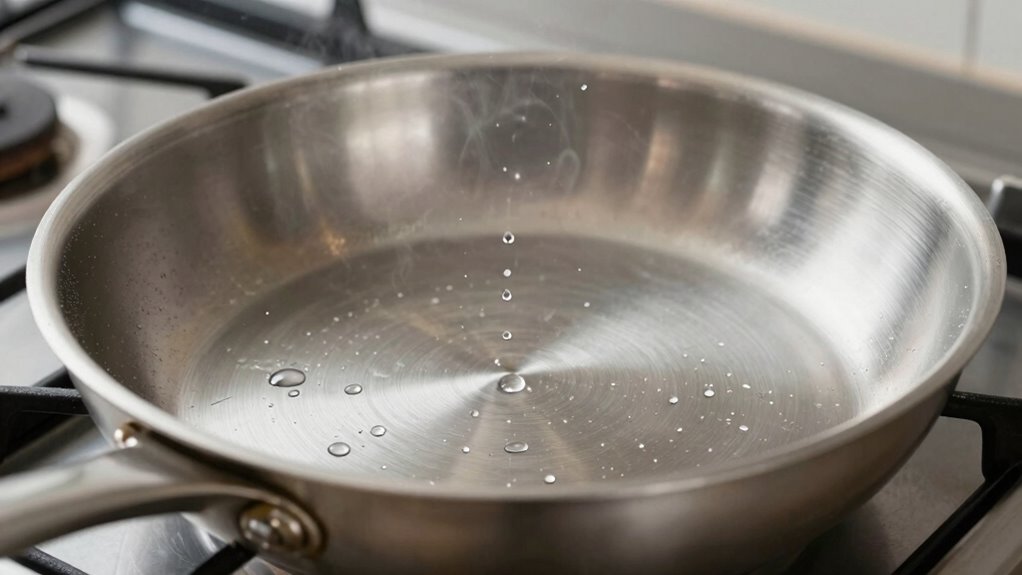
Knowing when your pan is hot enough to cook is essential for achieving ideal results. You’ll notice a few key signs indicating it’s ready. When the oil temperature reaches its smoke point, a faint shimmer appears, and tiny wisps of smoke may rise. You might also hear a slight sizzle when you add food. Touching the pan’s surface briefly can help; if it feels evenly warm but not scorching, it’s good to go. Use this table for quick reference:
| Sign | What It Means | Tip |
|---|---|---|
| Oil shimmering | Oil is hot enough to cook | Use a thermometer for accuracy |
| Light smoke | Oil approaches smoke point | Reduce heat if needed |
| Slight sizzling sound | Pan ready for ingredients | Keep heat consistent |
| No sticking or burning | Proper heat for non-stick results | Adjust heat as needed |
Additionally, preheating your pan properly can help ensure consistent cooking results. Proper pan heat management is crucial for optimizing cooking performance and preventing food from sticking. When you master these signs, you can better control your cooking process, leading to more delicious and evenly cooked meals. Being aware of the Flat Iron Bike principles can also influence how evenly heat distributes across your cookware, ensuring better results.

Non Stick Frying Pan, 10-inch Omelette Pan with Heat Dot Temperature Indicator, Healthy Non Toxic Egg Skillet with Heat-Resistant Handle, PFOA-Free, Dishwasher Safe, Compatible with All Cooktops
Thermo dot Heat Indicator:Features a high-sensitivity Heat Dot that changes colors for precision cooking. It turns from pale…
As an affiliate, we earn on qualifying purchases.
As an affiliate, we earn on qualifying purchases.
Understanding the Science: How Pan Temperature Affects Food Release
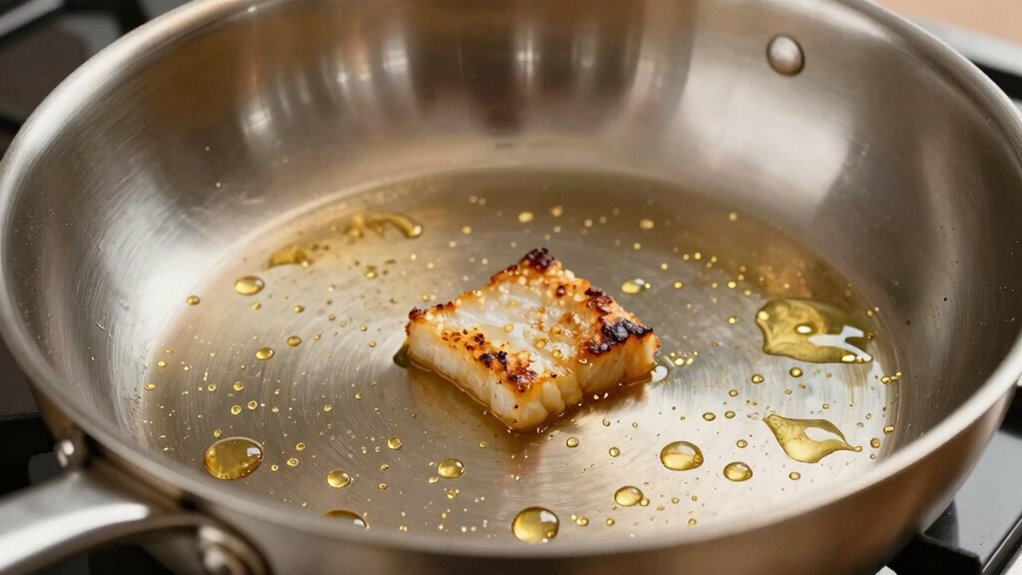
When your pan reaches the right temperature, the way food releases and cooks changes markedly. A properly heated pan creates a barrier that minimizes sticking, improves oil absorption, and enhances flavor development. If the pan’s too cool, food tends to stick and absorb more oil, making dishes greasy. Too hot, and food burns or cooks unevenly. Achieving the correct pan temperature is essential for optimal cooking results. Understanding these effects helps you control the cooking process. Proper heat management ensures consistent results and prevents common mistakes. Key points include: 1. Ideal temperature prevents sticking by forming a natural non-stick surface. 2. Proper heat limits excessive oil absorption, keeping dishes healthier. 3. Even temperature promotes better flavor development, ensuring food cooks evenly and tastes richer. Maintaining the correct appliance maintenance and ensuring your cookware is clean and in good condition can further improve heat distribution. Mastering pan heat ensures food releases effortlessly while maximizing taste and texture.
Common Mistakes That Keep Your Pan From Heating Properly

Using a cold pan or skipping preheating can prevent your pan from reaching the right temperature. Overcrowding traps heat and keeps the surface from heating evenly. Addressing these common mistakes helps you cook more efficiently and achieve better results. Additionally, understanding the importance of proper heat management ensures your dishes turn out perfectly every time. Maintaining consistent temperature control is essential for avoiding sticking and ensuring even cooking. Proper pan heating techniques also contribute significantly to preventing food from sticking to the surface. Being mindful of indoor air quality can also influence cooking conditions, as proper ventilation helps maintain an optimal environment for your kitchen activities. Proper kitchen ventilation plays a crucial role in maintaining the ideal cooking environment and preventing issues like food sticking.
Using Cold Pans
Have you ever tried to cook with a cold pan only to find it takes forever to heat up? Using a cold pan hampers your ability to control temperature effectively. When your pan starts cold, it delays reaching the ideal heat, making it harder to prevent sticking or burning. To improve your temperature control, consider these points:
- Always preheat your pan before adding ingredients to ensure even heating.
- Avoid pouring oil or ingredients into a cold pan, as this can cause sticking.
- Use medium heat initially, then adjust as needed for precise cooking.
- Incorporating scent balance techniques like preheating your pan can help maintain optimal cooking conditions and prevent sticking.
- Proper pan heating ensures consistent heat distribution, reducing the risk of food sticking or burning. Additionally, understanding heat transfer principles can help you optimize your cooking process for better results, especially when managing thermal conductivity.
Ignoring Preheating Steps
Ignoring preheating steps is a common mistake that prevents your pan from reaching the right temperature. When you skip this step, you risk oil smoking quickly or uneven heat distribution, which can cause food to stick. Preheating allows the pan to heat evenly, reducing the chance of hot spots that lead to sticking. If you add oil too early before the pan is hot enough, it may smoke or burn, ruining the flavor. Also, failing to preheat can cause the pan to warp over time, especially with sudden temperature changes. Proper preheating ensures the surface is evenly heated, helping your food cook smoothly. Take the time to let your pan heat up fully; it’s the key to preventing sticking and extending your pan’s lifespan. Temperature regulation during preheating is essential for achieving consistent results.
Overcrowding the Pan
When you overcrowd the pan, heat distribution becomes uneven, making it difficult for your food to cook properly. Pan overcrowding causes ingredients to steam instead of sear, leading to soggy textures and sticking issues. To prevent this, focus on proper ingredient layering and avoid adding too much at once. Additionally, using the right cooking gear can help maintain even heat and prevent sticking. Proper heat management is essential for achieving the perfect sear and avoiding food sticking to the pan. Here are some tips: 1. Cook in batches to ensure even heat exposure. 2. Leave space between ingredients for proper searing. 3. Use the right pan size—too small leads to overcrowding, too large wastes heat. Incorporating heat distribution techniques can further improve your results by promoting uniform cooking and preventing sticking. Paying attention to thermal conductivity of your cookware can also make a significant difference in how evenly your food heats.
The Best Pans for Applying the “Pan Heat” Rule
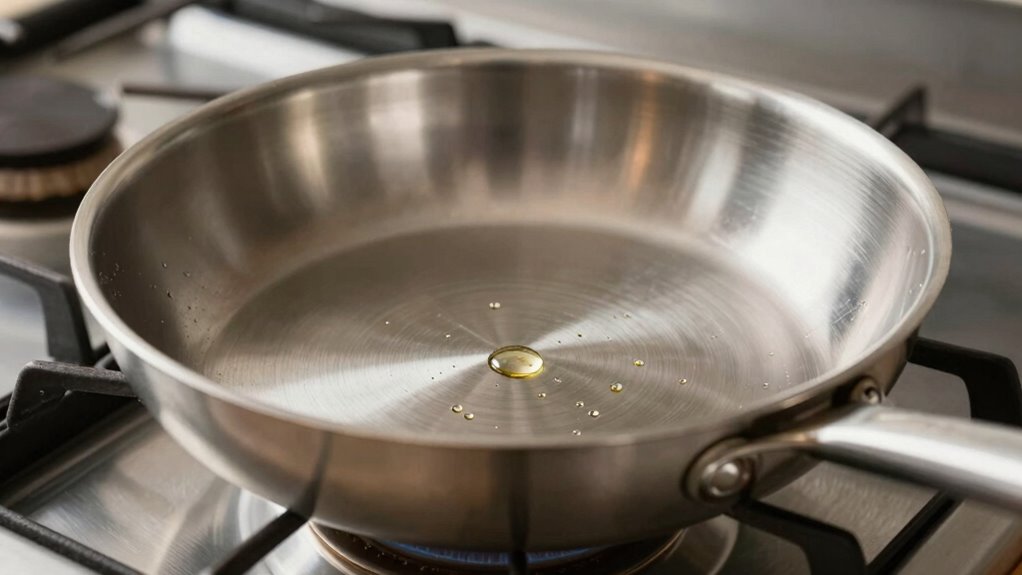
Choosing the right pan makes all the difference when applying the “Pan Heat” rule. You want a pan with materials that work well together for even heat distribution and compatibility with your stove. Nonstick coatings can also help maintain consistent temperature and prevent sticking.
Material Compatibility Tips
To effectively apply the “Pan Heat” rule, selecting the right cookware material is essential, as different pans respond uniquely to heat. Your choice influences thermal transfer efficiency and material durability.
Consider these tips:
- Cast iron offers excellent thermal transfer and long-lasting durability, making it ideal for consistent heat application.
- Stainless steel provides good durability and moderate thermal transfer, suitable for versatile cooking needs.
- Non-stick surfaces heat quickly but may lack durability over time, so they’re best for light use and delicate foods.
Matching the pan material to your cooking style ensures even heat distribution and prevents sticking. Proper material compatibility enhances the effectiveness of the “Pan Heat” rule for better results.
Optimal Heat Distribution
The key to maximizing the benefits of the “Pan Heat” rule lies in selecting pans that distribute heat evenly across their surfaces. Pans with high thermal conductivity transfer heat quickly and uniformly, preventing hot spots that cause sticking. Good heat retention also helps maintain consistent temperature, reducing the need for constant adjustments. Choose pans made from materials like copper or aluminum, which excel in thermal conductivity, paired with thick bases for heat retention. To visualize, consider this comparison:
| Material | Thermal Conductivity | Heat Retention |
|---|---|---|
| Copper | Very high | Moderate |
| Aluminum | High | Good |
| Cast Iron | Low to moderate | Excellent |
Opting for these pans guarantees even heat distribution, making cooking smoother and sticking less likely.
Nonstick Coating Benefits
Nonstick coatings substantially enhance the effectiveness of the “Pan Heat” rule by ensuring food releases easily and evenly. This allows you to master cooking techniques that prevent sticking without overloading the pan, promoting kitchen safety by reducing the need for excessive oil or scrubbing. Nonstick surfaces make it easier to cook delicate items like eggs or fish, where sticking is common. Additionally, they simplify cleaning, saving time and effort. To maximize benefits, consider these factors:
- Even heat distribution across the surface
- Durability of the coating for long-term use
- Compatibility with safe, low-to-medium heat settings
Using nonstick pans supports better kitchen safety practices and helps you achieve consistent results in your cooking techniques, reinforcing the importance of the “Pan Heat” rule.
Step-by-Step: Heating Your Pan for Different Types of Food
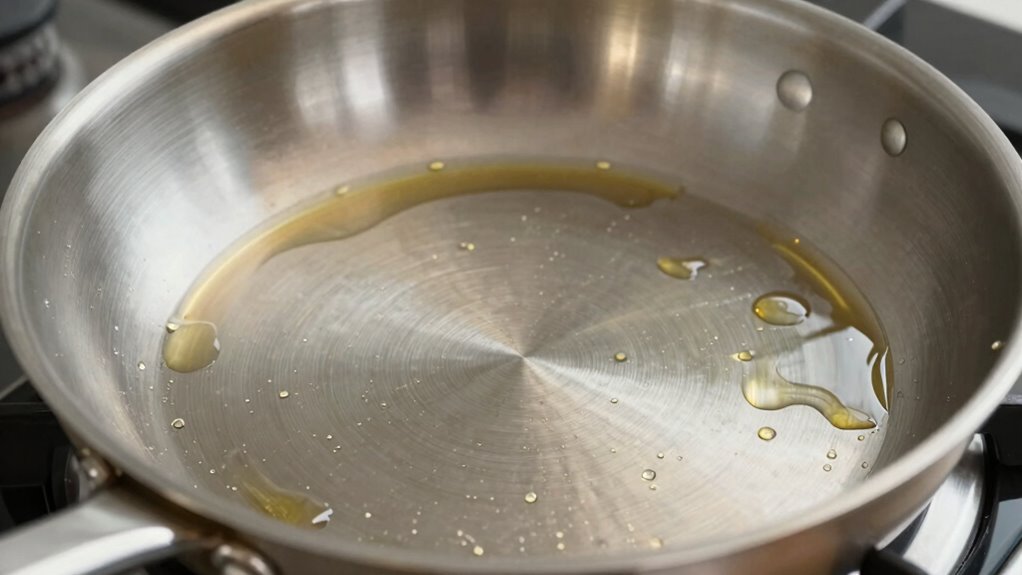
When heating your pan for different types of food, it’s essential to start with the right temperature to guarantee ideal results. For delicate foods like eggs or fish, heat the pan gently and gradually, ensuring it’s warm but not hot enough to cause sticking. For searing meats, preheat the pan until it’s very hot, which helps create a natural nonstick surface. To maintain consistent heat, consider your seasoning techniques; a well-seasoned pan heats evenly and reduces sticking. Proper pan storage also plays a role—storing your pan in a dry, cool place helps preserve its surface and prevents warping. Always preheat your pan before adding oil or ingredients, and adjust the heat as needed based on the food type to prevent sticking and achieve perfect results.
Troubleshooting: Why Food Still Sticks Even When You Heat the Pan Correctly
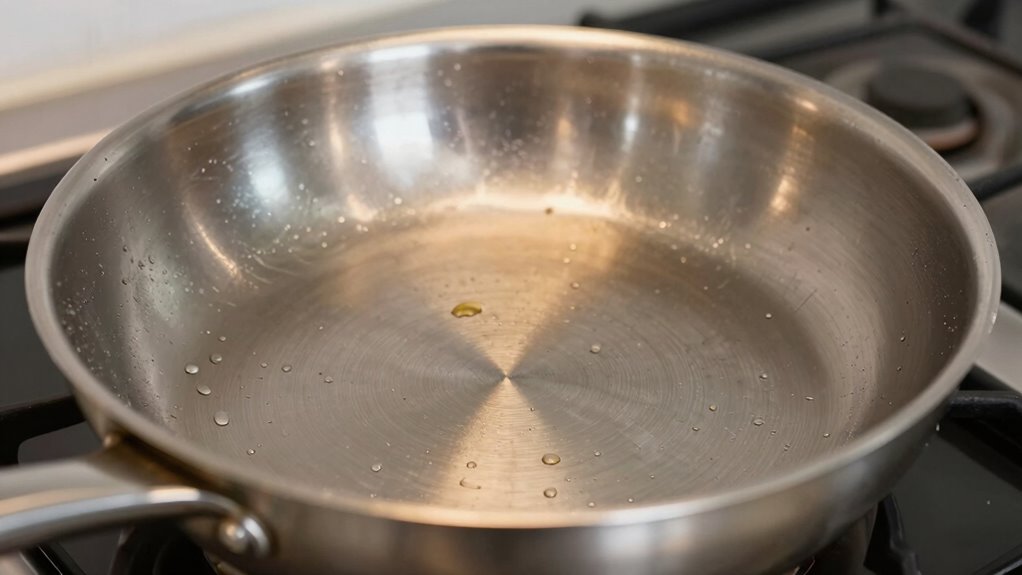
Even if you preheat your pan correctly, food can still stick due to several hidden factors. Poor seasoning techniques or inconsistent cleaning routines might be the culprit. First, inadequate seasoning can prevent a natural non-stick surface from forming, making food cling even when the pan is hot. Second, residual food or grease buildup from improper cleaning routines creates a sticky layer, overriding the pan’s heat advantage. Third, using the wrong fats or applying them at the wrong time can hinder proper seasoning and increase sticking. To troubleshoot, ensure you’re seasoning your pan properly and maintaining a regular cleaning routine. This helps prevent sticky residues and enhances the pan’s non-stick properties, making your cooking smoother and more successful.
Tips for Maintaining Proper Pan Heat During Cooking
To keep your pan at the right heat, start by preheating it properly each time before adding ingredients. Make sure you’re using the correct burner size to distribute heat evenly. Throughout cooking, adjust the heat as needed to maintain consistent temperature and prevent sticking or burning.
Preheat Properly Every Time
Are you preheating your pan enough before adding ingredients? Proper preheating guarantees even heat distribution and prevents sticking. If your pan isn’t hot enough, food sticks; if it’s too hot, oil can smoke, and the pan may warp. To get it just right:
- Wait until the pan is hot—drop a small amount of water; if it sizzles and evaporates immediately, it’s ready.
- Add oil and let it shimmer before adding food—this prevents sticking and enhances flavor.
- Adjust the heat as needed; too high can cause oil smoking, and too low won’t maintain consistent heat. Proper preheating keeps the pan stable, reduces warping, and ensures your food releases easily.
Use Correct Burner Size
Choosing the right burner size is vital for maintaining consistent pan heat during cooking. When you select a burner that matches your pan’s size, heat distributes evenly, preventing hot spots that can cause sticking or uneven cooking. Using the correct burner size also helps you control temperature better, which is essential for effective cooking techniques. Proper heat management enhances flavor by allowing ingredients to cook evenly and develop their natural tastes. Larger burners on small pans can cause overheating, while small burners on large pans may result in insufficient heat. Always match your pan to the burner, and avoid the temptation to crank up the heat unnecessarily. This simple step ensures better heat control, improves your cooking techniques, and boosts flavor enhancement.
Adjust Heat During Cooking
Ever wonder how to keep your pan at the right temperature while cooking? Adjusting the heat during cooking is key to preventing sticking and ensuring even results. Monitor the oil temperature; if it’s too hot, food can burn or stick, while too cool and it won’t sear properly. Use your burner’s heat control to fine-tune the temperature as needed. Remember, good heat distribution helps maintain consistent cooking conditions.
Here’s how to do it effectively:
- Start with medium heat and adjust as you observe the oil’s shimmer or smoke point.
- Lower the heat if food starts sticking or if oil begins to splatter excessively.
- Raise the heat briefly for a quick sear, then reduce to maintain even heat.
Keeping these tips in mind helps maintain ideal pan heat and prevents sticking.
How Mastering Pan Heat Improves Your Cooking Results

Mastering pan heat is essential because it directly influences how your food cooks, ensuring better texture, flavor, and consistency. When you use seasoned cookware, its well-developed surface improves heat conduction, allowing for even heat distribution. This helps prevent hot spots that can cause sticking or uneven cooking. By controlling your pan’s heat, you can achieve the perfect sear, maintain moisture, and avoid burning delicate ingredients. Proper heat management also means less frustration and fewer ruined dishes. With experience, you’ll learn to recognize the right temperature for different foods, making your cooking more efficient and predictable. Ultimately, understanding how to master pan heat transforms your culinary results, giving you more control and better outcomes with every meal.
Frequently Asked Questions
Does the Type of Oil Affect the “Pan Heat” Rule?
Yes, the type of cooking oil affects the “pan heat” rule because different oils have varying oil smoke points. When you heat oil past its smoke point, it can burn and cause sticking or unpleasant flavors. To prevent this, choose an oil with a higher smoke point, like avocado or refined canola oil, and keep an eye on your pan’s temperature. This way, you avoid sticking and guarantee better cooking results.
Can the “Pan Heat” Rule Be Applied to Non-Stick Pans?
Think of your non-stick pan as a well-trained dancer, gliding effortlessly across the stage. Yes, the “pan heat” rule applies, but its impact depends on the pan’s non-stick compatibility and heat transfer efficiency. When you heat it properly, the coating prevents sticking and ensures even cooking. Keep the heat moderate to avoid damaging the surface, allowing your pan to perform its best without sticking or compromising its longevity.
How Long Should I Preheat My Pan for Optimal Results?
You should preheat your pan for about 2-3 minutes to reach the ideal temperature. This duration ensures the pan heats evenly and is hot enough to prevent sticking without overheating. To check, sprinkle a few drops of water; if they dance and evaporate quickly, you’re at the right temperature. Proper preheating creates a non-stick surface, making cooking more efficient and your food less likely to stick.
Is There a Risk of Burning Food With High Pan Heat?
Yes, there’s a risk of burning food with high pan heat. When your pan gets too hot, oil can start smoking, indicating it’s overheating beyond your food’s heat tolerance. This can lead to burnt flavors and unhealthy fumes. To avoid this, monitor the oil’s smoke point and adjust the heat accordingly. Using moderate heat helps you cook evenly without risking burnt food or damaging your pan.
How Does Pan Material Influence Heat Distribution and Sticking?
Your choice of pan material directly impacts heat distribution and sticking. For example, copper pans heat evenly, enhancing cooking techniques and reducing hot spots, while non-stick coatings prevent food from sticking, making cleanup easier. Durable materials like cast iron last long and retain heat well, but require proper seasoning. By selecting the right pan, you improve your cooking precision, minimize sticking, and make certain of consistent results every time.
Conclusion
So, now that you know the secret “pan heat” rule, go ahead and pretend you’re a professional chef—minus the fancy kitchen, of course. Just remember, heating your pan properly isn’t rocket science; it’s just a simple trick to avoid sticking disasters and make your dinner look like a five-star masterpiece. So, next time food sticks, don’t blame the pan—blame your “scientist in training” skills. Happy cooking!