
TL;DR

Get the latest gadgets delivered free — and shop member deals
- Fast, free delivery on millions of items
- Access to Prime Big Deal Days deals on October 6–7
- Prime Video, Amazon Music and more included
Archaeologists discovered a 1,600-year-old Egyptian mummy buried with fragments of Homer’s Iliad. This find suggests a significant cultural connection between Egypt and Greece during late antiquity, with possible symbolic or ritual importance.
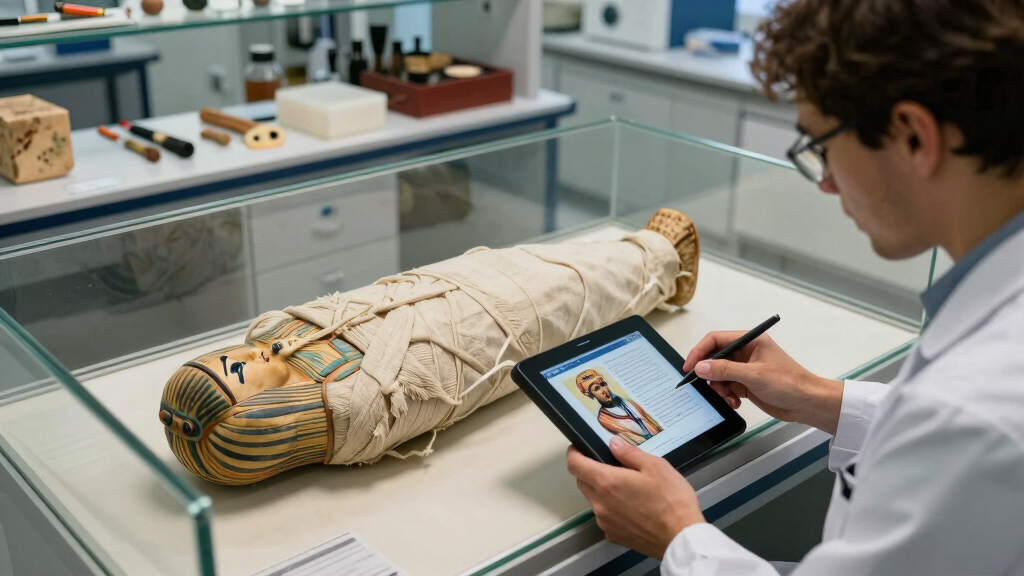
Archaeologists have confirmed the discovery of a 1,600-year-old Egyptian mummy buried with fragments of Homer’s Iliad, marking a rare find that underscores Greek cultural influence in Egypt during late antiquity.
The mummy was excavated from a tomb in the Egyptian town of Al Bahnasa. It contains preserved pages from Homer’s Iliad, specifically lines from Book 2’s ‘catalogue of ships,’ dated to the Roman period, roughly the 4th to 5th centuries CE. This discovery suggests that Greek literary texts held significant cultural or ritual importance in Egypt long after the classical Greek era.
According to archaeologists involved in the excavation, the pages were likely placed intentionally within the tomb, possibly functioning as a cultural ‘passport’ or symbolic object. Experts note that Greek literacy and influence persisted in Egypt well into the late Roman Empire, especially among the elite classes who valued Greek education and literature. The pages appear to be part of a fragmentary papyrus scroll, expertly preserved despite the centuries buried underground.
Why It Matters
This discovery highlights the enduring cultural exchange between Egypt and Greece, especially during the late Roman period when Greek language and literature were highly esteemed in Egypt. It suggests that Homer’s works, particularly the Iliad, were not only literary treasures but also held symbolic or ritual significance, possibly serving as a spiritual safeguard or status symbol for the deceased. The find underscores the importance of Greek influence in Egypt’s cultural and social spheres during this era, extending beyond mere literary appreciation to ritual and identity formation.
As an affiliate, we earn on qualifying purchases.
Background
While Greek influence in Egypt is well-documented from earlier periods, especially during the Ptolemaic dynasty, this 4th-5th century CE find demonstrates that Greek literary texts continued to be valued long after the Hellenistic period. The discovery aligns with other evidence of Greek literacy and cultural integration in Egypt during late antiquity, a time when Egypt was part of the Roman Empire. The presence of Homeric fragments in tombs is rare and suggests a special status for Greek texts among certain Egyptian communities.
“The presence of Homer’s Iliad pages in this tomb indicates a deep cultural connection and suggests that Greek literature played a significant role in Egyptian spiritual or social practices during late antiquity.”
— Dr. Maria El-Amin, Egyptologist
“The idea that Homer’s works served as a kind of cultural passport or spiritual talisman in Egypt is fascinating and opens new avenues for understanding how Greek literature was integrated into local traditions.”
— Professor James Carter, classical scholar
As an affiliate, we earn on qualifying purchases.
What Remains Unclear
It remains unclear whether the pages were placed for ritual purposes, as a status symbol, or for some other reason. The exact manner in which Homer’s Iliad was used or valued in this context is still under investigation, and further analysis of the papyrus may shed light on its original purpose.
As an affiliate, we earn on qualifying purchases.
What’s Next
Researchers plan to analyze the papyrus fragments more thoroughly, including carbon dating and textual analysis, to confirm their origin and significance. Excavations in the region may uncover additional artifacts that clarify the cultural practices of late antique Egypt.
Greek mythology and history books
As an affiliate, we earn on qualifying purchases.
As an affiliate, we earn on qualifying purchases.
Key Questions
How rare is it to find Homer’s texts in Egyptian tombs?
Such finds are extremely rare; this is one of the few documented instances of Homeric texts discovered in Egyptian burial contexts, particularly from the late Roman period.
What does this discovery tell us about Greek influence in Egypt?
It suggests that Greek literature and cultural symbols remained influential and valued in Egypt long after the classical Greek era, especially among elite or religious communities.
Could the Homeric pages have had a ritual purpose?
It is possible; scholars are investigating whether the pages served as spiritual talismans or symbols of status, but definitive conclusions have yet to be reached.
Will there be further excavations related to this find?
Yes, archaeologists plan to continue excavations in the area to uncover additional artifacts that may provide more context about the cultural practices of the time.
Halloween Picks
halloween
As an affiliate, we earn on qualifying purchases.