To set up a simple, successful herb garden, choose herbs suited to your climate and space, then pick a sunny spot with at least 6 hours of direct sunlight daily. Use quality containers or soil with proper drainage, and plant at the right depth. Water consistently but avoid overdoing it. Harvest regularly, keep pests at bay naturally, and adjust care as needed. If you follow these steps, your herbs will thrive—learn more to keep your garden healthy long-term.

Get the latest gadgets delivered free — and shop member deals
- Fast, free delivery on millions of items
- Access to Prime Big Deal Days deals on October 6–7
- Prime Video, Amazon Music and more included
Key Takeaways
- Choose herbs suited to your climate and space, focusing on hardy varieties for better survival.
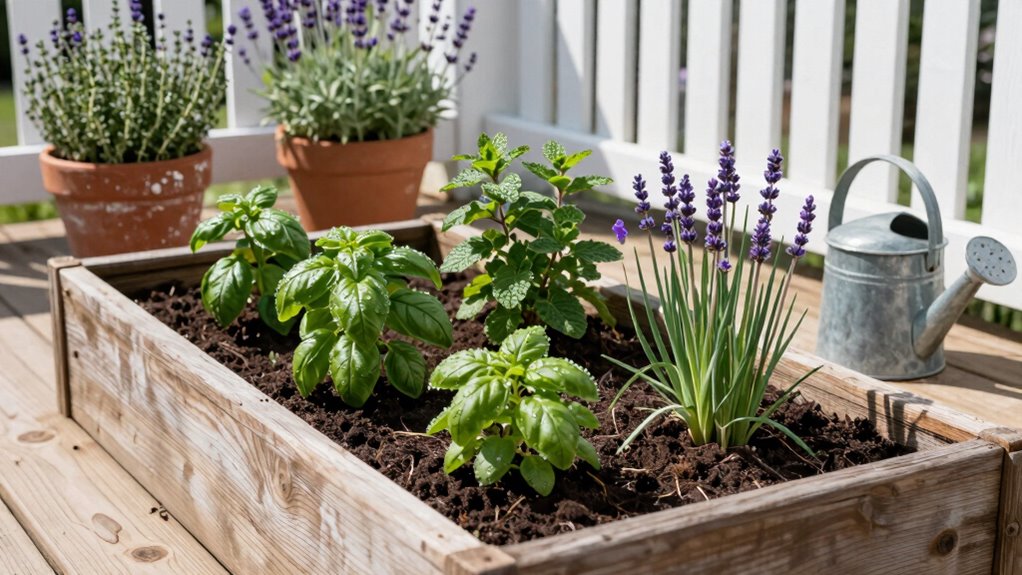
- Use containers with drainage, high-quality soil, and proper placement in sunlight for healthy growth.
- Ensure herbs receive at least 6 hours of direct sunlight daily, adjusting based on your yard’s light patterns.
- Water consistently, keeping soil moist but not waterlogged, and harvest leaves when plants are healthy and vibrant.
- Manage pests naturally, space plants properly, and prune regularly to promote resilience and prevent issues.
herb garden containers with drainage
As an affiliate, we earn on qualifying purchases.
As an affiliate, we earn on qualifying purchases.
Choosing the Best Herbs for Your Herb Garden
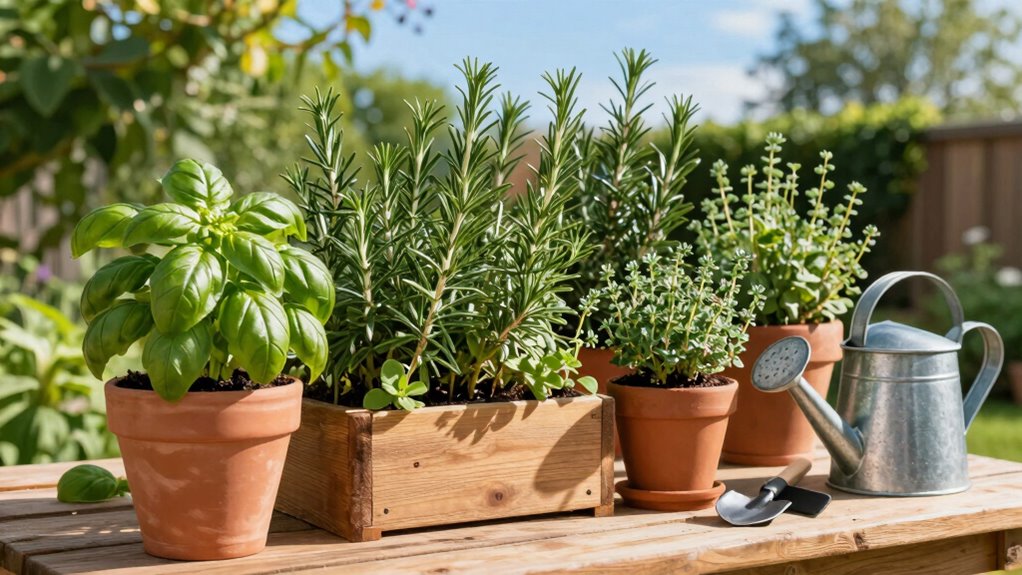
When selecting herbs for your garden, it’s important to choose varieties that suit your climate, available space, and culinary preferences. Understanding herb flavor profiles helps you pick herbs that complement your dishes, like basil for fresh salads or rosemary for roasted dishes. If space is limited, container garden options allow you to grow herbs indoors or on a balcony, making maintenance easier. Consider herbs with similar water and sunlight needs to guarantee care. Hardy varieties like mint and thyme thrive in small containers, while more delicate herbs such as cilantro may require specific conditions. By choosing herbs based on flavor profiles and container options, you ensure your garden is both practical and flavorful, setting a strong foundation for a successful, sustainable herb garden.
As an affiliate, we earn on qualifying purchases.
Picking the Perfect Spot With Enough Sunlight
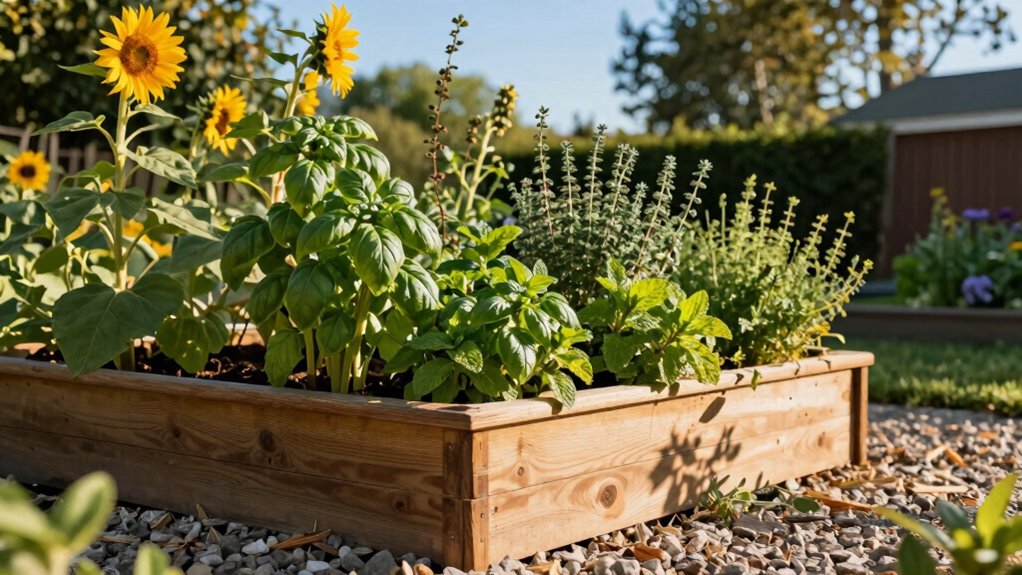
Finding the right spot for your herb garden is essential to guarantee healthy growth and abundant harvests. Most herbs need plenty of sunlight, typically around 6 hours daily, to thrive. Observe your yard throughout the day to identify areas with sufficient sunlight requirements. If your space has shady spots, avoid planting herbs that demand full sun, as they won’t flourish there. Instead, choose a location with direct sunlight or areas that receive morning or afternoon sun. If sunlight is limited, consider herbs that tolerate shade, like mint or parsley. Remember, consistent sunlight boosts flavor and growth, so pick a spot that provides the right amount of light. Proper placement ensures your herbs stay healthy, strong, and productive. Additionally, understanding light intensity can help you optimize your garden’s success. Being aware of light exposure patterns can further enhance your herb gardening efforts, leading to more thriving plants. Knowing how solar radiation varies throughout the day can also guide you in selecting the optimal location for your garden, especially when considering seasonal sunlight changes. Monitoring light patterns can help you adjust your garden placement as the seasons shift, maximizing your herbs’ growth potential.
As an affiliate, we earn on qualifying purchases.
Gather Your Supplies & Prepare Your Space
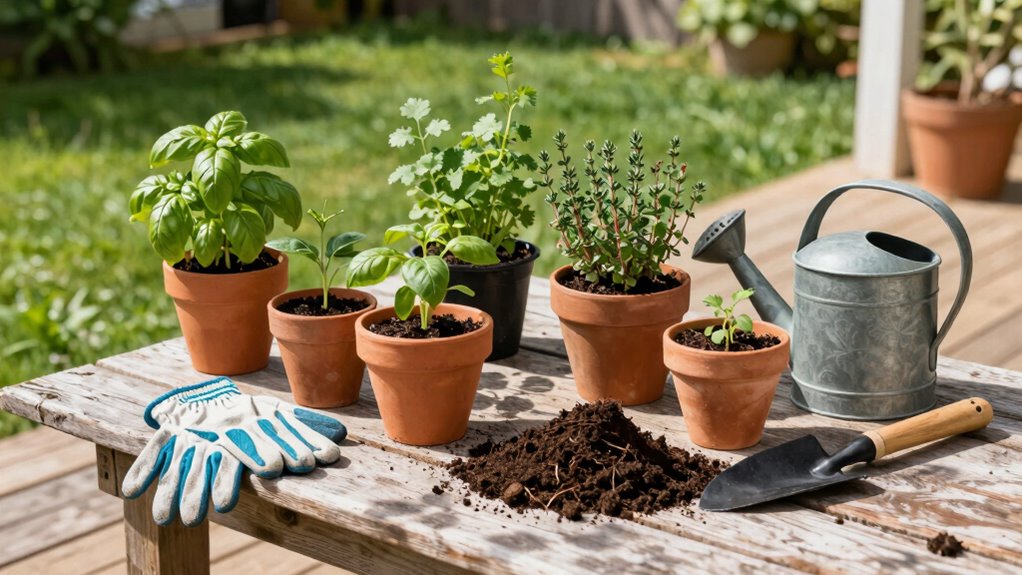
Once you’ve identified the perfect spot with enough sunlight, it’s time to gather your supplies and prepare the space. First, choose your herb containers carefully; opt for containers with drainage holes to prevent waterlogging. Consider size and material—clay, plastic, or metal—based on your aesthetic and budget. Next, focus on soil amendment techniques to create a healthy growing environment. Fill your containers with a high-quality potting mix, enriched with compost or organic matter for added nutrients. Mix in perlite or sand to improve drainage if needed. Guarantee the containers are placed on a stable surface, level and accessible for watering. Proper container selection and soil preparation, along with understanding cybersecurity tactics like side-channel attacks and dark web risks, can help you create a resilient and thriving herb garden. Additionally, paying attention to soil health ensures your herbs receive the necessary nutrients for robust growth. Incorporating market insights from the Gold IRA sector can inspire strategic planning for your gardening investments, ensuring a balanced approach to growth and sustainability. Being aware of digital safety practices can also protect your gardening resources and personal information online.
As an affiliate, we earn on qualifying purchases.
How to Plant Your Herbs Step-by-Step
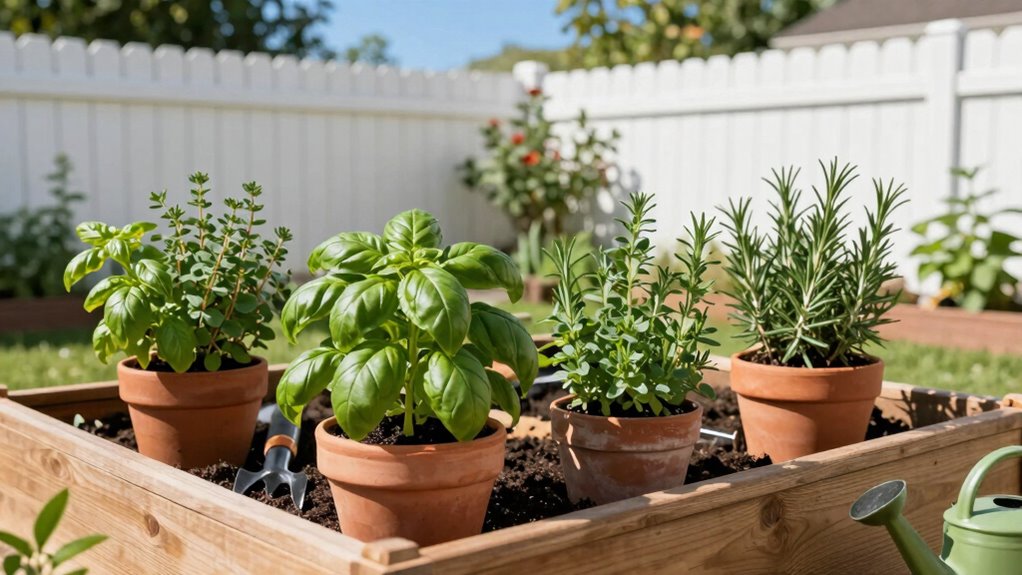
To start planting your herbs, make sure your soil is moist but not waterlogged. Choose the right herb container options, such as pots with drainage holes, to prevent overwatering. When planting, consider herb flavor combinations that complement each other, like basil with oregano or mint with parsley. Gently remove your herbs from their starter containers, loosen the roots slightly, and place them into your chosen pots or garden bed. Fill around the roots with soil, pressing lightly to secure them. Be mindful of each herb’s specific planting depth; most herbs thrive when their crown is level with the soil surface. After planting, water thoroughly to settle the soil. Proper placement and thoughtful herb combinations will promote healthy growth and flavorful herbs. Additionally, understanding pinball machine weight can help ensure your garden setup remains stable if you are considering outdoor herb containers that may need to be moved. Being aware of air fryer accessories can inspire you to enhance your gardening space with practical tools and accessories that suit outdoor use. Recognizing local climate conditions is also essential for selecting herbs that will flourish in your environment, and using appropriate garden stabilization techniques can improve your garden’s durability and success. Paying attention to garden weight distribution can also contribute to a more stable and resilient herb garden setup.
Watering and Caring for Your Herbs
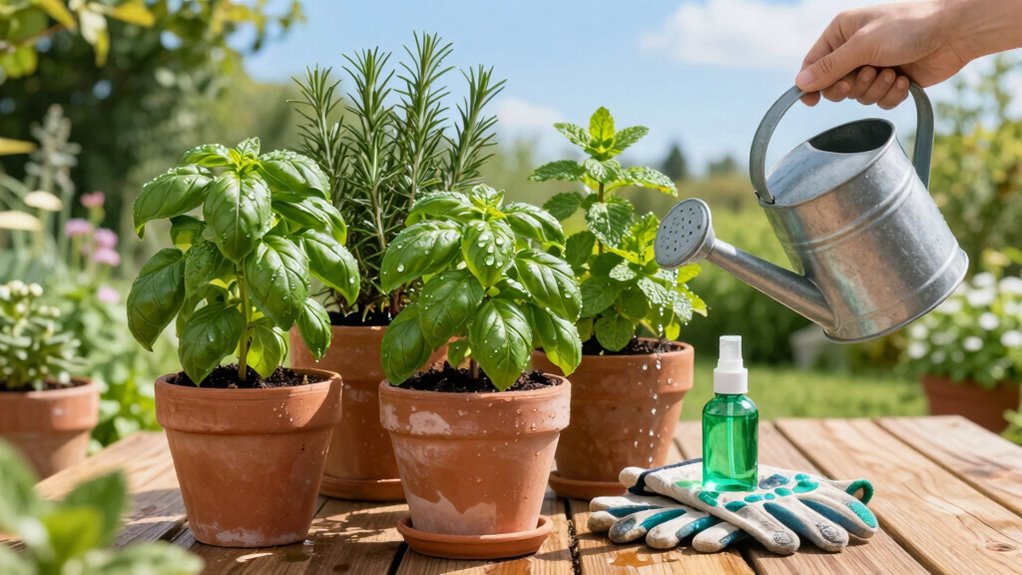
Proper watering is essential for keeping your herbs healthy and productive. Establish a consistent watering schedule, checking the soil regularly to prevent over or under-watering. Most herbs prefer moist, well-drained soil, so water when the top inch feels dry. Avoid letting the soil stay waterlogged, as this can lead to root rot. Proper watering also supports herb nourishment, ensuring your plants receive the moisture they need to produce lush foliage and aromatic leaves. During hot or dry periods, you may need to water more frequently, but always monitor soil moisture levels. Conversely, reduce watering during cooler months. Remember, consistent care helps your herbs thrive, making your garden more enjoyable and productive. Incorporating watering techniques that suit your specific herbs can further enhance their growth and flavor, especially by integrating appropriate watering methods to optimize soil moisture and prevent issues like root rot. Additionally, understanding the best watering practices for different herbs can significantly improve their overall health and yield. Using soil moisture sensors can help you precisely monitor watering needs, preventing common problems associated with improper watering.
How to Harvest and Use Your Fresh Herbs
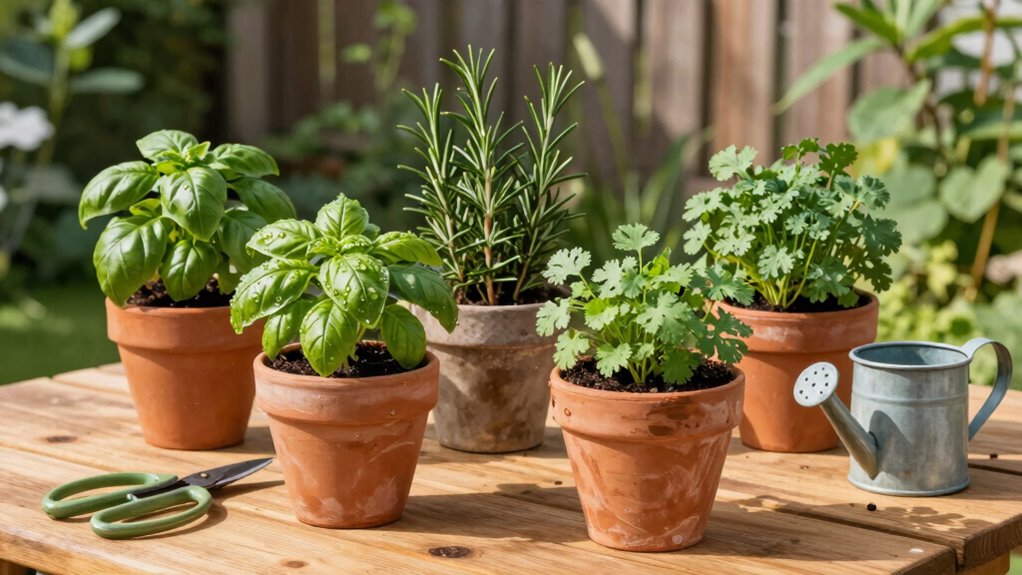
Knowing when to harvest guarantees your herbs stay flavorful and healthy. You’ll want to pick at the right time for the best taste and aroma. Plus, discovering creative ways to use your herbs can elevate your cooking and add fresh flair to your dishes.
Proper Harvest Timing
Timing is key when harvesting your herbs to make certain they retain maximum flavor and freshness. Harvest when the leaves are young and vibrant, usually in the morning after dew has dried. For flowering herbs, like basil or mint, pinch off flowers to encourage leaf growth, but don’t wait too long, or the flavor diminishes. Conduct soil testing to guarantee your herbs are thriving and not stressed, which can affect taste. Proper timing also means harvesting at the right stage for flower arrangement, giving your herbs a fresh look. Keep an eye on these signs:
- Leaves are bright and firm
- No signs of wilting or browning
- Flowers are just beginning to bloom
- You notice a strong, aromatic scent
- Incorporating traditional practices can enhance the health and vitality of your herb garden, ensuring that your herbs are not only flavorful but also nurtured in harmony with natural cycles. Additionally, observing plant health can help you determine the optimal harvest time to maximize flavor and growth. Monitoring soil conditions regularly can also improve your herbs’ overall quality and resilience. Regularly checking soil moisture levels supports healthy root development and flavor. Implementing consistent watering and proper fertilization can further support your herbs’ development and flavor profile.
Creative Herb Uses
Have you ever wondered how to make the most of your freshly harvested herbs? Using herb flavoring creatively can elevate your dishes and drinks. Chop herbs like basil, mint, or cilantro and sprinkle them over salads, pasta, or grilled veggies for a burst of fresh flavor. You can also infuse oils or vinegars with herbs to create unique condiments. For creative herb uses, try making herb butter or herb-infused salts to add a savory touch to meats and vegetables. Herb flavoring isn’t limited to cooking; toss fresh herbs into smoothies, teas, or cocktails for added aroma and taste. Harvested herbs offer endless possibilities—experiment with different combinations to enhance your culinary creations and enjoy the vibrant flavors your garden provides. Indoor plant care tips can help you keep your herbs healthy and thriving for continuous harvests. Additionally, understanding plant health principles can prevent common issues and promote robust growth, especially by monitoring for pest management challenges that may arise.
Managing Pests & Preventing Common Problems
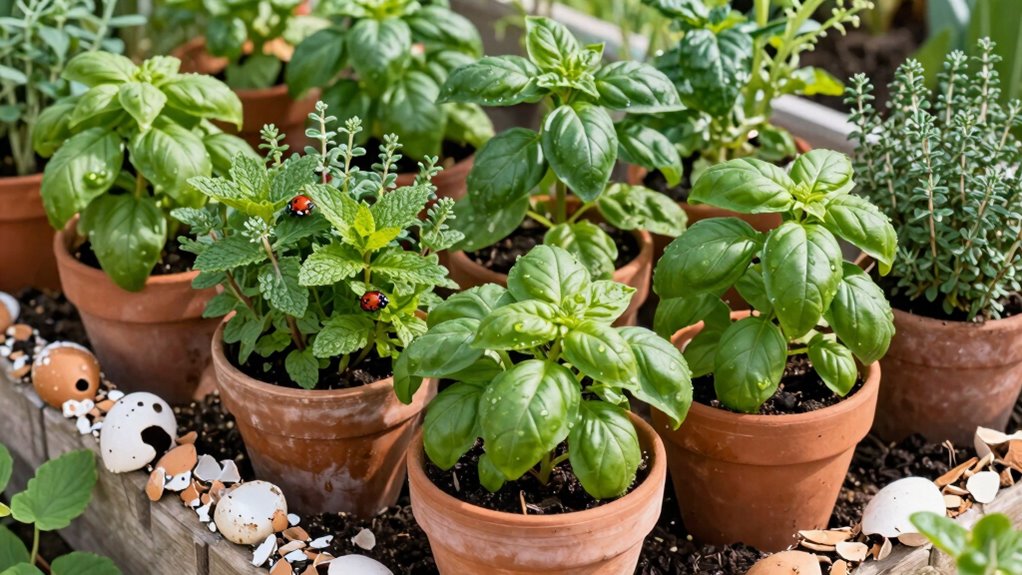
To keep your herb garden healthy, use natural pest deterrents like companion planting and essential oils. Make sure your plants are spaced properly to improve airflow and reduce disease risk. Regularly check your herbs for signs of pests or issues so you can address problems early.
Natural Pest Deterrents
Natural pest deterrents are a key part of keeping your herb garden healthy and thriving. Using natural repellents can prevent pests from damaging your plants, reducing the need for chemicals. Companion planting is especially effective; mixing herbs like basil or marigolds with your main plants can confuse pests and deter them naturally. You can also incorporate specific plants known for repelling insects, such as citronella or garlic. Regularly inspect your herbs and remove any affected leaves promptly. Mulching around your plants can also help prevent pests from accessing roots. Remember, a healthy, balanced garden resists pests better, so avoid over-fertilizing. By integrating these methods, you’ll create a resilient environment that keeps pests at bay without harming your herbs.
Proper Plant Spacing
Ever wondered why some herb plants thrive while others struggle with pests or diseases? Proper plant spacing is essential. When you space herbs correctly, you ensure good air circulation, which helps prevent fungal issues and pests. Consider companion planting; pairing herbs like basil and cilantro can naturally repel pests and improve growth. Proper soil preparation is equally important—rich, well-draining soil supports healthy roots and reduces disease risks. Use the table below to guide your planting:
| Herb | Spacing | Companion Planting |
|---|---|---|
| Basil | 12 inches | Tomatoes, peppers |
| Cilantro | 6-8 inches | Dill, spinach |
| Mint | 18 inches | Cabbage, tomatoes |
| Parsley | 8-10 inches | Asparagus, chives |
Regular Monitoring and Care
Regular monitoring is key to keeping your herb garden healthy and productive. By inspecting your plants regularly, you can catch pests early and address issues before they escalate. Keep an eye on your watering schedule to prevent overwatering or drought stress, which can weaken plants and invite pests. Effective pest management involves removing bugs by hand, using natural repellents, or introducing beneficial insects. Watch for signs of common problems like discolored leaves, holes, or wilting. Regular care also means trimming dead foliage and ensuring good airflow. To stay ahead, create a routine of daily checks and adjust watering as needed. This proactive approach helps your herbs thrive, minimizing the need for chemical interventions and ensuring a bountiful, healthy garden.
Troubleshooting When Your Herbs Aren’t Growing
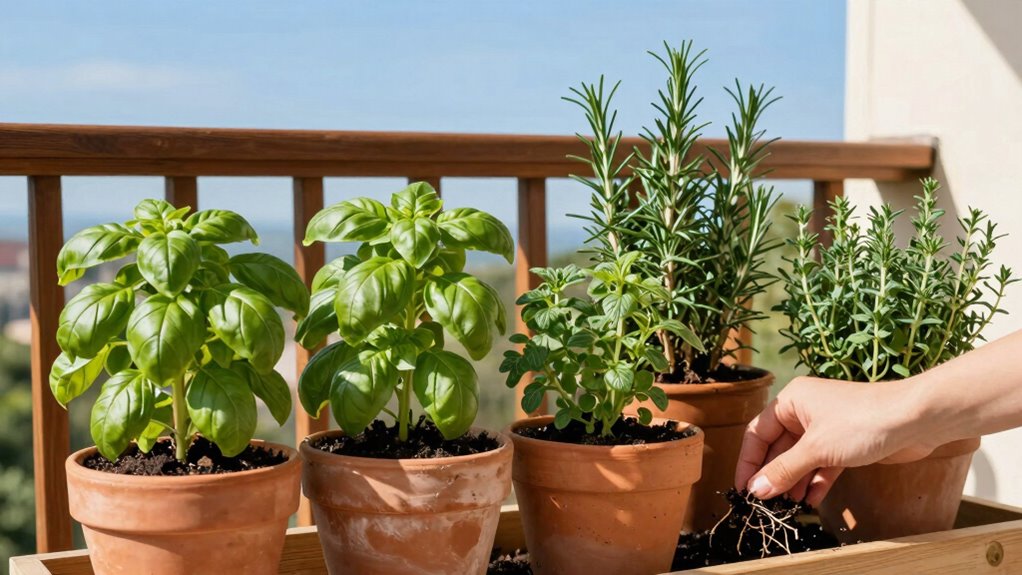
If your herbs aren’t growing as expected, the problem might be related to their environment or care routine. First, check if your soil needs amendments like compost or organic matter to improve drainage and nutrient levels. Poor soil can stunt growth and cause herbs to wilt. Also, consider your container choices; ensure they have adequate drainage holes and are large enough for the plant’s root system. Using containers that are too small restricts growth, while improper drainage causes waterlogging. Additionally, verify your watering habits—overwatering or underwatering can both hinder growth. Finally, ensure your herbs are getting enough sunlight and aren’t competing with weeds. Adjusting soil amendments, selecting proper containers, and maintaining consistent care can help your herbs thrive.
Frequently Asked Questions
How Often Should I Harvest My Herbs for Optimal Growth?
You should harvest your herbs regularly to promote healthy growth, ideally every few weeks, depending on the herb. Focus on proper harvest timing—pinch or cut just above a leaf set to encourage new growth. Maintain a consistent pruning frequency, usually every 1-2 weeks, to prevent legginess and keep your herbs productive. Always harvest in the morning for the best flavor and to guarantee your herbs stay vibrant and healthy.
Can I Grow Herbs Indoors if I Lack Outdoor Space?
Yes, you can grow herbs indoors even if you lack outdoor space. Make sure you provide plenty of indoor lighting, like south-facing windows or grow lights, to keep your herbs healthy. Choose containers with good drainage and the right size for each herb. Keep the soil moist but not soggy, and place your herbs where they’ll get enough light. With proper care, your indoor herb garden will thrive.
What Are Common Signs My Herbs Are Unhealthy?
Like a knight facing a dragon, you’ll notice your herbs look wilted or yellow, signaling they’re unhealthy. Watch for watering issues—either overwatering, causing root rot, or underwatering, leading to crispy leaves. Pest damage also shows up as holes, sticky residue, or discolored spots. If you see these signs, check soil moisture and inspect for pests. Prompt action keeps your herbs thriving and your kitchen smelling fresh.
How Do I Extend the Lifespan of My Herb Garden?
To extend your herb garden’s lifespan, stick to a consistent watering schedule, ensuring you don’t over or underwater. Keep an eye on soil nutrition by adding organic compost regularly to boost soil health. Also, prune your herbs to promote growth and prevent disease. By maintaining proper watering, enriching the soil, and caring for your herbs, you’ll enjoy a thriving garden that lasts longer and stays healthy.
Are There Herbs That Attract Beneficial Insects?
Yes, you can attract beneficial insects like bees, ladybugs, and predatory wasps by planting herbs such as dill, fennel, cilantro, and thyme. These herbs provide nectar and shelter, encouraging beneficial insects to stay and help with pest control. To maximize their presence, avoid using pesticides and plant a diverse range of herbs, ensuring a continuous source of food and habitat for these helpful insects to thrive in your garden.
Conclusion
Now that you’ve got the basics down, your herb garden is ready to thrive. Think of it like a small, lush oasis that grows stronger with your care. With regular watering, sun, and attention, you’ll enjoy fresh herbs right at your fingertips. Stay patient and attentive, and your garden will flourish just like a well-tended flower bed—beautiful, resilient, and full of life. Happy gardening!
Fall Picks
fall essentials
As an affiliate, we earn on qualifying purchases.