Many believe bug lights repel insects, but they often attract different species or have little impact. These lights emit wavelengths, including UV and blue light, which attract many bugs, making the switch to yellow or amber bulbs a better choice for reducing insects. Avoid relying solely on bug lights—combine smarter lighting with environmental strategies like removing standing water or using natural repellents. If you want to discover more effective tips, keep exploring how to create an insect-resistant outdoor space.

Get the latest gadgets delivered free — and shop member deals
- Fast, free delivery on millions of items
- Access to Prime Big Deal Days deals on October 6–7
- Prime Video, Amazon Music and more included
Key Takeaways
- Traditional yellow bug lights often attract as many insects as standard bulbs because they emit UV and blue wavelengths.
- Using amber or warm-colored lights with UV-filtering technology significantly reduces insect attraction outdoors.
- Combining insect-repellent lighting with environmental controls like eliminating standing water enhances pest management.
- Relying solely on bug lights is ineffective; integrate multiple strategies such as citronella candles and ecological pest control.
- Understanding insect light sensitivities and ecosystem dynamics helps create a sustainable, bug-minimized outdoor environment.
As an affiliate, we earn on qualifying purchases.
Do Bug Lights Really Attract Fewer Insects: or Just Different Bugs?
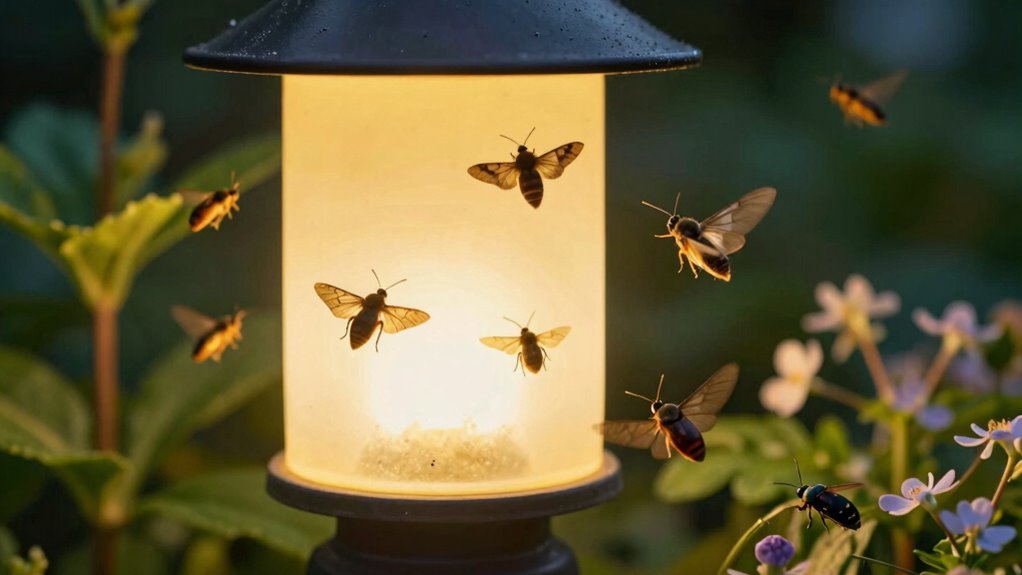
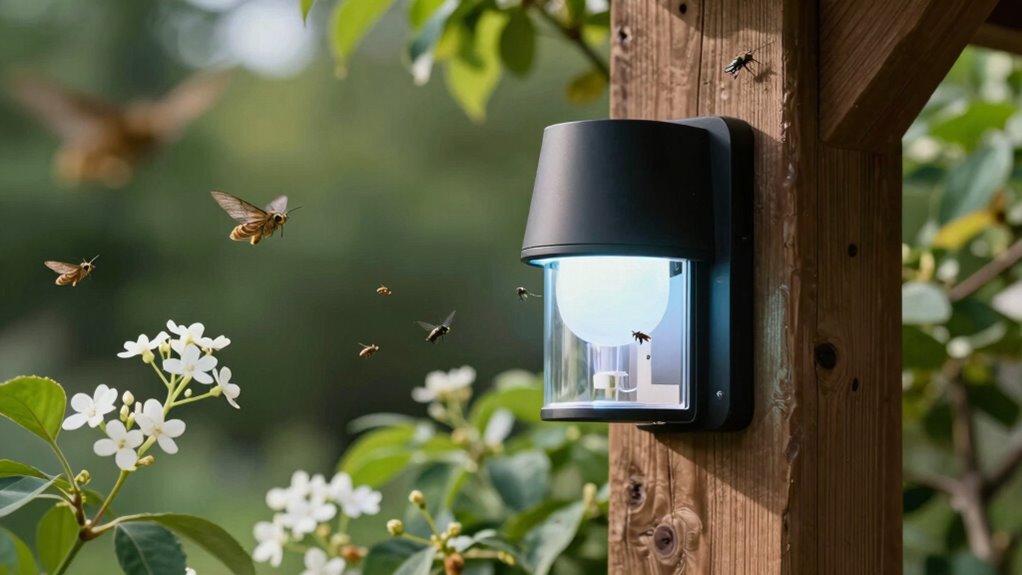
Many people assume that bug lights attract fewer insects, but the truth is more nuanced. The main factor is species attraction, which depends on the light spectrum emitted by the bulb. Traditional yellow “bug lights” don’t actually reduce insect visits; they just attract different species compared to standard white lights. Some insects are less drawn to certain wavelengths, but others may still be attracted. For example, many flying insects are sensitive to ultraviolet and blue light, regardless of the bulb’s color. So, it’s not simply a matter of fewer bugs, but rather different types of insects being attracted or repelled based on the light spectrum. Light spectrum plays a crucial role in insect attraction, influencing which species are drawn to different types of outdoor lighting. Additionally, understanding insect behavior related to spectral sensitivity can help you choose the most effective lighting options to minimize pests. Recent studies suggest that using lights with specific wavelengths can significantly alter insect activity around your home, especially when informed by knowledge of insect visual systems.
As an affiliate, we earn on qualifying purchases.
How Do Bug Lights Work, and Why Are They Usually Ineffective?
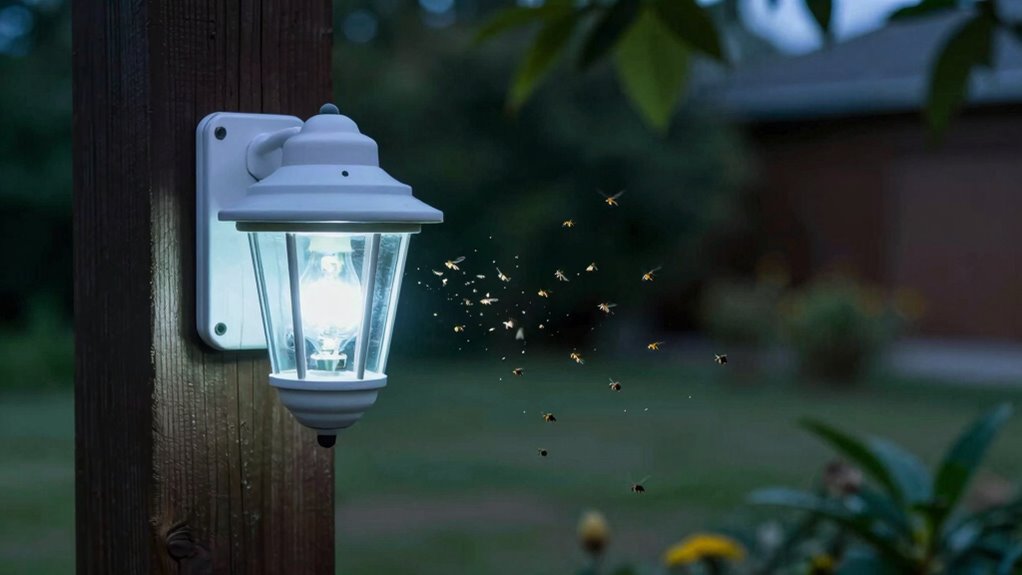
Bug lights work by emitting specific wavelengths of light that are supposed to be less attractive to insects, typically aiming to repel or reduce their interest. However, many bug lights primarily emit UV light, which actually attracts insects rather than deters them. This makes them ineffective for keeping bugs away. Insects are naturally drawn to UV light because it mimics the glow of flowers or their natural environment. As a result, bug lights often attract more insects than they repel. Understanding insect attraction to UV light shows why these lights rarely work as intended. Instead of reducing bugs, they often increase their presence. Additionally, the spectral output of many bug lights overlaps with the wavelengths insects are most attracted to, making them counterproductive. Here’s an emotional glance at the reality:
| Hope for Bug-Free Nights | Disappointment | Reality Check |
|---|---|---|
| Promises of fewer bugs | Bugs still come | UV attracts insects |
| Peaceful evenings | Frustration | Ineffective light |
| Better outdoor experiences | Disillusionment | Nature’s instincts |
| A natural solution? | Letdown | Bugs love UV |
| Trust in bug lights | Regret | Choose better methods |
As an affiliate, we earn on qualifying purchases.
Which Light Colors or Types Help Keep Bugs Away?
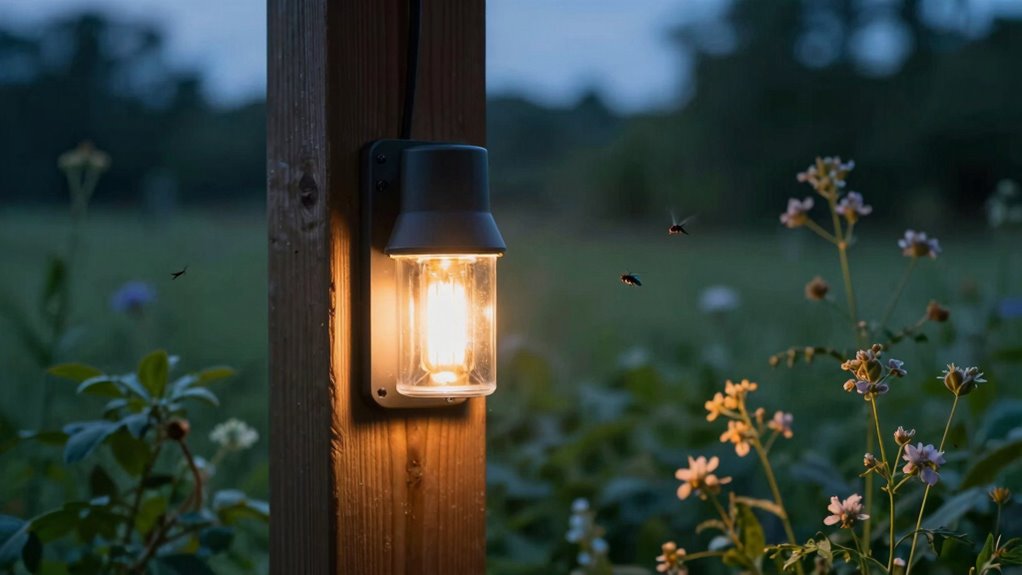
To keep insects at bay, choosing the right light color can make a significant difference. Bugs are less attracted to lights that emit less ultraviolet spectrum, which is why yellow or amber lights are often more effective. These warmer hues are less visible to many insects, reducing their attraction. Color psychology also plays a role: softer, warmer tones signal comfort and safety to humans, but are less appealing to bugs. In contrast, cool white or blue lights emit more ultraviolet spectrum, drawing in more insects. By selecting lights with reduced ultraviolet emissions, you can create an outdoor environment less inviting to pests. ultraviolet light emissions can influence insect behavior, making it even more important to choose the right lighting options. Additionally, selecting outdoor lighting with UV filtering technology can further decrease insect attraction and enhance outdoor comfort. Using bug-repellent lighting options that are specifically designed to minimize UV output can further improve your outdoor experience.
As an affiliate, we earn on qualifying purchases.
Effective Outdoor Strategies to Repel Bugs Without Relying on Bug Lights
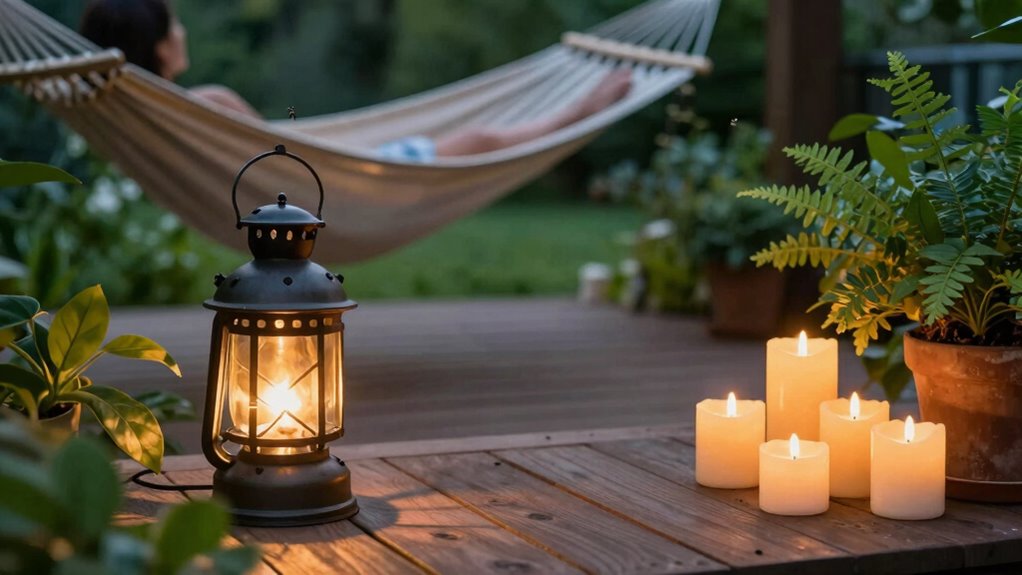
While choosing the right light color can reduce insect attraction, there are additional outdoor strategies that can effectively keep bugs away without relying on bug lights. Using mosquito traps can substantially reduce the insect population around your outdoor space by attracting and capturing mosquitoes before they bother you. Additionally, citronella candles create a scent barrier that repels many flying insects, making your outdoor area more comfortable. Positioning mosquito traps around your yard helps target pests actively seeking hosts, while citronella candles provide localized relief. Incorporating outdoor pest control practices such as removing standing water and trimming vegetation further decreases bug activity. Employing ecological pest management techniques can also reduce reliance on chemical repellents and improve your outdoor experience without the myth of the bug light. For a more sustainable approach, integrating natural repellents like essential oils can enhance your pest prevention efforts without harmful chemicals.
Common Mistakes That Reduce Your Outdoor Insect Control Success
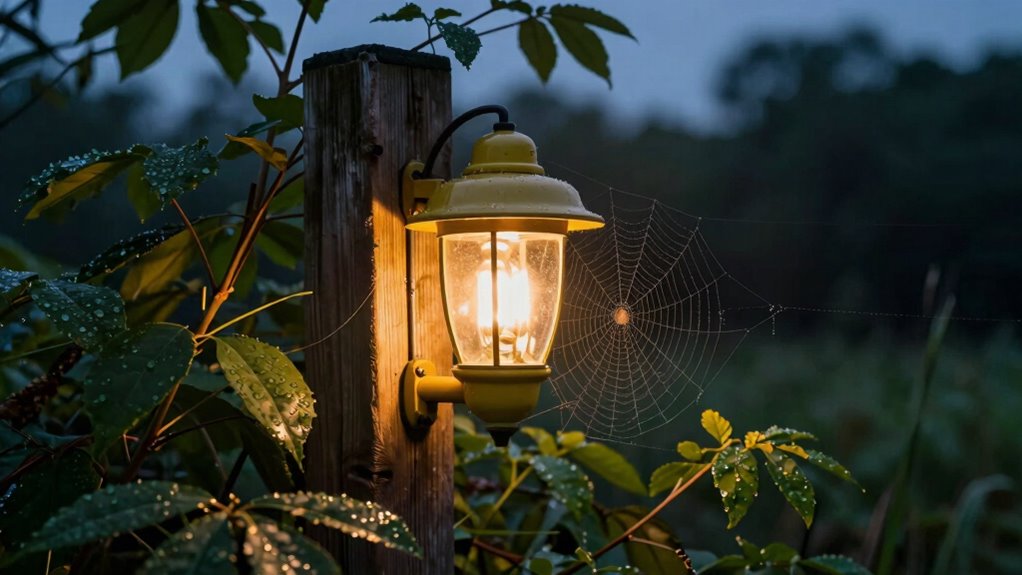
Many homeowners unknowingly undermine their outdoor insect control efforts by making common mistakes that reduce effectiveness. Relying solely on mosquito traps without maintaining them properly can let pests thrive. Using citronella candles indoors or in low-traffic areas wastes their potential; they’re most effective when placed strategically around seating and entry points. Overusing bug lights, thinking they’re a silver bullet, can actually attract more insects rather than repel them. Ignoring environmental factors, like standing water or dense shrubbery, also invites pests in. Additionally, assuming that one method alone will solve all problems limits your success. Combining effective strategies, such as properly maintained mosquito traps and well-placed citronella candles, enhances your outdoor insect control and creates a more comfortable space. Understanding insect behavior can further help you tailor your pest control efforts effectively. Recognizing insect attraction cues like light and scent can improve your control methods significantly. Being aware of environmental factors like standing water and dense vegetation helps prevent pest-friendly conditions from developing around your home. Incorporating routine inspections also ensures that pests are detected early before they become overwhelming.
Choosing the Best Methods to Keep Bugs Off Your Outdoor Space
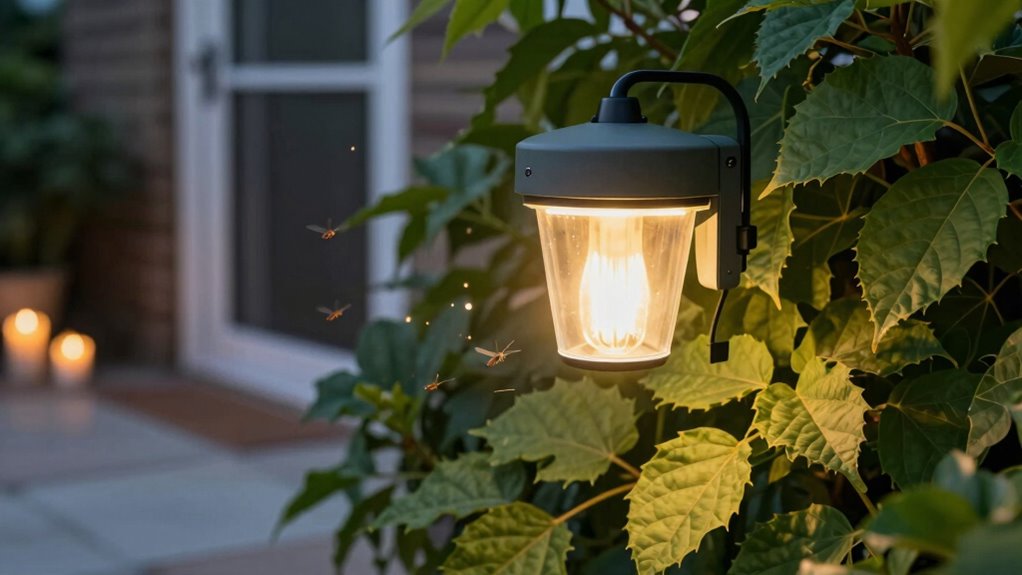
Choosing the best methods to keep bugs off your outdoor space requires a strategic approach that combines multiple techniques. Use natural repellents like citronella candles or essential oils to deter insects without chemicals. Pest traps, such as sticky traps or bait stations, actively reduce bug populations around your area. Additionally, consider installing physical barriers like screens or netting to block entry points. Regularly removing standing water eliminates breeding sites for mosquitoes. Maintaining a tidy yard minimizes hiding spots and food sources for bugs. Incorporating environmental awareness can encourage a mindful approach to outdoor pest management, fostering greater understanding of the ecological balance. For example, understanding the role of beneficial insects helps in selecting appropriate pest control methods that do not disrupt local ecosystems. Employing integrated pest management strategies can further optimize your efforts by combining biological, cultural, and physical controls. Recognizing ecosystem dynamics helps in choosing control methods that support environmental health. Combining these methods creates a layered defense, increasing effectiveness and ensuring a more comfortable outdoor experience.
Frequently Asked Questions
Are There Natural or Homemade Alternatives to Bug Lights?
Yes, you can use DIY repellents and herbal solutions as natural alternatives to bug lights. Try mixing citronella, eucalyptus, or lavender oils with water and spray around your outdoor space. Burning herbal bundles like sage or rosemary can also help repel bugs. These natural options create a less attractive environment for insects and are safer for you and the environment, making your outdoor experience more enjoyable without relying on traditional bug lights.
Do Bug Zappers or Traps Work Better Than Bug Lights?
Bug zappers generally work better than bug lights because they attract insects using specific light wavelengths that disrupt insect behavior, causing them to be electrocuted. Bug traps also target insects effectively by trapping them once attracted. Bug lights, however, often don’t considerably reduce insect presence because their light wavelength isn’t as attractive or disruptive. For better results, choose devices that use UV or blue light, which are more effective at attracting insects.
How Does Weather Influence Insect Attraction to Outdoor Lighting?
On humid summer nights, insects are more attracted to outdoor lighting because higher humidity levels boost their activity. For example, during a full moon, the increased brightness can reduce insect attraction to lights. Conversely, new moon phases make lights more appealing since natural light is minimal. So, weather conditions like humidity and moon phases directly influence how insects respond to outdoor lighting, affecting your chances of avoiding bugs.
Can Certain Plants Help Deter Insects From Outdoor Areas?
Certain plants can help deter insects from outdoor areas. Native plants and pest repellent herbs like citronella, lavender, and basil are effective choices. You should plant these around your patio or garden to naturally repel bugs. These plants emit scents that insects find unappealing, reducing their presence. Incorporating native plants and pest repellent herbs into your landscape creates a natural barrier, making your outdoor space more comfortable without relying solely on chemical repellents.
Are There Specific Times of Day When Insects Are More Attracted to Lights?
Insects are like moths drawn to a smoky campfire, especially during certain times of day. You’ll notice they’re most active at dusk and dawn, when the moon phases and wind patterns stir the air. During full moons, insects swarm more, while still and windy nights keep them at bay. To reduce bites, plan outdoor activities when the moon is waning, and wind is gentle—less attraction, less fuss.
Conclusion
Think of bug lights as just one piece of your outdoor puzzle. They might attract different bugs, but they rarely solve the problem alone. To truly keep pests at bay, you need a balanced approach—like a well-tuned orchestra, where multiple methods work in harmony. By combining smart lighting choices, good sanitation, and physical barriers, you create a fortress that bugs can’t breach. Remember, a single tool isn’t a silver bullet—your outdoor space deserves a well-rounded defense.
Fall Picks
fall essentials
As an affiliate, we earn on qualifying purchases.