
TL;DR
Japan’s Aerospace Exploration Agency (JAXA) successfully conducted a ground combustion test of a ramjet engine capable of Mach-5 speeds. This development advances efforts toward hypersonic passenger aircraft, potentially reducing transpacific flight times to around two hours.
Japan’s Aerospace Exploration Agency (JAXA) has successfully completed a ground combustion test of a ramjet engine designed for hypersonic aircraft capable of reaching Mach‑5 speeds, a significant milestone in high-speed aviation development.
The test was conducted at JAXA’s Kakuda Space Center, simulating flight conditions at 25 kilometers altitude and five times the speed of sound. Engineers focused on validating the engine’s performance, heat shielding, and control systems under extreme thermal conditions. The ramjet relies on air-breathing technology that compresses incoming air through rapid forward motion, eliminating the need for moving parts like turbines.
While this test was ground-based and involved a scaled-down model, it represents a critical step toward actual flight tests. Future plans include mounting the experimental vehicle on a sounding rocket for a Mach‑5 flight attempt, with the goal of enabling commercial hypersonic passenger service by the 2040s. If successful, flights from Tokyo to Los Angeles could be reduced from approximately 10 hours to about two hours.
Why It Matters
This development matters because it could revolutionize long-distance air travel, drastically reducing transit times for transpacific routes and potentially transforming international travel. Achieving Mach‑5 speeds would also demonstrate technological progress in thermal protection and high-altitude flight, influencing both commercial and military aerospace sectors.

Allison Model 501-D13 Prop-Jet Aircraft Engine (STEM) 1/10 Scale Model Kit
Master your craft!
As an affiliate, we earn on qualifying purchases.
As an affiliate, we earn on qualifying purchases.
Background
Hypersonic flight has long been pursued for military applications and high-speed research. The U.S. has conducted similar Mach‑5 testing, but Japan’s recent success marks a significant milestone in civilian hypersonic propulsion. Previous efforts focused on scramjets and other high-speed engines, but practical implementation has faced substantial thermal and material challenges. This Japanese test builds on decades of research into thermal protection systems and high-altitude aerodynamics.
“This successful ground test validates key aspects of our hypersonic engine design and brings us closer to real flight tests and eventual commercial use.”
— JAXA spokesperson
“Achieving Mach‑5 speeds with a ramjet engine is a breakthrough that could redefine high-speed travel, though many technical hurdles remain.”
— Professor Takashi Yamada, Waseda University
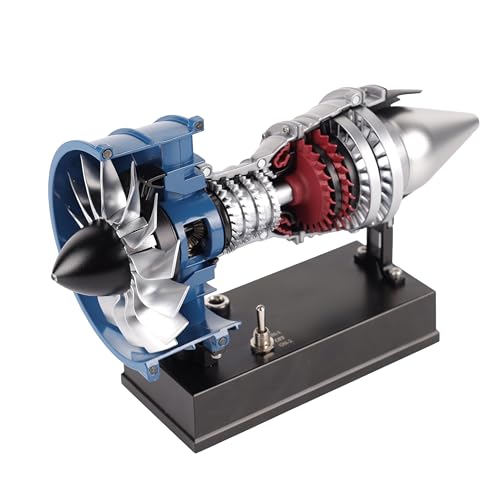
DM122 Mini Metal Turbofan Engine Model Kit That Works, 170+ Parts 1:20 Scale 4.41”H x 7”L x 3”W All-Metal Jet Engine Model with Transparent Cover, STEM Educational Assembly Kit, Desk Decoration Gift
Realistic & Authentic: The lifelike & visually stunning model provides a realistic depiction of a full-sized engine with…
As an affiliate, we earn on qualifying purchases.
As an affiliate, we earn on qualifying purchases.
What Remains Unclear
It is not yet clear when the next phase of testing—actual flight at Mach‑5—will occur, or what technical and regulatory hurdles may delay commercial deployment. The durability of thermal protection systems and engine scalability remain under investigation.

An Engineer's Guide to Automated Testing of High-Speed Interfaces, 2nd Edition
As an affiliate, we earn on qualifying purchases.
As an affiliate, we earn on qualifying purchases.
What’s Next
Next steps include mounting the engine on a sounding rocket for a Mach‑5 flight attempt, which will test real-world performance. Successful flight tests could pave the way for regulatory approval and commercial service in the 2040s.

Aerospace Materials Science 5: Thermal Protection and Environmental Effects
As an affiliate, we earn on qualifying purchases.
As an affiliate, we earn on qualifying purchases.
Key Questions
When will the hypersonic aircraft be available for commercial flights?
It is still uncertain; projections estimate operational service could begin in the 2040s, contingent on successful testing and regulatory approval.
What are the main technical challenges remaining?
Key challenges include thermal protection at extreme speeds, engine durability, control systems, and regulatory approvals for hypersonic flight.
How does this compare to other hypersonic research globally?
While the U.S. has conducted similar Mach‑5 testing, Japan’s recent success marks a significant advancement in civilian hypersonic propulsion research.
Source: Hacker News