
TL;DR

Get the latest gadgets delivered free — and shop member deals
- Fast, free delivery on millions of items
- Access to Prime Big Deal Days deals on October 6–7
- Prime Video, Amazon Music and more included
The Maldives is experimenting with 3D-printed coral reefs to restore damaged ecosystems caused by rising sea temperatures. This innovative approach could help preserve the country’s iconic reefs and tourism industry, but its effectiveness remains under evaluation.
The Maldives has initiated a pilot project deploying 3D-printed coral reefs in its North Ari Atoll to combat damage caused by climate-induced bleaching. This marks one of the first large-scale efforts to use additive manufacturing technology for reef restoration in the region, aiming to preserve the Maldives’ vital marine ecosystems and tourism appeal.
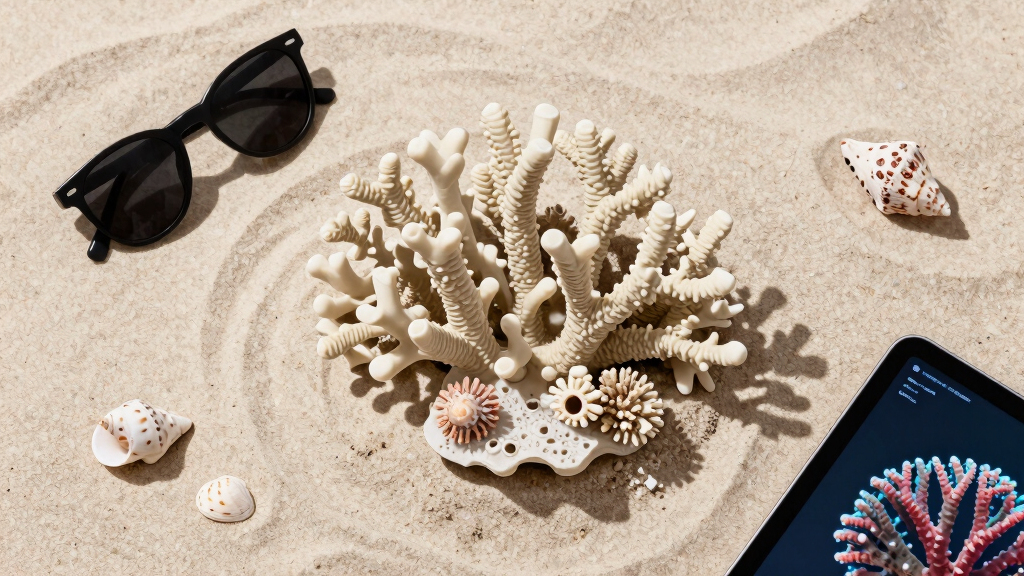
According to officials, the project involves creating artificial coral structures using 3D printing technology designed to mimic natural coral shapes and promote marine growth. The structures are being placed in areas heavily affected by bleaching, which has been linked to rising sea temperatures and climate change. The initiative is supported by environmental organizations and local authorities seeking sustainable solutions to reef degradation.
Experts involved in the project state that 3D-printed reefs could provide a scalable and adaptable method for reef restoration, potentially accelerating recovery times compared to traditional methods. The structures are made from environmentally friendly materials intended to encourage coral larvae settlement and marine biodiversity.
While the project is still in its early phases, preliminary observations suggest that some marine species are beginning to colonize the artificial reefs, indicating initial success. However, researchers caution that long-term data on ecological integration and resilience are still needed to assess overall effectiveness.
Potential Impact of 3D-Printed Reefs on Maldives’ Ecosystems
This initiative could represent a significant advancement in marine conservation, offering a scalable solution to restore coral reefs damaged by climate change. For the Maldives, whose economy heavily depends on tourism centered around its vibrant reefs, successful implementation could help safeguard its natural heritage and economic stability.
Experts believe that if proven effective, 3D-printed reefs could be adopted widely across coral-bleached regions, providing a vital tool in global efforts to mitigate climate impacts on marine ecosystems. However, the approach’s long-term ecological effects and cost-effectiveness remain under evaluation.
As an affiliate, we earn on qualifying purchases.
Maldives’ Coral Reefs Under Threat from Climate Change
The Maldives, like many tropical island nations, faces severe coral bleaching linked to rising sea temperatures caused by climate change. Over the past decade, bleaching events have become more frequent and intense, threatening the health of reefs that support marine biodiversity and tourism.
Traditional reef restoration methods have had limited success in scaling up to meet the urgent need for recovery. In response, innovative techniques such as 3D printing are being explored as potential solutions to accelerate reef rebuilding efforts.
This pilot project follows similar initiatives worldwide, where advanced manufacturing is used to create artificial reefs that can serve as nurseries for coral growth and marine life.
“3D-printed reefs could revolutionize how we restore damaged marine ecosystems, offering a scalable and customizable solution.”
— an anonymous researcher
As an affiliate, we earn on qualifying purchases.
Long-Term Effectiveness and Ecological Integration Unknown
It is not yet clear whether 3D-printed reefs will sustain long-term ecological health or effectively support diverse marine life over time. Researchers are still collecting data on coral growth, resilience, and biodiversity outcomes, and the approach’s scalability and cost-effectiveness remain to be fully evaluated.
eco-friendly marine restoration materials
As an affiliate, we earn on qualifying purchases.
As an affiliate, we earn on qualifying purchases.
Monitoring and Expanding 3D Reef Projects in the Maldives
The project will continue to monitor the artificial reefs over the coming months and years to assess ecological success. If initial results are positive, authorities may expand the use of 3D printing technology to other affected areas, potentially establishing a new standard in reef restoration efforts.
Further scientific studies and pilot programs are expected to refine the technology and evaluate its practical application at larger scales, with international collaboration likely to play a role.
marine biodiversity enhancement products
As an affiliate, we earn on qualifying purchases.
As an affiliate, we earn on qualifying purchases.
Key Questions
How do 3D-printed reefs compare to natural reefs?
3D-printed reefs are designed to mimic natural coral structures, aiming to provide suitable habitats for marine life. Their success depends on ecological integration and long-term resilience, which are still under study.
Can these artificial reefs fully replace natural coral reefs?
Currently, artificial reefs are viewed as supplementary tools to aid natural recovery, not complete replacements. Their role is to accelerate reef restoration and support biodiversity.
What materials are used for 3D printing the reefs?
Materials are environmentally friendly and designed to encourage coral larvae settlement, but specific compositions are still being tested for durability and ecological safety.
How long will it take to see results from the project?
Initial colonization by marine species has been observed within months, but full ecological assessment and long-term success will take several years.
Could this technology be used in other regions?
Yes, if proven effective, 3D printing could be adapted for reef restoration in other climate-affected areas worldwide.
Source: Nikkei Asia
Halloween Picks
halloween
As an affiliate, we earn on qualifying purchases.