
TL;DR

Get the latest gadgets delivered free — and shop member deals
- Fast, free delivery on millions of items
- Access to Prime Big Deal Days deals on October 6–7
- Prime Video, Amazon Music and more included
Researchers have analyzed circuit boards from the Space Shuttle’s I/O Processor, uncovering details about its architecture and microcode storage. This sheds light on early multi-threaded computing in aerospace systems.
Researchers have examined circuit boards from the Space Shuttle’s I/O Processor, a key component responsible for managing the Shuttle’s input/output networks and system communications. This analysis provides rare insight into the hardware architecture of this historic aerospace computer, which was among the first to implement multi-threaded processing. The findings are significant for understanding early aerospace computing technology and its legacy.
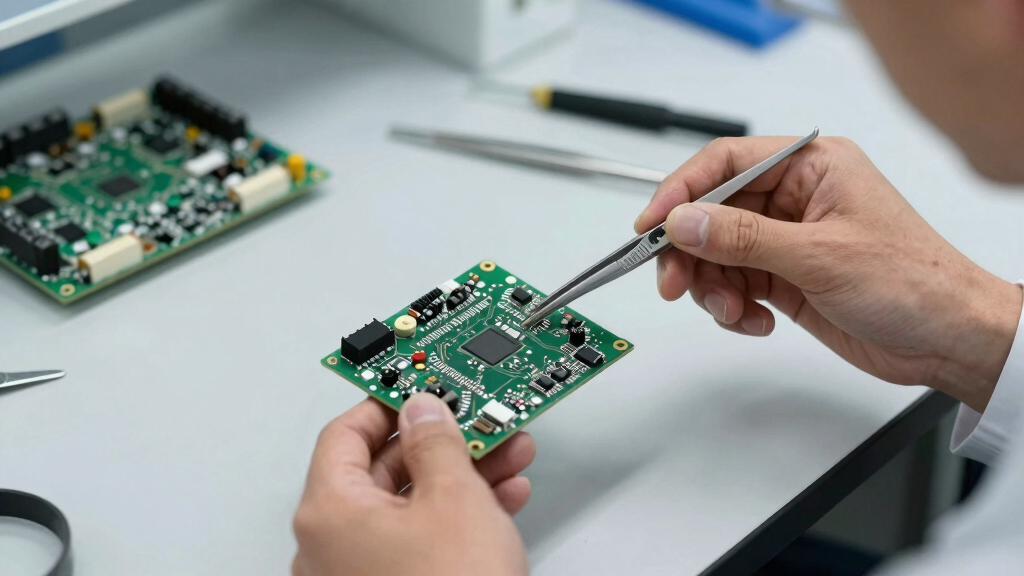
The I/O Processor (IOP) of the Space Shuttle was a complex, programmable computer that managed 24 high-speed networks connecting the Shuttle’s systems and sensors. Recently, two circuit cards from the IOP were obtained and analyzed, revealing detailed information about their construction. One card, the network interface page called the ‘MIA’ (Multiplexer Interface Adapter), contained hybrid analog modules and integrated circuitry designed for high-speed digital communication. The other card housed the microcode storage, using tiny fuses to encode instructions—an approach typical of the era’s technology.
The MIA interface page included hybrid modules with transistor dies and other discrete components, mounted on ceramic wafers for reliability and miniaturization. These modules handled analog signal conversion, coupling, and noise filtering, essential for maintaining signal integrity over the Shuttle’s extensive data networks. The microcode page used fusible links to store low-level instructions, which defined how the IOP’s virtual processors executed tasks. This microcode was critical for the multi-threaded operation of the IOP, which implemented 25 virtual processors on a single physical processor, a pioneering architecture at the time.
Implications of Analyzing Space Shuttle IOP Hardware
This analysis offers valuable insights into the hardware design of one of the earliest multi-threaded aerospace computers, highlighting innovative engineering solutions used in the 1980s. Understanding these circuit boards helps preserve the legacy of space computing and informs modern efforts to emulate or study historic aerospace systems. It also underscores the complexity and reliability engineering that supported the Shuttle’s critical missions, which relied on hardware designed before the microprocessor revolution.
Space Shuttle circuit board replica
As an affiliate, we earn on qualifying purchases.
As an affiliate, we earn on qualifying purchases.
Historical and Technical Background of the I/O Processor
The Space Shuttle’s five general-purpose computers, including the I/O Processor, played a vital role in managing flight control, sensor monitoring, and system navigation. The IOP was built from multiple circuit boards with discrete components and early microcode storage, reflecting the technological constraints of the era. Its architecture was notable for implementing multi-threading with virtual processors, a pioneering concept in aerospace computing. The IOP’s design was driven by the need for high reliability and redundancy, with multiple networks and fault-tolerant features. Recent access to its circuit boards offers a rare glimpse into these engineering solutions, which were critical for the Shuttle’s success.
“The use of fusible links for microcode storage on these boards reflects the technological practices of the time, predating modern flash or EEPROM memory.”
— Electronics historian
microcode storage fusible link kit
As an affiliate, we earn on qualifying purchases.
As an affiliate, we earn on qualifying purchases.
Remaining Questions About Hardware Functionality
While the physical analysis reveals the construction and microcode storage methods, it is not yet clear how the microcode was updated or maintained during the Shuttle’s operational lifetime. Additionally, the full extent of the IOP’s multi-threaded processing capabilities, as implemented in hardware, remains to be fully documented. Researchers are still investigating whether modifications or repairs were made to these circuit boards post-manufacture, which could influence interpretations of their original design.
high-speed digital communication interface card
As an affiliate, we earn on qualifying purchases.
As an affiliate, we earn on qualifying purchases.
Future Research and Preservation Efforts
Further analysis will focus on reconstructing the IOP’s microcode and understanding its operational procedures. Preservation projects aim to digitize and emulate the hardware to facilitate educational and historical research. Additionally, experts plan to compare these boards with other aerospace computing systems to contextualize their design innovations and limitations. The ongoing study will contribute to a more comprehensive understanding of early spaceflight hardware engineering.
aerospace circuit board components
As an affiliate, we earn on qualifying purchases.
As an affiliate, we earn on qualifying purchases.
Key Questions
What is the significance of the fusible links used for microcode storage?
Fusible links allowed the microcode to be permanently programmed into the circuit boards during manufacturing, reflecting the technology available at the time before erasable memory was common. This method provided a reliable, tamper-proof way to store instructions critical for the IOP’s operation.
How does this hardware compare to modern aerospace computers?
Modern aerospace computers use integrated microprocessors with erasable memory, offering greater flexibility and capacity. The IOP’s design relied on discrete components and fusible links, making it more hardware-intensive and less adaptable but highly reliable for its era.
Will the circuit boards be restored or emulated for educational purposes?
Efforts are underway to digitize and emulate these hardware components to preserve their legacy and provide educational resources. Physical restoration is complex due to their age and fragility, but emulation offers a practical way to study their architecture.
What role did the I/O Processor play in the Shuttle’s overall system?
The IOP managed high-speed network communications between the Shuttle’s systems and sensors, acting as a bridge that enabled the main computer to control and monitor various subsystems reliably and efficiently.
Source: Hacker News
Fall Picks
fall essentials
As an affiliate, we earn on qualifying purchases.