
TL;DR

Get the latest gadgets delivered free with Prime
- Fast, free delivery on millions of items
- Prime Video, Amazon Music and more included
- Member-only deals all year
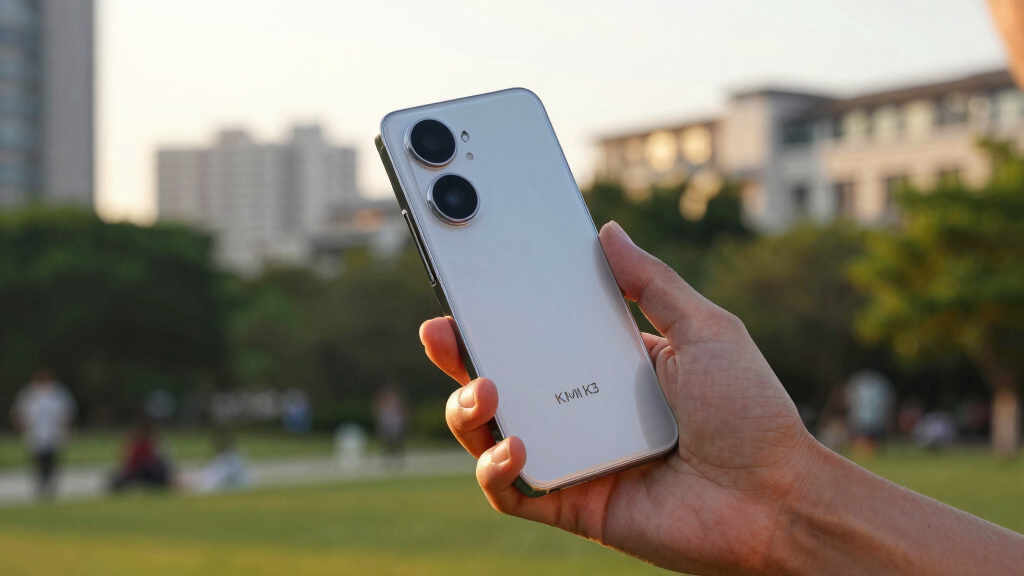
Kimi K3, an AI model by Moonshot, has achieved third place in VigilSAR’s recent AI benchmark, surpassing several GPT and Gemini models. The ranking emphasizes trustworthiness for intelligence tasks.
Kimi K3, a language model developed by Moonshot, has secured a prominent third place in VigilSAR’s latest AI ranking, published on July 17, 2026. This marks a notable achievement, as the model outperformed numerous GPT and Gemini models, highlighting its potential for trustworthiness in intelligence, surveillance, and reconnaissance (ISR) applications.
The VigilSAR benchmark evaluates AI models based on their ability to perform reasoning, reporting, and restraint in ISR-related tasks, rather than general trivia performance. For more on this benchmark, see the detailed report. The evaluation, conducted on July 17, 2026, involved 14 models across 300 tasks, with results published on the public leaderboard. You can explore the full leaderboard on the VigilSAR leaderboard page. Kimi K3, debuting at 64.65 points in Band B, places it ahead of all GPT and Gemini models on the leaderboard. The benchmark emphasizes bands rather than precise ranks, and the scores are accompanied by confidence intervals and analysis of model economics.
According to Thorsten Meyer, the benchmark’s operators built the evaluation to measure models’ real-world applicability in defense scenarios, explicitly stating that vendor claims are not considered evidence. The leaderboard also includes measures of deployment readiness, with one locally runnable model scored as “sovereign-deployable,” reflecting practical deployment considerations.
Implications of Kimi K3’s High Ranking for Defense AI
The achievement of Kimi K3 in VigilSAR’s ranking signals a shift in the landscape of defense-oriented AI models. Its high placement suggests that Moonshot’s model is capable of handling complex ISR tasks with a level of trustworthiness that surpasses many established models like GPT-5.x and Gemini. This could influence procurement decisions, research directions, and the development of AI tools tailored for military and intelligence use, where reliability and restraint are critical.
Products Worth Considering

LG UltraGear 32GX850A-B 32-Inch 4K UHD Glossy OLED Gaming Monitor

DJI Osmo Mobile 8 3-Axis Smartphone Gimbal Stabilizer

Sonos Era 100 SL Compact Microphone-Free Speaker, Black
As an affiliate, we earn on qualifying purchases.
VigilSAR Benchmark Methodology and Recent Results
VigilSAR’s benchmark is designed to evaluate language models specifically for their suitability in ISR tasks, emphasizing reasoning, reporting accuracy, and restraint. The evaluation process involves private task sets to prevent training data contamination, with results published on a public leaderboard. The current standings show Claude-fable-5 leading in Band A with 67.77 points, while Kimi K3’s debut at third place with 64.65 points marks a significant breakthrough for Moonshot. The benchmark’s emphasis on bands rather than precise ranks reflects confidence intervals and the importance of practical deployment capabilities.
Prior to this, models like GPT-5.x and Gemini have dominated the upper bands, but Kimi K3’s performance indicates a rising competitor in the defense AI space, especially given its performance on a private, unseen task set.
“Kimi K3’s debut at third place demonstrates its capability to handle complex ISR tasks with a high degree of trustworthiness.”
— an anonymous researcher
Unconfirmed Aspects of Kimi K3’s Capabilities
Details about Kimi K3’s specific architecture, training data, and deployment readiness are not yet publicly confirmed. The evaluation focuses on performance scores and practical deployment status, but the underlying model characteristics remain undisclosed. It is also unclear how Kimi K3 will perform on other benchmarks or real-world scenarios beyond VigilSAR’s private task set.
Next Steps for Kimi K3 and VigilSAR Benchmarking
Further testing and evaluation of Kimi K3 across additional ISR benchmarks and real-world scenarios are expected. Moonshot may also release more technical details about the model’s architecture and deployment capabilities. VigilSAR’s operators are likely to update the leaderboard with new models and extended testing, providing a clearer picture of Kimi K3’s standing over time. Monitoring these developments will be key for stakeholders in defense AI development.
Key Questions
What makes VigilSAR’s benchmark different from other AI evaluations?
VigilSAR’s benchmark specifically assesses models’ abilities in reasoning, reporting, and restraint for ISR tasks, using private task sets to simulate real-world defense scenarios, and emphasizes practical deployment over general performance.
Why is Kimi K3’s third-place finish significant?
Kimi K3’s high ranking indicates it can handle complex intelligence tasks with a level of trustworthiness comparable or superior to some leading models, making it a notable contender in defense AI applications.
Are there technical details available about Kimi K3’s architecture?
No, the specific architecture, training data, and deployment details of Kimi K3 have not been publicly disclosed. The evaluation focuses on performance scores and deployment readiness.
What are the implications for defense agencies?
The ranking suggests Kimi K3 could be a viable option for ISR operations requiring reliable AI models, potentially influencing procurement and development strategies in defense sectors.
Source: ThorstenMeyerAI.com