
TL;DR

Get the latest gadgets delivered free with Prime
- Fast, free delivery on millions of items
- Prime Video, Amazon Music and more included
- Member-only deals all year
Compact portable chargers are small but powerful tools to keep your devices charged anywhere. Advances like fast charging and wireless tech boost their convenience, but choose wisely based on your needs.
Ever been caught with a dead phone just when you needed it most? That’s where a compact portable charger becomes your best friend. These tiny power banks pack a punch, fitting in your pocket or keychain, yet capable of reviving your devices multiple times.
In this guide, you’ll learn what makes a portable charger truly useful, recent tech trends that improve them, and how to pick the right one for your adventures. Because staying connected shouldn’t depend on carrying a bulky battery.
Choose a capacity based on your typical device and usage pattern, aiming for around 10,000 mAh for daily needs.
Prioritize fast-charging tech like Power Delivery for quick power-ups, especially during busy days.
Look for safety certifications and durable build quality to ensure long-term, worry-free use.
Keep your charger clean, cool, and fully charged before trips to extend its lifespan.
Invest in reputable brands; a reliable compact charger blends safety, speed, and portability.
What Makes a Portable Charger Really Useful?
Size isn’t just about how small it is; it’s about making sure it’s easy to carry and reliable. Imagine slipping a lightweight charger into your jeans pocket or attaching a slim keychain to your bag. That’s practical.
Battery capacity matters too. A 10,000 mAh charger can fully power your iPhone 13 (with a 3,240 mAh battery) about two times, so you don’t run out during a long day or a trip. It’s the sweet spot between size and power.
And don’t forget the charging speed. Fast-charging tech like Power Delivery (PD) can fill your phone in less than 30 minutes, saving you precious time. Plus, safety features keep your devices protected from overcurrent or overheating.
Choosing the right capacity and speed involves understanding your typical usage. For example, if you often find yourself needing to top up multiple devices or extended use, opting for a higher capacity charger ensures you won’t be left powerless. However, larger capacity often means increased size and weight, so there’s a tradeoff between portability and power. Safety features like overcurrent protection are crucial because they prevent damage to your devices and the charger itself, especially with rapid charging technologies that generate more heat and stress. Therefore, balancing capacity, size, and safety is key to selecting a dependable portable power source that suits your everyday needs.
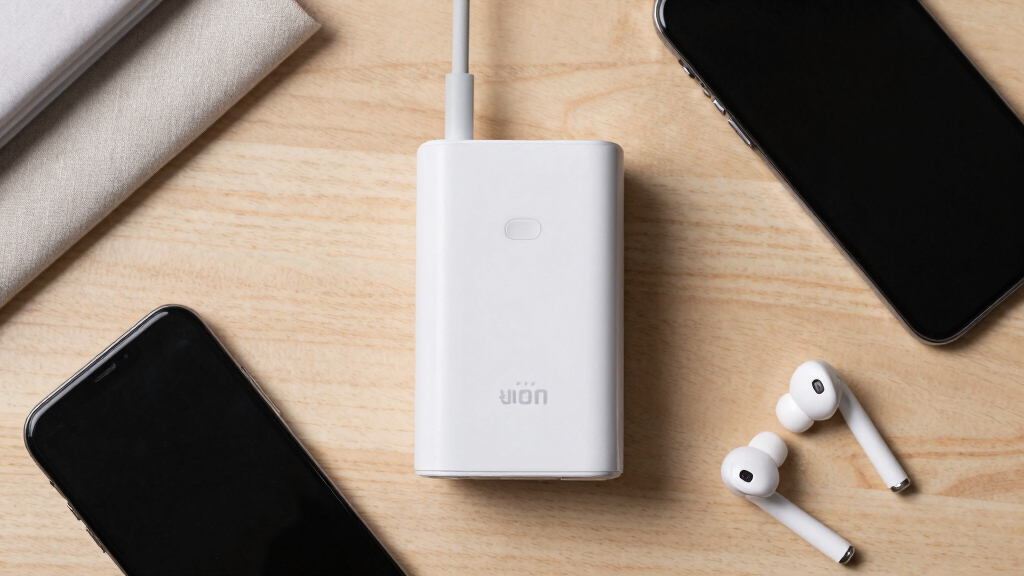
compact portable charger 10000mAh with fast charging
As an affiliate, we earn on qualifying purchases.
As an affiliate, we earn on qualifying purchases.
How Recent Tech Turns Tiny Power Banks Into Powerhouses
| Feature | What It Does | Why It Matters |
|---|---|---|
| Fast Charging (PD, QC) | Speeds up device charging from 2 hours to under 30 minutes | |
| Smaller Batteries with Lithium-Polymer | More capacity in less space, making chargers thinner and lighter | |
| Wireless Charging | Charge compatible devices without cables | |
| Eco-Friendly Materials | Recycled plastics and solar options reduce environmental impact |
For example, a recent Anker PowerCore III packs 10,000 mAh in a palm-sized shell, supporting 18W PD fast charging. It’s enough to juice up a typical smartphone twice in a quick, lightweight package.
Wireless models like the RAVPower WP 30W combine convenience with power, letting you set your phone on a pad and walk away. These innovations make sure your portable power never feels bulky or outdated.
These technological advances are more than just incremental improvements—they fundamentally change how we think about portable power. Fast charging reduces downtime, meaning you can get back to using your device in a fraction of the time compared to older models. Lithium-polymer batteries allow for slimmer designs without sacrificing capacity, which is vital for portability. Wireless charging adds a layer of convenience, especially in scenarios where cables are cumbersome or when multiple devices need power simultaneously. Eco-friendly materials reflect a growing awareness of environmental impacts, prompting manufacturers to develop sustainable options. Together, these innovations make modern power banks versatile, efficient, and aligned with the needs of a mobile, eco-conscious lifestyle.
wireless power bank for smartphones
As an affiliate, we earn on qualifying purchases.
As an affiliate, we earn on qualifying purchases.
Picking the Perfect Compact Power Bank for Your Lifestyle
Choosing the right charger depends on your daily habits. Do you need quick top-ups during a commute, or do you want a backup for outdoor adventures? Match capacity and features to your routine.
Here’s a quick guide:
- Assess your device’s battery size: A 4,000 mAh phone needs less than 10,000 mAh for a full charge, but if you’re powering tablets or multiple devices, bump up capacity.
- Decide on size and weight: Want something in your pocket? Aim for under 150 grams. Need more power? Expect slight bulk.
- Prioritize fast-charging and safety: Look for PD or QC support and safety certifications like UL or CE.
- Think about extra features: Wireless charging, built-in cables, or solar panels might be worth it if they fit your lifestyle.
For example, a college student who juggles classes and social life might prefer a 5,000 mAh wireless charger in a keychain form, ready to power their phone between classes without extra cables. Understanding your habits helps you choose a device that seamlessly integrates into your daily routine, avoiding unnecessary bulk or features you won’t use. This tailored approach ensures that your investment provides maximum convenience and reliability, whether you’re a traveler, student, or busy professional.
small lightweight power bank with safety features
As an affiliate, we earn on qualifying purchases.
As an affiliate, we earn on qualifying purchases.
How to Keep Your Compact Charger in Top Shape
Proper care extends the life of your portable charger. Keep it clean, avoid extreme temperatures, and don’t overcharge it. A charger left in a hot car all summer can degrade quickly.
Charge it fully before long trips, and store it in a cool, dry place. If it has a solar feature, remember sunlight is your friend, but don’t rely solely on it for daily power.
Check the safety features—overcharge protection, short circuit prevention—and update your charger’s firmware if it has smart capabilities. This keeps performance sharp and safe.
For example, I once left my 3-year-old charger in a backpack in the sun. It still works, but I notice it takes longer to charge now. Proper storage and maintenance can significantly extend its lifespan, ensuring your investment remains reliable for years to come.
power bank with Power Delivery USB-C
As an affiliate, we earn on qualifying purchases.
As an affiliate, we earn on qualifying purchases.
The Real Cost and What You’re Really Getting
Most compact chargers cost between $20 and $60. It’s worth investing in a reputable brand with safety features and fast-charging support. Cheaper models often skimp on quality and safety.
Think of it like buying a reliable flashlight. A basic model might work, but a branded one with durable materials and a fast-charging chip will last longer and perform better under stress.
Support for multiple devices and quick recharging of the power bank itself adds to the value. Remember, a higher-capacity charger costs more but reduces the need to carry multiple units.
When evaluating the cost, consider the implications of quality and safety. Cheaper chargers may save money upfront but could pose risks like overheating or device damage, leading to higher costs over time. Conversely, investing in a reputable brand ensures durability, safety, and better performance, ultimately saving you money and hassle. For example, the high-end Anker PowerCore+ 26800 offers not only high capacity and fast charging but also robust build quality, making it a worthwhile investment for frequent travelers or power users who demand reliability.
Your Top Questions About Compact Portable Chargers Answered
- How do I pick the best one? Match your device needs, size preferences, and budget. Read reviews for real-world performance.
- Will it fully charge my phone? Usually, yes—if capacity aligns with your device’s battery size. A 10,000 mAh charger can fully charge a 4,000 mAh phone twice.
- Are they safe? Certified brands with protections for overcharge, overcurrent, and heat are safe for daily use.
- How long will it last? Expect 2–3 years with proper care. Quality brands tend to last longer.
- Can I charge multiple devices? Many support 2 or more outputs, but charging speed for each drops when multiple devices are connected.
Understanding these factors helps you select a charger that balances capacity, safety, and convenience, ensuring your investment is worthwhile and your devices stay powered reliably.
Conclusion
Having a compact portable charger isn’t just about convenience; it’s about peace of mind. When your phone’s battery dips during a busy day, a small, powerful backup can be a lifesaver. Those tiny devices are evolving fast, packed with features that make them smarter, safer, and more efficient.
Pick one that fits your lifestyle, and treat it well. In a world where staying connected is everything, that small power bank could be your best pocket-sized ally.
Halloween Picks
halloween
As an affiliate, we earn on qualifying purchases.