
📊 Full opportunity report: DDR5 Now, DDR6 Soon: A Buyer’s Field Guide on ThorstenMeyerAI.com — validation score, market gap, and execution plan.

Get the latest gadgets delivered free — and shop member deals
- Fast, free delivery on millions of items
- Access to Prime Big Deal Days deals on October 6–7
- Prime Video, Amazon Music and more included
TL;DR
DDR5 remains the recommended choice for 2026 builds, with DDR6 expected around 2027 but not worth waiting for now. Prices for DDR5 are high, but delaying purchase may cost more in the long run.
DDR5 memory remains the dominant choice for mainstream PCs in 2026, with manufacturers and industry analysts confirming that DDR6 will not be commercially available for consumer desktops until 2027 at the earliest. This development matters because it influences buying decisions amid record-high prices and ongoing shortages, guiding consumers to avoid waiting for an upgrade that isn’t imminent. For example, the ongoing AI chip shortages have also impacted memory prices.
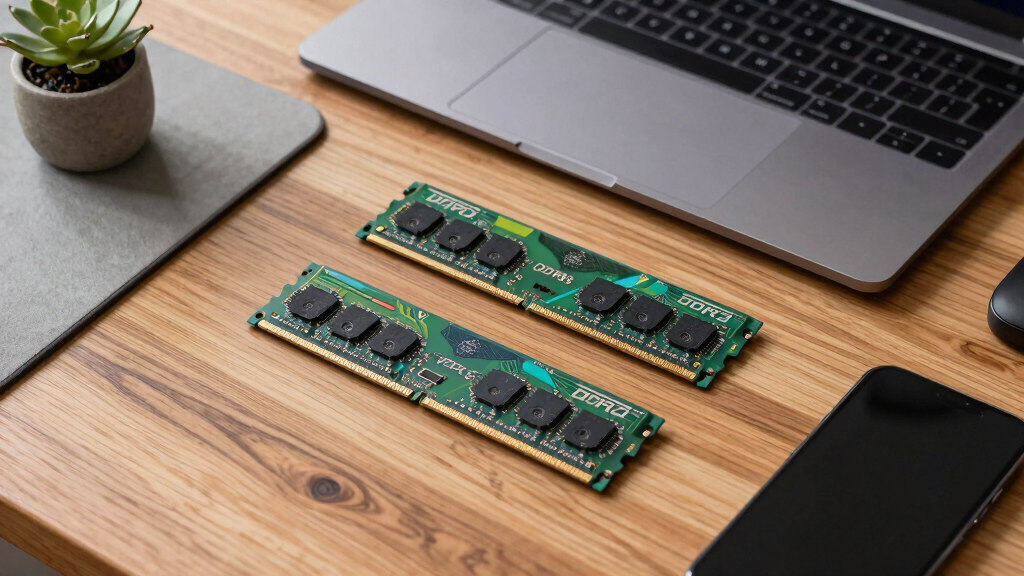
Industry sources, including JEDEC standards and major memory manufacturers, confirm that DDR5 modules are currently the best option for most users. As memory prices remain high, it’s important to choose the right modules. The recommended configuration is DDR5-6000 with CL30 timings, which balances performance and cost for both AMD and Intel platforms. Higher-speed kits, such as DDR5-8000, offer minimal real-world benefits and are generally a poor investment given current market conditions.
Capacity planning remains crucial: for typical gaming and desktop use, 32GB is sufficient, while content creators and heavy multitaskers should consider 64GB. With current market conditions, investing in higher capacity modules may be more cost-effective in the long run. The common temptation to buy 128GB modules to future-proof is discouraged, as prices remain high and actual usage may not justify the expense. Additionally, buying DDR4 in 2026 is no longer advisable since manufacturers have phased out DDR4 production, and its cost parity with DDR5 makes it a poor choice for new builds.
Regarding DDR6, industry insiders confirm it is still in development, with initial launches expected in enterprise and AI server markets around 2026–27. DDR6 introduces significant architecture improvements, including four 24-bit sub-channels and much higher speeds—up to 17,600 MT/s—compared to DDR5. However, it requires entirely new platforms, including CPUs, chipsets, and modules, with no backward compatibility. Mainstream adoption for desktops is projected around 2027–30, with early adopters facing higher costs and potential stability issues.
DDR5 now, DDR6 soon
A buyer’s field guide. The 20-year instinct — wait for prices to drop, or wait for the next generation — is broken this cycle. Buy the DDR5 you actually need now; don’t wait for DDR6. Here’s the reasoning.
Driven to end-of-life, production slashed. Same money, dead-end socket. Leave a working DDR4 box alone — but never start a new build on DDR4 to “save.”
A framework, not a gamble. Buy the DDR5 you need now, at the sweet spot, in the capacity you’ll actually use — don’t buy DDR4, don’t wait for DDR6. The two costliest mistakes in this market are the ones that feel prudent: waiting for a price drop that isn’t coming, and waiting for a next-gen part that launches dearer than what’s on the shelf. Next: The SSD Squeeze.
Why DDR5 Still Matters in 2026
Understanding that DDR5 remains the current standard helps consumers avoid unnecessary delays and expenses. Waiting for DDR6 could mean missing out on years of platform improvements and incurring higher costs for early-generation hardware that may not provide immediate benefits. For most users, investing now in a well-chosen DDR5 system ensures better performance and value, especially given the slow rollout and high premiums associated with DDR6.
As an affiliate, we earn on qualifying purchases.
The 2026 Memory Market and Future Outlook
The memory market has experienced significant volatility, with prices soaring due to supply chain disruptions and increased demand. DDR4 has been phased out, leaving DDR5 as the primary choice. Industry forecasts indicate that DDR6 will not be mainstream until at least 2027, with initial adoption limited to high-end servers and specialized workloads. The slow transition mirrors past generational shifts, but the current market dynamics favor immediate investment in DDR5 rather than waiting for DDR6.
“DDR6 is in the final stages of standardization but is not yet available for consumer platforms.”
— JEDEC standards committee
As an affiliate, we earn on qualifying purchases.
Unresolved Questions About DDR6 Launch and Adoption
While DDR6 specifications are finalized, actual product availability, pricing, and platform compatibility remain uncertain. Industry insiders suggest early DDR6 modules will be expensive and may face compatibility issues, with widespread adoption not expected until at least 2027–28. It is also unclear how quickly manufacturers will ramp up production and how the market will respond to early adopters.
As an affiliate, we earn on qualifying purchases.
Key Milestones for DDR5 and DDR6 Development
Consumers should monitor JEDEC announcements and motherboard compatibility lists for validation of DDR6 modules. For DDR5, the focus remains on optimal configurations—DDR5-6000 CL30—while waiting for prices to stabilize. The next major step is the official launch of DDR6 modules and compatible CPUs, expected around late 2026 or early 2027, after which adoption will accelerate gradually.
As an affiliate, we earn on qualifying purchases.
Key Questions
Should I wait for DDR6 before building a new PC?
No, unless you are building a long-term workstation for AI, scientific computing, or heavy rendering. For most users, DDR5 offers the best value and performance now, and DDR6 will not be mainstream until at least 2027.
Is DDR4 still a good choice in 2026?
No. DDR4 is phased out, and new builds should focus on DDR5. DDR4 modules are now priced similarly to DDR5 but lack future upgrade paths.
What is the recommended DDR5 configuration for 2026?
DDR5-6000 with CL30 timings provides the best balance of performance and cost for most users.
When will DDR6 be widely available for desktops?
Initial enterprise and AI server modules are expected around 2026–27, but mainstream desktop adoption likely won’t occur until 2027–30.
What are the main advantages of DDR6 over DDR5?
DDR6 offers significantly higher speeds, increased bandwidth, and architectural improvements—mainly beneficial for bandwidth-intensive workloads like AI and scientific computing, not gaming.
Source: ThorstenMeyerAI.com
Halloween Picks
halloween
As an affiliate, we earn on qualifying purchases.