
TL;DR

Get the latest gadgets delivered free — and shop member deals
- Fast, free delivery on millions of items
- Access to Prime Big Deal Days deals on October 6–7
- Prime Video, Amazon Music and more included
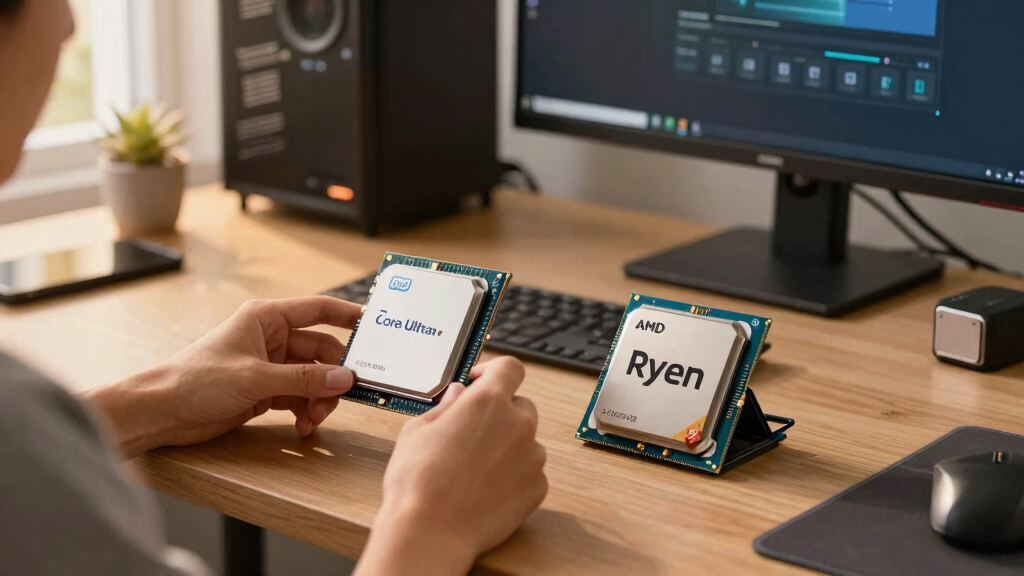
Intel’s Core Ultra 5 250K Plus and AMD Ryzen 5 7600X3D are competing in the mid-range CPU market. The 250K Plus offers more cores, higher clock speeds, and support for faster memory, while the 7600X3D excels in gaming due to its large cache. The review compares their specs, gaming performance, and power efficiency.
Intel’s newly launched Core Ultra 5 250K Plus outperforms AMD’s Ryzen 5 7600X3D in overall specifications, but the latter maintains a gaming edge due to its large cache. This comparison highlights the strengths and weaknesses of each processor for mainstream and gaming users.
The Core Ultra 5 250K Plus, built on Intel’s Arrow Lake architecture using TSMC’s 3nm process, features 18 cores (6 performance and 12 efficiency) and boosts up to 5.3 GHz, with support for DDR5-7200 memory. It draws up to 159W power. In contrast, AMD’s Ryzen 5 7600X3D, based on Zen 4 architecture with 3D V-Cache, has 6 cores and 12 threads, with a boost clock of 4.7 GHz, 102MB cache, and a TDP of 65W.
In gaming benchmarks at 1080p, the 250K Plus averaged 153.5 FPS, roughly 10% behind the 7600X3D’s 168.8 FPS. The AMD chip’s large cache provides a notable advantage in cache-sensitive titles, leading in many games such as Final Fantasy XIV and Baldur’s Gate 3. Meanwhile, the 250K Plus performed well in certain AAA titles like Hogwarts Legacy, benefiting from its higher core count and faster memory support.
Why It Matters
This comparison is significant for mainstream users and gamers deciding between high-core-count CPUs versus cache-optimized gaming chips. The 250K Plus’s higher core count and faster memory support make it versatile for productivity and gaming, while the 7600X3D’s cache advantage offers superior gaming performance in specific titles. The choice influences build priorities and budget considerations.
Intel Core Ultra 5 250K Plus CPU
As an affiliate, we earn on qualifying purchases.
As an affiliate, we earn on qualifying purchases.
Background
Intel’s Arrow Lake Refresh CPUs, including the Core Ultra 5 250K Plus, mark a notable step forward with improved performance and value. AMD’s Ryzen 5 7600X3D has been a popular gaming choice since its launch, thanks to its 3D V-Cache technology. The recent release of the 250K Plus introduces a new competitor in the mid-range segment, intensifying a market where gamers and mainstream users seek balanced performance.
“The Core Ultra 5 250K Plus offers more cores, higher clock speeds, and support for faster DDR5 memory, making it a well-rounded choice for both productivity and gaming.”
— Tom’s Hardware reviewer
“The Ryzen 5 7600X3D’s large cache continues to give it an edge in gaming, particularly in cache-sensitive titles, maintaining its position as a top gaming CPU.”
— Gaming performance analyst
As an affiliate, we earn on qualifying purchases.
What Remains Unclear
It is not yet clear how these CPUs will perform in real-world, long-term usage beyond initial benchmarks, especially under different workloads and overclocking conditions. Pricing and availability may also influence consumer choices as market dynamics evolve.
mid-range gaming CPU for PC build
As an affiliate, we earn on qualifying purchases.
As an affiliate, we earn on qualifying purchases.
What’s Next
Further testing across a broader range of applications and gaming titles will clarify their performance differences. Additionally, upcoming CPU releases and platform updates could shift the competitive landscape. Consumers should monitor reviews and pricing trends in the coming months.
As an affiliate, we earn on qualifying purchases.
Key Questions
Which CPU is better for gaming?
The AMD Ryzen 5 7600X3D generally offers better gaming performance due to its large cache, especially in cache-sensitive titles, but the Intel Core Ultra 5 250K Plus is competitive and offers higher overall core counts and faster memory support.
Which CPU is better for productivity tasks?
The Intel Core Ultra 5 250K Plus, with its higher core and thread count, is better suited for multitasking and productivity workloads compared to the Ryzen 5 7600X3D.
How do their power consumptions compare?
The Core Ultra 5 250K Plus has a higher TDP of 125W (up to 159W turbo), while the Ryzen 5 7600X3D operates at 65W TDP, making it more power-efficient.
Are these CPUs compatible with existing motherboards?
The Intel Core Ultra 5 250K Plus requires a compatible motherboard with the latest socket and chipset, while the AMD Ryzen 5 7600X3D uses the AM5 socket. Compatibility depends on platform support and BIOS updates.
Fall Picks
fall essentials
As an affiliate, we earn on qualifying purchases.