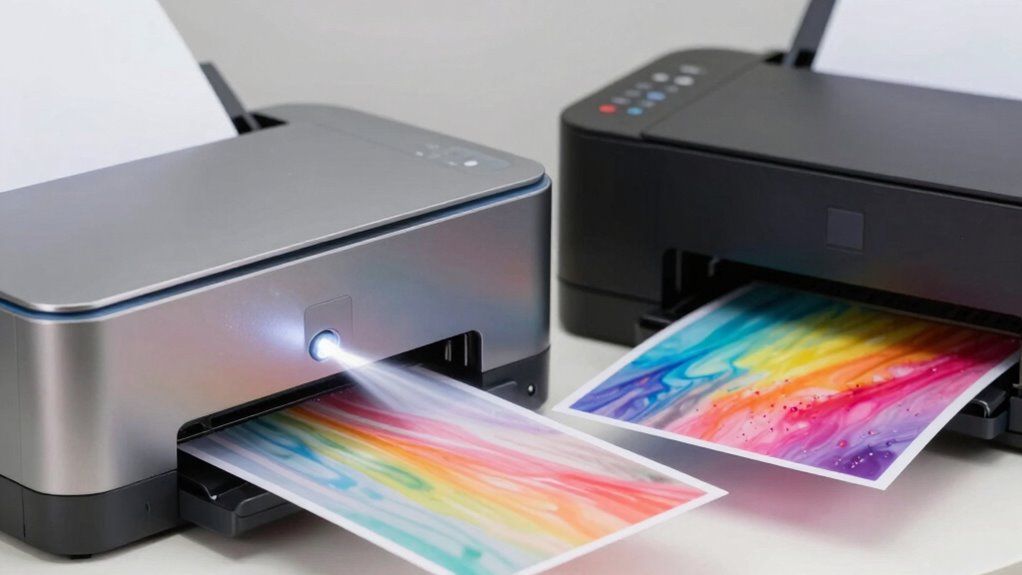

If you need fast, high-volume printing with sharp text, a laser printer is your best choice, especially for office tasks. For detailed photos and color-rich projects, an inkjet printer provides better quality and color accuracy, making it ideal for creative work. Cost and space are also factors—laser printers tend to be more expensive upfront but cheaper long-term, while inkjets are compact and better for occasional use. To discover which fits your needs best, explore further.
Key Takeaways
- Laser printers excel in high-volume, fast printing tasks, ideal for office use and large workloads.
- Inkjet printers are better suited for detailed color images and photos, perfect for creative, photographic, or art projects.
- Laser printers offer lower cost per page and higher durability, making them cost-effective for frequent, everyday printing.
- Inkjet printers are compact, affordable initially, and suitable for occasional, small-scale or home use.
- Choose laser for speed and efficiency; select inkjet for superior photo quality and detailed color work.

Brother HL-L2460DW Wireless Compact Monochrome Laser Printer with Duplex, Mobile Printing, Black & White Output | Includes Refresh Subscription Trial(1), Works with Alexa
BEST FOR HOME OFFICES & SMALL TEAMS – Engineered for consistent, premium print quality, the Brother HL-L2460DW Monochrome…
As an affiliate, we earn on qualifying purchases.
As an affiliate, we earn on qualifying purchases.
What Are Laser and Inkjet Printers, and How Do They Work?
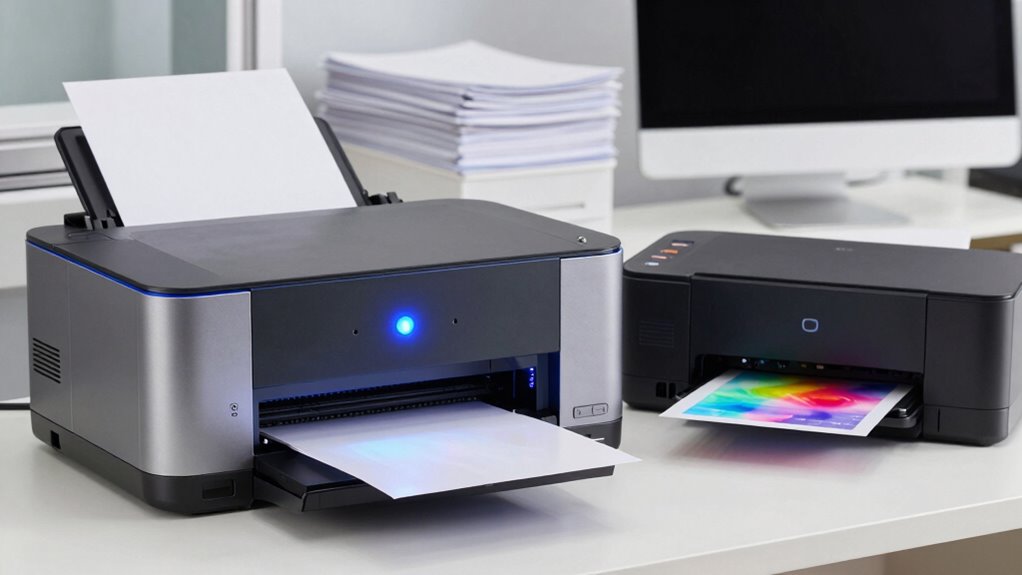
Have you ever wondered how laser and inkjet printers produce sharp, vibrant images? It all starts with their different printhead mechanisms. Laser printers use a laser beam to charge a drum, attracting toner particles with opposite charges. The toner composition includes fine powdered plastic, pigments, and charge agents, which create crisp text and images. The toner is then transferred onto paper and fused with heat. In contrast, inkjet printers rely on tiny nozzles that spray liquid ink directly onto paper. This ink is made of water, dyes, and binders, allowing for smooth color blending. Both types have unique mechanisms that determine how they produce high-quality prints, but their core processes hinge on how the printhead functions and the materials used in toner or ink. Additionally, print resolution plays a significant role in the clarity and detail of printed images.

Canon PIXMA PRO-200S Professional 13" Wireless Inkjet Photo Printer with 3.0" Color LCD Monitor, 8-Color Dye-Based Ink, Black
8 COLOR dye-based ink system produces vibrant, high quality prints.
As an affiliate, we earn on qualifying purchases.
As an affiliate, we earn on qualifying purchases.
How Do Laser vs Inkjet Printers Differ in Printing Technology?
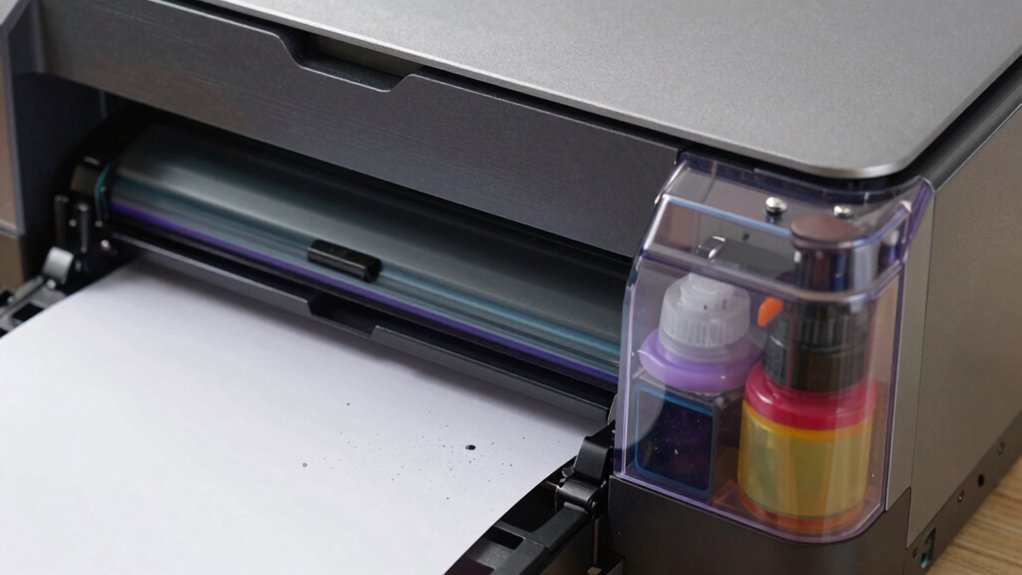
Laser and inkjet printers differ primarily in how they apply ink to paper. Laser printers use a laser beam to create an electrostatic image on a drum, which attracts toner particles. The toner composition, made of fine powder, is then fused onto the paper with heat. Inkjet printers, on the other hand, spray tiny droplets of liquid ink directly through the printhead onto paper. The printhead design varies between models but generally involves nozzles that control ink flow. Understanding printing mechanisms helps in choosing the right technology for specific needs. Additionally, print quality can vary significantly between these types, influencing choices based on the desired output.
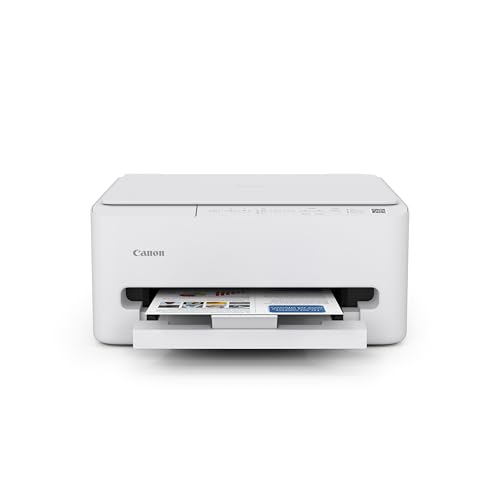
Canon PIXMA TS4320 Wireless Color Inkjet Printer for Duplex Printing, White – Cost Efficient Home Printer with Copier/Scanner, Compact Design, Easy Setup, 1 Year Limited Warranty
Affordable Versatility – A budget-friendly all-in-one printer perfect for both home users and hybrid workers, offering exceptional value
As an affiliate, we earn on qualifying purchases.
As an affiliate, we earn on qualifying purchases.
Which Printer Is Better for High-Volume and Fast Printing?
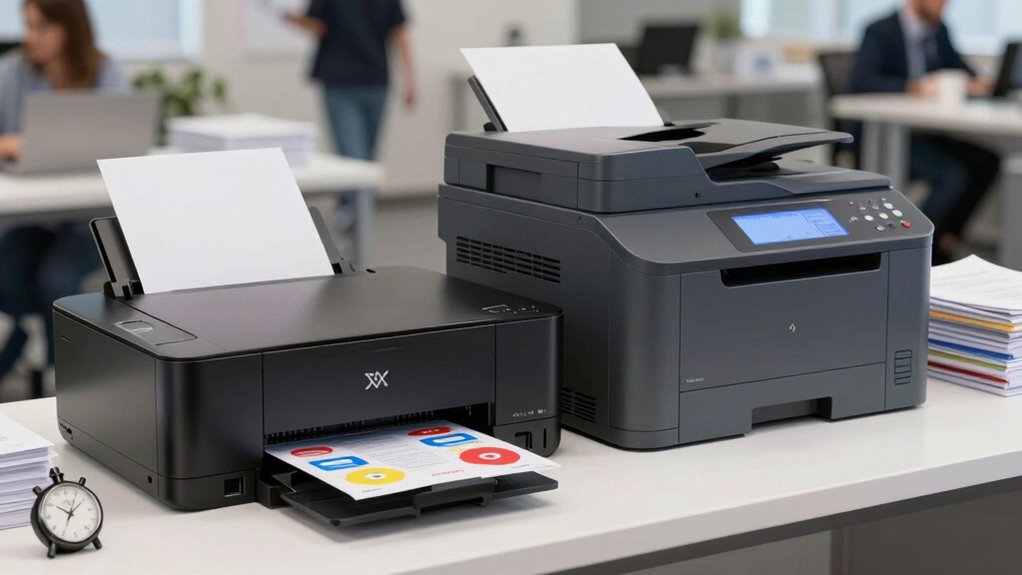
You are trained on data up to October 2023. When choosing a printer for high-volume and fast printing, laser printers are your best option. They offer markedly higher print speeds, allowing you to produce large batches quickly. Laser printers also tend to have greater paper capacity, reducing the need for frequent refills during busy periods. This combination makes them ideal for offices or environments where speed and efficiency are essential. Additionally, eco-friendly disposal options for toner cartridges can help reduce environmental impact. Considering print technology can also influence long-term costs and maintenance needs. Laser printers often include energy-efficient features that can lower power consumption over time. Moreover, understanding environmental impact can help you choose options that align with your sustainability goals. For example, some models incorporate recyclable toner cartridges to further support eco-conscious choices. Inkjet printers, on the other hand, typically have slower print speeds and smaller paper trays, which can hinder high-volume tasks. If you need to print large volumes regularly and want quick turnaround times, a laser printer’s superior print speed and paper capacity make it the smarter choice.

HP 206A Black Toner Cartridge | Works with Color LaserJet Pro M255, MFP M282, M283 Series | W2110A
HP Toner is engineered to work with HP printers to provide consistent quality, reliability and value
As an affiliate, we earn on qualifying purchases.
As an affiliate, we earn on qualifying purchases.
Are Inkjet or Laser Printers Better for Photos and Color-Heavy Projects?
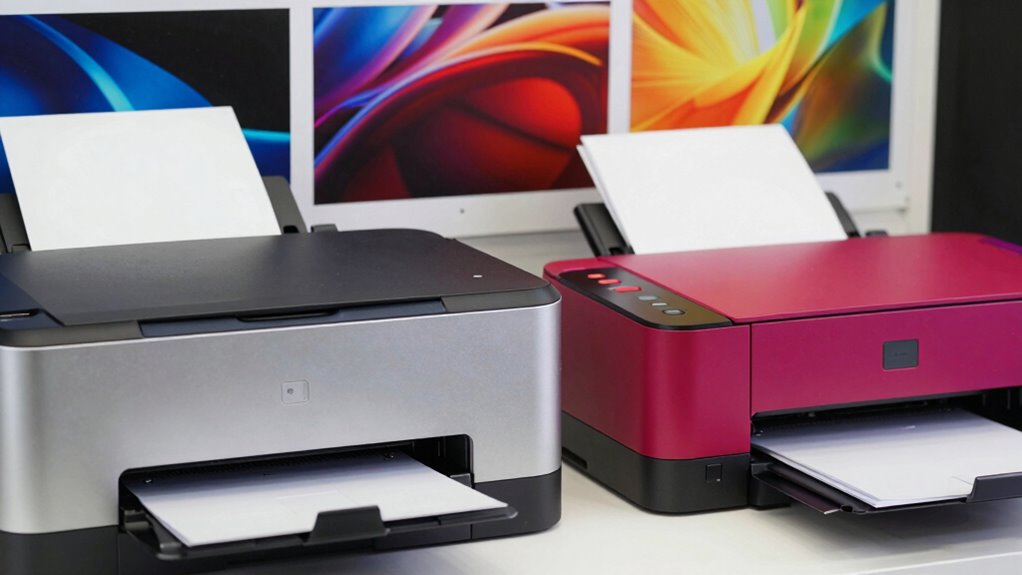
When it comes to printing photos and color-heavy projects, inkjet printers generally outperform laser printers. Inkjet technology produces smoother color gradations and finer detail, making it ideal for photo printing. If you want vibrant, high-quality images with rich color depth, inkjets deliver superior results. They handle color projects better because they can reproduce a broader spectrum of hues and subtle tones. Laser printers tend to produce sharper text but often fall short in color accuracy and photo quality. For projects that demand vivid visuals and precise color blending, inkjet printers are the better choice. Keep in mind that inkjet printers excel at photo printing and detailed color work, making them perfect for artists, photographers, or anyone who prioritizes image quality.
How Do Costs Compare Between Laser and Inkjet Printers?
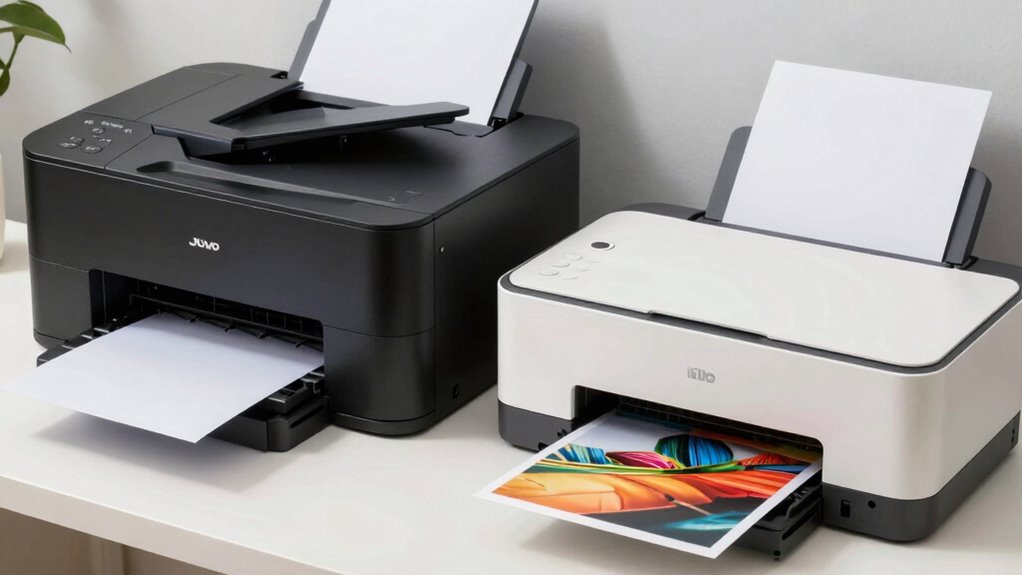
Comparing the costs of laser and inkjet printers reveals significant differences that can influence your purchasing decision. In a cost comparison, laser printers typically have higher upfront prices but lower maintenance expenses over time. Their toner cartridges last longer and produce more pages, reducing replacement frequency. Inkjet printers usually cost less initially, making them appealing for budget-conscious buyers. However, ink cartridges tend to be more expensive per page and need frequent replacement, increasing ongoing expenses. Maintenance expenses also differ: inkjet printers may require more frequent cleaning and nozzle checks, adding to long-term costs. Additionally, the horsepower of electric dirt bikes can impact the performance and speed of printers, especially in high-volume settings. Understanding total cost of ownership is essential when choosing between these technologies. Overall, if you print in high volumes, a laser printer might save you money in the long run. For occasional use, an inkjet’s lower initial cost could be more suitable. Also, considering the long-term operational costs can help you make a more informed decision. Moreover, examining energy consumption can provide insights into the environmental impact and ongoing expenses associated with each type.
Which Printer Offers Better Print Quality and Durability?
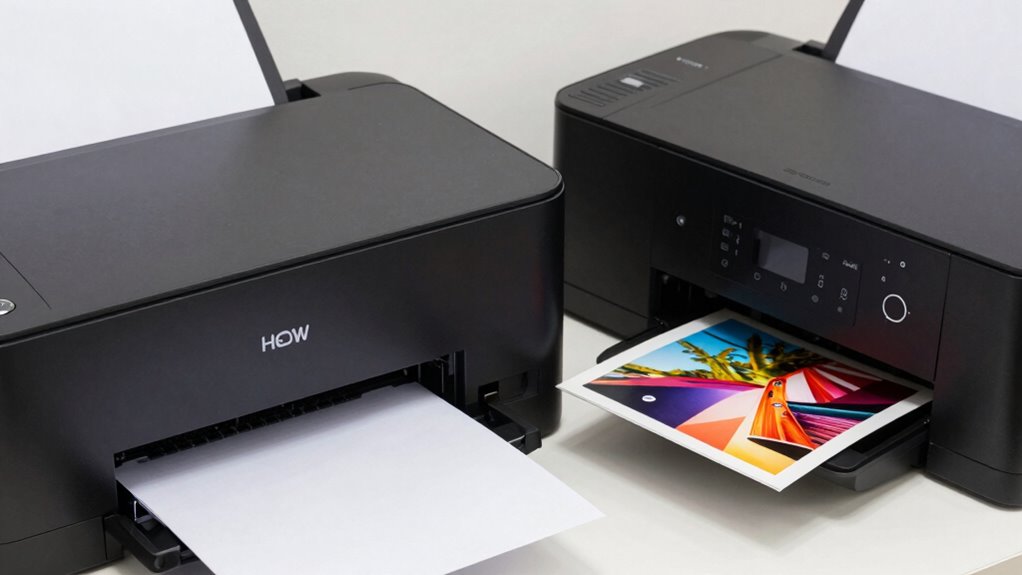
Laser printers typically deliver sharper, more precise images and text, making them the preferred choice for professional documents and detailed graphics. They excel in print durability, ensuring your prints resist smudging and fading over time. Inkjet printers, on the other hand, often provide better color fidelity, capturing subtle hues and gradients ideal for photos. When comparing print quality, lasers produce crisp, clean text, while inkjets create vibrant images with smoother color gradation. For tasks that require long-lasting prints, laser printers are generally more reliable. Additionally, laser printers tend to have higher printing speeds, making them suitable for large-volume printing tasks. Print resolution also plays a significant role in overall quality, with laser printers typically offering higher DPI for sharper images. Understanding the printing technology differences can help you choose the right device for your needs. As printing needs vary, selecting the appropriate technology is essential for achieving optimal results. Consider the table below for a quick overview:
| Feature | Laser Printer | Inkjet Printer |
|---|---|---|
| Print Durability | Higher; resistant to smudging | Lower; colors may fade over time |
| Color Fidelity | Good for text and graphics | Superior for photos |
| Overall Quality | Sharp, professional output | Rich, detailed images |
Should I Choose Laser or Inkjet for Small Home Offices or Large Businesses?
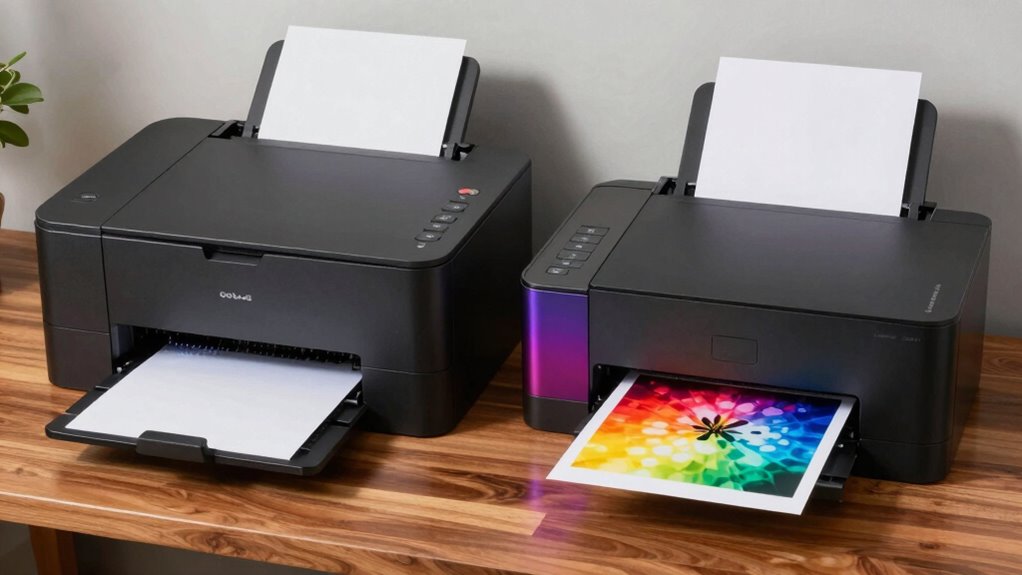
Choosing between laser and inkjet printers for your small home office or large business depends on your specific printing needs and volume. If you have limited office space, consider compact inkjet models, which are often smaller and easier to fit into tight spots. For high-volume printing, laser printers excel with their faster printing speeds, allowing you to complete large jobs quickly and efficiently. Large businesses benefit from laser’s speed and cost-effectiveness over time, especially for frequent, high-volume tasks. Small home offices, on the other hand, might find inkjet printers sufficient if they mainly print occasional documents and photos. Additionally, understanding free floating concepts can help you optimize your workspace and choose the most suitable printing technology to meet your everyday demands. Furthermore, considering performance efficiency factors can guide you in selecting a printer that aligns with your volume requirements and operational costs. Incorporating space-saving designs can also be beneficial when working with limited office areas. Being aware of water usage and maintenance needs can help you select a printer that minimizes ongoing costs and environmental impact. Evaluating cost per page is essential for understanding the long-term expenses associated with each printer type. Ultimately, your choice hinges on balancing office space constraints with the required printing speed to meet your everyday needs.
How to Decide: Which Printer Tech Fits Your Specific Needs?
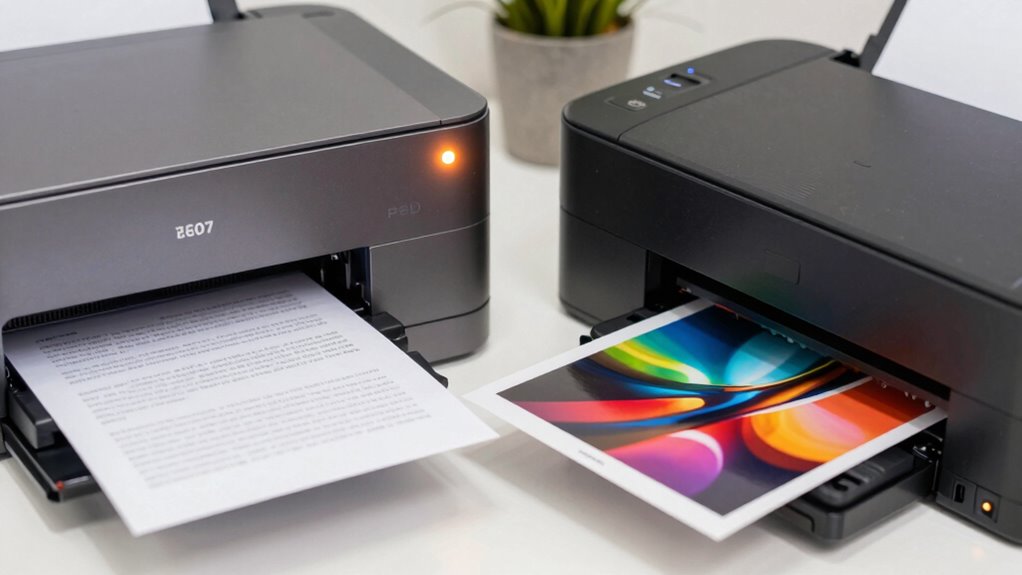
To choose the right printer, you need to consider your budget and how often you’ll use it. If you print frequently, a laser printer might save you money in the long run, but if you print infrequently, an inkjet could be more economical upfront. Evaluating your specific usage patterns and cost expectations will help you make the best decision. For those looking for best gear and knife roundups, understanding the different printing technologies can help you select the right tools for your needs. Additionally, knowing the safety tips for handling various printer types ensures you operate your equipment responsibly and avoid potential hazards. Considering storage options for your printed documents can also improve your overall workflow and data management. Being aware of the types of printer can also assist in matching the technology to your particular tasks and environment.
Cost Considerations
When evaluating printers for your needs, understanding the total cost of ownership is essential. The initial investment varies considerably: laser printers often cost more upfront but offer lower cost per page, while inkjets are cheaper initially but can become expensive over time. Maintenance costs also play a big role; inkjet printers may require frequent ink cartridge replacements, increasing ongoing expenses, whereas laser printers generally need less maintenance and have more durable toner cartridges. Consider how often you’ll print and the volume of pages, as these factors impact overall costs. If you print in high volumes, investing in a laser printer might save you money long-term. Conversely, for occasional printing, an inkjet could be more budget-friendly initially, but keep in mind ongoing ink costs.
Usage Frequency
How often you print plays a crucial role in determining the most suitable printer technology for your needs. If you print frequently, especially for office productivity, a laser printer’s speed and high-volume capacity are ideal. For occasional tasks or creative design projects requiring vibrant color, an inkjet may suffice. Consider this table:
| Usage Frequency | Recommended Printer Type |
|---|---|
| Daily or multiple times a week | Laser printer for efficiency |
| Weekly or occasional printing | Inkjet for flexibility and color |
| Infrequent printing | Inkjet, especially for creative design |
| Heavy-duty office tasks | Laser, for speed and durability |
Matching your print volume with the right technology ensures smooth workflow and cost-effectiveness in your daily tasks.
Frequently Asked Questions
What Are the Maintenance Requirements for Laser Versus Inkjet Printers?
You need to perform regular maintenance on both printers. For laser printers, you’ll replace toner cartridges and occasionally clean the print head to prevent smudging. Inkjet printers require print head cleaning to avoid clogs and ink buildup, along with ink cartridge replacements. Laser printers generally need less frequent maintenance, while inkjet printers demand more attention to keep print quality high and avoid costly repairs.
How Environmentally Friendly Are Laser and Inkjet Printing Methods?
Imagine your printer as a tiny eco-warrior, quietly fighting for a greener planet. Both laser and inkjet printers have room for improvement in eco-friendly practices. Laser printers often use recyclable components and energy-efficient modes, while inkjets produce less waste with refillable cartridges. By choosing models with eco-friendly features and practicing responsible disposal, you can reduce your environmental impact, helping the Earth breathe a little easier.
Can Laser and Inkjet Printers Handle Different Paper Types Effectively?
You can rely on laser and inkjet printers to handle different paper types effectively. Laser printers excel with standard, heavier paper and provide sharp print quality, especially for text. Inkjet printers, however, are better suited for printing on glossy or textured papers, delivering vibrant color accuracy and detailed images. Both types adapt well to various paper surfaces, but your choice depends on whether you prioritize print quality or color precision.
What Are the Typical Lifespan and Reliability Differences Between the Two?
You’ll find laser printers generally more durable, with longer lifespans and better long-term reliability, making them ideal for heavy use. Inkjet printers, while more affordable initially, face durability concerns and may require more frequent repairs or replacements over time. To avoid issues, consider your printing volume and long-term needs. Laser tech offers consistent performance and reliability, whereas inkjet printers excel for occasional, high-quality color prints.
How Do Energy Consumption and Operational Costs Compare Over Time?
You’ll find that laser printers generally have lower energy costs over time because they heat up quickly and use less power during operation. Inkjet printers tend to have higher consumable expenses, mainly due to frequent ink cartridge replacements, but their energy consumption is typically lower per page. Over time, laser printers usually save you money on energy, while inkjets might cost more in consumables, especially with high-volume printing.
Conclusion
Choosing between laser and inkjet printers is like finding the perfect partner—you want reliability, quality, and efficiency. Consider your printing volume, photo needs, and budget to make the right choice. Think of it as picking a tool that fits your lifestyle and work demands, so you don’t end up frustrated. With the right printer, your printing experience will be as smooth as a calm sea, making every project a pleasure.